
Impeachment Trial's Third Month: Prosecution Promises 'Home Run' Evidence as Senate Threshold Debate Heats Up
House prosecution says evidence of Vice President Sara Duterte's unexplained wealth is coming and calls the confidential funds revelations a 'home run,' even as senators weigh the 16-vote conviction threshold.
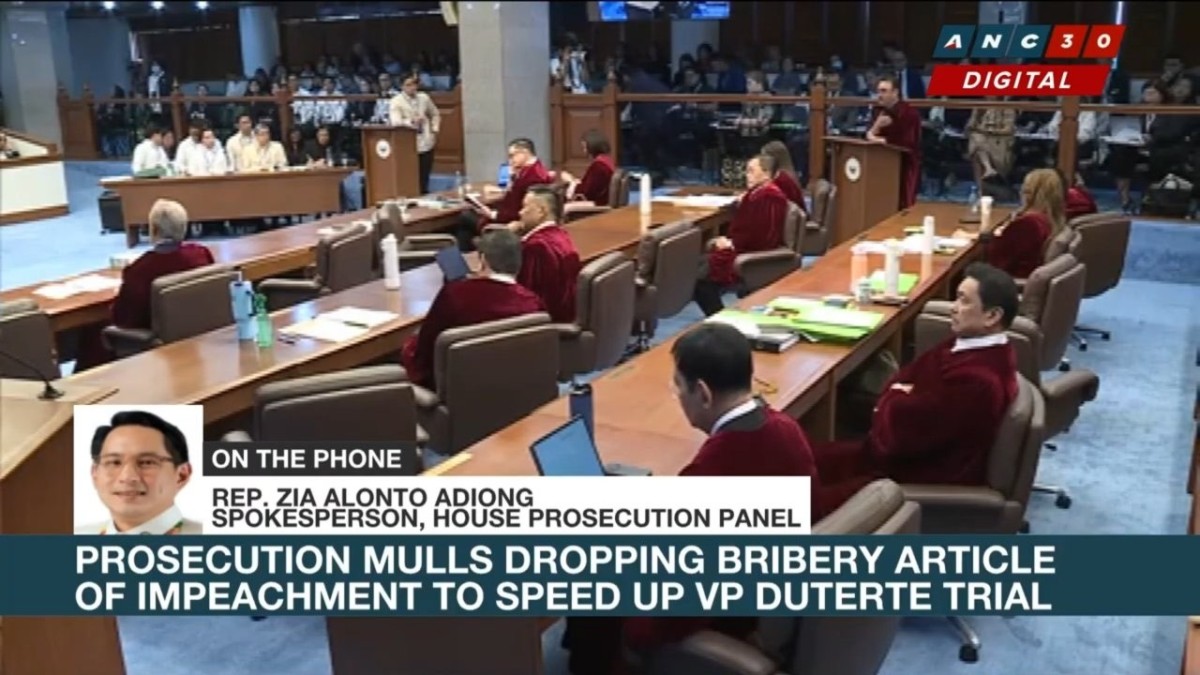
In an ANC 24/7 report on Friday, House prosecution panel spokesperson Rep. Zia Alonto Adiong declared that the impeachment case against Vice President Sara Duterte holds a "home run" piece of evidence regarding confidential funds, and that the public should anticipate revelations about her alleged unexplained wealth. As the trial enters its third month, the central question is no longer just about the evidence, but about the very rules of conviction that will determine whether the Vice President can be removed from office — a decision that will ultimately hinge on how the Senate interprets the Constitution and how ordinary Filipinos perceive the accountability of their leaders.
Impeachment Trial's Third Month: Prosecution Promises "Home Run" Evidence as Senate Threshold Debate Heats Up
Manila, Philippines – Friday — The impeachment trial of Vice President Sara Duterte before the Senate impeachment court entered its third month this week with the prosecution signaling it possesses powerful evidence on confidential funds and unexplained wealth, even as senator-judges debate whether the constitutional threshold for conviction should be lowered due to absent members. The trial, which began on July 6, 2026, has drawn intense public attention, with the Senate opening its premises to the public to witness the historic proceedings.
Senate President Francis "Chiz" Escudero, presiding over the court, ruled at the start of the trial that conviction requires 16 affirmative votes — two-thirds of the 24-member Senate as mandated by the Constitution. However, with several senator-judges unavailable, some members are now questioning whether that threshold remains attainable, a debate that could reshape the entire impeachment process and potentially trigger a Supreme Court challenge.
The Day's Development: Prosecution's "Home Run" and Unexplained Wealth Evidence
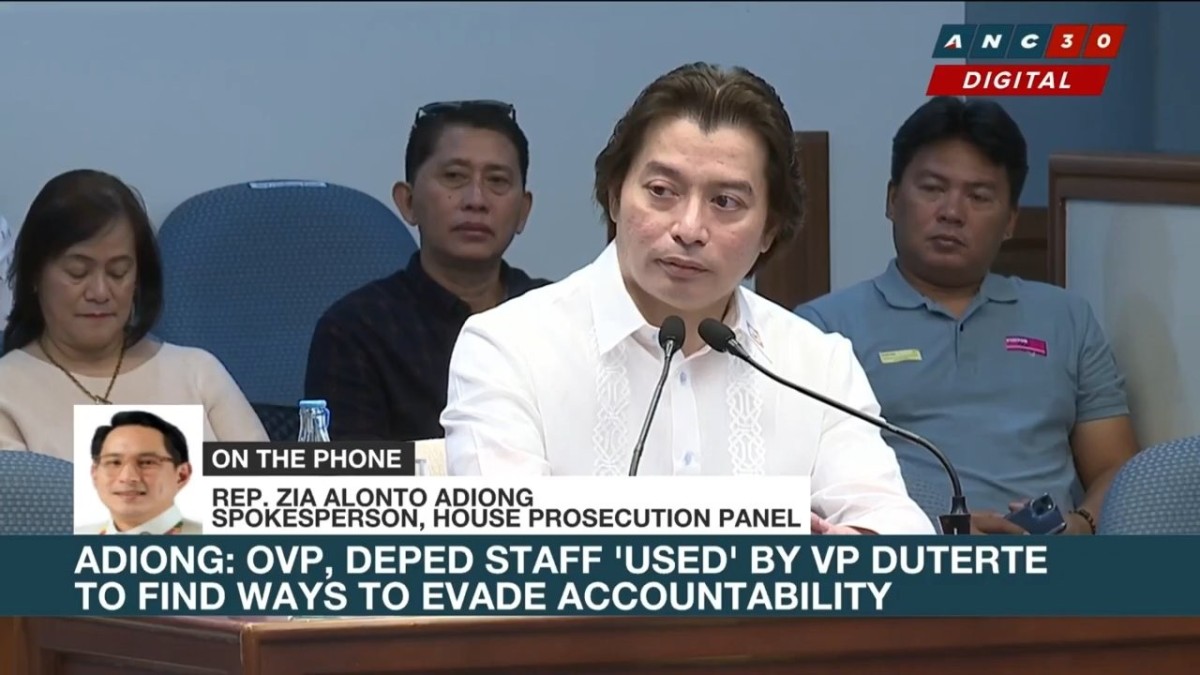
In a press briefing carried by ANC 24/7 on Friday, September 4, Rep. Adiong of Lanao del Sur's 1st District told reporters that the House prosecution panel has evidence regarding the Vice President's alleged "unexplained wealth" and that the public should anticipate its presentation in the coming sessions. He described the revelations on confidential funds as a "home run" — using the Filipino expression "pang-homerun" — for the impeachment case, suggesting that the evidence would be decisive in convincing senator-judges of the gravity of the allegations.
Adiong also addressed the role of Office of the Vice President (OVP) and Department of Education (DepEd) staff, saying they were "used" by the Vice President to find ways to evade accountability. He specifically mentioned defense counsel Atty. Michael Poa, asserting that Poa had no idea about the DepEd confidential fund use but was "dragged into the mess" of explaining it. These statements signal that the prosecution's case will focus heavily on the paper trail of confidential fund disbursements and the individuals who facilitated them.
The prosecution's confidence comes as the panel has prepared its case assuming that 16 votes remain necessary for conviction. Rep. Barbers, a prosecution official, said on September 3 that the panel reserves the right to question the threshold before the Supreme Court if the application of the 16-vote rule injures its case. This dual strategy — presenting evidence while simultaneously preparing for a constitutional battle over the voting rule — underscores the high stakes of the proceedings.
The Threshold Question: Zubiri's Remarks and the 16-Vote Rule
Senate Majority Leader Sen. Juan Miguel Zubiri said on Friday that some senator-judges want to revisit the 16-vote threshold because of the missing members. He explained that the best way to settle the matter is to debate it openly and seek a ruling from the presiding officer, Senate President Escudero. Zubiri predicted that any change to the threshold would inevitably be challenged before the Supreme Court, stating that "as the sun will rise, someone will take it up to the Supreme Court."
The debate stems from the absence of several senator-judges. Sen. Ronald "Bato" dela Rosa has been a fugitive since May 14, facing an International Criminal Court (ICC) warrant over alleged crimes against humanity in the drug war. Sen. Jinggoy Estrada is detained on plunder charges, while Sen. Rodante Marcoleta was arrested on plunder charges in July. Sen. Loren Legarda has been on medical leave for weeks due to a serious health condition. These absences reduce the number of available senator-judges, making the 16-vote threshold mathematically more difficult to reach.
Impeachment court spokesperson Atty. Regie Tongol has maintained that the 16-vote threshold is "set in stone" unless raised before the Supreme Court. This position aligns with Escudero's initial ruling, but the pressure from some senator-judges to revisit the rule suggests that the issue is far from settled. The prosecution, for its part, has said it will respect the Senate impeachment court's ruling on the conviction voting threshold, with Adiong noting that talk of a lower threshold "has been anticipated."
The Allegations on Trial: Confidential Funds, Unexplained Wealth, and Threats
The impeachment complaint against Vice President Duterte encompasses a wide range of allegations, including the misuse of confidential funds — specifically the DepEd Confidential and Intelligence Funds and OVP funds — as well as unexplained wealth and failure to disclose properties. The complaint also alleges bribery and threats against President Ferdinand Marcos Jr., First Lady Liza Araneta-Marcos, and Speaker Martin Romualdez. These allegations strike at the heart of public accountability, raising questions about how taxpayer money was handled by the second-highest official of the land.
Adiong's statements on Friday suggest that the prosecution will present evidence showing a pattern of financial impropriety. The allegation that OVP and DepEd staff were "used" to evade accountability paints a picture of a coordinated effort to obscure the use of public funds. The mention of Atty. Poa being "dragged into the mess" indicates that even those who may not have been directly involved in the alleged misuse found themselves entangled in the explanations required by the impeachment court.
The confidential funds issue resonates deeply with the Philippine public, as these funds are by nature discretionary and subject to less scrutiny than regular appropriations. The prosecution's characterization of the confidential funds revelations as a "home run" suggests that the evidence will demonstrate not just technical violations but a fundamental breach of public trust. For teachers and DepEd personnel who have long struggled with inadequate resources, the alleged misuse of education funds adds a particularly painful dimension to the case.
Philippine Context: Why the Threshold Fight Matters
The debate over the 16-vote threshold is fundamentally a constitutional question that goes to the heart of the impeachment process. Article XI, Section 3 of the 1987 Constitution provides that conviction requires the concurrence of two-thirds of all members of the Senate. This provision was designed to ensure that removal from office is not a partisan exercise but rather a decision that commands overwhelming consensus among the people's representatives.
The separation of powers doctrine underpins the impeachment process, with the House of Representatives acting as the prosecutor and the Senate as the judge. A change in the voting threshold would not only affect the current trial but would set a precedent for future impeachments, potentially making it easier to remove high-ranking officials. The checks and balances embedded in the Constitution are designed to prevent any single branch from becoming too powerful, and the two-thirds requirement is a critical safeguard against politically motivated removals.
If the Senate were to lower the threshold, it would likely face an immediate challenge before the Supreme Court. The High Court has historically been cautious about intervening in impeachment proceedings, but a ruling on the threshold would have far-reaching implications for the interpretation of the Constitution. The prosecution's reservation of its right to question the threshold before the Supreme Court suggests that this issue may ultimately be resolved not in the Senate chamber but in the halls of the judiciary.
Impact on Filipinos: Taxpayers' Money and Public Trust
At its core, this impeachment trial is about the accountability of public officials for the use of taxpayers' money. The confidential funds at issue — whether under the OVP or DepEd — come from the pockets of ordinary Filipinos who contribute to the national coffers through taxes. When these funds are allegedly misused, it is not just a legal violation but a betrayal of the public trust that undermines the social contract between the government and the governed.
The DepEd connection is particularly significant for teachers and public school students. The Department of Education serves millions of Filipino children, and its budget is meant to provide learning materials, teacher training, and school infrastructure. Allegations that confidential funds meant for education were misused strike at the very heart of the nation's commitment to quality education. For teachers who often spend their own money on classroom supplies, the alleged misuse of education funds is a painful reminder of the disparities in resource allocation.
The concept of bayanihan — the Filipino tradition of communal unity and cooperation — stands in stark contrast to the allegations of self-enrichment at the expense of the public. The taumbayan, the Filipino people, look to the impeachment court not just for a legal ruling but for a demonstration that no one is above the law. The trial's outcome will shape public perception of whether the country's institutions can hold even the highest officials accountable for their actions.
Reactions and Responses: Defense Posture and Institutional Positions
The defense has maintained its posture through Atty. Poa, who has been tasked with explaining the DepEd confidential fund use. Adiong's characterization of Poa as being "dragged into the mess" suggests that the defense's explanations have been less than convincing to the prosecution. The defense is expected to argue that the Vice President followed proper procedures in the disbursement of confidential funds and that the allegations are politically motivated.
Senators have taken varied positions on the threshold question, with some expressing concern about the feasibility of reaching 16 votes given the absent members. The public has followed the trial closely, with the Senate opening its premises to accommodate observers. Civil society organizations have called for transparency and due process, emphasizing that the trial must be conducted fairly regardless of its outcome.
The prosecution's confidence in its evidence, coupled with its anticipation of a threshold debate, suggests that the panel is prepared for a long legal battle. The reservation of the right to question the threshold before the Supreme Court indicates that the prosecution views the constitutional question as integral to its case. If the 16-vote rule is applied strictly, the prosecution may need to convince not just a majority but a supermajority of senator-judges of the Vice President's guilt.
What to Watch For
In the coming weeks, the Senate impeachment court may issue a ruling on the threshold question, either affirming Escudero's initial ruling or modifying it in response to the concerns raised by some senator-judges. The presentation of the prosecution's evidence on unexplained wealth is expected to be a pivotal moment in the trial, potentially shifting public opinion and influencing the calculations of senator-judges.
A Supreme Court review of the threshold issue remains a distinct possibility, particularly if the Senate changes its interpretation of the constitutional requirement. The High Court's ruling would have implications not just for this trial but for the future of the impeachment process in the Philippines. The next hearing days will reveal whether the prosecution can deliver on its promise of a "home run" and whether the Senate can navigate the constitutional complexities of the threshold debate.
For Filipino readers, the trial represents a moment of reckoning — a test of whether the nation's democratic institutions can hold its leaders accountable. The outcome will determine not just the fate of Vice President Sara Duterte but also the precedent it sets for how the country handles allegations of corruption and abuse of power at the highest levels of government. As the trial continues, the taumbayan watches with hope that justice will prevail and that the principles of accountability and transparency will be upheld.
This article was produced with AI-assisted research and editorial support. Sources: ANC 24/7 (ancphilippines on YouTube), Philippine News Agency (pna.gov.ph), GMA News Online, Philippine Daily Inquirer, Journal News Online.
By Bella Reyes, Staff Writer
What's Your Reaction?
 Like
0
Like
0
 Dislike
0
Dislike
0
 Love
0
Love
0
 Funny
0
Funny
0
 Wow
0
Wow
0
 Sad
0
Sad
0
 Angry
0
Angry
0

Philippines/Southeast Asia Correspondent at Global1.News. Manila-based journalist covering Philippine politics, environment, maritime security, and social issues. Passionate about marine conservation and the communities protecting the Philippines' natural heritage.














Comments (0)