
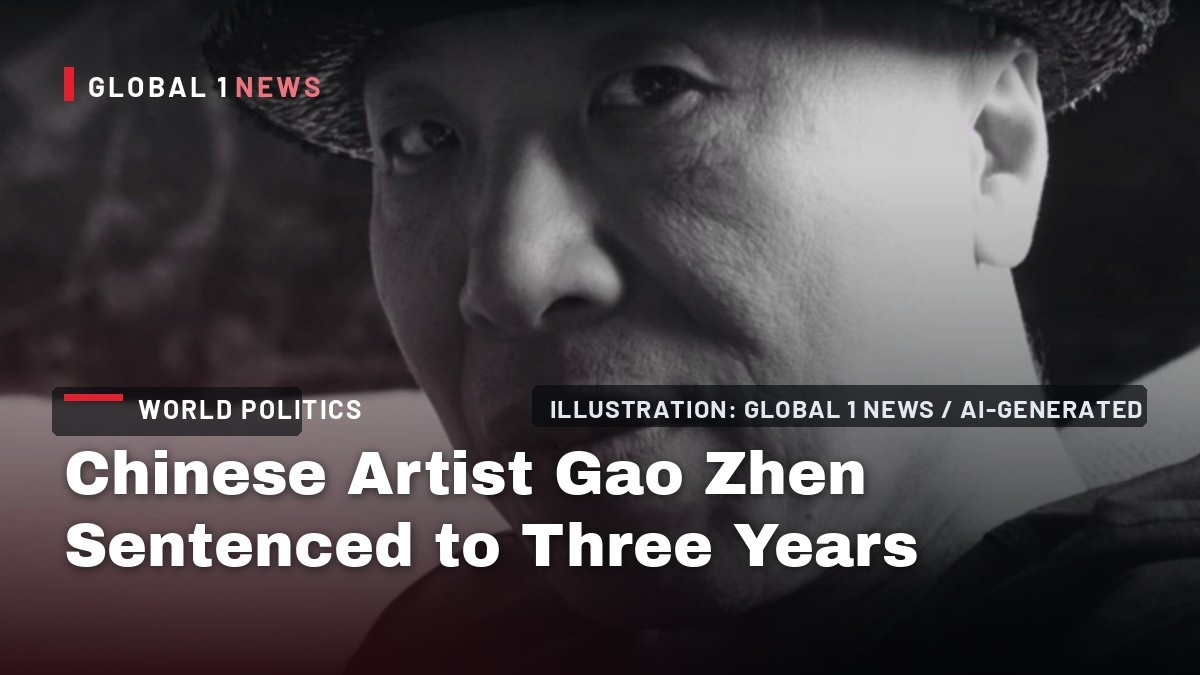
Chinese Artist Gao Zhen Sentenced to Three Years Over Satirical Mao Sculptures
A court in Hebei province has sentenced Chinese artist Gao Zhen to the maximum three-year prison term for "slandering China's heroes," concluding a case that rights groups say demonstrates Beijing's willingness to apply its laws retroactively and extend its reach over citizens who have left the coun
Chinese Artist Gao Zhen Sentenced to Three Years Over Satirical Mao Sculptures
A court in Hebei province has sentenced Chinese artist Gao Zhen to the maximum three-year prison term for "slandering China's heroes," concluding a case that rights groups say demonstrates Beijing's willingness to apply its laws retroactively and extend its reach over citizens who have left the country. The verdict, announced on Tuesday 25 August 2026, centers on satirical sculptures of Mao Zedong that the 70-year-old artist created with his brother Gao Qiang more than fifteen years ago. Gao Zhen has been in detention for the past two years, and the court ruled that his work "infringes upon the hero's reputation and harms public interest," according to rights organizations monitoring the proceedings. If the verdict is upheld, Gao would be due to complete his sentence in August 2027, as the term takes into account the two years he has already spent in custody.
The Verdict and Its Legal Mechanics
The one-day, closed-door trial was held earlier this year and received limited coverage within China, a pattern consistent with how the authorities handle politically sensitive artistic expression cases. The Hebei province court's decision to impose the maximum sentence signals that the judiciary is operating in alignment with the party's broader cultural governance objectives rather than exercising judicial restraint. The case was prosecuted under a law that came into force in March 2018, which bans the defamation of historical figures associated with the party. This legal framework, often compared to the Heroes and Martyrs Protection Law that was enacted around the same period, creates a broad category of protected individuals whose reputations are considered integral to the state's historical narrative. The maximum sentence available under this statute was applied in full, suggesting that the court viewed Gao's artistic output as a particularly serious challenge to the official version of China's revolutionary history.The Artworks at the Centre of the Case
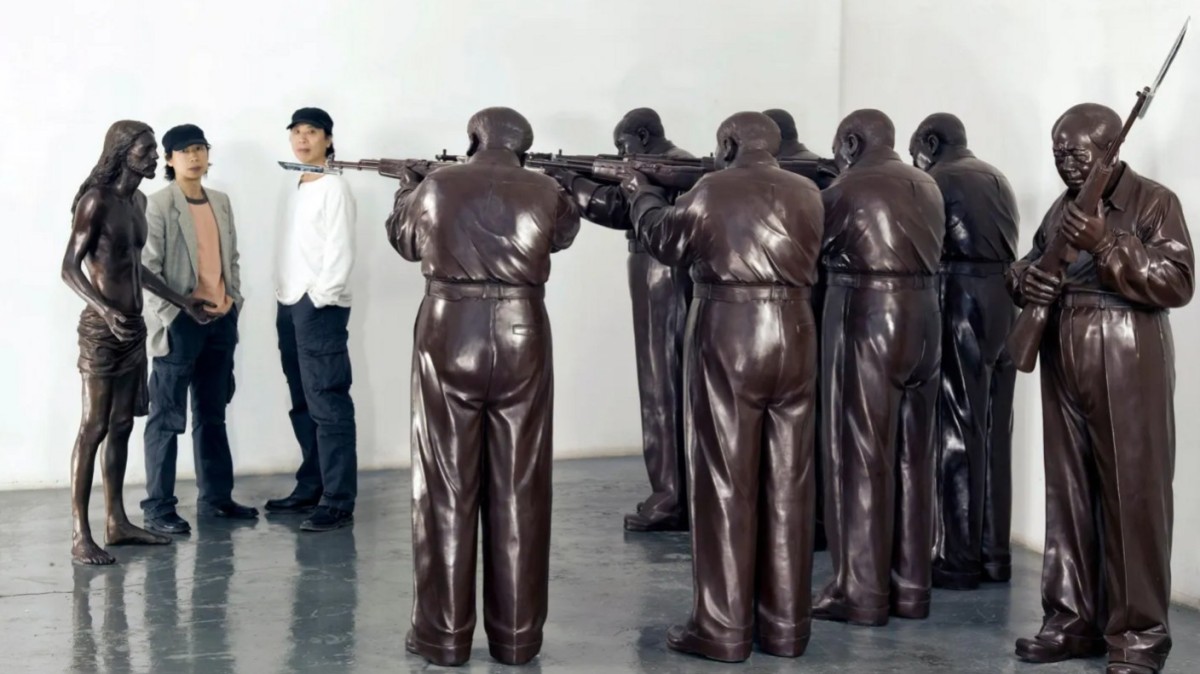
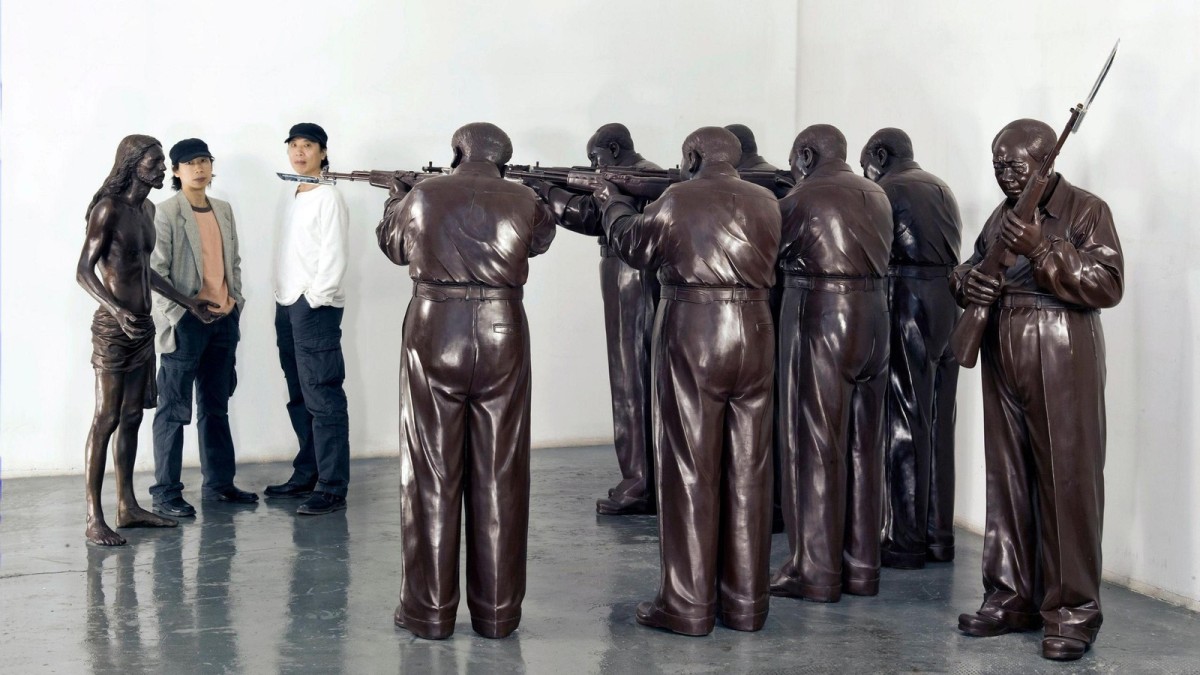
The sculptures that form the basis of the prosecution were exhibited in 2009, a full nine years before the law under which Gao was charged came into effect. The most prominent among them is *Execution of Christ*, a piece depicting a squad of Mao-like figures holding Jesus Christ at gunpoint. Two other works were also cited in the case: *Mao's Guilt*, a life-sized replica of the leader kneeling in a pose of solemn contrition, and *Miss Mao*, which depicts him with large breasts and a long, Pinocchio-style nose. These works emerged from a period when the Gao brothers had risen to prominence in China's art scene during the 1990s and 2000s, earning a global reputation for pieces that skewered the politics of their homeland. The fact that these works were created and exhibited more than a decade before the relevant law existed raises profound questions about the retroactive application of criminal legislation, a concern that has been echoed by international legal observers and human rights organizations.
The Legal Framework and the Question of Retroactivity
The 2018 law banning defamation of historical figures associated with the party represents a significant expansion of China's legal apparatus for protecting its foundational political narrative. Legal scholars have noted that the statute's language is deliberately broad, allowing prosecutors and courts considerable discretion in determining what constitutes defamation of a "hero" or "historical figure." In this case, the application of the law to conduct that predates its enactment by nearly a decade marks a notable departure from the principle of legality that typically governs criminal law in most jurisdictions. The UN Human Rights Office has explicitly raised concerns about "the retroactive application of criminal law" in this case, highlighting how the prosecution undermines the predictability and fairness that should characterize criminal justice systems. Gao Qiang, the artist's brother, told the BBC earlier this year that the trial's "message is clear": "Even if a work was made 15 years ago, it can still be turned into a crime if today's political climate changes." This observation captures the essence of the legal strategy employed by the authorities, which appears designed to send a signal that artistic expression is subject to the shifting political winds of the moment rather than stable legal principles.The Arrest and Its Transnational Dimension
Gao Zhen's case carries a distinctly transnational dimension that has drawn particular attention from China watchers. The artist had moved to the United States in 2022, apparently seeking to place himself beyond the reach of Chinese authorities. However, during a visit to his studio on the outskirts of Beijing in August 2024, he was arrested, demonstrating that physical presence on Chinese soil, even temporarily, carries significant risk for individuals who have fallen out of favor with the authorities. The arrest was accompanied by the seizure of his artworks and, notably, the barring of his wife and seven-year-old son from leaving China. This family dimension adds a coercive element to the case, suggesting that the authorities are willing to use the artist's family as leverage or as a means of ensuring his compliance with the legal process. The transnational reach of Chinese law enforcement, combined with the practical constraints imposed on family members, illustrates how Beijing's governance model extends beyond its borders in ways that affect not only Chinese citizens abroad but also their relatives who remain within the country.International Reaction and Criticism
The international community has responded to the sentencing with expressions of concern and condemnation. Amnesty International has characterized the verdict as an "assault" on artistic freedom, with the organization's China Director Sarah Brooks issuing a strong statement on Tuesday. "No artist should face criminal punishment for creating work that challenges official narratives or encourages critical reflection on history," Brooks said. She further argued that the trial "demonstrates how broadly worded and politically motivated laws are used - and worse, in this case, used retroactively - to silence artists, activists and other individuals who dare to express views that differ from those of the Chinese government." The UN Human Rights Office has also weighed in, telling AFP that the case "raises particular concerns with regard to the retroactive application of criminal law, the use of criminal sanctions to punish artistic expression, and the impact on his family." These international responses reflect a growing pattern of concern among Western governments and human rights organizations about the trajectory of China's legal system, particularly as it applies to cultural and political expression.What the Case Signals About Chinese Governance and Artistic Freedom
The Gao Zhen case must be understood within the broader context of how China's legal system, information control mechanisms, and party discipline operate in tandem to maintain domestic stability. The prosecution of an artist for works created fifteen years ago, under a law that did not exist at the time of their creation, sends an unmistakable message to the artistic and intellectual communities within China: creative expression is permissible only insofar as it aligns with the current political climate, and past works can be retroactively criminalized if the political environment shifts. This approach reflects a governance philosophy that prioritizes ideological conformity over legal certainty, treating the law as an instrument of political control rather than a stable framework of rules. For Chinese artists and intellectuals, the case reinforces the boundaries of acceptable expression and demonstrates that the state's tolerance for critical reflection on historical figures, particularly those associated with the party's founding and revolutionary history, has narrowed considerably. The fact that Gao had moved to the United States before his arrest underscores that even geographic distance provides no protection for those who choose to return to Chinese soil, however briefly.
Strategic Implications for How the World Reads China's Legal Trajectory
The international community's reading of this case extends beyond concerns about artistic freedom to encompass broader questions about the direction of Chinese governance and law. For the diaspora abroad, the case serves as a warning that the party's reach extends transnationally, and that returning to China for any reason carries potential legal risks for those who have expressed dissenting views. For international audiences, including the UN, Amnesty International, and Western governments, the case reinforces a narrative of a Chinese legal system that is increasingly politicized and willing to apply laws retroactively to punish expression deemed threatening to the party's historical narrative. The strategic calculus behind this prosecution appears to be twofold: domestically, it reinforces the boundaries of acceptable discourse and demonstrates the party's commitment to protecting its foundational myths; internationally, it signals that China will not tolerate challenges to its official history, regardless of where they originate or when the offending works were created. As China's legal trajectory continues to evolve in this direction, the international community faces the challenge of how to engage with a system that increasingly treats law as an instrument of political control rather than a neutral arbiter of justice. The Gao Zhen case, with its retroactive application of law and its transnational dimensions, offers a revealing glimpse into the priorities and methods of Chinese governance in the mid-2020s, and it raises questions about the future of artistic and intellectual freedom not only in China but also for Chinese citizens operating beyond its borders. By Prof. Marcus Chen, Staff WriterThis article was produced with AI-assisted research and editorial support. Sources: BBC News, 26 August 2026.
What's Your Reaction?
 Like
0
Like
0
 Dislike
0
Dislike
0
 Love
0
Love
0
 Funny
0
Funny
0
 Wow
0
Wow
0
 Sad
0
Sad
0
 Angry
0
Angry
0

Marcus Chen
World Politics Analyst at Global1.News. Based in Beijing, covering US-China relations, global trade, and geopolitical strategy. Brings deep analytical perspective to the power dynamics shaping international affairs.









Comments (0)