
IDF Strikes Hezbollah Targets in Southern Lebanon After Drone Attack
IDF strikes Hezbollah targets in southern Lebanon after explosive drones targeted soldiers near Ali al-Taher ridge. Strikes hit weapons sites and a command center in a former hospital. Lebanese sources report four killed.
In a report aired on i24NEWS English, the IDF confirmed it launched strikes against Hezbollah weapons storage facilities and terrorist structures in southern Lebanon on Sunday, responding to an attempted drone attack on Israeli soldiers operating in the country's self-declared Security Zone. The exchange marks the latest escalation in a low-intensity conflict that has simmered along the northern border for months, even as Israel's military focus has shifted toward the Iranian nuclear threat and the Gaza front.
IDF Strikes Hezbollah Targets in Southern Lebanon After Drone Attack
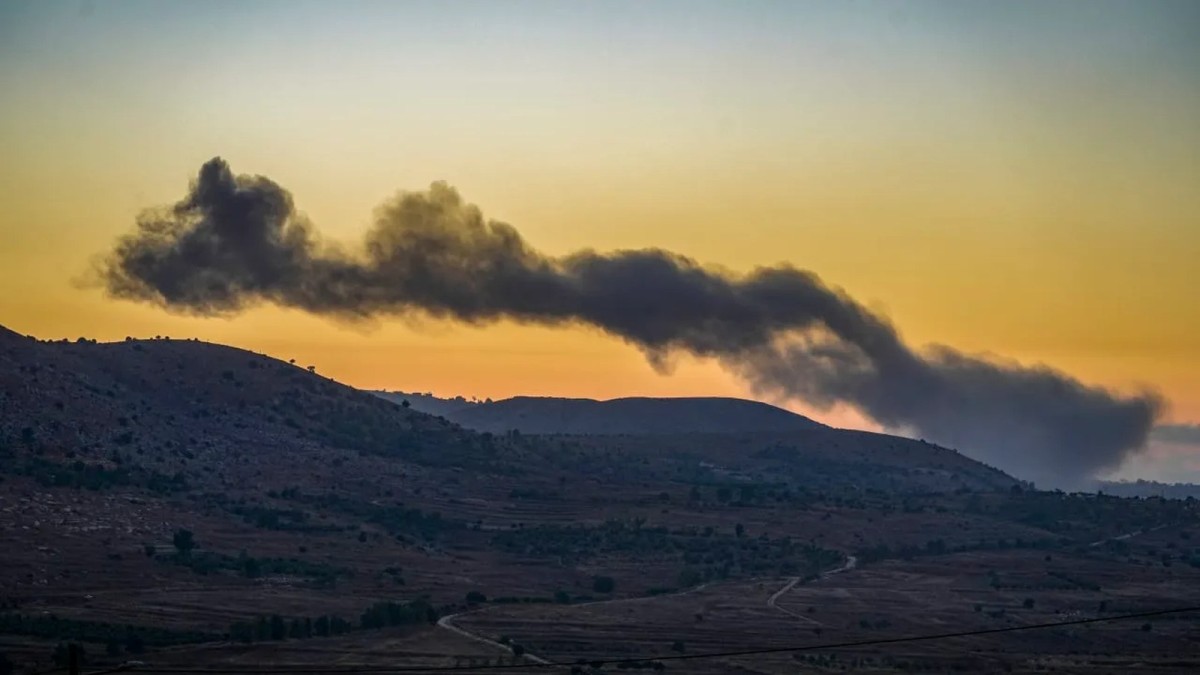
Jerusalem, Israel – September 7, 2026 — The IDF Spokesperson's Unit said the strikes were carried out after Hezbollah launched two explosive drones toward soldiers operating near the Ali al-Taher ridge, a strategic hilltop area outside Nabatieh that Israeli forces took "operational control" of earlier this week. Soldiers opened fire on the incoming drones and successfully downed one of them; no Israeli troops were wounded in the incident. The military characterized the drone launch as "a blatant violation by the Hezbollah terrorist organization" and confirmed it was actively striking targets in southern Lebanon in response.
Targets Included Command Center in Former Hospital Building
The IDF said its retaliatory strikes hit weapons storage facilities and terrorist structures used by Hezbollah to plan and direct attacks within the Security Zone, a roughly 10-kilometer (6-mile) deep buffer area Israel established inside Lebanese territory. In a significant detail, the military said one of the targets was a Hezbollah command center that had been established inside a building previously used as a hospital in southern Lebanon. Israel has repeatedly accused Hezbollah of embedding military infrastructure within medical facilities, a charge the group has denied.
The IDF emphasized that steps were taken to mitigate harm to civilians, including the use of precise munitions and continuous aerial surveillance of the target areas. The military does not typically comment on individual strike results, and the IDF Spokesperson's Unit said only that "the IDF is operating now and will continue to operate with force against the Hezbollah terrorist organization's repeated attempts to harm our forces."
First Evacuation Warning in Weeks Issued for Arab Salim
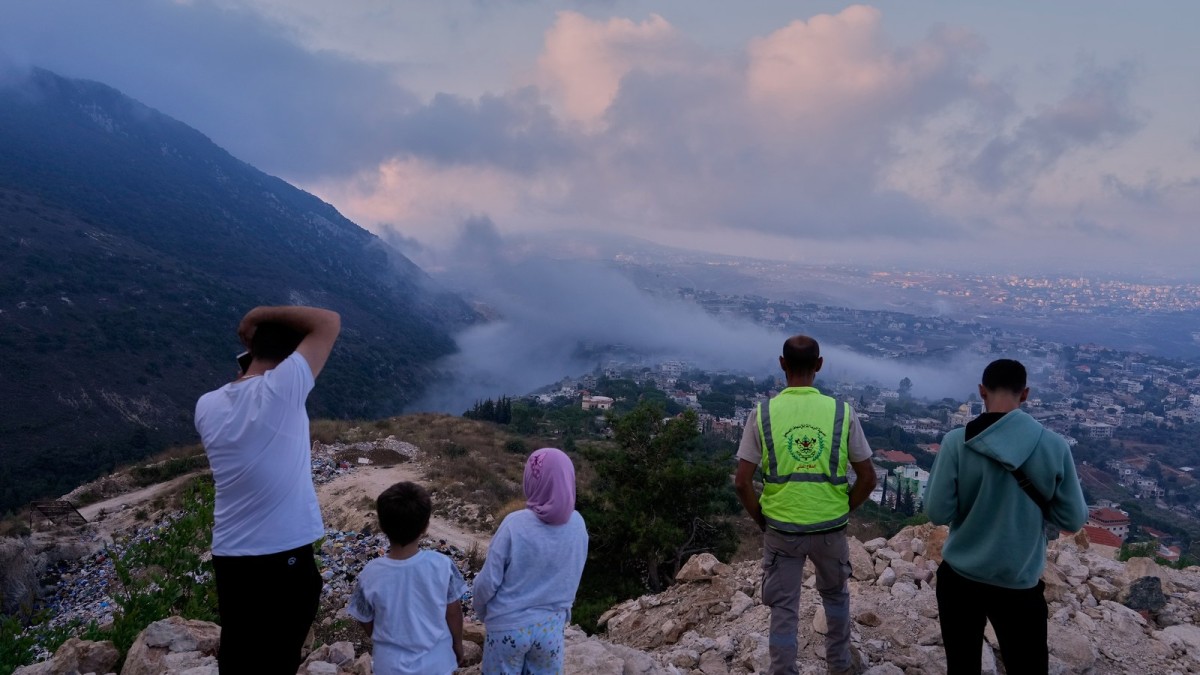
Before launching the strikes, the IDF issued its first evacuation notice in southern Lebanon in several weeks, a sign that the military anticipated a significant operation. The warning, delivered in Arabic, told residents of the village of Arab Salim to leave their homes immediately, stating that they were situated near a Hezbollah facility that the IDF would operate against. The village sits in the Nabatieh district, an area that has seen repeated Israeli strikes throughout the current conflict.
The Lebanese Health Ministry, cited by the Associated Press and France 24, reported that four people were killed in southern Lebanon on Sunday, including two women in Nabatieh al-Fawqa and two women in the nearby village of Arab Salim. The Jerusalem Post, citing Lebanese media, reported separate strikes around Kfar Rumman near Nabatieh that killed two people and wounded one. Israel does not comment on individual strike results, and the casualty figures come exclusively from Lebanese sources, which have been the primary record-keepers throughout the conflict.
The evacuation warning and subsequent strikes underscore a pattern that has defined Israel's northern operations: advance notice to civilians where feasible, followed by precision strikes on military infrastructure. The IDF has maintained this approach even as Hezbollah has continued what Israeli military statements describe as "near-daily low-level attempts" against troops operating inside the Security Zone, despite a months-old ceasefire arrangement that was supposed to end hostilities.
Ali al-Taher Ridge: A Strategic Flashpoint
Sunday's drone attack occurred in the vicinity of the Ali al-Taher ridge, a hilltop position near Nabatieh that the IDF said earlier this week it had taken "operational control" of after weeks of ground operations. The ridge offers commanding views over the surrounding terrain and has been a focal point of Israeli military activity in the Security Zone. Hezbollah has not commented on or confirmed the Israeli claim of control over the ridge, leaving the tactical situation on the ground unclear.
The Security Zone itself has been a point of contention since Israel expanded its map of the area in June, extending the buffer deeper into Lebanese territory. Israeli troops remain deployed inside the zone despite the ceasefire arrangement, a reality that Hezbollah has used to justify continued attacks on Israeli forces. The IDF has said the zone is necessary to prevent Hezbollah from establishing positions directly on the border and to protect Israeli communities in the Galilee from cross-border attacks.
Regional Context: A Wider War With Deep Casualties
The ongoing exchanges along the Lebanon-Israel border are part of a broader regional conflict that began in March, when Hezbollah attacked Israel in response to the US-Israeli campaign against Iran. Lebanese army and health figures cited in the i24NEWS report say the wider conflict has killed more than 4,300 people in Lebanon and driven more than a million from their homes, devastating communities across the country's south and east.
Friday's strikes in southern and eastern Lebanon killed four people, including an 18-year-old woman, after Israel said it struck Hezbollah targets in response to a drone launch toward its soldiers. On Saturday, the IDF said it struck terrorists and Hezbollah infrastructure overnight, including weapons storage facilities, in response to Friday's attempted drone attack. The pattern of near-daily exchanges has become routine, even as the intensity of the conflict has fluctuated.
For Israeli readers, the numbers tell a stark story of asymmetry: while Israel has suffered relatively few casualties from Hezbollah's drone and rocket attacks, the Lebanese side has borne the brunt of the destruction. The IDF maintains that its strikes are aimed exclusively at military targets and that Hezbollah's practice of embedding within civilian areas is responsible for the high civilian toll. Lebanese authorities and human rights groups have challenged that characterization, pointing to specific incidents where civilians were killed in Israeli strikes.
Political Ramifications: Elections Loom as Security Dominates
The northern front has become a central issue in Israel's domestic politics as the country approaches Knesset elections scheduled for October 27, 2026 — roughly 50 days away. Security concerns, particularly the ongoing operations against Hezbollah and the broader Iranian threat, have dominated campaign discourse. The i24NEWS exclusive interview with Prime Minister Benjamin Netanyahu, conducted by Naveh Dromi, aired this same period and captured the prime minister's framing of the conflict as a battle against Iran, which he called "the head of the octopus."
Netanyahu told i24NEWS that Israel had done "80-90% of the work" against the Iranian nuclear threat and needed to finish the rest, adding that "our pilots were there and can be there at any moment." He predicted that the Iranian regime "will fall, we will bring it down." Asked whether he feared another prime minister would inherit the Iran file after elections, Netanyahu said, "That is the choice of the public." The interview, which included a security briefing at the Gaza Division and a tour of southern Israeli cities, underscored how the prime minister is seeking to position himself as the experienced hand needed to manage Israel's multiple security fronts.
The timing of Sunday's Hezbollah drone attack and the Israeli response is unlikely to be coincidental. With elections weeks away, any security incident on the northern border carries political weight, and the IDF's visible response — including the evacuation warning and precision strikes — serves to demonstrate that the military remains in control of the situation. For opposition parties, the ongoing conflict in Lebanon and the continued presence of Israeli troops in the Security Zone raise questions about the government's endgame strategy.
What Comes Next: A Conflict Without Clear Resolution
The immediate trajectory of the northern front remains uncertain. Hezbollah has shown no sign of halting its attacks on Israeli forces inside the Security Zone, and the IDF has made clear it will continue responding with force. The ceasefire arrangement that was supposed to end hostilities has proven fragile, with both sides accusing the other of violations. Israeli military statements suggest the IDF expects the current pattern to continue, with Hezbollah carrying out low-level attacks and Israel responding with strikes on military infrastructure.
The broader strategic picture is complicated by the Iranian dimension. Netanyahu's assertion that Israel has done most of the work against Iran's nuclear program suggests that the window for decisive action may be closing, and that the northern front is intertwined with the larger confrontation with Tehran. Hezbollah, as Iran's most capable proxy, remains a central piece of that puzzle. For Israeli defense officials, the challenge is managing the northern front without triggering a full-scale war that would exact a heavy toll on both sides.
For the residents of southern Lebanon, the conflict has brought displacement, destruction, and loss. For Israelis in the north, the threat of rockets and drones remains a daily reality. The Security Zone, Israel's buffer against Hezbollah, has become a permanent feature of the landscape — and a permanent source of friction. With elections approaching and no diplomatic solution in sight, the exchanges along the border are likely to continue, each drone launch and each strike reinforcing the cycle of violence that has defined this front for months.
By Hannah Berg, Staff Writer
This article was produced with AI-assisted research and editorial support. Sources: i24NEWS English, The Jerusalem Post, France 24/AP, Arab News, Israel National News.
What's Your Reaction?
 Like
0
Like
0
 Dislike
0
Dislike
0
 Love
0
Love
0
 Funny
0
Funny
0
 Wow
0
Wow
0
 Sad
0
Sad
0
 Angry
0
Angry
0
Israel Correspondent at Global1.News. Based in Tel Aviv, covering Israeli politics, security, technology, and society. Provides balanced, deeply-sourced reporting on one of the most closely-watched regions in the world.















Comments (0)