
Houthi Strike on Saudi Tanker Escalates Red Sea Oil Crisis
The Iran-backed Houthi movement's missile strike on a Saudi oil tanker off the Red Sea port of Yanbu has exposed how quickly the Gulf's energy arteries can be severed - and how desperately the region's producers are searching for alternatives.
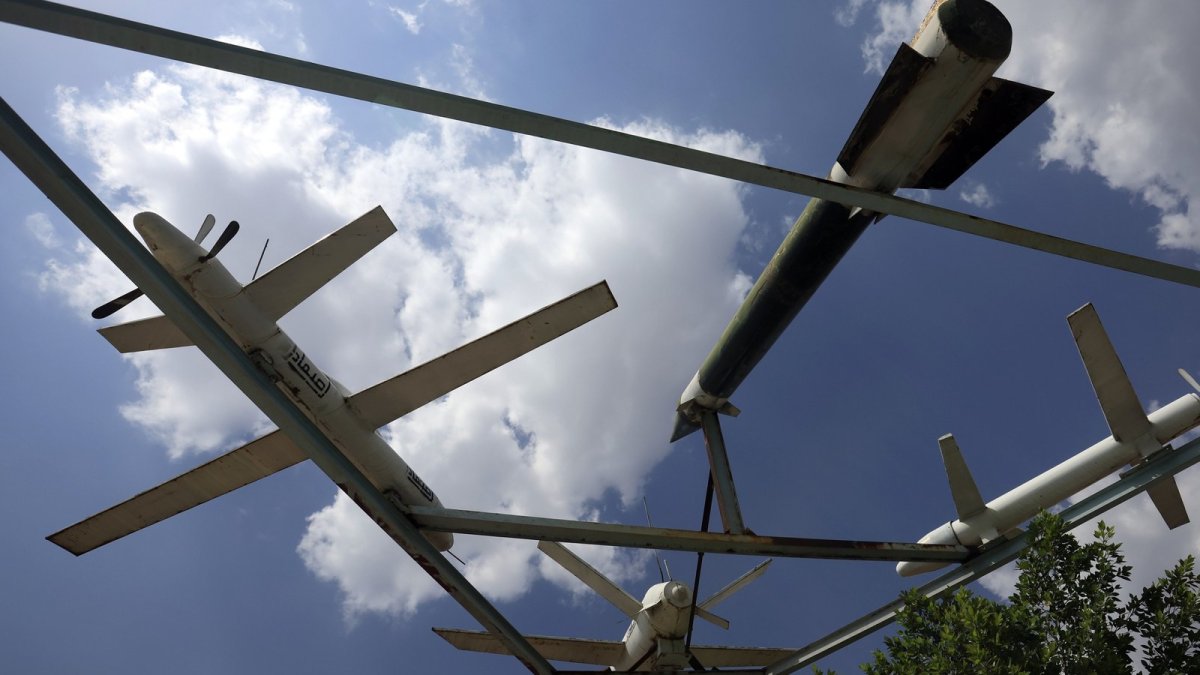
The Iran-backed Houthi movement's missile strike on a Saudi oil tanker off the Red Sea port of Yanbu has exposed how quickly the Gulf's energy arteries can be severed - and how desperately the region's producers are searching for alternatives. With the Strait of Hormuz closed since the U.S.-Iran war erupted in late February and the Bab al-Mandeb now under direct threat, the August 5 attack on the Wafa has pushed crude prices higher while accelerating pipeline diplomacy from Ankara to Baghdad.
Houthi Strike on Saudi Tanker Wafa Escalates Red Sea Oil Crisis
Beirut, Lebanon - August 5, 2026 - The following analysis examines the escalating Red Sea blockade, its impact on global energy markets, and the strategic response taking shape across Türkiye and Iraq.
Houthi Strike on Saudi Tanker Wafa Escalates Red Sea Oil CrisisHouthi Forces Claim Strike on Saudi Tanker Wafa
Yemen's Iran-backed Houthis announced on August 5, 2026, that they had struck the Saudi oil tanker Wafa off Yanbu in the northern Red Sea using ballistic missiles. Houthi military spokesman Yahya Saree stated in a video message that the group "successfully targeted the Saudi oil tanker 'Wafa' in the northern Red Sea, off the coast of Yanbu, with a number of ballistic missiles."
This marked the eighth Saudi oil tanker targeted since the blockade began on July 22. Saree warned that the group would escalate attacks in the northern Red Sea because Saudi Arabia had diverted tankers northward to avoid southern routes.
The Houthis' decision to escalate in the northern Red Sea reflects a deliberate strategy to eliminate Saudi Arabia's remaining maritime options after the southern blockade took effect on July 22. By targeting vessels diverted northward, the group seeks to demonstrate that no route remains viable, thereby increasing pressure on Riyadh to alter its military posture or accept higher export costs. This approach mirrors Iran's broader use of proxies to constrain Gulf energy flows without direct confrontation.
Saudi Arabia, facing the loss of its eastern outlets, must weigh the risk of further attacks against the need to sustain revenue. The eighth tanker incident underscores how the blockade has shifted from a southern chokepoint to a multi-front maritime campaign, forcing Aramco to balance operational continuity with mounting security expenses.
Blockade Forces Saudi Diversion of Oil Routes
The Houthis declared they would close all access points after Saudi Arabia shifted tankers to the northern Red Sea. Al Jazeera reported that 29 Saudi oil tankers have been prevented from proceeding or forced to turn back in the Red and Arabian Seas since the blockade started.
The action follows Iran's closure of the Strait of Hormuz after the U.S.-Iran war erupted in late February 2026. Hormuz previously carried roughly 20 million barrels per day, about one-fifth of global energy supplies.
Saudi redirection of more than 70 percent of exports through the East-West pipeline illustrates a calculated adaptation to the Hormuz closure that began in late February 2026. Yet this rerouting concentrates risk in a single corridor, giving the Houthis leverage to threaten the kingdom's primary remaining outlet. Riyadh's reliance on Yanbu now creates a narrower target set for adversaries seeking to disrupt global supply.
The move also highlights the limits of infrastructure flexibility. While the pipeline enables continued flows, it cannot fully offset the loss of eastern terminals, leaving Saudi Arabia exposed to any sustained campaign against Red Sea shipping and complicating long-term planning for OPEC+ quota management.
Red Sea Emerges as Critical Saudi Export Lifeline
With Hormuz closed, the Saudi port of Yanbu on the Red Sea became the main exit point for Saudi oil, and the Bab al-Mandeb Strait turned into a crucial transit route. Saudi Arabia redirected more than 70 percent of its oil through the East-West pipeline to western terminals.
Analysts noted that the Red Sea conduit accounted for about 90 percent of seaborne Saudi oil exports, totaling 4.6 million barrels per day in July. Kpler data showed Saudi seaborne crude exports via Bab el-Mandeb surged eightfold between March and mid-July 2026 compared with the same period in 2025, reaching nearly 100 million barrels in June alone.
With the Strait of Hormuz closed, the Bab al-Mandeb Strait has become the decisive chokepoint for Saudi crude, accounting for roughly 90 percent of seaborne exports by July. This concentration grants Iran-backed forces significant coercive power, as even partial interdiction can affect millions of barrels daily. Riyadh's dependence on this route amplifies the strategic value of any actor able to influence passage through the narrow waterway.
Historical patterns of Gulf energy vulnerability, from past Hormuz tensions to the current crisis, show that control over exit routes often outweighs production capacity itself. Saudi planners must therefore consider whether further pipeline or terminal investments can reduce this single-point exposure before additional disruptions materialize.
Oil Markets React to Fresh Strike and Diplomatic Signals
Crude prices rose after the Houthi claim. Brent crude traded at $80.15 a barrel, up 1 percent, while U.S. West Texas Intermediate futures for September delivery rose 0.28 percent to $75.98. The strike rattled markets and reduced hopes for an immediate ceasefire.
Oil had ended about 6 percent lower on Tuesday amid expectations of a Hormuz reopening. U.S. Central Command stated on X that the southern route of the Strait of Hormuz through Omani waters remained free and open. U.S. Treasury Secretary Scott Bessent told CNBC that a deal to unlock the waterway could be reached this week.
The modest price increase after the Wafa claim reveals how quickly markets price in renewed supply risk, even as earlier hopes for Hormuz reopening had eased pressure. Traders appear to discount near-term diplomatic progress, recognizing that Houthi escalation could offset any U.S.-brokered easing of tensions. This dynamic gives Tehran indirect influence over price signals without direct involvement in negotiations.
Second-order effects include potential shifts in buyer behavior, with Asian refiners seeking alternative sources or building inventories. Such hedging could sustain elevated prices longer than the immediate incident warrants, complicating Saudi fiscal planning and OPEC+ coordination at a moment when export reliability is already compromised.
Türkiye and Iraq Extend Kirkuk-Ceyhan Pipeline Deal
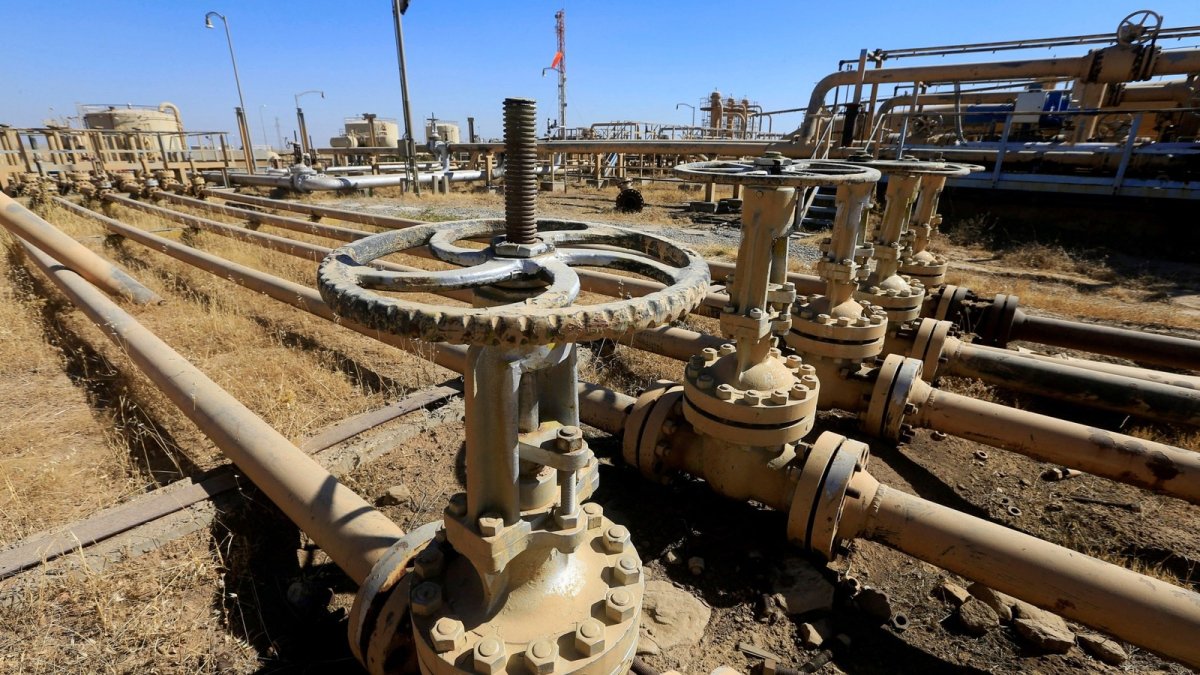
Ankara and Baghdad signed a one-year agreement on August 2, 2026, to maintain the crude oil pipeline from Kirkuk in northern Iraq to the Turkish Mediterranean port of Ceyhan. The deal extends a decades-long arrangement and secures Baghdad's only functioning export pipeline.
The agreement sets a minimum export volume of 750,000 barrels per day, with the pipeline holding a capacity of 1.5 million barrels per day. It was last carrying around 200,000 barrels per day. Energy and Natural Resources Minister Alparslan Bayraktar said capacity could eventually expand to between 2 million and 2.5 million barrels per day.
The one-year extension of the Kirkuk-Ceyhan agreement provides Baghdad with a concrete alternative to Hormuz-dependent routes, securing a minimum of 750,000 barrels per day. For Türkiye, the deal reinforces its role as a transit hub and strengthens leverage in regional energy diplomacy. Both governments appear motivated by the recognition that prolonged Hormuz closure could persist, making Mediterranean access strategically valuable.
This arrangement also creates second-order effects for Gulf producers exploring bypass options. By demonstrating that overland routes can operate at scale, the pipeline may encourage further investment in similar corridors, gradually diluting the coercive impact of maritime blockades on multiple exporters simultaneously.
Strategic Stakes in Kirkuk Fields and Broader Corridor
Under a separate agreement signed during Iraqi Prime Minister Ali al-Zaidi's visit to Ankara, Turkish Petroleum Corporation acquired a 15 percent stake in a consortium with BP and ConocoPhillips developing fields in Iraq's Kirkuk region. The Kirkuk project holds an estimated 3 billion barrels of recoverable reserves, valued at roughly $250 billion at current prices.
Bayraktar noted that the wider contract area may hold up to 20 billion barrels of oil equivalent. Current production stands at around 300,000 barrels per day, with long-term potential reaching 1.2 million barrels per day.
TPAO's 15 percent stake in the Kirkuk consortium signals Ankara's intent to lock in long-term influence over Iraqi production decisions. With an estimated 3 billion barrels of recoverable reserves, the fields represent a stable supply source that can feed the expanded Ceyhan corridor. Iraq gains technical and political backing while reducing its exposure to southern maritime risks.
The partnership also reshapes competitive dynamics among international operators. Inclusion of BP and ConocoPhillips alongside TPAO suggests a deliberate effort to distribute risk and attract capital, potentially accelerating capacity growth toward the 2-2.5 million barrels per day target cited by Turkish officials.
Geopolitical Calculus and Regional Energy Realignment
The expanded Türkiye-Iraq corridor offers producers in Iraq and Gulf countries an alternative route amid security concerns around the Strait of Hormuz. Bayraktar stated that additional capacity through Türkiye would provide resilience if disruptions occur.
Ankara also proposes a gas pipeline alongside the planned Basra oil pipeline and electricity lines, allowing Qatari and other Gulf gas to flow through Iraq into Türkiye and onward to Europe. Bayraktar described this as establishing a "global hub" where energy routes converge in Türkiye, supported by the country's more than 20,000 km of high-pressure natural gas pipelines and LNG facilities.
These developments reflect shifting leverage in a region where Iran-backed networks challenge Saudi export routes while Türkiye positions itself as a transit hub linking Gulf producers to European markets. The moves carry second-order effects for global energy flows and alliance patterns as states seek to reduce single-point vulnerabilities.
By Malik Hassan, Staff WriterThe convergence of Houthi maritime pressure and the Türkiye-Iraq pipeline extension illustrates a broader realignment in which land-based routes gain favor over vulnerable sea lanes. Producers are now prioritizing redundancy, accepting higher infrastructure costs to limit the leverage of any single chokepoint actor. This shift benefits transit states like Türkiye while challenging Iran's ability to project influence solely through Hormuz and proxy naval actions.
Over time, sustained use of the Kirkuk-Ceyhan corridor could alter OPEC+ dynamics by giving Iraq greater export flexibility independent of Saudi or Iranian preferences. Riyadh, meanwhile, faces the task of restoring multiple exit options before adversaries consolidate control over remaining maritime passages.
By Malik Hassan, Staff Writer
This article was produced with AI-assisted research and editorial support. Reporting is based on sources cited in the article.
What's Your Reaction?
 Like
0
Like
0
 Dislike
0
Dislike
0
 Love
0
Love
0
 Funny
0
Funny
0
 Wow
0
Wow
0
 Sad
0
Sad
0
 Angry
0
Angry
0

Middle East Correspondent at Global1.News. Based in Beirut, covering politics, conflict, energy, and society across the Middle East. Brings context and depth to a region often reduced to headlines.













Comments (0)