
Trump Sets 48-Hour Deadline for Hormuz Deal or Major Strike
The US-Iran standoff over the Strait of Hormuz has drawn in Oman, Saudi Arabia, and Pakistan as mediators, linking immediate shipping access to broader questions of nuclear ambitions and regional power balances. President Donald Trump’s 48-hour timeline for a resolution or major military action underscores how control of this chokepoint affects energy flows, Sunni-Shia rivalries, and great-power positioning across the Middle East.
The US-Iran standoff over the Strait of Hormuz has drawn in Oman, Saudi Arabia, and Pakistan as mediators, linking immediate shipping access to broader questions of nuclear ambitions and regional power balances. President Donald Trump’s 48-hour timeline for a resolution or major military action underscores how control of this chokepoint affects energy flows, Sunni-Shia rivalries, and great-power positioning across the Middle East.
Trump Sets 48-Hour Deadline for Hormuz Deal or Major Strike
Dubai, United Arab Emirates – August 5, 2026 — US President Donald Trump stated that negotiations with Iran are moving along very nicely and that the outcome will be known within 48 hours. He warned that the strait will be open very soon or Iran will get hit very hard, describing a potential strike as the biggest US military attack since World War II.
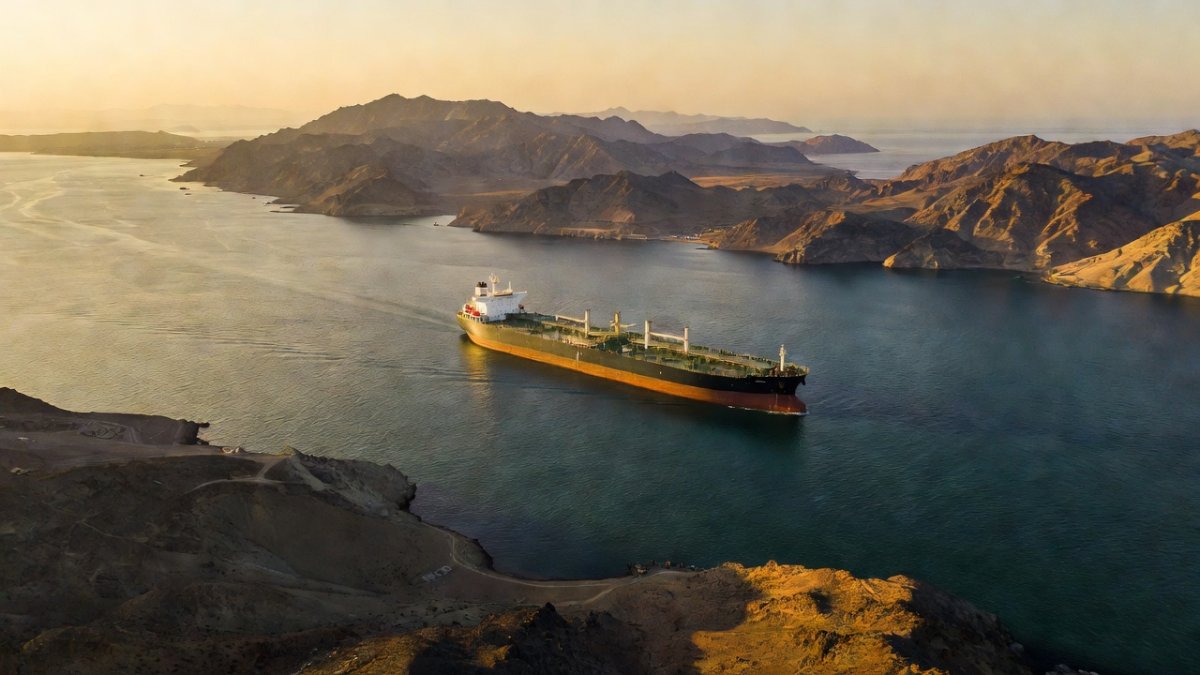
Geopolitical Context
Trump said the US and Iran are having very good discussions, though Iran publicly denies the talks. He ruled out any Iranian tolls on shipping, stating that if anyone charges, the US will charge. The president also said Iran will never acquire a nuclear weapon and noted the stock market has set new records 78 times.
The 48-hour ultimatum arrives against a backdrop of depleted US precision munitions stockpiles, with the Army having exhausted most ATACMS and PrSM reserves according to Reuters reporting and roughly 80 percent of THAAD interceptors already expended per CNN assessments. Yet Trump countered that Washington possesses far more munitions than anyone in the world, framing any escalation as sustainable despite these constraints. This rhetorical posture masks deeper calculations about sustaining prolonged operations in a theater where Iranian asymmetric capabilities could impose significant costs on forward-deployed US forces.
China’s dependence on Hormuz transit for approximately 30 percent of its oil imports adds another layer of pressure on Washington to avoid prolonged disruption. Beijing has quietly signaled interest in any arrangement that restores predictable flows without conceding permanent Iranian leverage over the waterway. Russia, meanwhile, watches for opportunities to position itself as an alternative supplier or mediator, leveraging its own energy exports to fill gaps left by any extended closure.
The Draft Deal
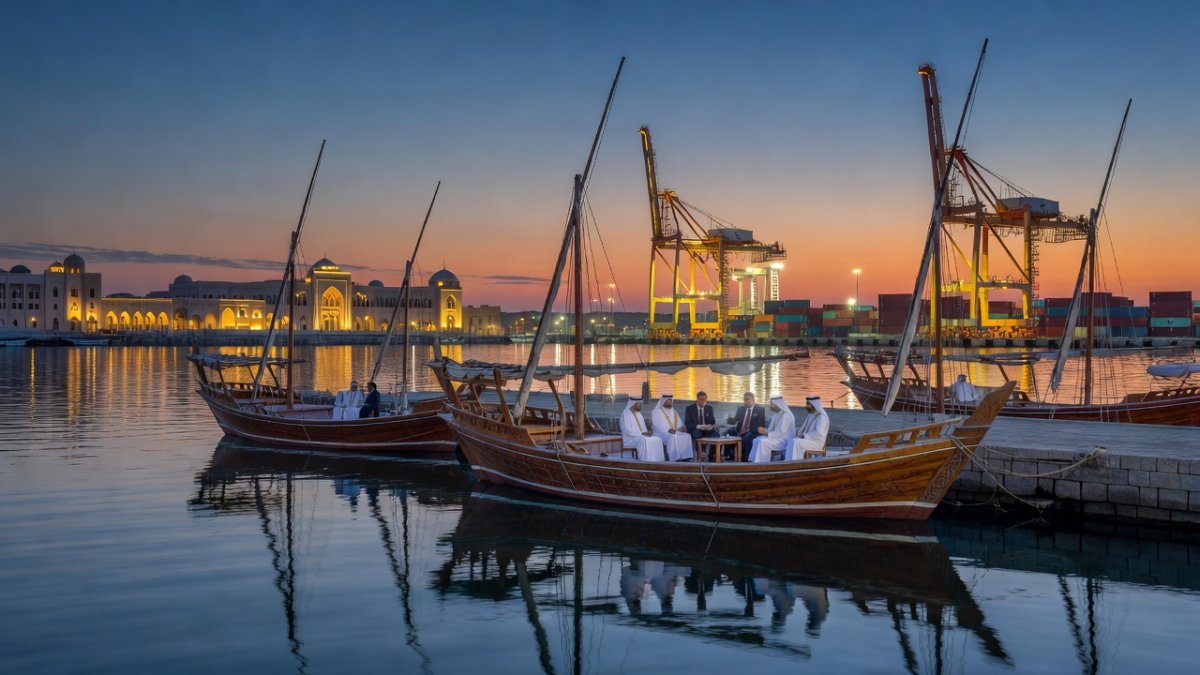
Iranian and Omani negotiators have finalized the draft deal to reopen the Strait of Hormuz and are awaiting final approval from Iran’s supreme leader, according to two regional officials who spoke anonymously to AP. The proposed arrangement would route ships entering the Persian Gulf through an Iranian-controlled lane and exiting through an Omani-controlled lane, with service fees charged for security and environmental preservation.
Iranian Foreign Ministry spokesman Esmail Baghaei said Tehran’s talks with Oman focused on establishing safe inbound and outbound shipping lanes that uphold sovereign rights while addressing national security considerations of both countries. Final results will be announced once concluded.
Pakistan has played a discreet but pivotal mediating role, with a senior Pakistani official confirming the document is close to being finalized. The two-lane scheme envisions Iranian oversight of inbound traffic and Omani control of outbound movements, accompanied by service fees that would generate revenue for both Tehran and Muscat while ostensibly funding environmental safeguards. This structure revives elements of earlier confidence-building proposals floated during the 2015 JCPOA negotiations but adapts them to the post-February 2026 conflict environment.
US and European capitals have applied quiet pressure on Oman to accept a temporary framework that prioritizes rapid reopening over permanent Iranian institutional control. The arrangement’s service-fee mechanism could generate steady income streams for cash-strapped Iranian entities, yet it also risks normalizing a precedent that Washington and its Gulf partners view as strategically unacceptable.
Historical Background
The US and Israel launched war on Iran on Feb. 28, 2026, citing goals of toppling Tehran’s government and ending its nuclear program. The conflict later centered on the strait after Iranian threats and attacks halted traffic. A June deal to open the strait collapsed when attacks resumed. Precedents include the 1979 revolution-era tensions, the Iran-Iraq war tanker war of the 1980s, and the 2019 tanker attacks.
During the 1984-1988 tanker war, both Iran and Iraq targeted neutral shipping in the Gulf, prompting US reflagging operations and direct naval clashes that foreshadowed today’s chokepoint vulnerabilities. The 2019 tanker attacks near Fujairah similarly demonstrated Iran’s capacity to impose asymmetric costs without triggering full-scale war. These episodes illustrate a recurring pattern in which Tehran leverages Hormuz transit as a pressure valve when facing existential threats to its nuclear program or regime stability.
The June 2026 memorandum of understanding collapse, which briefly promised restored traffic, exposed the fragility of any interim arrangement lacking ironclad security guarantees. Iranian hardliners appear to have resumed attacks once they assessed that the deal failed to deliver meaningful sanctions relief or recognition of Tehran’s regional influence.
Regional Dynamics
US Secretary of State Marco Rubio confirmed progress but said talks were not final. He ruled out any deal giving Iran control over the strait, calling that a very dangerous precedent, and distinguished the immediate straits issue from the big deal involving Iran’s nuclear ambitions. Treasury Secretary Scott Bessent told CNBC that talks with the Iranians could produce a deal today or tomorrow to open the strait and move toward a more normalized position.
Rubio’s framing separates the urgent shipping-lane question from longer-term nuclear negotiations, yet the two remain inextricably linked in Iranian calculations. Tehran has historically used maritime leverage to extract concessions on sanctions and enrichment limits, a tactic that dates back to the post-1979 hostage crisis era. Any deal that appears to reward Iranian disruption risks emboldening further coercion across other regional chokepoints such as the Bab el-Mandeb.
Bessent’s public optimism about an imminent agreement reflects Treasury’s focus on stabilizing energy markets ahead of potential winter demand spikes. Markets have already priced in a war-risk premium, with Brent hovering near $80 per barrel despite recent volatility, underscoring how even partial reopening could ease inflationary pressures across import-dependent Asian economies.
Energy Markets Impact
The Strait of Hormuz once carried a fifth of the world’s oil and natural gas. Only 8 vessels transited the strait on Monday, compared with roughly 130 ships per day before the war, according to Kpler. Brent crude traded around $80 per barrel on Wednesday after sliding 5.3 percent Tuesday on Bessent’s remarks and then rising 1.3 percent; WTI stood around $76.30 after falling 5.7 percent.
The collapse in daily transits from roughly 130 vessels to just eight represents an unprecedented disruption whose economic ripple effects extend far beyond immediate price spikes. Saudi Vision 2030 diversification plans, UAE port and logistics investments, and Qatari LNG expansion all depend on reliable Hormuz access; prolonged closure threatens sovereign wealth fund returns and fiscal balances across the GCC. OPEC+ spare capacity offers limited relief because most Gulf producers lack alternative export routes of comparable scale.
War-risk premiums embedded in current Brent and WTI levels already reflect trader expectations of intermittent flare-ups even if a deal materializes. Should the two-lane scheme fail to win supreme leader approval, renewed attacks could push prices toward levels last seen during the 2019-2020 tensions, amplifying second-order effects on global inflation and emerging-market debt sustainability.
Gulf State Reactions
Saudi Crown Prince Mohammed bin Salman urged Trump to prioritise dialogue in the US-Iran war. Oman has served as mediator in the Iran talks, with Pakistan also involved indirectly. A senior Middle East diplomat said the US and European countries are pressuring Oman to accept a temporary agreement. A senior Pakistani official described a document on reopening the strait as close to being finalized.
MBS’s August 2 appeal for dialogue reflects Riyadh’s calculation that sustained US-Iran confrontation risks empowering Iranian proxies across the region while diverting American attention from countering Chinese influence in the Gulf. Saudi Arabia’s own Aramco expansion plans and downstream investments remain hostage to Hormuz stability, making any arrangement that restores even partial traffic preferable to indefinite closure.
Oman’s traditional role as discreet interlocutor carries heightened stakes this time, given the proposed two-lane scheme’s direct implications for Muscat’s sovereignty and revenue streams. European pressure on Oman to accept a temporary framework underscores broader Western interest in preventing a precedent that could encourage similar Iranian claims over other strategic waterways.
Strategic Calculus
Trump said Iran allowed 10 oil tankers through the strait as a present to show seriousness about negotiations. Rubio emphasized that the immediate focus remains the straits while the larger nuclear question stays separate. Trump claimed Washington has far more munitions than anyone in the world, while reports noted depleted US stockpiles of certain precision weapons.
The limited Iranian gesture of permitting ten tankers through serves as a low-cost signal of negotiating seriousness while preserving the option to resume pressure if talks stall. Rubio’s insistence that Iranian control would set a dangerous precedent reveals Washington’s core red line: any arrangement must avoid legitimizing Tehran’s de facto authority over the chokepoint even temporarily.
US munitions depletion introduces a genuine constraint on escalation options, particularly for precision strikes against hardened Iranian targets. This reality may explain Trump’s emphasis on dialogue as the preferred path, even as he maintains the credible threat of overwhelming force should the 48-hour window close without agreement.
Regional Implications
Additional incidents include Houthi claims of firing ballistic missiles toward a Saudi oil tanker off Yanbu and an Indian-flagged ship sinking in the Red Sea after an attack. A cargo ship reported being hit by an unknown projectile near Oman. UN human rights chief Volker Türk criticized an increase in executions in Iran, with at least 56 carried out since March 19.
Houthi attacks on Saudi-linked shipping, including the claimed strike on the tanker Wafa off Yanbu and the July closure of Bab el-Mandeb for certain vessels, demonstrate how the Hormuz crisis has cascaded into parallel disruptions across multiple maritime corridors. The sinking of an Indian-flagged vessel and the projectile strike 37 kilometers northeast of Al Khasab further illustrate the expanding geography of risk for commercial operators.
Inside Iran, the execution of at least 56 individuals since March 19, including 27 tied to protest cases according to UN High Commissioner Volker Türk, signals regime efforts to deter domestic dissent amid wartime economic hardship. These repressive measures risk fueling further instability should sanctions relief or shipping revenue fail to materialize quickly enough to ease popular pressures.
By Malik Hassan, Staff Writer
This article was produced with AI-assisted research and editorial support. Reporting is based on sources cited in the article.
What's Your Reaction?
 Like
0
Like
0
 Dislike
0
Dislike
0
 Love
0
Love
0
 Funny
0
Funny
0
 Wow
0
Wow
0
 Sad
0
Sad
0
 Angry
0
Angry
0
Middle East Correspondent at Global1.News. Based in Beirut, covering politics, conflict, energy, and society across the Middle East. Brings context and depth to a region often reduced to headlines.












Comments (0)