
Hormuz at a Crossroads: Iran's Demands Test Trump's 'Economic Pressure' Pivot
Five months into the US-Iran war, the Strait of Hormuz stays closed as Tehran demands sanctions relief, war compensation, and a US withdrawal before reopening. With Trump pivoting to economic pressure and munitions stockpiles down 38%, the standoff's global cost keeps climbing.
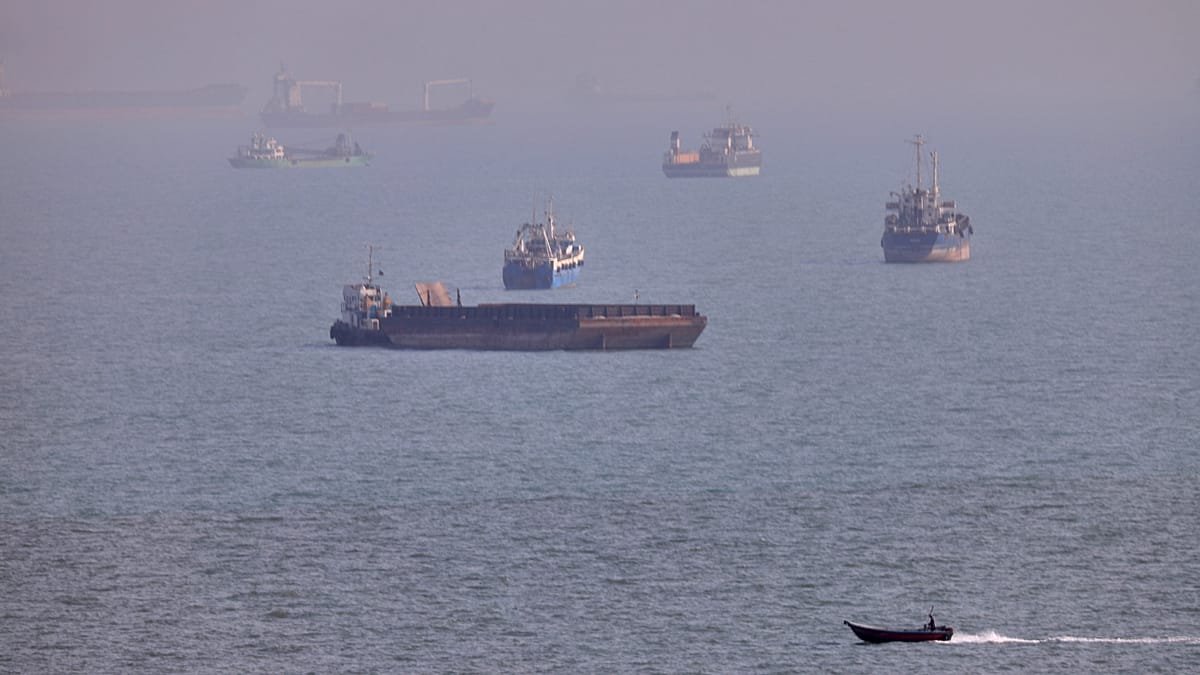
Five Months of War, One Blocked Waterway
Five months into a war that was supposed to have ended with a handshake in mid-June, the Strait of Hormuz remains the most dangerous choke point on Earth. The waterway that once carried roughly 20% of the world's oil, according to CNN, has been effectively closed since the opening salvos of this conflict in March 2026, producing what Bloomberg has called "the biggest oil supply shock in history."
The scale is hard to overstate. Brent crude breached $100 a barrel in March for the first time in nearly four years, shut-ins peaked at 10.8 million barrels per day, and the EIA projected a $109.73 average Brent price in the second quarter. The world has been paying for this standoff at every pump, every port, and every power plant that depends on Gulf crude.
Diplomacy, at least on paper, already happened. In mid-June, President Donald Trump and Iranian President Masoud Pezeshkian signed a 14-point memorandum of understanding, mediated by Pakistan, committing to an "immediate and permanent" end to military operations and laying out a framework to reopen the Strait. The US released the official text on June 17. And then, nothing: strikes continued, the Strait stayed shut. By early August, both sides had reverted to demands, denials, and dangerous signaling.
The Oman Gambit: New Lanes, Same Hostage Crisis
The most intriguing diplomatic development in weeks came on August 5, when Iran's Foreign Ministry spokesperson, Esmaeil Baqaei, announced that Tehran and Oman had finally agreed on the coordinates of new commercial shipping routes through the Strait of Hormuz. The negotiations took roughly two months. But here's the kicker: Iran is not presenting this as an opening. Tehran stressed that the agreement would not end the regional crisis, and that Washington was not involved.
Deputy Foreign Minister Hassan Qashqavi added that the decision is still pending a green light from "higher levels" — a deferral that tells you everything about where real power in this negotiation sits. Bloomberg reported that the proposed framework includes an outright ban on US and Israeli ships in the Strait. That is not a compromise. That is a demand dressed in diplomatic clothing.
The timing was deliberate. The announcement landed on the same day the Houthis claimed an attack on a Saudi oil tanker, and as Trump declared the reopening was coming "soon." Iran is signaling to Washington, to Riyadh, and to global shipping markets that it controls the timeline, the coordinates, and the terms.
Tehran's Shopping List: What Iran Demands Before the Strait Opens
If you want to know why the Strait has not reopened, look at the statement issued August 8 by Iran's Supreme National Security Council. Secretary Mohammad Bagher Zolghadr said the Strait will not open until the US "corrects its behavior." The phrase is vague; the list behind it is not.
Iran's demands, reported by the NYT, Guardian, Politico, and AP: lift the naval blockade of Iranian ports, withdraw US military forces from the area, "completely compensate" Iran for war damage, lift sanctions, and meet additional unspecified conditions. That is not a negotiating position. That is a capitulation list — the kind of terms you present when you believe time is on your side.
The US and Iran are not engaged in direct talks, and Tehran has said it will not start them while these conditions stand. By August 8-9, Tehran said it was nearing a final pact with Oman on shipping lanes — but the Americans must satisfy the other conditions first. In short: the waterway stays closed until Washington bends.
The Munitions Wars: Trump, Hegseth, and the Stockpile Fight
On the American side, the war's sustainability has become the story. Around midnight on August 6, Trump took to Truth Social to insist the US has "massive amounts of munitions," dismissing Reuters and CNN reporting that long-range missile stockpiles had been depleted to "dangerously low" levels. He went further on August 7, calling the leakers behind those reports "treasonous."
The Washington Post reported that Trump confronted Defense Secretary Pete Hegseth over the dwindling munitions — a confrontation the White House and the Pentagon both denied. But denial is cheap, and the numbers are stubborn. According to Al Jazeera, the Pentagon on August 9 urged faster weapons production amid the stockpile concerns. The US has replenished its interceptor inventory to somewhere between 234 and 278 units — but that stockpile remains at least 38% smaller than it was before the conflict began.
The Atlantic reported on August 6 that current and former US defense officials do not believe the US has enough long-range weapons, after five months of war, to also combat a threat in Asia. Read that carefully: not enough to fight Iran and simultaneously deter China. Tehran knows it. The Pentagon knows it. Insisting everything is fine will not speed up the production lines.
The Numbers Behind the Standoff
Let's put the stakes in hard numbers. Before the war, the Strait of Hormuz carried about 20% of the world's oil. The conflict's shut-ins peaked at 10.8 million barrels per day. The economic shockwave hit in March when Brent crossed $100 a barrel for the first time in nearly four years, and EIA projections had Brent averaging $109.73 in the second quarter.
Oil prices rose again in early trading Monday as traders weighed the mixed signals on a potential reopening. The market is pricing a binary outcome: either the Strait reopens and supply floods back, or it stays closed and the world keeps bleeding. There is no middle ground — which is why every statement from Tehran, every Truth Social post from Trump, and every shipping advisory from Oman moves the barrel price.
This is not an abstract geopolitical drama. It is the price of gasoline in Ohio, the cost of jet fuel in London, the electricity bill in Mumbai. Five months of war have shown this administration's economic stability depends on a waterway controlled by the Islamic Republic of Iran.
Economic Pressure vs. Military Strikes: Trump's Pivot
Monday brought a notable shift in Washington's approach. Al Jazeera reported that Trump has signaled a pivot to economic pressure rather than new military strikes to push Iran toward a deal. The logic is understandable: after five months of war, with munitions stockpiles down 38% and long-range weapons stretched thin against a potential Asian contingency, another round of strikes is a costly gamble.
But here is the uncomfortable question: what economic pressure is left to apply? Sanctions on Iran were already among the most comprehensive in the world before this war. The naval blockade is already in place. The Strait is already closed. Trump's pivot reads less like a new strategy and more like an acknowledgment that the military option has hit its limits.
Iran, meanwhile, is signaling patience. The Supreme National Security Council statement was issued through official channels and laid out conditions Washington cannot accept without surrendering its position in the Gulf. This is a regime that believes it is winning. And if oil prices keep climbing, that belief may not be entirely wrong.
The Human Cost: 16 Indian-Flagged Vessels and Counting
Behind the geopolitics, there are real people. At least 16 Indian-flagged vessels remain exposed across the Gulf, the Red Sea, and adjoining waters, according to India Today's August 6 report. Their crews are sitting in a war zone — vulnerable to strikes and to being caught in the crossfire of a conflict no one asked them to fight.
The Houthi claim of an attack on a Saudi oil tanker on August 5 is a reminder that this war has never been confined to the Strait itself. The Red Sea, the Gulf of Oman, the wider region — all of it is contested space now. Every commercial vessel moving through those waters is a potential target, and every crew is a potential casualty.
India's position is uniquely difficult: New Delhi maintains working relationships with both Washington and Tehran, and its ships are paying the price for a squeeze that is not of India's making. The 16 vessels are a daily reminder that this standoff's cost is measured in barrels of oil and in the lives of seafarers who just want to get home.
What to Watch Next
So where does this go from here? Watch three things. First, the Oman pact: if Iran's "higher levels" give final approval to the new shipping coordinates, we will see whether the framework actually excludes US and Israeli vessels as Bloomberg reported — and whether Washington accepts that exclusion to get oil moving again.
Second, watch the munitions numbers. The Pentagon's August 9 call for faster weapons production is an admission that the current pace is unsustainable. Interceptor inventories between 234 and 278 units, 38% below pre-war levels, do not support a war of attrition — and Iran knows it.
Third, watch the oil market. If Brent pushes hard against that $109 mark again, political pressure will mount on both sides in ways rhetoric alone cannot manage. Trump says the reopening is coming "soon." Iran says it will not open until the US "corrects its behavior." One of those statements is not connected to reality. The tragedy is that markets, seafarers, and consumers pay the price while we wait to find out which one it is.
By Jessica Ali, Staff WriterThis article was produced with AI-assisted research and editorial support. Reporting is based on sources cited in the article.
What's Your Reaction?
 Like
0
Like
0
 Dislike
0
Dislike
0
 Love
0
Love
0
 Funny
0
Funny
0
 Wow
0
Wow
0
 Sad
0
Sad
0
 Angry
0
Angry
0

Editor-in-Chief at Global1.News. Atlanta-based journalist who cuts through the BS and tells it like it is. Lead anchor, host, and the voice you hear when the spin stops and the truth starts.












Comments (0)