
Kamchatka Braces for Near-Total Internet Shutdown as Rostelecom Repairs Undersea Cable
Kamchatka's 280,000 residents face a near-total internet blackout starting Aug. 12 as state provider Rostelecom repairs the Sakhalin-Kamchatka undersea cable for up to four days. The shutdown is the latest and most sweeping example of Russia's wartime pattern of internet restrictions.
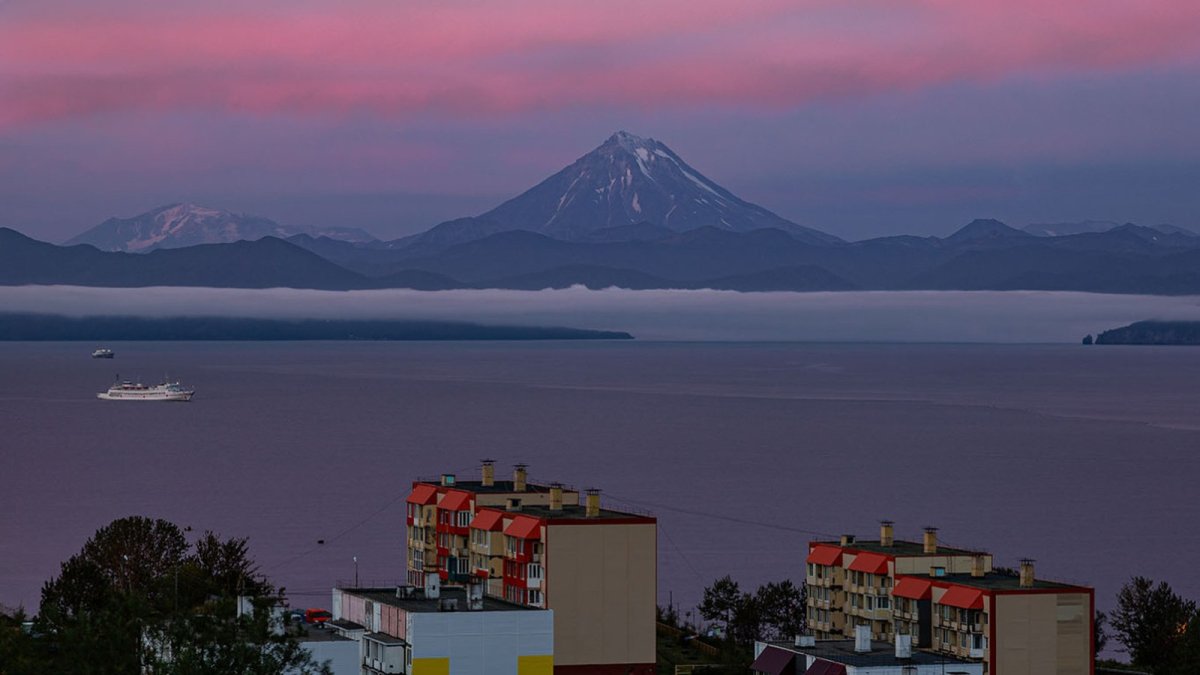
Authorities in Russia's far eastern Kamchatka Peninsula have told residents to prepare for a near-total internet blackout beginning Wednesday, as state telecommunications provider Rostelecom carries out up to four days of repairs on the undersea cable that is the region's only digital lifeline. The shutdown, announced Monday by the regional government, is the most sweeping example yet of how routine internet disruption has become in wartime Russia.
Kamchatka Braces for Near-Total Internet Shutdown as Rostelecom Repairs Undersea Cable
PETROPAVLOVSK-KAMCHATSKY, Russia — Starting at midnight local time on Wednesday (Aug. 12), the 280,000 residents of this remote volcanic peninsula will lose access to mobile and home internet for up to four days, "weather permitting," the regional government said. The outage will mark the first full-scale test of how a Russian region copes when its digital connection to the outside world is severed entirely.
The Announcement
In a statement released Monday, Kamchatka's regional government said Rostelecom, Russia's state-owned telecommunications provider, would carry out repairs on the undersea fiber-optic cable linking the peninsula to the mainland. "During this period, mobile and home internet will be unavailable. Messaging apps, social media and online services will not work," the government said.
The statement offered a partial reassurance: standard voice calls, SMS text messages, television broadcasts and emergency services will remain functional. Hospitals, gas stations, supermarkets and ATMs are to be switched to backup satellite connections. Residents were advised to withdraw cash in advance and to rely on offline resources to reduce their dependence on internet-enabled services.
This is not the first time Kamchatka has been warned of an impending blackout. The maintenance was originally scheduled for September of last year, when regional authorities announced that "large-scale" work on the Sakhalin-Kamchatka line would require a regionwide outage of at least five days. That work was postponed — and now, nearly a year later, the repairs have finally arrived.
A Peninsula Cut Off by Geography
Kamchatka's predicament is shaped by its geography. The peninsula, famed for its volcanoes and salmon rivers, has no overland road or rail connection to the Russian mainland. The Sakhalin-Kamchatka submarine cable is its primary fixed-line link to the outside world — a vulnerability that long predates the current era. The cable's predecessor dates to the Soviet era, and the region has periodically suffered connectivity failures when the undersea link has been damaged.
That history makes the coming outage a reminder of how fragile the region's digital infrastructure remains. In September of last year, the Kamchatka region's Digital Ministry separately reported cable damage further inland that disrupted service in four of Kamchatka's 11 districts — a foretaste of the broader vulnerability now being addressed.
A Postponed Repair, Renewed Urgency
The September 2025 announcement framed the work on the same Sakhalin-Kamchatka line as urgent upgrades to land-based infrastructure, intended to prevent longer outages if the cable erodes or is damaged. At the time, Yulia Morozova, head of the regional government, sought to calm residents' anxieties about the planned five-day disruption. "Residents won't be left without essential food even if they forget to withdraw cash," Morozova said.
The message this week is more sober. The regional government's advice to withdraw cash and prepare for the shutdown suggests that authorities themselves are uncertain how smoothly backup systems will function under the strain of a full regional blackout.
Part of a Nationwide Pattern
The Kamchatka outage cannot be understood in isolation. Internet restrictions in Russia began in May 2025 and have since become a regular feature of daily life across the country. According to published records, there were 69 outages in May of last year; by June that figure had jumped to 655, and in July it rose to 2,099 — more shutdowns than were recorded worldwide for the entire year.
Almost 80 percent of Russia's territory has been at least temporarily without mobile internet since the restrictions began. The first regional shutdowns came on the eve of Victory Day in May 2025, when mobile communications were unavailable in more than 40 regions.
Government agencies have cited the protection of civilian networks from Ukrainian drones as the reason for the restrictions. In June of last year, Ukraine launched Operation Spiderweb, a massive drone attack on Russian air bases using remotely operated drones guided via mobile networks. Authorities say that shutting down mobile internet prevents drones from receiving targeting coordinates through civilian infrastructure.
But the geographic scope of the shutdowns has raised questions. Outages have hit regions far beyond the reach of Ukrainian drones, including Omsk, which experienced serious disruption from June 6 onward — nearly the entire month — despite being more than 2,500 kilometers from the Ukrainian border. Krasnoyarsk Krai, the Sakha Republic and Chukotka Autonomous Okrug have all reported outages. The seemingly random nature of the disruptions has made it difficult to identify consistent patterns or a clear logic behind the authorities' decisions.
'Cheburnet' and the New Russian Internet
For ordinary Russians, the cumulative effect of these shutdowns has produced a new digital reality, one that has acquired its own colloquial name: "Cheburnet," a portmanteau of Cheburashka, the beloved Soviet cartoon character, and "internet."
Users across the country have reported that during restrictions they could access only Russian resources, while foreign platforms using content delivery networks such as Cloudflare and Amazon stopped loading. The impact has been felt in daily life: taxis stopped working, banking apps became unusable, food ordering and online marketplaces went dark, and electric train ticket inspectors temporarily accepted only cash.
For Kamchatka, the coming days will be a stress test of how well a modern Russian region can function without the internet — and without the foreign platforms that have become embedded in everyday routines.
A Strategically Sensitive Location
Kamchatka's strategic importance adds a layer of complexity to the outage. The peninsula hosts significant Russian Pacific Fleet facilities, including a major nuclear submarine base near Vilyuchinsk, in the Rybachiy area. This has long made the region a sensitive military zone, and it is reasonable to interpret the shutdown through that lens as well.
When authorities restrict internet access in a region that hosts critical naval assets, the stated rationale of drone defense and the practical effect of information control become difficult to separate. This could indicate that the Kremlin sees a strategic benefit in habituating remote regions to periodic disconnection — a dry run, perhaps, for a more tightly controlled digital environment nationwide.
The Human and Economic Cost
The economic damage of the shutdowns has been substantial. According to TechRadar estimates for July, internet outages cost the Russian economy approximately 26 billion rubles — roughly $290 million — in a single month. The human cost is harder to quantify but no less real.
In the Irkutsk region's Usolsky District, home to one of the air bases targeted in Operation Spiderweb, residents have struggled without reliable internet or phone service since the June 1 strike. "To call relatives or an ambulance, we have to walk through the streets just to find a spot where the phone stops crackling," one woman wrote in a local Telegram group. Even card payments no longer worked.
Human Rights Watch has described the situation as another step toward control and isolation, creating what it calls a "piecemeal internet" under complete state surveillance. The organization has drawn comparisons with China's "Great Firewall" model — a framework in which the state decides what citizens may see, when they may see it, and at what cost.
Data from the technical support project Na Svyazi confirmed that more than half of Russia's regions were regularly affected by late June of last year. In May and June combined, Nizhny Novgorod experienced 21 days of confirmed local outages, while Saratov, Tula, Omsk and Rostov each recorded 20 days.
Moscow's Digital Sovereignty Agenda
The shutdowns are taking place alongside a parallel push to build a more self-sufficient Russian internet. On June 24, 2025, President Vladimir Putin signed a decree establishing a national messenger called Max; the service registered its first million users within a week.
This year, seven Russian banks moved to TLS certificates signed by a government-run certificate authority, requiring users to trust the state's infrastructure — a move that also gives the government the technical ability to intercept or impersonate websites. Technology experts have noted that authorities have switched to widespread use of Deep Packet Inspection technology, which allows network operators to examine and filter traffic in real time. By the end of 2024, the system had been tested several times in exercises involving disconnection from the global internet, as confirmed by NetBlocks and Access Now.
Seen together, these measures suggest a deliberate strategy: the periodic shutdowns accustom the population to disruption, while the construction of state-controlled alternatives — Max, the government certificate authority, and the expansion of Deep Packet Inspection — builds the infrastructure for a permanently more restricted internet. What began as a wartime measure may be evolving into a permanent feature of Russian digital life.
What Comes Next
For Kamchatka's residents, the immediate question is simpler: how to manage without the internet for up to four days, beginning Wednesday. The regional government has advised withdrawing cash and relying on offline resources. Voice calls and SMS will continue to work; hospitals, supermarkets and ATMs will have backup satellite links. Whether those systems hold under the strain of a full blackout remains to be seen.
Rostelecom's repairs are scheduled to last up to four days, "weather permitting" — a caveat that reflects the harsh conditions of the North Pacific, where the cable runs beneath some of the world's stormiest waters. If the past year is any guide, however, the restoration of connectivity will not mean the restoration of normal service. For much of Russia, the internet has become something that can be switched off. Kamchatka is about to learn what that means.
By Irina Volkov, Staff Writer
This article was produced with AI-assisted research and editorial support. Sources: The Moscow Times, Meduza, Wikipedia.
What's Your Reaction?
 Like
0
Like
0
 Dislike
0
Dislike
0
 Love
0
Love
0
 Funny
0
Funny
0
 Wow
0
Wow
0
 Sad
0
Sad
0
 Angry
0
Angry
0

Russia/Eastern Europe Correspondent at Global1.News. Covering Russian politics, energy, security, and the shifting dynamics of the post-Soviet space. Provides clear-eyed analysis on one of the world's most opaque regions.















Comments (0)