
John Healey tells ministers to prepare for budget cuts to finance new Burnham pledges
The first real test of Andy Burnham's premiership has arrived not in the form of a backbench rebellion or a Westminster ambush, but in the cold, unforgiving arithmetic of the Treasury.
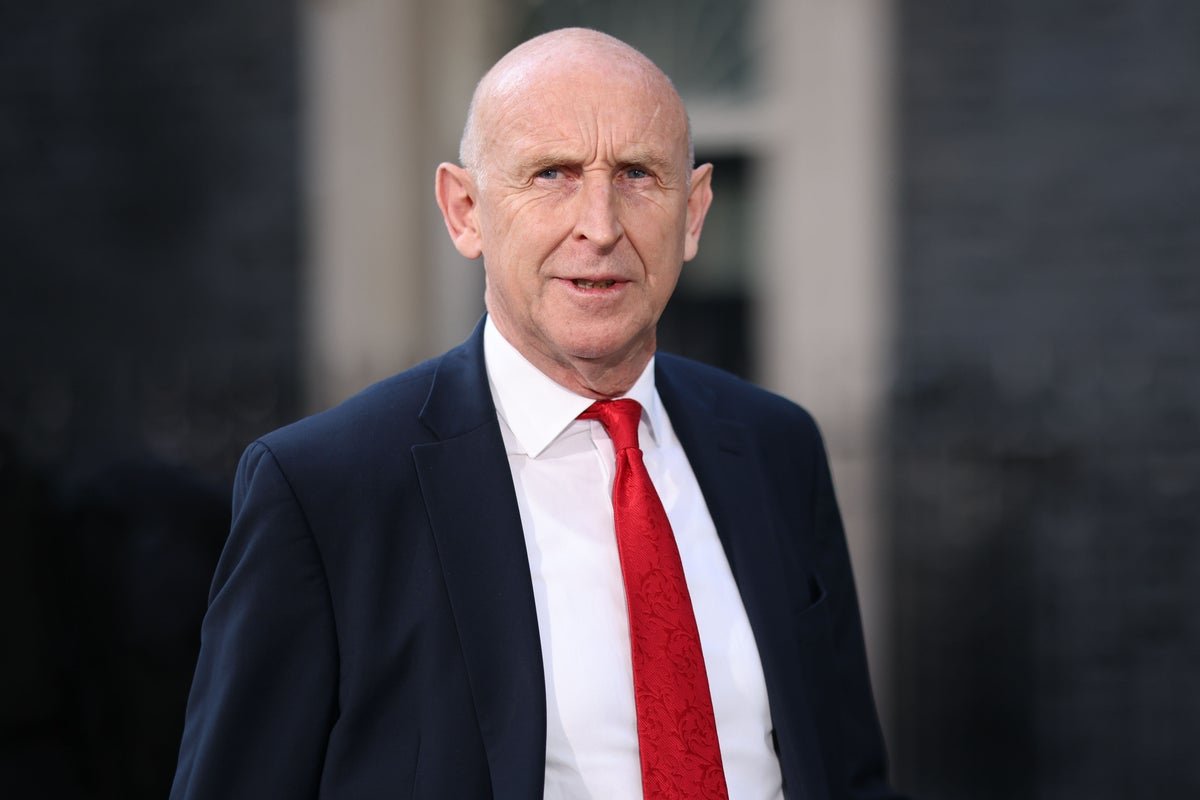
The first real test of Andy Burnham's premiership has arrived not in the form of a backbench rebellion or a Westminster ambush, but in the cold, unforgiving arithmetic of the Treasury. Chancellor John Healey has told Cabinet ministers to brace for spending cuts to fund the Prime Minister's early policy blitz, in a joint letter with Mr Burnham that delivers a stark message: there is no new money.
Healey warns Cabinet of spending cuts as Burnham's cost-of-living pledges face fiscal reality check
Chancellor's letter lays down the law
The joint letter from the Chancellor and the Prime Minister, dispatched to every member of the Cabinet, is being interpreted in Whitehall as a deliberate attempt to reset expectations after a fortnight of eye-catching announcements. Mr Healey, who took the keys to Number 11 Downing Street just over a week ago, is understood to have been explicit: the new policy programme will be funded through reprioritisation, not additional borrowing or tax raids.
The timing is significant. On Friday, Mr Healey confirmed his first Budget will be delivered on October 28, a date that will now serve as the moment of reckoning for a government that has promised much in its opening days. The Chancellor has pledged that the fiscal event will be "built on fiscal discipline" and will "spread money and power" out of Westminster — language carefully chosen to echo the Prime Minister's own mantra of devolution and localism.
But behind the rhetoric lies a familiar Westminster tension. Mr Burnham's ascent to the premiership on July 20, following Sir Keir Starmer's departure and the King's invitation to form a government, was accompanied by a flurry of commitments that carry a price tag. The question now is not whether those commitments survive contact with the Treasury's spreadsheets, but which departments will be asked to foot the bill.
The cost of the 'cost of living government'
At his first Cabinet meeting, Mr Burnham described his administration as a "cost of living government" and told ministers they must be "prepared to make difficult decisions". That phrase has taken on a sharper edge in recent days as the scale of the spending commitments has become clear.
The centrepiece of the early programme is the removal of VAT from household electricity bills, cutting the rate from 5 per cent to zero for six months from October. The Treasury estimates this will save the average household around £45 a year — a modest sum, but one that carries significant political symbolism as energy costs rise heading into winter. The measure will cost the Exchequer hundreds of millions in forgone revenue at a time when the public finances are already stretched.
Then there is the pledge to cut business rates by 20 per cent for pubs, bars and nightclubs — a move designed to shore up the high street and reward the hospitality sector that has struggled through years of inflation and changing consumer habits. The offset, however, is a proposed increase in rates on large warehouses operated by online retail giants such as Amazon. That policy may play well in the Commons, but it represents a direct tax on the logistics sector that has become the backbone of modern retail.
Add to that Mr Burnham's commitment to maintain the state pension "triple lock" — a promise that, while popular with older voters, carries a growing fiscal burden as the population ages. The Office for Budget Responsibility has repeatedly warned that the triple lock is one of the most expensive commitments in the entire welfare state.
Defence spending row lingers over the Treasury
Mr Healey's position is complicated by the circumstances of his appointment. According to reporting from The Telegraph, the Chancellor accepted the job despite failing to secure a pledge from Mr Burnham to raise defence spending to 3 per cent of GDP by the end of the decade. That failure has not gone unnoticed in military circles or among Conservative backbenchers, who see it as evidence that the new Prime Minister's priorities lie elsewhere.
The defence question is not merely academic. With conflict continuing in Ukraine and NATO allies under pressure to increase their contributions, the UK's commitment to 2.5 per cent of GDP on defence — the current baseline — is already seen by some as insufficient. A failure to move towards 3 per cent will be portrayed by the opposition as a weakening of Britain's standing on the world stage.
For Mr Healey, the defence row illustrates the fundamental challenge of his new role: he must balance the Prime Minister's domestic agenda against the UK's international obligations, all while maintaining the credibility of the fiscal rules that Labour has pledged to uphold. The Chancellor's allies insist he is committed to those rules, and that the October Budget will demonstrate that commitment in full.

Stride demands answers on 'unfunded commitments'
The opposition has been quick to scent blood. Shadow Chancellor Sir Mel Stride has written to Mr Healey demanding he set out precisely how the Prime Minister's "unfunded spending commitments" will be paid for. In a piece published earlier this week for Conservative Home, Sir Mel warned that Mr Burnham was "in danger of becoming another Labour Prime Minister who pulls the tax and borrowing levers at the first opportunity".
The Conservative attack line is clear: this is a government that promised fiscal discipline but is already reaching for the chequebook. Sir Mel's letter is designed to force the Treasury to publish its calculations ahead of the Budget, potentially exposing gaps between the promises made and the money available.
Labour's response, echoed by the Chancellor on Friday, is that the government will stick to its fiscal rules and provide businesses and households with "stability for the future". The party's strategists believe the public is more concerned with the cost of living than with the finer points of fiscal arithmetic, and that the early announcements on energy bills and business rates will resonate more strongly than any Treasury spreadsheet.
What this means for households and the Treasury
For ordinary households, the immediate impact of the Chancellor's warning is likely to be minimal — the VAT cut on electricity bills will arrive in October regardless of any internal Treasury negotiations. But the longer-term picture is more uncertain. If Mr Healey is serious about funding the new pledges through spending cuts, the question becomes which departments will bear the brunt.
Whitehall insiders suggest the usual suspects are already being examined: back-office functions across Whitehall, quango budgets, and the sort of administrative spending that rarely makes headlines but adds up quickly. The NHS, schools and defence are likely to be protected, given their political sensitivity, but other areas — local government funding, transport, culture — could face real-terms reductions.
The timing could hardly be more challenging. The NHS is under intense pressure heading into winter, with waiting lists still elevated and industrial action simmering in parts of the health service. Local councils are already struggling to balance their books, with many warning of effective bankruptcy without additional central government support. And energy costs, while lower than the peaks of 2022 and 2023, remain significantly above pre-crisis levels.
Burnham's political gamble
For Mr Burnham, the coming months represent a high-stakes gamble. His premiership began with a burst of activity designed to signal a break from the Starmer era and to cement his reputation as a leader who understands the cost of living pressures facing ordinary families. The VAT cut and the business rates pledge were carefully chosen to appeal to voters who feel left behind by Westminster politics.
But the Chancellor's letter is a reminder that governing is about choices, and that every promise has a price. Mr Burnham's allies insist he is prepared to make those choices, and that the "difficult decisions" he referenced at his first Cabinet meeting will be taken in the national interest. His critics, meanwhile, see a Prime Minister who has over-promised and will soon be forced to under-deliver.
The October Budget will be the moment of truth. If Mr Healey can present a credible plan that funds the new pledges without breaking the fiscal rules or resorting to tax rises, the government will have navigated its first major test. If not, the "cost of living government" may find itself paying a different kind of price — in political capital, and perhaps at the ballot box.
For now, the message from the Treasury is clear: the era of unfunded announcements is over. Whether that message survives contact with the Prime Minister's political instincts remains to be seen.
By Erica Thornton, Staff Writer
This article was produced with AI-assisted research and editorial support. Reporting is based on sources cited in the article.
What's Your Reaction?
 Like
0
Like
0
 Dislike
0
Dislike
0
 Love
0
Love
0
 Funny
0
Funny
0
 Wow
0
Wow
0
 Sad
0
Sad
0
 Angry
0
Angry
0

US Politics and Policy Correspondent at Global1.News. Based in Washington DC, covering American politics, policy, elections, and the courts. Knows how the system works and tells you what it actually means.













Comments (0)