
Cyclist likely bitten by several dogs and died from throat injuries, source says
The tragic death of a young cyclist in Hong Kong’s New Territories has reignited public concern over stray‑dog management, forensic capability, and road safety for vulnerable road users.
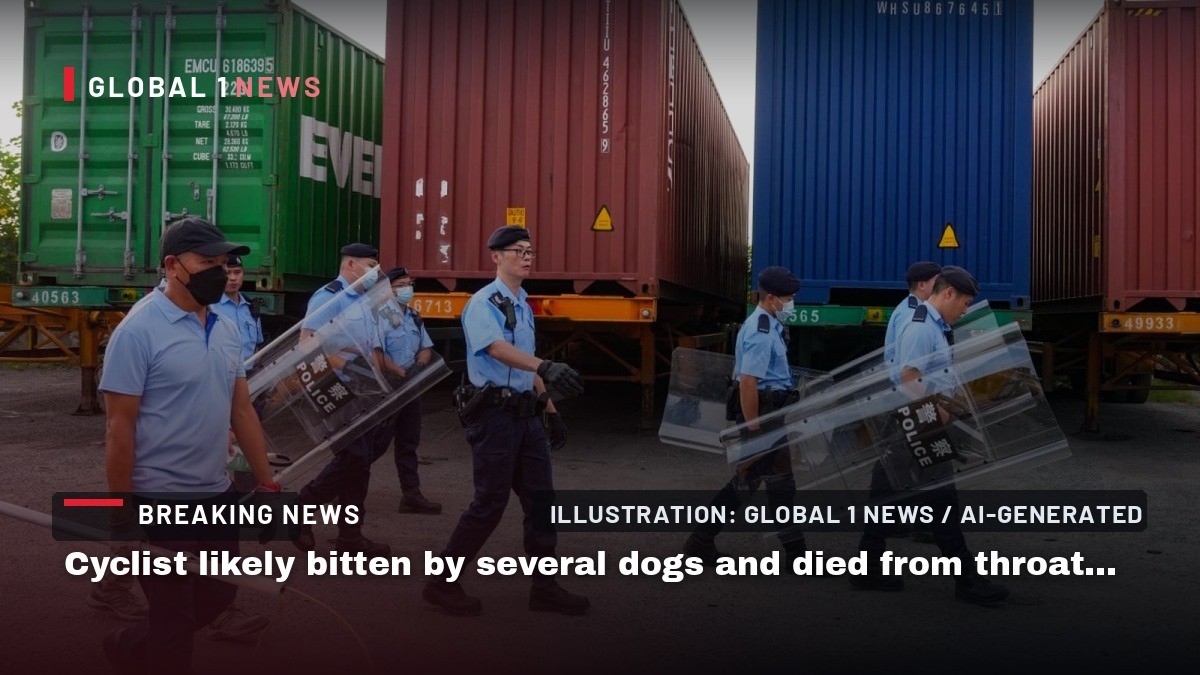
The tragic death of a young cyclist in Hong Kong’s New Territories has reignited public concern over stray‑dog management, forensic capability, and road safety for vulnerable road users. According to the South China Morning Post, the victim was identified as Eva Chu, a resident of the Fairview Park estate, who was discovered on Pok Wai South Road near Nam Sang Wai in the early hours of 20 September. CCTV footage captured a disturbing scene in which three dogs pursued the 27‑year‑old woman as she rode a shared bicycle, ultimately leading to fatal injuries to her throat. While the incident is still under investigation, forensic pathologists have warned that pinpointing the exact animals involved may prove impossible, underscoring the complexities of modern forensic work in urban settings.
Chronology of the incident
The timeline, as reconstructed from the limited public record, begins with the discovery of Chu’s body at approximately 12.42 am on 20 September, near a Drainage Services Department sewage pumping station. The location is a relatively remote stretch of road that runs alongside wetlands and agricultural fields, an area where shared‑bicycle usage has increased in recent years due to government encouragement of low‑carbon transport. The South China Morning Post reports that CCTV footage from a nearby camera captured three dogs chasing the cyclist for roughly 30 metres before she collapsed near the drainage facility.
Investigators have focused on the sequence of events captured on video, noting that the dogs appeared to target the cyclist’s neck area. The forensic assessment, as conveyed by the source, indicates that the fatal injuries were consistent with multiple bites to the throat. However, the pathologists caution that, given the chaotic nature of the chase and the lack of clear visual identification of the animals, establishing which specific dogs were responsible may remain unresolved.
Forensic challenges in animal‑attack cases
Hong Kong’s forensic pathology service, tasked with determining cause of death in a wide range of circumstances, faces particular difficulties when dealing with animal‑related injuries. Bite marks can be ambiguous, especially when multiple animals are involved, and the depth and angle of wounds may not clearly distinguish one animal’s dentition from another’s. The source notes that forensic pathologists fear it may ultimately be impossible to determine the exact animals involved, reflecting a broader limitation in forensic science when applied to wildlife or stray‑animal incidents.
Beyond the technical aspects, the case highlights a procedural gap: the lack of a systematic method for collecting DNA or other biological evidence from stray dogs in urban environments. While forensic teams can retrieve trace evidence from a crime scene, the rapid movement of animals and the public nature of the area make it difficult to secure reliable samples before they are lost or contaminated.
Public safety and shared‑bicycle usage
The incident occurs against a backdrop of expanding shared‑bicycle programs across Hong Kong, which aim to reduce traffic congestion and carbon emissions. While these programs have been praised for their convenience, they also raise safety concerns, particularly in less‑populated corridors where cyclists may encounter wildlife, stray animals, or agricultural activities. The stretch of Pok Wai South Road, near Nam Sang Wai, is representative of such peripheral routes that are increasingly used by cyclists seeking quieter alternatives to busy city streets.
Local authorities have previously issued guidance on cycling safety, emphasizing the need for helmets, reflective gear, and awareness of surrounding hazards. However, the presence of stray dogs—an issue that has persisted in certain districts—adds a layer of risk that is not easily mitigated by standard cycling precautions. The fatal outcome for Chu underscores the need for a more integrated approach to road safety that considers both human and animal factors.
Stray‑dog management in Hong Kong
Hong Kong has long grappled with the challenge of stray dogs, particularly in the New Territories where open spaces intersect with residential and agricultural land. Animal welfare groups have called for more humane capture‑and‑neuter programs, while some residents express frustration over repeated incidents of dog attacks. The recent case, involving multiple dogs in a coordinated chase, may intensify public debate over the adequacy of current control measures.
Authorities have historically relied on a combination of municipal animal control officers and volunteer groups to manage stray populations. Yet the incident suggests that existing strategies may not be sufficient to prevent dangerous encounters, especially in areas where stray dogs congregate near water sources or waste facilities, such as the drainage pumping station mentioned in the source material.
Legal implications and liability
From a legal perspective, the death of Eva Chu raises questions about liability and the scope of responsibility for both public agencies and private landowners. While the source does not detail any ongoing legal actions, similar cases in Hong Kong have seen families pursue claims against municipal bodies for alleged negligence in managing stray‑animal risks. The determination of liability often hinges on whether the authorities had prior knowledge of a heightened risk in a specific location and whether reasonable preventive measures were taken.
Furthermore, the involvement of a shared‑bicycle operator could become a point of contention. Operators typically provide the bicycles but do not control the routes taken by users. Nevertheless, they may face scrutiny over the adequacy of safety information provided to riders, especially regarding known hazards such as stray‑dog activity in certain districts.
Community response and mourning
The death of a young resident has resonated deeply within the Fairview Park community and the broader public. Residents have expressed shock and sorrow, with many recalling Chu as an active member of local cycling groups. Social media platforms have seen an outpouring of condolences, as well as calls for stronger action against stray‑dog threats. While the source material does not include direct quotations, the tone of the coverage suggests a community grappling with grief and a desire for preventive change.
Local NGOs and animal‑welfare advocates have also weighed in, urging a balanced approach that protects both human safety and animal rights. They argue that a purely punitive response to stray dogs could exacerbate the problem, advocating instead for comprehensive vaccination, sterilisation, and adoption programs that address the root causes of stray populations.
Future outlook and policy considerations
Looking ahead, the incident may serve as a catalyst for policy revisions concerning stray‑dog control, urban wildlife management, and cyclist safety. Government agencies could consider enhancing surveillance in high‑risk zones, deploying rapid‑response animal control units, and integrating animal‑related risk assessments into urban planning. Additionally, the forensic community may seek to develop more refined techniques for distinguishing bite patterns, potentially collaborating with veterinary experts to improve evidentiary standards.
For cyclists, the tragedy underscores the importance of heightened vigilance, especially when traversing less‑populated routes. Shared‑bicycle providers might explore partnerships with local authorities to disseminate real‑time alerts about stray‑animal sightings, thereby empowering riders with timely information. Ultimately, the convergence of public safety, animal welfare, and forensic capability will shape how Hong Kong addresses similar incidents in the future, striving to prevent another loss like that of Eva Chu.
This article was produced with AI-assisted research and editorial support. Reporting is based on the source material cited below. Sources: South China Morning Post; scmp.com; Global1.News (29 September 2026).
By Kenji Tanaka, Staff Writer
What's Your Reaction?
 Like
0
Like
0
 Dislike
0
Dislike
0
 Love
0
Love
0
 Funny
0
Funny
0
 Wow
0
Wow
0
 Sad
0
Sad
0
 Angry
0
Angry
0

Japan Correspondent at Global1.News. Tokyo-based voice covering Japanese politics, technology, economy, and culture. Tracks the intersection of tradition and innovation in one of the world's most dynamic societies.















Comments (0)