
Gurkhas Deployed to South Wales to Help Fight Wildfires
Gurkhas and Royal Engineers have been deployed to South Wales to support firefighters battling significant wildfires, with around 100 military personnel on the ground and 100 more expected. Crews have worked 10-11 hour shifts amid tinderbox conditions.
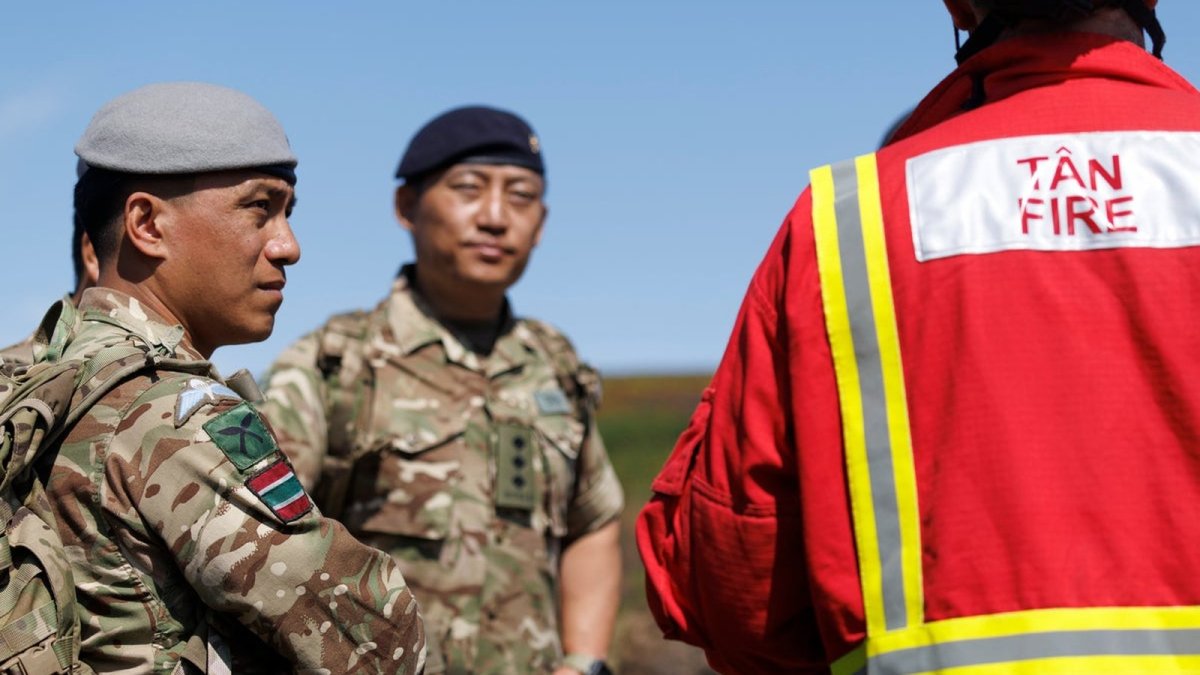
The British Army has been mobilised to South Wales, with Gurkha regiments deployed to support firefighters battling what officials have described as "significant wildfire activity" amid "tinderbox conditions" across much of the country. The intervention, confirmed by South Wales Fire and Rescue Service (SWFRS) on Sunday, marks a serious escalation in the response to a crisis that has stretched emergency services to their limits.
Around 100 military personnel, including members of the Queen's Own Gurkha Logistic Regiment (QOGLR) and 22 Royal Engineers, have been deployed to provide logistical and operational support as crews tackle ten large fires across the region. The Ministry of Defence confirmed on Saturday that a further 100 personnel are expected to follow in the coming days, underscoring the severity of the situation facing the principality.
Military deployment: A logistical lifeline for South Wales
The deployment, which began over the weekend, sees soldiers working alongside SWFRS crews who have been fighting blazes on mountainsides in shifts lasting ten to eleven hours. The military support is designed to relieve frontline firefighters of non-combat duties, allowing them to focus their efforts on containing the flames that have swept across the region's parched landscape.
Deputy Chief Fire Officer Adam Openshaw moved to reassure the public on Sunday, stating: "The combined efforts of everyone involved in this major incident continue to play a vital role in keeping people safe during these exceptional circumstances." He added: "We know this is a challenging and worrying time for many people. Please be assured that we remain committed to protecting our communities and keeping the people of South Wales safe."
The scale of the operation became clear on Saturday evening when SWFRS revealed it had already received 736 calls, compared with an average of around 300. The service has urged the public only to call 999 if there is a new emergency to report, as control room operators struggle to manage the volume of inquiries.
On the ground: Water distribution and terrain access
The role of the military personnel is multifaceted, with a particular focus on water distribution and logistics. According to the Ministry of Defence, soldiers have been transporting water from distant sources to create mobile water reservoirs in key locations, ensuring that firefighters have a reliable supply in areas where hydrants are either absent or inadequate.
Beyond water, the troops are assisting with the movement of equipment, supplies and personnel to ensure resources are positioned correctly across the affected areas. This logistical backbone is considered critical to sustaining the firefighting effort, which has been hampered by the difficult terrain of the South Wales valleys.
Military teams have also been helping emergency services access remote and difficult terrain, improving their ability to respond to the ongoing fires. The use of 22 Royal Engineers is particularly significant in this regard, as their expertise in field engineering and route clearance enables firefighters to reach areas that would otherwise be inaccessible to their vehicles and equipment.
The human cost: Firefighters on the frontline
While the military deployment provides welcome relief, the strain on firefighters has been immense. Gareth Tovey, Fire Brigades Union executive council member for Wales, painted a stark picture of conditions on the ground, revealing that crews have been working ten- or eleven-hour shifts on mountainsides without breaks or access to toilets, eating meals "covered in soot".
The physical demands of fighting wildfires in such conditions cannot be overstated. Firefighters are not only battling the flames but also the heat, the smoke and the exhaustion that comes from sustained physical exertion in challenging environments. The lack of basic amenities, such as toilet facilities and proper rest areas, adds to the hardship faced by crews who are working around the clock to protect communities.
Tovey's comments highlight the human cost of the crisis, which has seen firefighters from across the UK travel to South Wales to support their colleagues. SWFRS confirmed on Sunday that it was responding to the situation with the support of other services from across the country, a testament to the solidarity of the UK's firefighting community in times of crisis.
A 200-year tradition: The Queen's Own Gurkha Logistic Regiment
The deployment of the Queen's Own Gurkha Logistic Regiment carries particular significance, representing as it does a 200-year military tradition that has seen Nepal's soldiers fight alongside the British Army. The QOGLR is a unit of the Royal Logistic Corps composed of Nepalese Gurkhas and British officers, a unique formation that embodies the enduring bond between Britain and Nepal.
Gurkhas have served in the British Army since the early 19th century, earning a fearsome reputation for their bravery, discipline and loyalty. Their deployment to South Wales is a reminder that this tradition extends beyond the battlefield to include support for domestic emergencies, with the regiment's soldiers bringing their renowned work ethic and logistical expertise to bear on the wildfire crisis.
The choice of the QOGLR for this operation is no accident. The regiment's primary role is to provide logistic support to the British Army, including the movement of supplies, fuel and ammunition. This expertise translates directly to the civilian emergency context, where the efficient distribution of water and equipment is critical to the success of firefighting operations.
National context: A country on high alert
The South Wales deployment comes against a backdrop of national concern about wildfire risk. On Friday evening, millions of people in England and Wales received an alert on their mobile devices warning them of a "very high risk of wildfires nationally". The alert marked a significant step in the government's efforts to communicate the severity of the situation.
Prime Minister Andy Burnham has described Britain as a "tinderbox", a stark assessment that has been borne out by events on the ground. In a separate incident earlier this week, 19 homes were lost to wildfires in the West Midlands, highlighting the destructive potential of the blazes that have swept across the country during the current heatwave.
A temporary ban on disposable barbecues has been put in place in an effort to reduce the risk of accidental fires, but the underlying conditions remain dangerous. The lack of rain has left vegetation across much of the country dangerously dry, creating the perfect conditions for fires to start and spread rapidly.
What happens next: Risk remains despite easing temperatures
While temperatures are expected to ease in the coming days, the risk of wildfires in South Wales remains high due to the lack of rain. The Met Office has warned that another heatwave could hit the UK in September, following sweltering temperatures that have already reached 38C in parts of the country this summer.
The immediate outlook, however, offers some cause for cautious optimism. The easing of temperatures should reduce the intensity of the fires and give firefighters a better chance of bringing them under control. The arrival of a further 100 military personnel will also bolster the response, providing additional capacity for logistics and support operations.
For the people of South Wales, the coming days will be critical. The ten unitary authority areas covered by SWFRS — Bridgend, Merthyr Tydfil, Rhondda Cynon Taf, Cardiff, Vale of Glamorgan, Caerphilly, Monmouthshire, Newport, Blaenau Gwent and Torfaen — remain on high alert, with residents urged to remain vigilant and report any signs of fire immediately.
The deployment of the military is a clear signal that the government and emergency services are taking the situation seriously. But as Deputy Chief Fire Officer Openshaw acknowledged, these are "exceptional circumstances" that require a sustained and coordinated response. The coming days will test the resilience of the firefighting effort, the effectiveness of the military support, and the patience of the communities caught in the path of the flames.
For now, the focus remains on containing the fires and protecting lives and property. The Gurkhas, with their 200-year tradition of service, are playing their part in that effort, a small but significant chapter in a long history of British military support for the civilian population in times of crisis.
This article was produced with AI-assisted research and editorial support. Sources: The Independent.
By Erica Thornton, Staff Writer
What's Your Reaction?
 Like
0
Like
0
 Dislike
0
Dislike
0
 Love
0
Love
0
 Funny
0
Funny
0
 Wow
0
Wow
0
 Sad
0
Sad
0
 Angry
0
Angry
0

US Politics and Policy Correspondent at Global1.News. Based in Washington DC, covering American politics, policy, elections, and the courts. Knows how the system works and tells you what it actually means.











Comments (0)