
Hungary Opens Its Agent Files After 36 Years, Then Admits It Named the Wrong Man
Hungary has published tens of thousands of names from communist-era secret police records on a public database, 36 years after the 1990 transition - then apologised within a day to a former deputy speaker listed by an IT error.
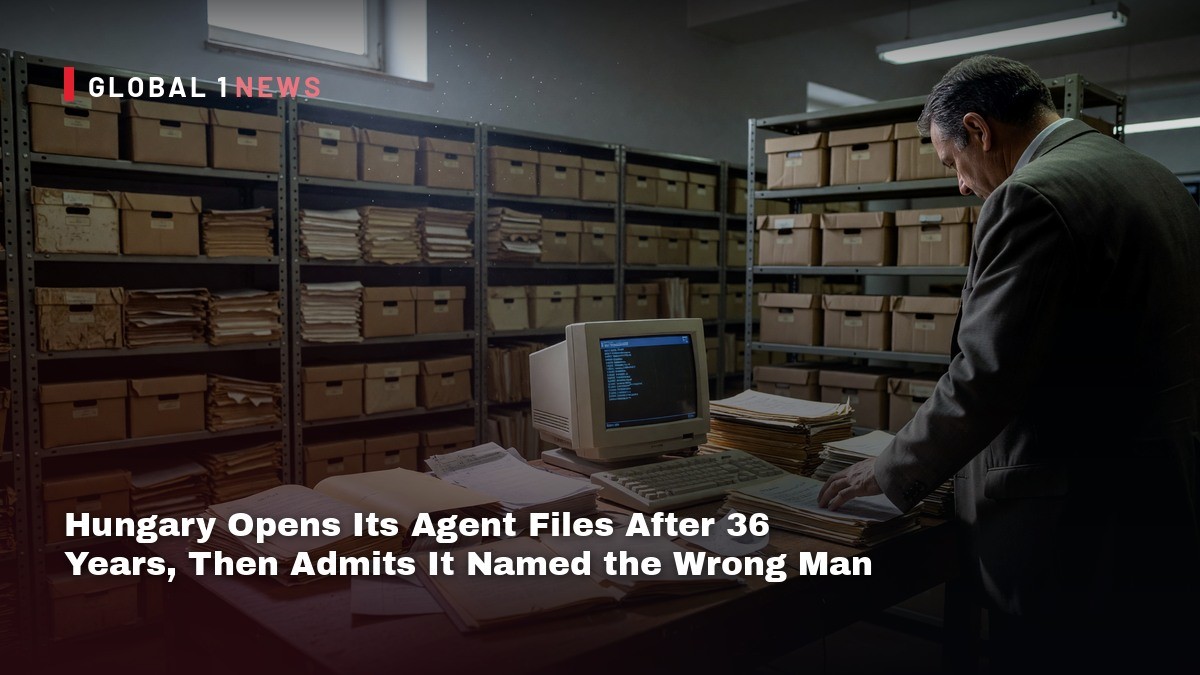
Hungary Opens Its Agent Files After 36 Years, Then Admits It Named the Wrong Man
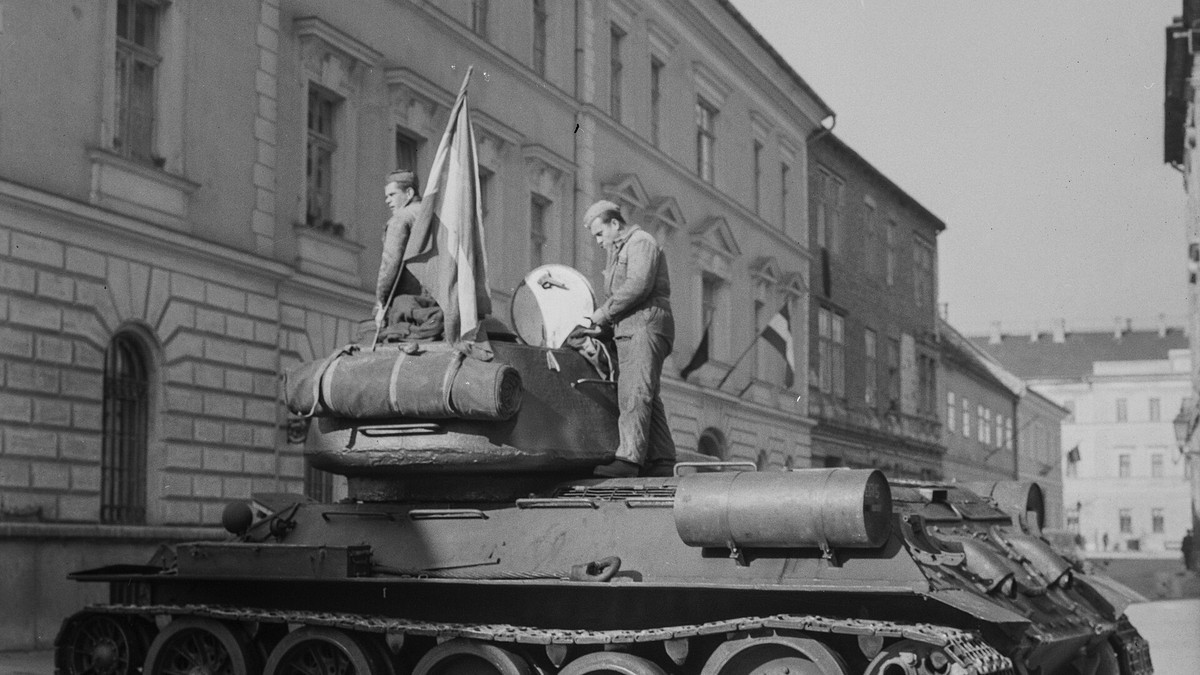
Budapest, Hungary — The database went live on the 70th anniversary of the day Soviet tanks rolled into this city to kill a revolution. By Thursday morning, the men who built it were issuing a correction.
A Debt Paid on the Anniversary of the Tanks
The date was not an accident. On 4 November 1956, Soviet armour entered Budapest to crush a revolution that had lasted barely two weeks. Between 2,500 and 3,000 Hungarians were killed in the suppression, a toll cited by TVP World.
Seventy years later to the day, Prime Minister Péter Magyar stood in the state security archives and opened the files. "I ask everyone to treat this long overdue publication of documents with dignity and humanity," he told reporters. "Many families will now face difficult information, often related to a deceased relative." He added that it is impossible to process a trauma without discussion and without asking questions.
Magyar framed it as a promise kept. "After 36 years, we are finally fulfilling what was once one of the key promises of the 1990 regime change — a promise that was later denied and lied about," he said. He told parliament two days earlier that Hungary was "repaying a 36-year debt".
What Hungary Actually Published, and How Many Names It Holds
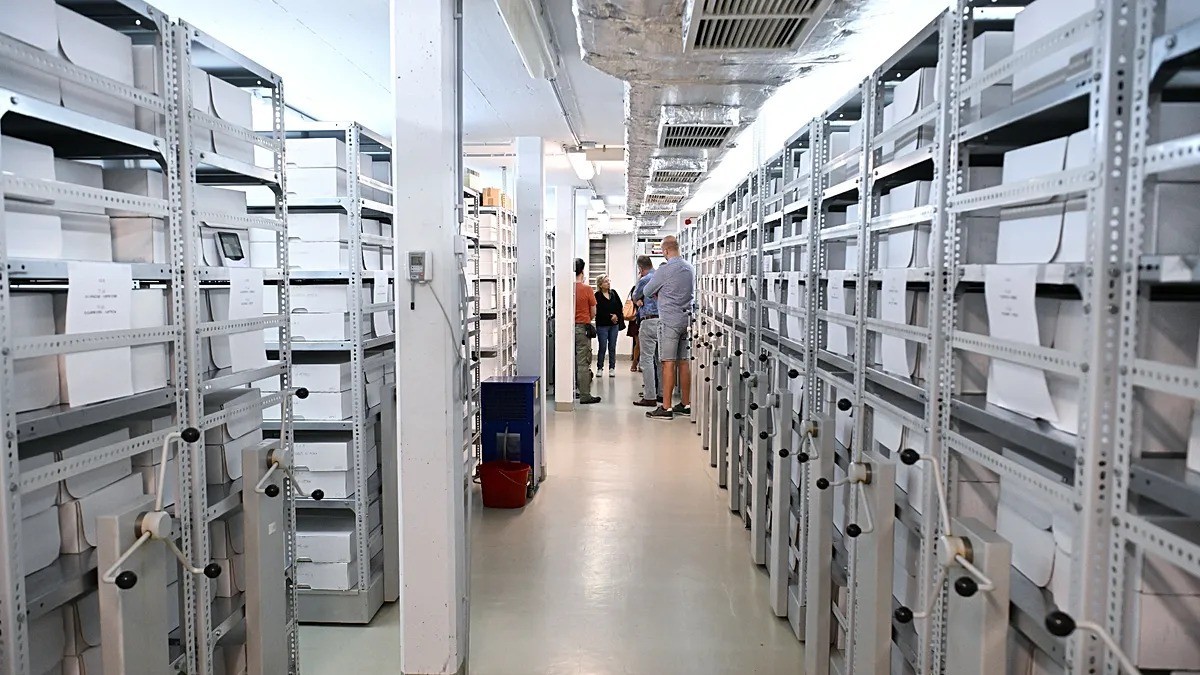
The legal basis is a bill driven through by Magyar's Tisza party in September, amending the old "agent law" to grant the public unrestricted access to the communist security apparatus for the first time. Four categories of pre-1990 records are covered. Three went live on Wednesday morning at nyitottaktak.hu, the portal run by the Historical Archives of the State Security Services.
The first is the so-called 6 card, the registration sheet for a network member. It records a name, place and date of birth, the mother's name, occupation, the circumstances and motivation for recruitment, how long the person stayed on the books, and the handling officer. The others are a register of recruitments between 1957 and 1962 and a database of former agents' personal data and code names, including material recovered from magnetic storage tape.
The fourth category, the B-dossiers that detail the recruitment process itself, lands on 25 February 2027. Medical records and intimate material used as leverage are being withheld.
The Count Is a Range, and Everyone Should Say So
Nobody in Budapest has published a single clean number. The BBC puts it at around 60,000 people recruited by the communist-era services. Euronews reports up to 60,000, with estimates running from 50,000 to 60,000 names in this disclosure. Bulgarian agency BGNES says approximately 58,000 individuals. Telex, citing the archive's own experts, says 55,000 to 60,000 — a figure that effectively means almost everyone will find an informant in their family.
Those are the names that survive. Recruitment across the whole communist period is estimated at 150,000 to 160,000 people between December 1944 and February 1990. Only about one-third of those names are still known to the archives, and detailed, substantive information exists for only around a tenth of them. Many records were lost in 1956 and during the change of regime. The rest sat with the Interior Ministry until 1997.
The Names That Surfaced First
Within hours, Hungarian outlets were working through the database, and the results cut across the political divide.
János Martonyi, foreign minister in Viktor Orbán's first and second governments, appears under the codename "Magasdi", registered with the Interior Ministry's counterintelligence department. He has previously denied signing any declaration of cooperation, writing reports or taking payment. Zsigmond Járai, finance minister from 1998 to 2000 and later central bank governor, appears as "Bihari"; he has acknowledged limited cooperation, saying he first refused and eventually agreed under repeated pressure to report on how Hungary was seen abroad.
György Surányi, another former central bank governor, is listed as "Otto", though the documents do not establish that he supplied anything; he says the record is the trace of a failed recruitment attempt. Károly Szita, the long-serving Fidesz-aligned mayor of Kaposvár, was recruited in 1980 as "Péter Krakus" and denies being an agent.
A Sitting Judge, a 1988 Card and a Court Under New Management
The most consequential name belongs to a man still on the bench. András Patyi, a sitting Constitutional Court judge and former chairman of the National Election Commission, appears in two hits. His registration card records that he was recruited on 5 August 1988 "on patriotic grounds" as a secret collaborator of Department III/III, the domestic political surveillance directorate, under the codename "Márton Kocsis". The department, the card says, counted on him in the field of youth protection.
His presence in the archives had not previously been public. The Constitutional Court did not dismiss it. "It can in no way be ignored that the personal data of a constitutional judge appear on a published 6 card," the court said. "We will respond substantively once all the circumstances are known."
The timing is awkward for the institution as well as the man. Two days before the release, parliament elected Sonnevend Pál as the court's new president, after a constitutional amendment handed that choice back to the judges themselves and imposed a 70-year age limit that ended several mandates.
Twenty-Four Hours Later, the Archive Said It Was an Error
Sándor Lezsák, a founder of the Hungarian Democratic Forum, a long-standing Fidesz ally and a former deputy speaker who stayed in parliament until April, was named on Wednesday. He did not wait for the paperwork. "I was not an agent. I was the one being watched," he said. He said anyone spreading "this vile lie" would answer in court, and that no legal victory could repair the moral damage.
The next day the archive conceded the point. Lezsák's name had appeared "as a result of an IT error", it said. His name is on the magnetic tapes — but as a person under surveillance, not as a network contact. The archive said the fault was under investigation, the affected part of the database was being reviewed, and it apologised to him directly. His 6 card cannot be found, and he is not listed in the recruitment register.
Orbán's Name Is Not in the Records Released So Far
For weeks, the loudest question in Hungarian politics was whether Viktor Orbán would appear. He has not. Nor has Péter Medgyessy, whose work for communist intelligence caused a scandal in 2002 — a reminder that the database is not a complete index of the past.
Orbán did not wait to be found. On Tuesday, a day before the release, he published pages of documents on Facebook that he said proved he had been watched, not used, and that his wife Anikó Lévai had been watched with him. He was responding to Miklós Németh, Hungary's last pre-1990 prime minister, who claimed he had seen three handwritten reports Orbán filed as an informant during military service.
"They tried to recruit me during the early part of my military service but I refused, so the attempt was unsuccessful," Orbán wrote. He said listening devices were installed at their workplaces, in their flats, "and even in our bedrooms". Fidesz said every document proved Orbán was the one surveilled, and asked what "the neo-communists" were trying to divert attention from. Historian Krisztián Ungváry, who sits on the advisory committee reviewing the classified files, said the only evidence behind the allegation is that Németh "claims that he saw something, the content and context of which he cannot even properly describe" — and that anyone accused keeps the presumption of innocence.
What a Card Cannot Tell You
The archive's own director general has warned against reading the database as a verdict. "You can't believe everything the state security agencies and their files claim," Cseh Gergő Bendegúz said, noting that files were incomplete, unreliable and in many cases destroyed. A large proportion of the informants, he added, were people who never made their mark on national public life.
Historians go further. László Eörsi of the 1956 Institute Foundation called the release "better late than never" and then warned against the obvious conclusion: "I know of quite a few examples when someone was recruited, but they did not make a report, but in fact took a huge risk by turning against the authorities. Some even could be considered proper heroes."
Zsuzsanna Borvendég, a historian and MEP for the far-right Our Homeland party, told Hungarian media that in the overwhelming majority of surviving agent reports "it isn't even possible to identify the agent, let alone their motives". The Hungarian Catholic Bishops' Conference apologised to victims for clergy who cooperated, while stressing that a 6 card was also opened on people who refused.
Thirty-Six Years of Saying No
That the files exist at all is the surprise. After 1989, Hungary's first post-communist prime minister, József Antall, rejected opening them, and Orbán's Fidesz blocked the idea for the better part of two decades — more than 30 votes against, according to Telex, with proposals from András Schiffer of LMP voted down without debate.
There were half-steps. The 1994 "agents law" forced government members, MPs and senior officials to undergo background checks. From 1997 citizens could read their own files; in 2003, after Medgyessy was exposed, the rules widened. But Hungarians still could not learn who had informed on them.
The old law was loose enough that ministries could block transfers of files to the archive on national-security grounds. That selective release did not produce truth. It produced leverage — leaking files against political opponents — and it left a country unable to read its own record.
A Country That Mostly Wanted This
The politics are less ambiguous than the paperwork. A poll by Europion conducted on the day of the release found an overwhelming, nearly three-quarters majority in favour of publishing the files, and a majority who doubt Orbán's account of his own history.
Magyar has tried to set the tone. "We are passing judgment on the inhumanity of the dictatorship, not on individual decisions," he said, warning that families may learn unwelcome things about relatives and former colleagues. His government is setting up hotlines and counselling for people confronting what the files say about their own names.
He has also made a wider argument: that decades of restricted access were themselves a form of government, a way of keeping compromising material in reserve. "For decades, restrictions on public access provided opportunities for political hysteria, blackmail, the exertion of pressure, and silencing," he said at the briefing.
The Real Test Arrives in February
Everything published this week is scaffolding. The 6 cards name people and give a motive in a box; the B-dossiers explain what happened, and roughly 9,000 to 10,000 are due on 25 February 2027.
Until then, Hungary argues about names attached to fragments — people who were coerced, people who reported nothing, and at least one, as of Thursday, who was there because a database misfired.
Ungváry put the wider case plainly: "societal lies inevitably lead to a strained relationship with politics and the price we paid for that was 16 years of Fidesz rule." His colleague János M. Rainer thinks the moment passed long ago and this is now symbolism.
Both can be right. A country that spent 36 years not asking has finally been handed the paperwork. What it does next is not in any file.
By Jessica Ali, Staff Writer
This article was produced with AI-assisted research and editorial support. Sources: BBC News, Reuters, Euronews, Deutsche Welle, Telex, HVG, 24.hu, BGNES, TVP World, The Japan Times. Photographs: Jack Metzger / ETH-Bibliothek Zürich, Bildarchiv via Wikimedia Commons (CC BY-SA 4.0); Euronews file image of the Historical Archives of the State Security Services, 16 September 2023.
What's Your Reaction?
 Like
0
 Dislike
0
 Love
0
 Funny
0
 Wow
0
 Sad
0
 Angry
0

Editor-in-Chief at Global1.News. Atlanta-based journalist who cuts through the BS and tells it like it is. Lead anchor, host, and the voice you hear when the spin stops and the truth starts.














Comments (0)