
Government Names 658 Employers for Minimum Wage Underpayment
The ritual is familiar by now: a government press release, a spreadsheet of shame, and a list of household names forced to admit they short-changed their own staff.
The ritual is familiar by now: a government press release, a spreadsheet of shame, and a list of household names forced to admit they short-changed their own staff. But today's iteration — naming 658 employers who failed to pay the National Minimum Wage and National Living Wage — carries a different weight. It is the first such round since the Fair Work Agency opened its doors in April, and it signals that the era of quiet non-compliance may be drawing to a close.
Government Names 658 Employers in Landmark Minimum Wage Crackdown
London, UK – 3 September 2026 — More than 27,000 workers have now received a combined £4 million in back pay after the Department for Business and Trade published its latest naming round of employers who underpaid staff. The list, enforced by HMRC on behalf of the new Fair Work Agency, spans the length and breadth of the British economy — from DIY sheds in Hampshire to NHS trusts in Surrey, from cinema chains in Cornwall to burger joints in the capital.
The scale is striking. Around £4 million has been returned to workers, with employers also slapped with penalties totalling approximately £7 million. Since the naming scheme launched in 2011, more than £100 million in penalties have been issued to over 5,200 employers, and more than £66 million has been repaid to roughly 650,000 workers. But this round feels different — not merely for its size, but for what it represents.
A New Era of Enforcement Under the Fair Work Agency
This is the first naming round since the Fair Work Agency was established in April 2026 under the Employment Rights Act. For the first time, workers' rights enforcement sits under one roof — a single agency tasked with policing everything from minimum wage compliance to statutory holiday pay. The ambition, as the Government frames it, is to end the patchwork of regulators and helplines that left many workers unsure where to turn.
Business Secretary Jonathan Reynolds was characteristically blunt: "Short-changing your staff isn't a shortcut to success and we are determined to stamp it out." Kate Dearden, Minister for the Future of Work, went further: "Underpaying your staff is illegal, and we will not let workers foot the bill for their boss failing to follow the rules."
The Fair Work Agency's reach is set to expand. Beyond minimum wage enforcement, it will soon tackle employers who deny workers holiday pay and sick pay — areas where enforcement has historically been reactive rather than proactive. Matthew Taylor, Chair of the Fair Work Agency Advisory Board, framed the stakes in simple terms: "Paying the minimum wage is not optional — it is the law."
The current rates, in force since April 2026, are £12.71 per hour for workers aged 21 and over, £10.85 for 18-20 year olds, and £8 for under-18s and apprentices. The underpayment periods on today's list span roughly 2013 to 2025 — a reminder that these are not isolated slips but systemic failures stretching back years.
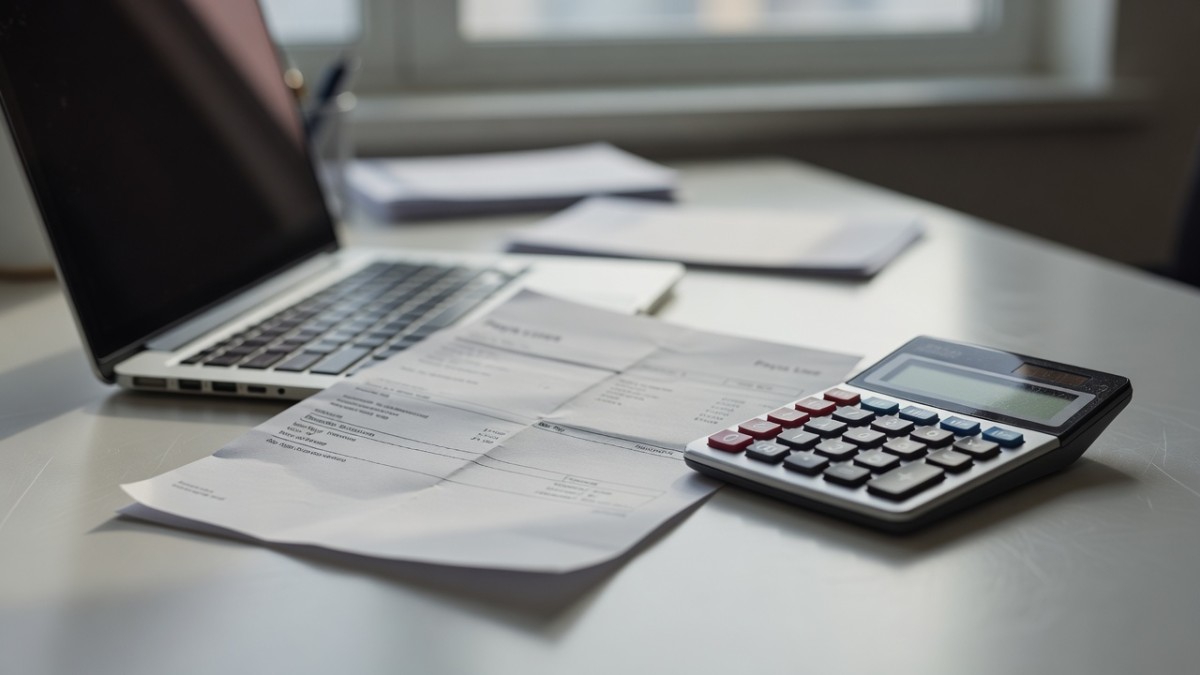
Household Names, Familiar Excuses
At the top of the list sits B&Q Ltd, headquartered in Eastleigh, Hampshire. The DIY giant failed to pay £456,934.72 to 4,530 workers — the largest single shortfall in this round. B&Q's defence is that the underpayments were unintentional, stemming from calculations involving geographical allowances paid in addition to hourly rates. The company insists all affected colleagues were paid in full in July 2025.
Second on the list is Elysium Healthcare Holdings 3 Ltd, based in Borehamwood, which underpaid 1,095 workers by £330,048.81. The healthcare provider's presence in the top five underscores a troubling pattern: care workers — already among the lowest-paid in the country — are disproportionately likely to be underpaid.
Five Guys JV Limited, the London-based burger chain, underpaid 3,699 workers by £54,642.47. The company blamed "technical differences in how payroll regulations were applied," identified in a review by HMRC, and said it had made all required payments to current and former employees. The sheer number of workers affected — nearly 3,700 — suggests the issue was baked into their payroll architecture rather than an isolated error.
Forest Holidays Ltd, based in Moira, Derbyshire, underpaid 598 workers by £100,308.68. Support Staff Services Ltd of Slough underpaid 323 workers by £119,715.13. Lanes Group Ltd of Leeds underpaid 297 workers by £67,893.34. UK Care Team Ltd of Leicester underpaid 99 workers by £67,082.76. Merlin Cinemas Ltd of Redruth, Cornwall, underpaid 181 workers by £50,198.75.
NHS Trusts and the Mechanics of Underpayment
Perhaps the most uncomfortable reading comes from the health service. St George's, Epsom and St Helier Hospital Group underpaid 75 workers by £123,331.97, while St George's University Hospitals NHS Foundation Trust in Wandsworth, London, underpaid 55 workers by £77,498.91. Norfolk Community Health and Care NHS Trust also features, with apprentices inadvertently underpaid between 2019 and 2023.
The mechanisms behind these NHS underpayments are instructive. At Epsom and St Helier, the issue was linked to salary sacrifice schemes — arrangements where employees give up part of their salary in exchange for non-cash benefits like cycle-to-work or childcare vouchers. When these schemes interact with minimum wage calculations, the arithmetic can go wrong, leaving workers below the legal floor.
At St George's in Wandsworth, technical issues with London weighting were to blame. London weighting is supposed to compensate staff for the higher cost of living in the capital, but when it is not properly accounted for in minimum wage calculations, it can mask underlying underpayment. Both hospital groups say they changed their processes after an HMRC review.
Norfolk Community Health and Care's case is perhaps the most damning. Apprentices were underpaid because time spent in meetings, handovers and changing into uniform was not counted as working time. This is not a technicality — it is a fundamental misunderstanding of what constitutes work. If you are required to be on premises, in uniform, ready to work, that is working time. Period.

What This Means for Workers on the Ground
For the 27,000 workers owed back pay, today's announcement is welcome but overdue. Many will have been struggling on wages below the legal minimum for years, unaware that they were being short-changed. The sectors affected — shops, restaurants, nurseries, social care providers — are precisely those where workers are least likely to challenge their employer for fear of losing their job.
The inclusion of social care providers is particularly concerning. Care workers in Leicester, Borehamwood and beyond are already grappling with low pay, insecure contracts and chronic understaffing. When their employers are named for underpaying the minimum wage, it raises uncomfortable questions about the sustainability of a sector that relies on the goodwill of an exhausted workforce.
The presence of NHS trusts on the list is a different kind of embarrassment. Public bodies are supposed to model best practice in employment standards. When they fall short, it undermines public confidence in the entire system — and gives private sector employers an easy excuse for their own failures.
The Naming Scheme: Shame as a Deterrent
The naming scheme works on a simple premise: public shame is a more powerful deterrent than financial penalty alone. For a company like B&Q, the reputational damage of being named as the UK's worst minimum wage offender far exceeds the £456,934.72 it owed. The scheme is designed to hit where it hurts — brand value, consumer trust, and the ability to attract and retain staff.
But critics have long argued that naming rounds are too infrequent and too slow. The underpayment periods on today's list stretch back to 2013 — meaning some workers waited over a decade for justice. The Government says naming rounds will now be more frequent, and the Fair Work Agency's expanded remit will allow it to act more quickly.
The penalties issued — around £7 million in this round — are separate from the back pay owed. Employers must repay the wages they withheld and face additional financial punishment. Since 2011, more than £100 million in penalties have been issued to over 5,200 employers. The message is clear: underpayment is not a cost of doing business, it is a breach of the law.
What Happens Next — and What Workers Should Do
The Fair Work Agency's expansion into holiday pay and sick pay enforcement is the next frontier. The agency is set to police employers who deny workers their statutory entitlements to paid annual leave and sick leave. This is a significant broadening of scope, and it will require a step-change in enforcement capacity.
For workers who suspect they are being underpaid, the Government has established a straightforward route to redress. Workers can check their pay via gov.uk/checkyourpay, a dedicated portal that helps employees calculate whether they are receiving the legal minimum. Acas, the Advisory, Conciliation and Arbitration Service, offers free and confidential advice to workers who believe they have been short-changed. Employers in Northern Ireland can contact the Labour Relations Agency.
The practical advice is simple: keep your payslips, track your hours, and do not assume your employer is getting it right. Underpayment is rarely a one-off error — it is usually a systemic issue that persists until someone challenges it. The 27,000 workers in today's list are proof that the system can work, but they are also proof that it takes too long.
Today's naming round is a milestone, but it is not the finish line. The Fair Work Agency has the tools, the mandate and — if today's list is any indication — the appetite to enforce the law. The question now is whether employers will get the message, or whether the next naming round will be even longer.
By Erica Thornton, Staff Writer
This article was produced with AI-assisted research and editorial support. Sources: Channel 4 News, GOV.UK, BBC News.
What's Your Reaction?
 Like
0
Like
0
 Dislike
0
Dislike
0
 Love
0
Love
0
 Funny
0
Funny
0
 Wow
0
Wow
0
 Sad
0
Sad
0
 Angry
0
Angry
0

US Politics and Policy Correspondent at Global1.News. Based in Washington DC, covering American politics, policy, elections, and the courts. Knows how the system works and tells you what it actually means.










Comments (0)