
Government condemns 'thuggish' far-right protests as Dover and Portsmouth become flashpoints
London, UK - 7 September 2026 - The Home Office has condemned "intimidating and thuggish behaviour" after a weekend of far-right street mobilisation that saw masked demonstrators shut down the Port of Dover and later attempt to block the processing of migrants who arrived on the Hampshire coast after a perilous ten-hour Channel crossing. The scenes - hundreds of men in black clothing and balaclavas chanting "Whose streets?
London, UK - 7 September 2026 - The Home Office has condemned "intimidating and thuggish behaviour" after a weekend of far-right street mobilisation that saw masked demonstrators shut down the Port of Dover and later attempt to block the processing of migrants who arrived on the Hampshire coast after a perilous ten-hour Channel crossing.
The scenes - hundreds of men in black clothing and balaclavas chanting "Whose streets? Our streets!" - have triggered cross-party condemnation, urgent questions about police preparedness, and fresh alarm over people smugglers opening new, longer routes to the UK coastline. The unrest, which unfolded between Saturday 5 September and the early hours of Monday morning, has laid bare the tactical evolution of the far-right and placed the limits of lawful protest firmly at the centre of the political agenda.
In a statement issued on Monday, a Home Office spokesperson said: "We condemn the intimidating and thuggish behaviour we saw in Portsmouth last night. The right to peaceful protest is fundamental to our democracy, but it must never cross a line into disorder." The government also thanked emergency services for their handling of a "challenging" situation.
Government condemns 'thuggish' far-right protests as Dover and Portsmouth become flashpoints
London, UK - 7 September 2026 - The weekend's events began on Saturday morning when hundreds of masked, black-clad demonstrators - predominantly men - converged on the Port of Dover, blocking roads and access to one of Britain's busiest ferry terminals. Chanting "Stop the boats", the crowd later marched through the town, their voices echoing off the seafront buildings with the menacing refrain: "Whose streets? Our streets!"
Dozens of police officers followed the demonstration, but the disruption was immediate and severe. A traffic jam stretching approximately four miles formed as P&O Ferries temporarily halted ferry traffic between France and the UK. Access to the port was not restored until around midday. Remarkably, no arrests were reported at Dover, a fact that has since fuelled criticism of police tactics and intelligence gathering. The Dover action was, in effect, a far-right vigilante operation that arrived secretly in vans, according to organisers. It was orchestrated by Daniel Thomas, known online as "Danny Tommo", a far-right agitator closely linked to Tommy Robinson, whose real name is Stephen Yaxley-Lennon. Thomas recently established the "Patriot Platform", the group behind the Dover action, and previously launched "Operation Overlord", which planned to send far-right activists to France. In a chilling indication of intent, Thomas described Dover as "a dummy run".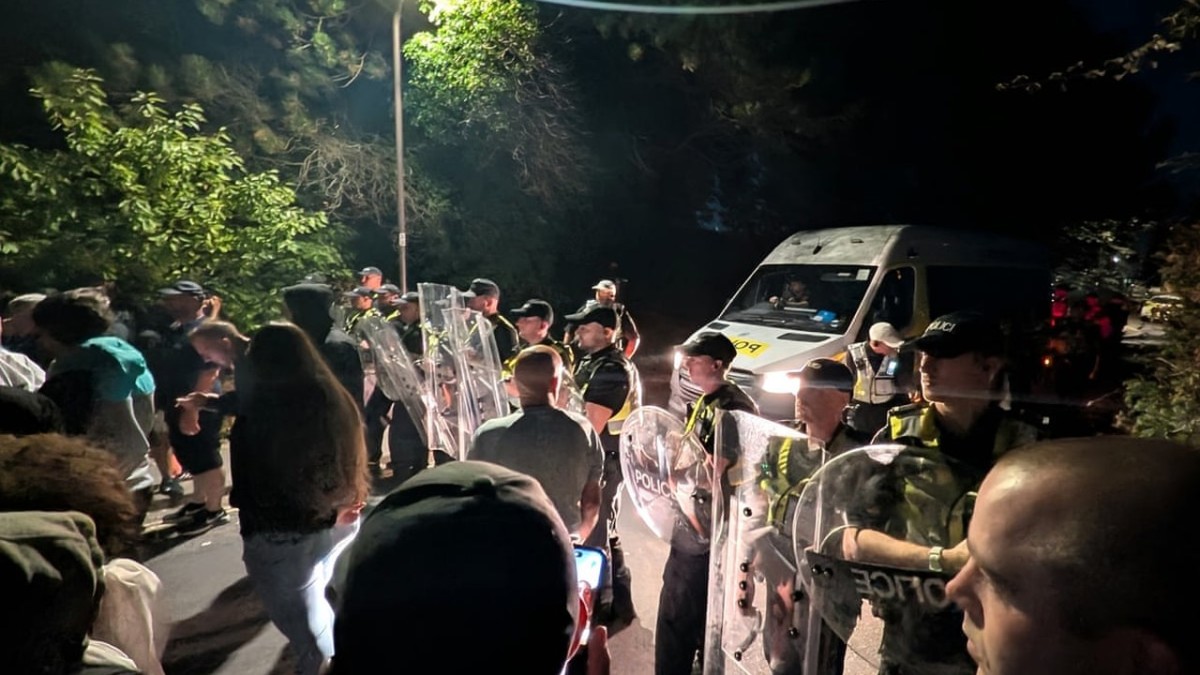
A coastal community under siege: the Portsmouth standoff
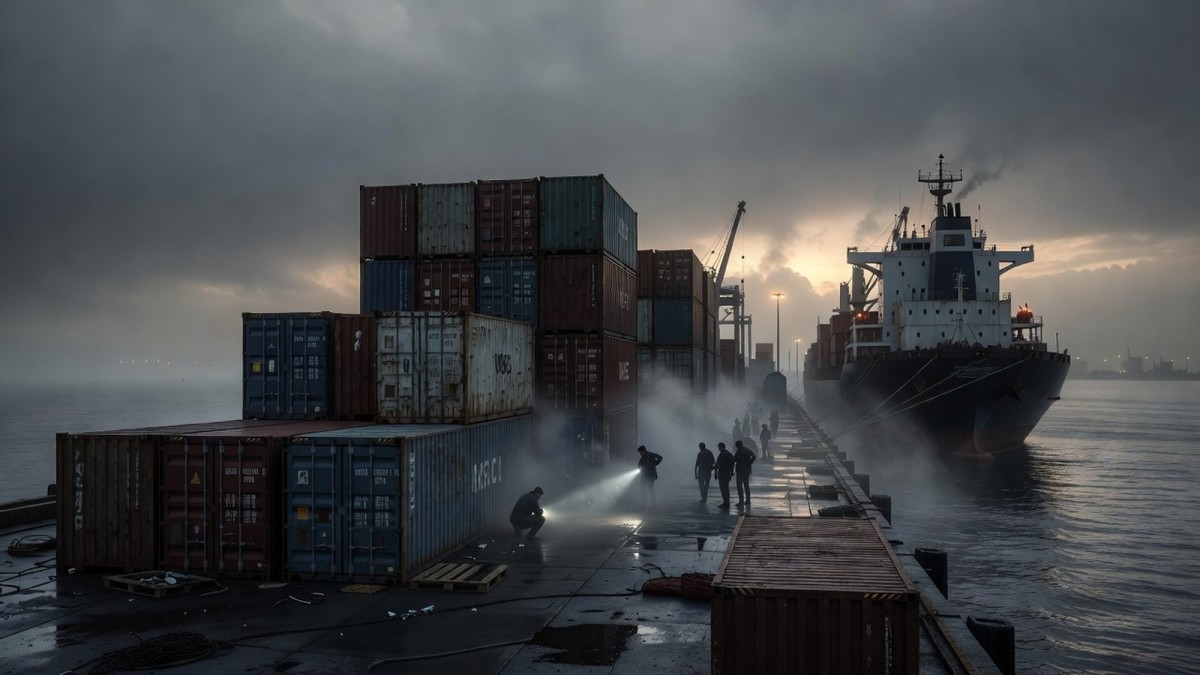
The second flashpoint came late on Sunday night, when around 140 migrants in a single dinghy were rescued in the English Channel heading for the Hampshire coast. The journey is thought to be one of the longest ever attempted by a small boat. Donna Jones, the Conservative police and crime commissioner for Hampshire, told the BBC the boat left near Cherbourg in France at approximately 1am on Sunday and entered the Solent, near Portsmouth, about ten hours later. Jones warned that Portsmouth must not become "a destination of choice" for people smugglers, a fear that materialised within hours. As the arrivals were brought ashore at Eastney Marina and Eastney Beach, hundreds of men - some dressed in black and wearing balaclavas - attempted to stop them being transported for processing. The crowd said they wanted to prevent transfer to the Manston processing centre in Kent, the government's primary facility for processing irregular arrivals. For hours, the mob blocked traffic on the road from Eastney, forming a human barrier. Police with riot shields formed a cordon around coaches carrying the migrants, creating a tense standoff that lasted until approximately 3am. The situation was only defused when police moved in with threats of arrest. A witness reported that two police car windscreens were smashed during the chaos. The Home Office confirmed that everyone who arrived had left the area and was being "transported for processing in the usual way". Daniel Thomas, who livestreamed from the scene at Eastney Beach, was captured on video boasting: "Roads are all blocked, they are never going to be able to leave here." Referring back to the Dover action, he added: "This has to come to an end now." The livestream, viewed thousands of times, has since been circulated widely on social media platforms, raising questions about the role of live-streaming in enabling and encouraging such mobilisations.Who is Daniel Thomas and the new far-right playbook
The emergence of Daniel Thomas and his "Patriot Platform" marks a significant shift in far-right tactics. Unlike the spontaneous, often disorganised protests of previous years, the Dover and Portsmouth actions bore the hallmarks of a coordinated, military-style operation: masked participants, secret arrival in vans, and a clear objective to physically disrupt the processing of migrants. Thomas, a close associate of Tommy Robinson, has been building a network of activists through his "Operation Overlord" initiative, which sought to send far-right agitators to France to monitor migrant camps and, according to critics, to intimidate migrants and aid workers. The Dover action, which Thomas himself called "a dummy run", appears to have been a rehearsal for the larger, more consequential operation in Portsmouth. Nick Lowles, chief executive of the anti-extremism group Hope Not Hate, said there appeared to have been a failure of intelligence with both protests. "We saw 300, 400 people with balaclavas marching down the streets, stopping traffic," he told Channel 4 News. Lowles warned that such images create "a climate of fear among migrants and immigrants, fear among people of colour", and that the government "needs to be far more robust in standing up against this". The use of balaclavas and face coverings has become a signature of these protests, allowing participants to evade identification and prosecution. Robert Jenrick, the Reform UK economic spokesman, was unequivocal: "I don't like people going around in balaclavas... our party's policy is to ban face coverings like that." The comments suggest that even parties on the right of the political spectrum are uncomfortable with the imagery and tactics on display.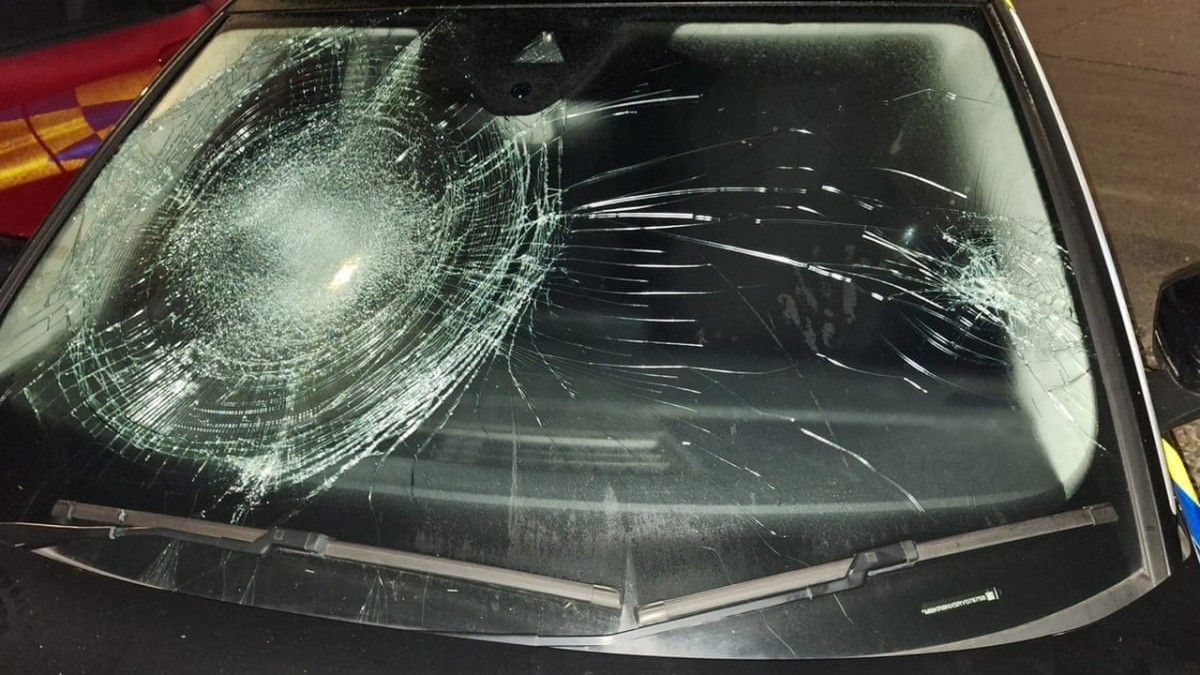
Government response: condemnation and defence of police
The government's response has been swift, but ministers have also sought to defend the police against claims they were caught off guard. Emma Reynolds, the Chief Secretary to the Treasury, told broadcasters: "As a politician, I absolutely support the right to peaceful protest, but this has crossed the line. This is thuggish and intimidating behaviour." She rejected claims that police were caught by surprise, insisting that officers "dealt with events well". Jonathan Reynolds, the Business Secretary - a separate minister with no relation to Emma Reynolds - echoed those sentiments, describing peaceful protest as "an essential part of British life, but that's not dressing up in costumes like this and disrupting people's lives". He added that police "on the whole... handled it very well". The defence of police comes amid growing scrutiny of whether Kent Police and Hampshire Police were adequately prepared for the scale and coordination of the protests. Questions are expected in Parliament on Monday over intelligence failures and the apparent lack of arrests at Dover. The fact that hundreds of masked men could assemble, block a major port, and later stage a similar operation on the south coast without significant police intervention has raised serious concerns about the state's ability to respond to organised civil disobedience. Donna Jones, the Hampshire police and crime commissioner, described the unrest as a "wake-up call" for the government. Speaking to the BBC, she said: "Largely they were peaceful, but there were crimes committed and they will now be investigated and I would not be surprised if there are arrests that come off the back of the footage." Her comments suggest that while the immediate standoff has ended, the legal consequences may be far from over.The politics of Channel crossings: numbers down, routes shifting
The weekend's events cannot be separated from the wider politics of Channel crossings under Prime Minister Andy Burnham's Labour government. Official figures show that small boat arrivals this year are down more than 40% compared with the same period last year, a statistic the government has repeatedly cited as evidence that its policies are working. Ministers have insisted that arrival numbers are falling, and the reduction is significant. However, the apparent use of new, longer routes beyond the Dover area has alarmed ministers and coastal communities alike. The dinghy that arrived near Portsmouth is thought to have launched from the Baie de Seine, approximately 170 miles from Calais, according to Nigel Farage. The Reform UK leader posted on social media that Prime Minister Andy Burnham "struck an agreement for 45 more officers on French beaches", yet a boat still managed to reach Hampshire beaches "for the very first time". He added: "Only Reform will send the boats back." Joe Robertson, the Conservative MP for Isle of Wight East, described the crossing as "extremely concerning". He told constituents he would contact the Home Office to establish whether people smugglers are using new routes and "mega-dinghies" capable of carrying over a hundred people in a single voyage. The 140-person dinghy that reached the Solent is among the largest ever recorded, raising fears that smugglers are adapting their tactics to evade increased enforcement in the Dover Strait. Reform UK Hampshire leader Councillor George Madgwick posted that "over 100 migrant men" had arrived on Portsmouth shores, a figure that has been used by protest groups to justify their actions. However, the government has stressed that all arrivals are processed in accordance with UK law, and that the right to claim asylum is protected under international conventions.The Bottom Line: a test of democratic resilience
The weekend's events represent a significant test for the Burnham government and for British democracy more broadly. The right to peaceful protest is a fundamental tenet of the UK's constitutional settlement, but the scenes in Dover and Portsmouth - masked men physically blocking the processing of vulnerable people - stretch that right to its breaking point. The government's condemnation has been clear, but words alone will not address the underlying concerns. Questions remain over police intelligence, the adequacy of resources in southern coastal forces, and whether the legal framework is sufficient to deal with organised, masked intimidation. The lack of arrests at Dover is particularly troubling, as it may embolden organisers to repeat such actions. For the migrants who made the perilous ten-hour crossing, the arrival on British shores was met not with sanctuary, but with a hostile mob. For the residents of Dover and Portsmouth, their towns have become unwilling flashpoints in a broader political battle over immigration. And for the government, the challenge is to uphold the rule of law while addressing the legitimate concerns of communities who feel their borders are not secure. As Parliament prepares to scrutinise the weekend's events, one thing is clear: the far-right has found a new playbook, and the state must respond with more than condemnation. The "dummy run" in Dover has been followed by a full-scale operation in Portsmouth. The question now is where the next target will be - and whether the authorities will be ready. By Erica Thornton, Staff WriterBy Erica Thornton, Staff Writer
This article was produced with AI-assisted research and editorial support. Sources: Channel 4 News, The Guardian, HuffPost UK, The Independent, Euronews.
What's Your Reaction?
 Like
0
Like
0
 Dislike
0
Dislike
0
 Love
0
Love
0
 Funny
0
Funny
0
 Wow
0
Wow
0
 Sad
0
Sad
0
 Angry
0
Angry
0

US Politics and Policy Correspondent at Global1.News. Based in Washington DC, covering American politics, policy, elections, and the courts. Knows how the system works and tells you what it actually means.









Comments (0)