
'Nothing Good Was Supposed to Come Out of Me': Nigerian Academic's Journey From Poverty to Bristol
Told as a child that nothing good would come of him, David Etor rose from poverty in a Nigerian compound to become an engineering lecturer at the University of Bristol. His new memoir honours a mother's dignity and the solar oven that changed everything.
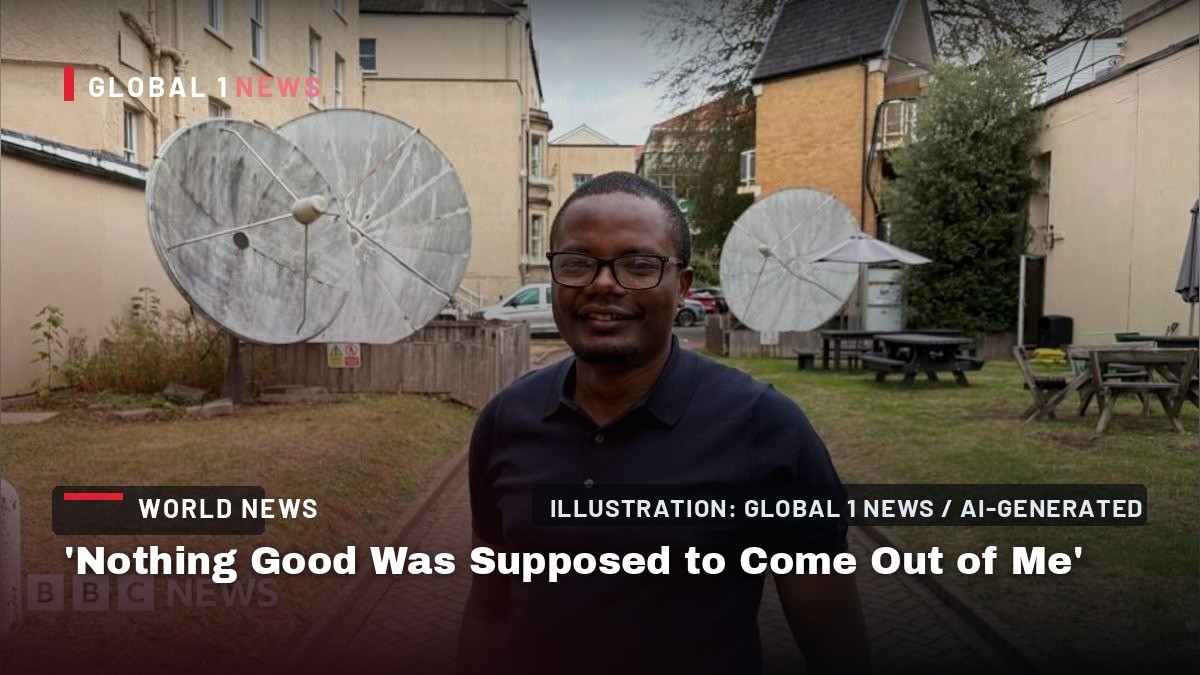
There are moments in a life when a single image holds the weight of everything that came before it — a mother stirring a pot of water, pretending it was dinner, so that her neighbours would never see the truth of her family's hunger. For David Etor, now a lecturer in electrical engineering at one of Britain's most prestigious universities, that image is not a memory of shame. It is a memory of love, of dignity, and of the quiet, stubborn refusal to be defined by poverty.
'Nothing Good Was Supposed to Come Out of Me': Nigerian Academic's Journey From Poverty to Bristol
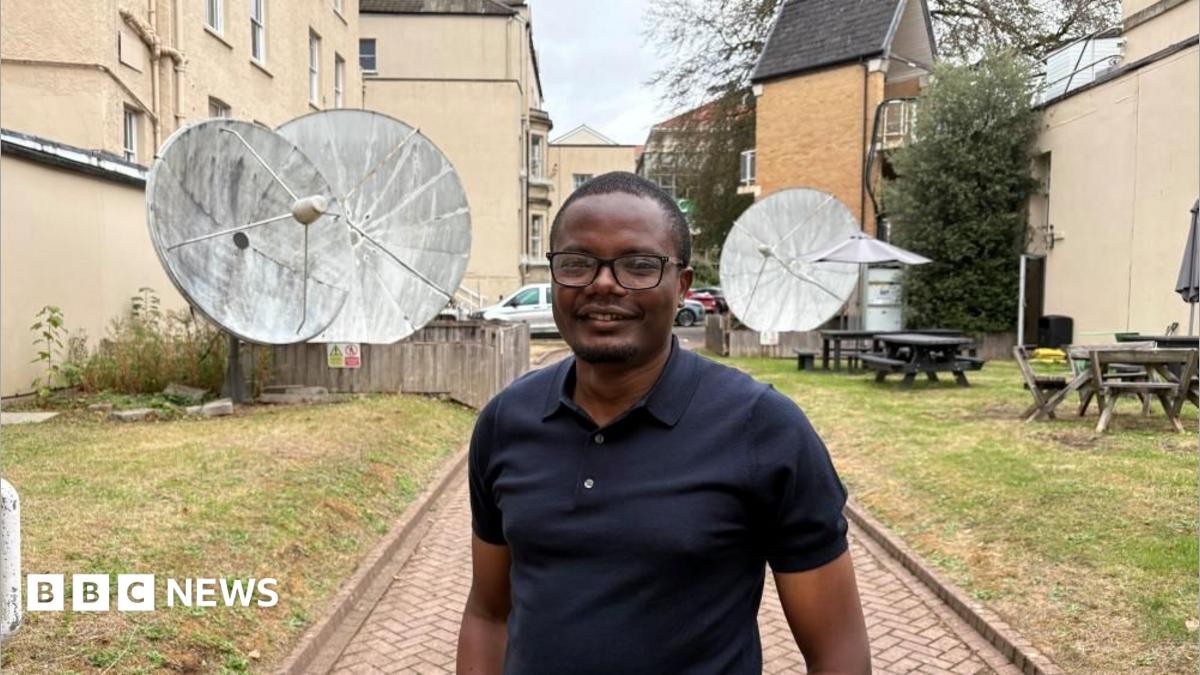
Bristol, England — David Etor, 43, who grew up in Nigeria and only learned to read and write at the age of 12, has told his story in a newly published memoir and in an interview with John Darvall on BBC Radio Bristol. Once told as a child that "nothing good will come out of you," Etor is now a lecturer in the School of Electrical, Electronic and Mechanical Engineering at the University of Bristol. His journey from a shared compound in a poor Nigerian neighbourhood to the lecture halls of British academia is a testament to resilience, ingenuity, and the enduring power of a mother's protection.
A Pot of Water and a Mother's Dignity
Etor's earliest memories are not of toys or schoolbooks, but of hunger — and of the extraordinary lengths his mother went to in order to shield her children from the judgement of others. The family was so poor that his mother would pretend to cook food in a kitchen they shared with other families, going through the motions of preparing a meal that did not exist.
"[She would] go back in and out, lift the lid, stir the water, go back into the room [and] come back as though she was preparing food," Etor recalled. "She would come back in with that pot of water after a couple of hours and it will be as though she's just finished cooking a meal, but it was just water."
The performance was not for her own sake, but for her children's. "To protect our dignity," he said. In that simple act — stirring water that would never become soup — she taught her son something more valuable than any lesson he would later learn in a classroom: that poverty could strip away food, comfort, and opportunity, but it could not strip away a person's right to be seen with respect.
Growing Up in a Compound
Life in the compound was communal in the most literal sense. Several families shared a single kitchen, one toilet, and one bathroom. Privacy was a luxury no one could afford, and neither was food, clean water, or the kind of childhood that many take for granted.
"It was a very poor neighbourhood," Etor said. "We were particularly very poor that the poor neighbours would refer to us as poor."
That line carries a particular sting. To be called poor by people who are themselves poor is to occupy a category of deprivation that is almost beyond description. It is one thing to struggle in the midst of others who struggle; it is another to be singled out, even in that company, as the family at the very bottom. Yet Etor does not speak of this with bitterness. He speaks of it as fact, as the ground from which he grew.
'Nothing Good Was Supposed to Come Out of Me'
The words that would come to define his early life were spoken to him as a child, a casual dismissal that might have crushed a less determined spirit. "Nothing good will come out of you," he was told. For a boy who could not read or write until the age of 12, the prophecy must have seemed self-fulfilling. In a world where education is the primary ladder out of poverty, being unable to access that ladder at the usual age might have meant being left behind forever.
But Etor did not accept that fate. Learning to read and write at 12 was not a late start so much as a determined one. It meant that when he finally entered the world of letters and numbers, he did so with an urgency born of years of waiting. The child who was told nothing good would come of him would go on to earn a PhD, to lecture at a leading British university, and to publish a memoir of his own remarkable life.
The Solar Oven That Opened a Door
Etor's first break came not in a classroom, but in the field — literally. While undertaking a kind of national service in Nigeria, he noticed something troubling. Many locals were being hospitalised with food poisoning, the result of trying to preserve food by drying it in open fields, where it was exposed to insects, dust, and contamination.
Rather than simply observing the problem, Etor set about solving it. He designed and built a kind of solar oven, a device that could dry food safely and hygienically using the power of the sun. The invention was simple in concept but profound in its implications — a practical, locally appropriate solution to a deadly problem.
That ingenuity did not go unnoticed. The solar oven led to a scholarship to study electrical power at Newcastle University, a stepping stone that would eventually carry him to a PhD at Durham University and, finally, to his current position at the University of Bristol. It is a reminder that brilliance often shows itself first not in examinations, but in the ability to see a problem and imagine a better way.
From Newcastle to Durham to Bristol
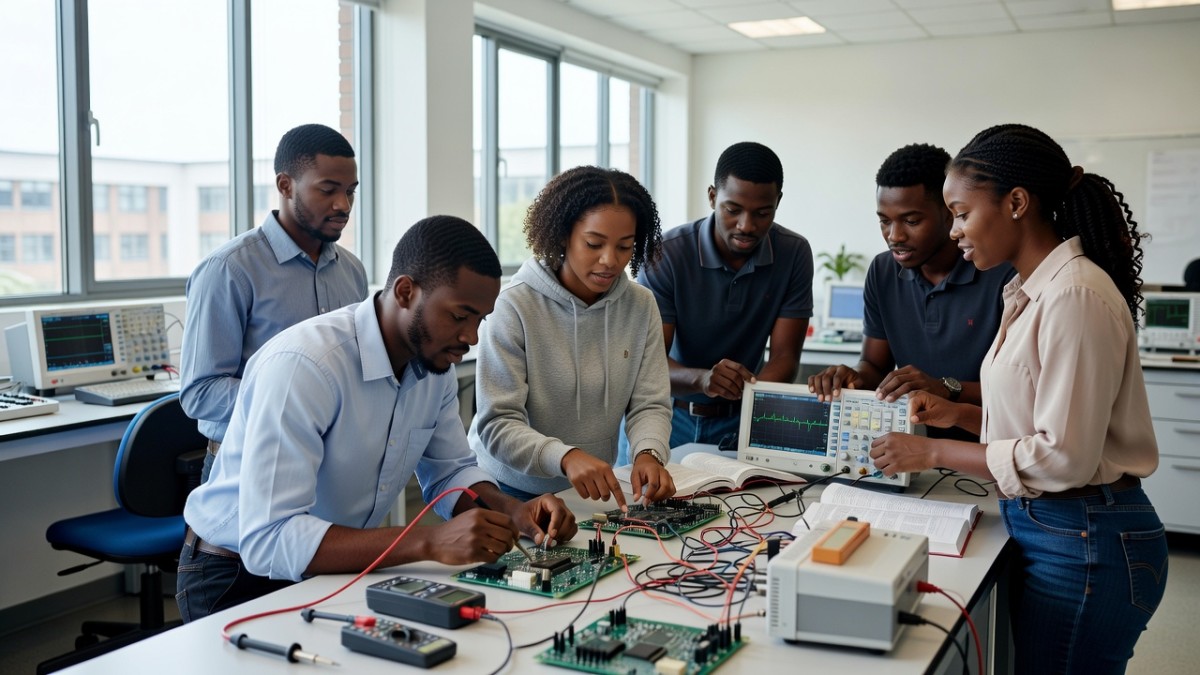
Etor's academic path took him from the study of electrical power at Newcastle to doctoral research at Durham, two of the United Kingdom's most respected institutions. Today, he is a lecturer in the School of Electrical, Electronic and Mechanical Engineering at the University of Bristol, where he teaches and researches in a field that would have been unimaginable to the boy in the compound.
The journey from a shared kitchen in Nigeria to the laboratories of British engineering is not merely a personal achievement; it is a demonstration of what is possible when talent is given the opportunity to flourish. Etor's work in electrical engineering places him at the forefront of efforts to build a more sustainable and technologically advanced future — a far cry from the days when his mother stirred a pot of water to keep up appearances.
A Memoir and a Message
Etor's memoir has just been published, and his appearance on BBC Radio Bristol has brought his story to a wider audience. Among those who have taken notice is Sir Steve Webb, the former MP and Pensions Minister, who got to know Etor through the church in Bristol. Webb called Etor's achievements "remarkable."
"David's message is very much that people shouldn't be defined by their upbringing or their background," Webb said. "They shouldn't be written off."
That message is at the heart of Etor's memoir and his public speaking. In a world that often sorts people into categories based on where they come from, Etor's life is a living rebuttal to the idea that any child can be written off. The boy who was told nothing good would come of him has spent his life proving that prediction wrong — not out of spite, but out of a deep conviction that every person deserves the chance to become who they were meant to be.
Why His Journey Resonates
For readers across Africa and the diaspora, Etor's story carries a particular resonance. It speaks to the experience of families who sacrifice everything for their children's futures, of mothers who find ways to protect their children's dignity even when they cannot protect their bellies, and of communities where poverty is not a shameful secret but a shared condition to be overcome.
Education has long been understood in many African cultures as the great equaliser, the ladder that can lift a child from the compound to the university. Etor's journey is a powerful confirmation of that belief. But it is also a reminder that the ladder is not always available, and that for every child who climbs it, there are many more who are held back by circumstances beyond their control.
His story also speaks to the experience of diaspora achievement — of Africans who leave their homelands and achieve great things abroad, carrying with them the values, resilience, and community spirit of the places that shaped them. Etor's success in Britain is not a rejection of his Nigerian roots; it is an extension of them. The ingenuity that led him to build a solar oven in Nigeria is the same ingenuity that now informs his work in electrical engineering at Bristol.
In the end, Etor's story is not really about poverty, or even about success. It is about the human capacity to hope, to work, and to believe in a future that no one else can see. It is about a mother who stirred a pot of water to protect her son's dignity, and a son who honoured that sacrifice by becoming someone his mother could be proud of. It is about the simple, radical idea that no person should be written off — and that sometimes, the most remarkable things come from the most unlikely places.
By Amara Diop, Staff Writer
This article was produced with AI-assisted research and editorial support. Sources: BBC News — "Bristol academic shares rags to riches story in new book" (bbc.co.uk/news/articles/cly452zwr01o).
What's Your Reaction?
 Like
0
Like
0
 Dislike
0
Dislike
0
 Love
0
Love
0
 Funny
0
Funny
0
 Wow
0
Wow
0
 Sad
0
Sad
0
 Angry
0
Angry
0

West Africa/Sahel Correspondent at Global1.News. Dakar-based journalist covering politics, security, climate, and development across Francophone and Anglophone West Africa. Tells the stories of a region undergoing profound transformation.















Comments (0)