
Ghana Leads Global Push for Slavery Reparations
This year has seen a dramatic shift in the global conversation about the transatlantic slave trade, with demands for formal apologies, debt relief, and financial compensation growing increasingly forceful. At the center of this movement is Ghana, a nation that has positioned itself as the leading voice on reparations, arguing that its history as a primary site of human trafficking gives it both moral authority and an urgent responsibility to seek justice.
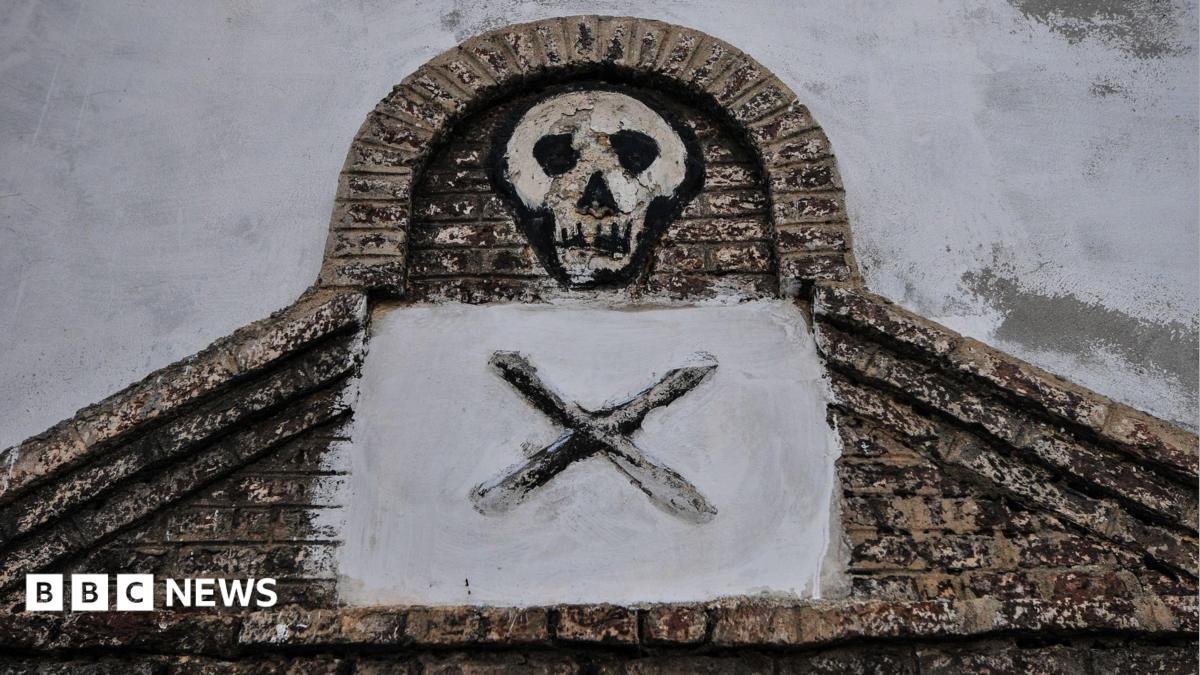
This year has seen a dramatic shift in the global conversation about the transatlantic slave trade, with demands for formal apologies, debt relief, and financial compensation growing increasingly forceful. At the center of this movement is Ghana, a nation that has positioned itself as the leading voice on reparations, arguing that its history as a primary site of human trafficking gives it both moral authority and an urgent responsibility to seek justice.
Ghana Leads Global Push for Slavery Reparations
Accra, Ghana — Ghana has emerged as the world's most prominent advocate for slavery reparations, leveraging its painful history and pan-African leadership to demand accountability from nations and institutions that profited from the transatlantic slave trade. The country's foreign minister insists that Ghana's role as a "crime scene" for these atrocities makes silence impossible.
A Historic UN Resolution and Growing Momentum
In March, the United Nations passed a resolution recognizing slavery as "the greatest crime against humanity," marking a significant milestone in the reparations movement. The resolution, tabled by Ghana, received support from member states, though the United States voted against it and every European nation abstained from the vote.
The abstentions reflect the deep resistance among former colonial powers, particularly the UK, which alongside Portugal dominated the transatlantic slave trade. Britain has consistently rejected the idea of paying reparations, a position that is perhaps unsurprising given estimates of what the country "owes" in damages to affected nations run into many trillions of pounds.
Despite this resistance, Ghana has pressed forward. In June, the country hosted a summit on reparations in its capital, Accra, drawing delegates from around 80 countries who concluded that recompense was long overdue.
Ghana's Unique Position and Moral Authority
Foreign Minister Samuel Okuzeto Ablakwa explains that Ghana's leadership role is deeply rooted in its history as the first sub-Saharan African country to attain independence and prove that it is possible to fight imperial might and win. The African Union has given Ghana special responsibility to serve as "champion for reparatory justice," a role the country's political leadership is clearly taking seriously.
The statistics are staggering: approximately 10-15% of the estimated 12 million Africans who were forcibly removed from their homes and dehumanised on a scale never before seen were from what is now Ghana. Even more were shipped from its shores, making the country central to the tragedy.
"Ghana was the crime scene where these atrocities took place, so Ghana cannot afford to be silent on ensuring that we hold perpetrators accountable," Ablakwa said.
Concrete Demands for Reparatory Justice
The foreign minister has called for a system of reparatory justice that funds educational grants, venture capital for young African entrepreneurs, and research into enduring health issues that some argue may trace their roots back to the severe malnutrition and inhumane conditions of enslavement.
While Ablakwa insists this is not about direct financial gain for African leaders, the demands laid out at the recent summit clearly included debt relief and debt cancellation. He also wants individual institutions that benefited from the slave trade to be held accountable and pay compensation.
Among these institutions is the Church of England, which in the 18th century ran plantations and owned hundreds of slaves through its missionary wing, helping to fund its work across the Americas and beyond. Many Church of England clergy independently owned slaves, and a recent report by the Church's endowment fund revealed large investments in the slave trade from which it made huge sums of money.
Archbishop's Emotional Visit to Cape Coast Castle
In July, the Archbishop of Canterbury Dame Sarah Mullally visited Ghana in one of her first international visits in the role. She travelled to Cape Coast Castle, one of the many coastal fortresses run by the British where enslaved people were held before enduring the brutal "Middle Passage" to the Americas.
As she toured the dungeons where slaves were held and walked through "the door of no return" through which they were forced before being loaded onto ships, Dame Sarah looked emotional and stopped to pray.
"I felt the weight of the depth of evil that the transatlantic slave trade was. You can't help but be deeply moved by the horrific conditions that people were kept in," the Archbishop said.
She also prayed in a 17th century chapel positioned directly above the dungeons, describing it as "such a stark illustration of the way the Church was involved in the slave trade." She questioned how the church could have sat above the horrors that were going on below.
The Church of England has apologised for its part in the transatlantic slave trade and established a £100m ($135m) social impact fund designed to benefit communities thought to continue to feel the enduring legacy of the slave trade today. However, the fund has encountered resistance within the Church, mirroring the global pushback against reparations.
Rejecting Claims of African Complicity
One of the key counter-arguments against reparations centres on the fact that some Africans were themselves complicit in the capture and sale of their fellow people. Foreign Minister Ablakwa emphatically rejects this narrative, calling it "a strategy to divide and conquer and to create a very contrived confusion."
He stresses that the entire architecture of chattel enslavement was curated by Western slave-owning powers, who simply utilised local actors to help carry out their plans. When the laws, insurance policies, and financial architectures of the trade were being drafted, "there was no African at the table."
"We denounce and totally reject those claims that Africans are as guilty and complicit as those who masterminded this whole atrocity," he said.
Traditional Leaders Acknowledge the Past
Yet within Ghana itself, the conversation around African complicity is far more nuanced. For some traditional leaders, acknowledging the past is a vital prerequisite part of healing. King Tackie Teiko Tsuru II, the Ga Mantse and leader of Ghana's Ga people, recently took the step of publicly apologising for his ancestors' involvement in the slave trade.
"I think that the transatlantic slave trade was the greatest crime against humanity, and ancestors also took part as players in that trade," the king said.
The Ga people became middlemen who traded with Europeans, selling gold, ivory and ultimately enslaved Africans, often those captured in local conflicts, in exchange for manufactured goods brought mainly by the British and Dutch, including textiles, alcohol and guns.
The king apologised not just for his own people's complicity, but for the complicity of other Africans too. "I stand on the same point of apologising on behalf of all traditional authorities and my ancestors and forebears for the part they also played in the slavery of our brothers and sisters," he said, adding that "it has affected lives and societies up to now, and to be able to go forward, you have to look at your past. It dawns on us to admit our fault and correct it."
For the Ga Mantse, admitting fault does not dilute the guilt of European empires; rather, it solidifies Africa's moral standing and sets an example as to how to move forward.
Diaspora Engagement and the Challenge of Healing
Ghana is also leading in another aspect of trying to heal the damage done by the slave trade through a high-profile campaign inviting the African diaspora, particularly African-Americans, to visit the continent. The initiative has been promoted as a means of bringing people together in the shared story of their traumatic past, with "reparations" quite literally focussing on "repair" at a very human level.
Yaw Asare, now a Ghanaian PhD student at Howard University, previously worked within the President of Ghana's Diaspora Office, which ran the campaign. Initially, the gathering of black people from across the globe was, he felt, "a beautiful, profound experience devoid of capitalist motives." But he says the initiative soon morphed.
"The Ghana Tourism Authority also latched on to it and then used it to enhance their tourism project," Asare explains, saying the initiative started to become less about "repair" and more about hitting tourism quotas. He says the campaign has often viewed the returning diaspora simply as a means of foreign cash flow, raising prices and negatively altering local economies.
"Now (local) people are finding that they cannot afford basic things," Asare says, describing how local Ghanaians were economically sidelined. More devastatingly, he feels the commercialisation of the initiative overshadowed the deep, psychological work that is desperately needed for locals as well as "returning" members of the diaspora.
"We are dealing with humans, we are dealing with people. We cannot reduce them to, 'come see this site, pay this entrance fee'," Asare says. He also questions why returning Africans were required to pay entrance fees at the same rates as European tourists at sites like the coastal castles where slaves were trafficked.
Asare points to how centuries-old concerns still dictate daily life in Ghana, noting that in Jamestown, one of the oldest districts in Accra, "people are huddled together because there is the fear of 'if I live far away, I could be taken'." The community was originally built around a British coastal fort where slaves were brought, traded and then sent on ships to the Americas.
For Asare, true reparatory justice must prioritise human connection and healing over financial transactions. "We have to remove the band-aid and then look at the sore, the gaping wound that's present," he says about what he sees as real "reparations." "And see how we can dress it and nurse it and heal."
By Amara Diop, Staff Writer
This article was produced with AI-assisted research and editorial support. Sources: BBC News Africa.
What's Your Reaction?
 Like
0
Like
0
 Dislike
0
Dislike
0
 Love
0
Love
0
 Funny
0
Funny
0
 Wow
0
Wow
0
 Sad
0
Sad
0
 Angry
0
Angry
0
West Africa/Sahel Correspondent at Global1.News. Dakar-based journalist covering politics, security, climate, and development across Francophone and Anglophone West Africa. Tells the stories of a region undergoing profound transformation.













Comments (0)