
Four Men Plead Guilty to Destroying Jewish Community Ambulances in London
The early morning of 23 March 2026 was meant to be quiet in Golders Green. Instead, the car park of Machzike Hadath Synagogue became the scene of a calculated act of destruction that would leave a volunteer ambulance service crippled and a community reeling.
The early morning of 23 March 2026 was meant to be quiet in Golders Green. Instead, the car park of Machzike Hadath Synagogue became the scene of a calculated act of destruction that would leave a volunteer ambulance service crippled and a community reeling. On Friday, four men stood in the dock of the Old Bailey and admitted their role in the firebombing — a crime the Metropolitan Police has treated as an antisemitic hate crime from the outset.
Four Men Plead Guilty to Firebombing Hatzola Ambulances in Premeditated Attack on North London Jewish Community
London, UK – 28 August 2026 — The full weight of the Crown Prosecution Service now falls on four young men who admitted at the Central Criminal Court to destroying or damaging property, being reckless as to whether life would be endangered, in connection with the arson attack on Hatzola’s ambulance fleet. The pleas, entered on Friday morning, mark a significant legal milestone in a case that has become a flashpoint for communal anxiety across Britain.

The Attack: A Precise Strike on a Lifeline
At approximately 1.45am on Monday 23 March 2026, four ambulances belonging to Hatzola — the Jewish-led, non-profit volunteer emergency service — were set alight in the car park of Machzike Hadath Synagogue in Golders Green. The timing was no accident. All four vehicles were parked together, off call, in a moment of rare vulnerability. Three of the service’s five ambulances were completely destroyed; a fourth was left partly damaged. Each vehicle was valued at between £240,000 and £250,000, placing the total damage at around £1 million.
No injuries were reported, but prosecutor Leo Seelig made clear to the court that the blaze endangered nearby homes and lives — the basis for the recklessness charge. The attackers are said to have travelled from east London in a blue Toyota Avensis, a detail that underscores the premeditated nature of the operation. For Hatzola, which provides free emergency medical response and hospital transport to the north London community, the loss was existential: three of its five ambulances were gone in a single night.
The Defendants: Young Men, Serious Charges
The four men who pleaded guilty are Hamza Iqbal, 20; Rehan Khan, 19; Judex Atshatshi, 18; and Saif Ali, 18, who can now be named after turning 18 in June. Atshatshi, Khan and Iqbal appeared by video-link from Wandsworth and Pentonville prisons, while Ali sat in the dock at the Old Bailey. All four were remanded in custody by the senior judge, with sentencing scheduled for spring 2027, at the conclusion of a separate trial.
The delay is significant. Prosecutor Leo Seelig told the court he will submit to the sentencing judge that the attack had a “terrorist connection” — a suggestion denied by all four men. That submission, if accepted, would elevate the case beyond a simple hate crime into the realm of terrorism legislation, carrying potentially far longer sentences. The separate trial referenced by the court is expected to test the boundaries of that argument.
A Fifth Defendant and the Unravelling of a Plot
The case does not end with the four guilty pleas. A fifth defendant, Subhan Ahmed, 18, from Walthamstow, east London, pleaded not guilty at the same hearing to assisting an offender, contrary to Section 4 of the Criminal Law Act 1967. Ahmed is alleged to have arranged to scrap his car to help others avoid arrest or prosecution. His trial at the Old Bailey is due to begin on 27 January 2027.
The charge against Ahmed suggests a wider network of support — individuals willing to dispose of evidence or vehicles to shield the perpetrators. It relates to the disposal of the blue Toyota Avensis the group is said to have used to travel from east London to Golders Green. For the Crown, the case is not merely about four men who lit a fire; it is about a coordinated effort to evade justice.
The Broader Context: A Community Under Siege
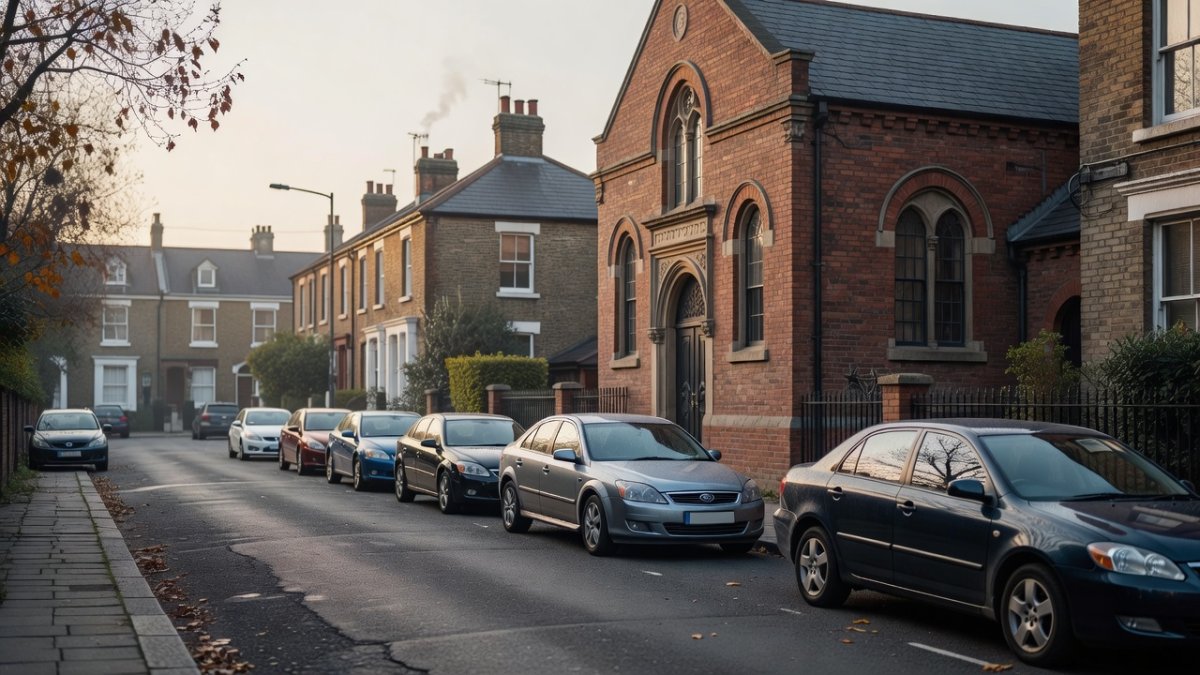
The pleas come after a spring of heightened communal tension across Britain. Arson attacks on Jewish institutions have punctuated the year, and in May 2026, the Board of Deputies organised a large “Extinguish Antisemitism” rally in central London. The Community Security Trust (CST) recorded 1,926 antisemitic incidents across the UK in the first half of 2026 — up 21 per cent on the same period in 2025 and the second-highest first-half total ever recorded, behind only the 2,019 incidents in January-June 2024.
In London alone, the CST recorded 994 incidents in the first six months of 2026, up 24 per cent from 800 in the same period the year before. Golders Green, in the London Borough of Barnet, is home to one of Europe’s largest Orthodox Jewish communities. The attack on Hatzola was not an isolated act of vandalism; it was a strike on a visible, vital symbol of Jewish communal self-reliance.
Community Response: Resilience and Fundraising
In the aftermath of the attack, the community mobilised with characteristic speed. A fundraising appeal raised nearly £1.5 million to help Hatzola replace the destroyed vehicles — a figure that speaks to both the service’s importance and the depth of communal solidarity. Gideon Falter, chief executive of the Campaign Against Antisemitism, captured the mood: “Burning that ambulance service down, waiting for a moment when all four of its ambulances were in one place, not on call, it’s premeditated, it’s calculated, it’s despicable.”
Hatzola’s volunteers, who provide free emergency medical response and hospital transport, have continued their work despite the loss. The service is not just a medical provider; it is a lifeline for a community that has learned, over centuries, to rely on its own institutions. The fundraising total — nearly £1.5 million — is a testament to that reliance and to the determination of donors to see the service restored to full capacity.
The Legal Road Ahead: Terrorist Connection and Sentencing
The sentencing hearing, scheduled for spring 2027, will be the next critical juncture. Prosecutor Leo Seelig’s submission that the attack had a “terrorist connection” will be tested in court, with the defence expected to argue that the men acted without ideological motivation. The distinction matters: a terrorist connection could trigger enhanced sentencing under terrorism legislation, potentially producing substantially longer custodial terms.
The separate trial, which must conclude before sentencing, will also examine the role of Subhan Ahmed and the alleged disposal of the Toyota Avensis. For the families of the victims — and for the wider Jewish community — the wait until spring 2027 will be agonising. But the guilty pleas have already established a foundation: the men admitted to recklessness as to whether life would be endangered, a charge that carries a maximum sentence of life imprisonment.
The Bottom Line — What Comes Next
The guilty pleas at the Old Bailey are a victory for the Crown Prosecution Service and for the Metropolitan Police, who treated this attack as an antisemitic hate crime from the outset. But they are also a reminder of the fragility of communal safety in 2026 Britain. The CST’s figures — 1,926 incidents in six months — are not abstract statistics; they represent real fear, real damage, and real disruption to daily life.
For Hatzola, the road to recovery is paved with nearly £1.5 million in donations and the quiet determination of its volunteers. For the four men now awaiting sentencing, the road leads to a prison cell. And for the rest of us, the question remains: what does it say about Britain that a volunteer ambulance service — a service that saves lives regardless of faith — has become a target for arsonists? The answer, when it comes in spring 2027, will be delivered by a judge. But the damage, like the smoke that rose over Golders Green that March morning, will linger far longer.
By Erica Thornton, Staff Writer
This article was produced with AI-assisted research and editorial support. Reporting is based on sources cited in the article.
What's Your Reaction?
 Like
0
Like
0
 Dislike
0
Dislike
0
 Love
0
Love
0
 Funny
0
Funny
0
 Wow
0
Wow
0
 Sad
0
Sad
0
 Angry
0
Angry
0

US Politics and Policy Correspondent at Global1.News. Based in Washington DC, covering American politics, policy, elections, and the courts. Knows how the system works and tells you what it actually means.














Comments (0)