
Beijing Runs a Two-Track Stabilization Campaign to Clear the Runway for the Next Xi-Trump Meeting
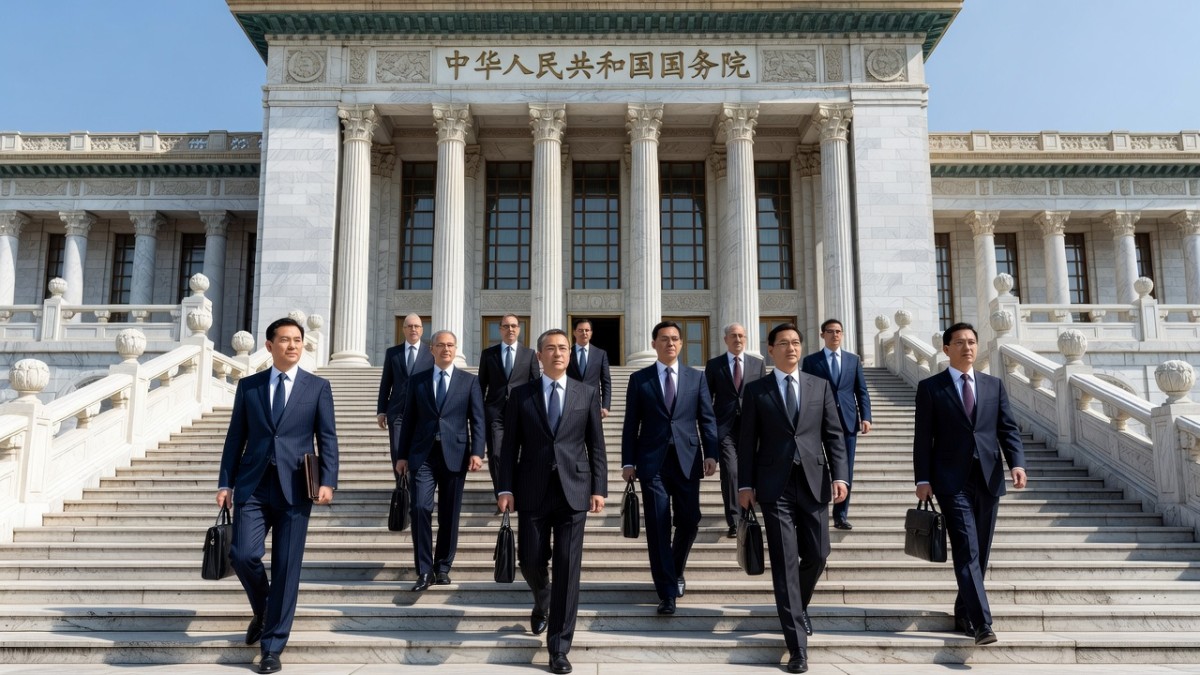
Chinese Premier Li Qiang hosted a US-China Business Council delegation in Beijing on September 1, pledging a level playing field for American firms, days after Foreign Minister Wang Yi met US Ambassador David Perdue to clear obstacles to high-level exchanges. With another Xi-Trump meeting expected, Beijing is running a two-track campaign for strategic stability.
Beijing Runs a Two-Track Stabilization Campaign to Clear the Runway for the Next Xi-Trump Meeting
The recent CGTN discussion hosted by Tian Wei framed a question that now dominates diplomatic calendars on both sides of the Pacific: where do China-US relations go from here before the next round of top-level diplomacy? Within the span of a single week in late August and early September 2026, Beijing supplied a pointed answer through two distinct channels. On August 26, Foreign Minister Wang Yi received US Ambassador to China David Perdue in Beijing for a calibrated readout on bilateral friction. Days later, on September 1, Premier Li Qiang hosted a delegation of the US-China Business Council (USCBC) Board of Directors at the Great Hall of the People, led by board chair and Visa chief executive Ryan McInerney. The sequencing was not accidental. Beijing is running a two-track stabilization campaign—economic outreach to American business and disciplined diplomacy through the ambassadorial channel—designed to clear the runway before the next Xi-Trump meeting.
The May Consensus and the Politics of Strategic Stability
The backdrop to this coordinated push is the May 2026 meeting between President Xi Jinping and President Donald Trump in Beijing, where the two leaders reached what Chinese readouts describe as important consensus. Since that encounter, bilateral relations have remained generally stable, at least by the standards of a relationship that has weathered tariff wars, export control regimes, and repeated rhetorical clashes over technology and supply chains. The Chinese formulation for the desired end-state is consistent: a constructive China-US relationship of strategic stability. That phrase, repeated by Premier Li Qiang during the USCBC meeting, is not diplomatic filler. It signals Beijing's preference for managed competition over confrontation—a framework in which both sides acknowledge deep differences but agree to contain them within predictable boundaries. The politics of strategic stability are delicate for both leaders. For President Xi, the May meeting provided a platform to demonstrate that China can engage the United States from a position of strength, particularly as domestic narratives emphasize technological self-sufficiency and the resilience of the Chinese economy. For President Trump, the meeting offered a chance to claim progress on trade imbalances and market access ahead of domestic political cycles. The consensus reached in May, however, was always understood as a framework rather than a settlement. The hard work of implementation—tariff exemptions, export control adjustments, and the management of flashpoints in the Taiwan Strait and the South China Sea—was always going to fall to subordinates. That is precisely the work now underway in Beijing's two-track campaign.
Li Qiang's Courtship of Corporate America
Premier Li Qiang's meeting with the USCBC delegation was a masterclass in targeted economic diplomacy. Speaking at the Great Hall of the People, Li pledged that China will work to address the reasonable concerns of US companies operating in the country and safeguard a level playing field in accordance with the law. The phrasing matters. Beijing is not offering blanket concessions; it is signaling a willingness to resolve specific grievances—whether related to data flows, market access in financial services, or intellectual property enforcement—through legal and regulatory channels. The audience was carefully chosen. The USCBC represents the most durable constituency for stable US-China relations: American multinationals with significant revenue exposure to the Chinese market. Li's characterization of China as probably the only high-potential market in the world with both massive scale and vibrant novelty was a direct appeal to corporate growth strategies. He highlighted smart consumption and green consumption as areas ripe for American investment, implicitly positioning China as a market for the future rather than a battleground for geopolitical rivalry. The premier also normalized the existence of friction, noting that given the scale of China-US economic and trade cooperation, some differences are normal and can be resolved through respect, understanding, communication, and consultation. This is a deliberate counter-narrative to the decoupling thesis: Beijing wants American business leaders to see friction as manageable noise within a fundamentally profitable relationship. The response from McInerney and the delegation was equally significant. The US business community, they said, is confident about China's 15th Five-Year Plan and will continue to expand investment in the country. The USCBC committed to serving as a bridging role and a constructive force in bilateral relations. This is not merely polite diplomacy. American multinationals have consistently lobbied against the most aggressive decoupling measures, recognizing that China remains central to global supply chains for electronics, pharmaceuticals, and consumer goods. By receiving the delegation at the highest level of government, Beijing is reinforcing the message that the business community has a seat at the table—and that its interests are aligned with China's strategic goals.The Wang Yi-Perdue Channel: Managing Friction Ahead of a Summit
If the Li Qiang meeting was the economic track, the Wang Yi-Perdue meeting on August 26 was the diplomatic track. Wang stated China's principled position with characteristic directness, emphasizing that mutual respect is a basic norm governing state-to-state relations. He called on both sides to implement the important consensus reached by the two presidents, remove disruptions, and clear obstacles to high-level exchanges. The language of removing disruptions and clearing obstacles is code for a specific set of irritants: US export controls on advanced semiconductors, tariffs on Chinese technology goods, and what Beijing perceives as excessive interference in its internal affairs under the guise of human rights or security concerns. Perdue's response was calibrated to keep the door open. He acknowledged that the two heads of state have provided important strategic guidance and described the meetings as productive, stating that the two nations are working together to achieve a constructive relationship of strategic stability with fairness and reciprocity. The inclusion of fairness and reciprocity is a subtle reminder that Washington's demands have not changed—the United States still seeks a rebalancing of economic terms. But Perdue's presence in Beijing and his willingness to engage in detailed consultations signal that the Trump administration sees value in maintaining a functioning diplomatic channel even as it pursues competitive policies. Reports from outlets including the South China Morning Post and The Hill describe the Wang Yi-Perdue meeting as preparation for a next Xi-Trump encounter, with Chinese officials signaling that President Xi will travel abroad for the meeting. No venue or date has been publicly confirmed, and none should be assumed. What is clear is that Beijing wants the next summit to occur on favorable terms—with the business community reassured, with friction points at least temporarily managed, and with a narrative of strategic stability firmly in place. The two-track campaign is designed to achieve precisely that.The Asymmetry of Leverage: What Each Side Actually Wants
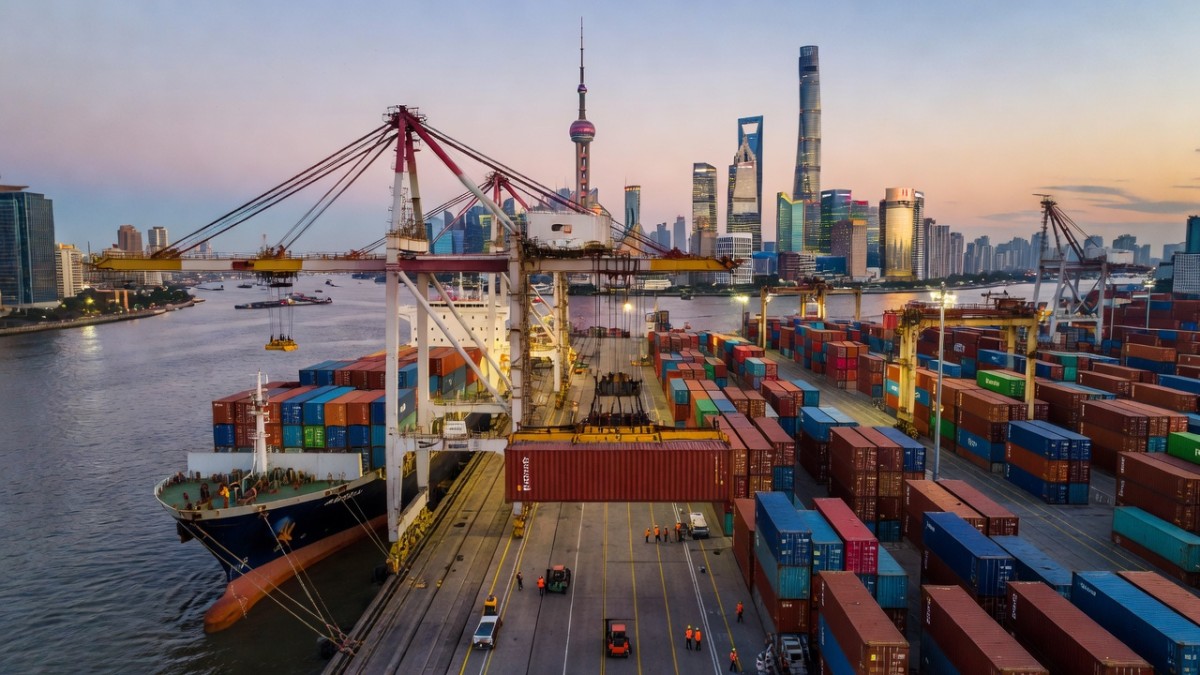
Beneath the diplomatic choreography lies a fundamental asymmetry of leverage. The United States retains significant coercive power through its control of advanced technology, financial infrastructure, and alliance networks. Export controls on cutting-edge semiconductors and related manufacturing equipment remain a recurring irritant, and Washington has shown little appetite for rolling them back absent concrete Chinese concessions. Tariffs on Chinese technology goods continue to shape corporate cost structures and supply chain decisions. For Washington, the leverage is real but not unlimited—American companies face competitive disadvantages when cut off from the Chinese market, and allies in Europe and Asia are reluctant to fully align with US export control regimes. China's leverage is different but substantial. The Chinese market remains indispensable for many American multinationals, particularly in consumer goods, automobiles, and financial services. China's control over critical minerals and rare earth processing gives it counter-leverage in any technology confrontation. And Beijing's diplomatic weight in the Global South, amplified through initiatives like the Belt and Road, offers alternative partnerships that reduce dependence on Western markets. What Beijing wants from the United States is predictability: a reduction in the whiplash of policy reversals, a clearer framework for technology trade, and respect for China's core interests, particularly regarding Taiwan and the South China Sea. What Washington wants is behavioral change: more balanced trade, stronger intellectual property enforcement, and a more transparent regulatory environment. The two-track campaign reflects Beijing's understanding that these interests are not mutually exclusive. By courting American business, China hopes to create domestic political pressure in the United States against the most disruptive decoupling measures. By engaging through the ambassadorial channel, Beijing signals its willingness to manage friction through dialogue rather than escalation. The strategy is to make the United States's own economic interests an ally of Chinese diplomatic goals.
The Business Stake in Managed Competition
The American business community has a direct stake in the success of this two-track approach. For companies like Visa, whose global network depends on cross-border payment flows, the stability of US-China relations is not an abstract geopolitical question—it is a commercial imperative. The USCBC delegation's confidence in China's 15th Five-Year Plan reflects a pragmatic assessment: despite the rhetoric of decoupling, the Chinese economy continues to offer growth opportunities that are increasingly scarce elsewhere. Smart consumption and green consumption are not just Chinese policy slogans; they represent actual market demand for digital payments, sustainable products, and advanced services. The business community's role as a bridging force is both an opportunity and a constraint. American companies can lobby for stable access to the Chinese market, but they cannot override national security concerns in Washington or sovereign policy choices in Beijing. The managed competition framework that both governments now reference offers the best available outcome: a relationship in which economic interdependence persists, but within boundaries that respect each side's strategic imperatives. For the business community, this means accepting that some technology transfer restrictions will remain, while pushing back against the most sweeping forms of economic decoupling.Strategic Implications and What to Watch
The strategic implications of Beijing's two-track campaign extend beyond the bilateral relationship. For the Asia-Pacific region, a stable US-China relationship reduces the risk of forced alignment—smaller states are less likely to face stark choices between Washington and Beijing if the two powers are managing their competition constructively. For global supply chains, the continuation of managed competition means that the deep integration of Chinese manufacturing with American technology and consumer markets will persist, albeit with more friction and redundancy than in the pre-2018 era. For the global economy, the avoidance of a full-scale economic rupture between the world's two largest economies is a public good in itself. What to watch in the coming weeks and months is the trajectory of the ambassadorial channel. If the Wang Yi-Perdue consultations yield concrete progress on specific irritants—whether tariff exemptions, visa processing, or the resumption of working-level dialogues—the runway for a next Xi-Trump meeting will be clear. If the channel stalls, Beijing may recalibrate its approach, potentially slowing the pace of high-level exchanges while maintaining economic outreach to the business community. The two tracks are not synchronized by accident; they are designed to reinforce each other, with economic reassurance providing ballast for diplomatic engagement. The forward-looking assessment is cautiously optimistic, with significant caveats. Beijing has demonstrated strategic patience and tactical flexibility, using both the business community and the ambassadorial channel to advance its interests. Washington, for its part, has shown a willingness to engage even as it maintains competitive pressure. The next Xi-Trump meeting, whenever and wherever it occurs, will be the true test of whether the two-track campaign has succeeded in clearing the runway. The groundwork has been laid; the flight schedule remains uncertain. By Prof. Marcus Chen, Staff WriterThis article was produced with AI-assisted research and editorial support. Reporting is based on sources cited in the article.
What's Your Reaction?
 Like
0
Like
0
 Dislike
0
Dislike
0
 Love
0
Love
0
 Funny
0
Funny
0
 Wow
0
Wow
0
 Sad
0
Sad
0
 Angry
0
Angry
0

Marcus Chen
World Politics Analyst at Global1.News. Based in Beijing, covering US-China relations, global trade, and geopolitical strategy. Brings deep analytical perspective to the power dynamics shaping international affairs.













Comments (0)