
GAO Report Exposes DOGE Savings Overstatements
Folks, the Government Accountability Office just dropped a bombshell report today exposing how the Department of Government Efficiency's flashy Wall of Receipts padded its numbers with billions in phantom savings that never materialized.
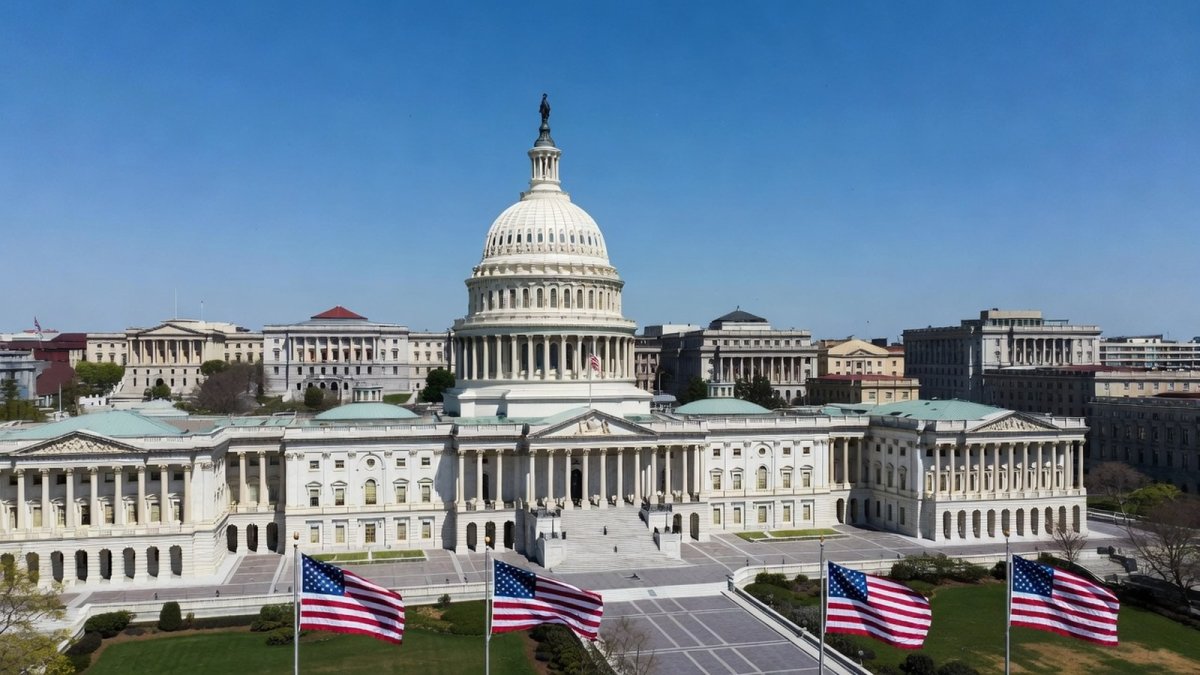
Folks, the Government Accountability Office just dropped a bombshell report today exposing how the Department of Government Efficiency's flashy Wall of Receipts padded its numbers with billions in phantom savings that never materialized. The watchdog found solid backing for only a tiny fraction of the claimed cuts, while DOGE stonewalled requests for basic proof. This isn't just sloppy bookkeeping—it's a direct hit on claims that were sold to the public as hard-won victories against waste.
GAO Report Exposes DOGE Savings Overstatements
Washington, D.C. – Thursday, August 6, 2026 — The Government Accountability Office released its audit today showing the Department of Government Efficiency overstated savings on its public Wall of Receipts by wide margins, with verifiable support for just 4 percent of the $110 billion in contract, grant, and lease terminations it highlighted. Requested by Senate Democrats, the review of GAO-26-108615 reveals DOGE ignored data quality problems, refused to cooperate with investigators, and kept inflated figures live even after internal reviews showed no actual terminations occurred. The findings land as agencies across Washington continue to grapple with the fallout from rushed cuts that targeted programs serving millions of Americans.
The Wall of Receipts: $110 Billion Under Scrutiny
The Wall of Receipts went live on February 17, 2025, just weeks after DOGE was created by executive order. By July 7, 2026, it listed $110.3 billion in savings from contracts, grants, and leases, with the broader site claiming a total of $215 billion. GAO auditors found that DOGE's methodology often failed basic checks, including cases where claimed savings did not match any termination records in federal databases.
Folks, this matters because federal agencies obligated more than $2 trillion on contracts, grants, and leases in fiscal year 2025 alone. When a public dashboard inflates results by orders of magnitude, it distorts the real picture of what government spending actually changed. The report notes that DOGE provided no comments on the findings and never responded to repeated requests for interviews or supporting documents.
The Wall of Receipts posted updates roughly every two weeks from February through May 2025 before the cadence slowed sharply from June onward, with the final refresh landing January 1, 2026. That tapering cadence turned a promised accountability tool into a static snapshot that grew harder to verify over time.
DOGE listed no savings whatsoever for 5,812 of the 13,476 contracts it posted, or 43.2 percent of the total. For another 2,479 contracts worth $24.3 billion in claimed savings—40 percent of the contract total—auditors could not reconstruct how the figures were derived at all.
DOGE described its method as total contract value minus the obligated amount, yet USAspending.gov never records full grant values, leaving the same formula impossible to apply to grants and exposing a core data gap the dashboard never addressed.
Contracts: The $27.4 Billion That Wasn't
DOGE listed 13,440 contract terminations tied to $61 billion in reported savings. GAO cross-checked those entries against the Federal Procurement Data System and determined that only 43.2 percent of the savings linked to contracts that were actually terminated in full or in part. A separate $27.4 billion came from 2,503 contracts that showed no termination action whatsoever.
Even when DOGE applied its own formula of subtracting obligated amounts from total contract value, it did so correctly for just 27.5 percent of the savings. For the remaining contracts, auditors could not determine how the numbers were calculated or found outright mismatches. One Defense Department IT contract serving more than 700 military medical facilities was flagged for termination, then kept in place after discussions with the agency—yet the Wall still displayed $1.7 billion in savings with no deobligation recorded.
Similar gaps appeared in Air Force and HHS examples. An infrastructure modernization contract saw its value reduced by $3.75 billion, but DOGE claimed $4 billion. Another IT transformation reported $62.7 million in savings while only $21.6 million was actually deobligated and the requirement continued under a follow-on award. Across 21 contracts reviewed in depth, GAO identified just $77.8 million in confirmed deobligations.
DOGE posted more than $28 million in savings on a Defense Counterintelligence and Security Agency financial-management modernization contract after the agency trimmed optional work. The same agency later extended the original contract six months and handed the identical contractor a fresh $27.4 million award without competition, a move a senior Air Force contracting official warned can inflate labor rates, overhead, and transition costs while erasing competitive pricing leverage.
On an HHS public-health reporting registry contract, DOGE claimed $14.7 million in savings. The contract was never canceled; it simply ran to the end of its performance period, with only $141,489 ultimately deobligated because the contractor billed less than expected.
CBS News had already shown that DOGE’s three largest claimed cuts through August 2025 delivered less than 3 percent of the advertised savings. Shortly afterward the group halted all detailed reporting on canceled USAID contracts, citing legal reasons and further eroding the public record.
Leases: Credit for Work Already Done
The Wall listed 264 leases for $53.5 million in savings, though the page itself displayed an inaccurate total of $113 million. GAO determined that 108 of those leases, worth about $15.3 million, were already in the termination pipeline at the General Services Administration before DOGE existed. DOGE simply took credit for actions already underway.
Actual savings from the listed leases totaled $31.8 million after corrections, meaning the Wall overstated lease results by $81.1 million — and the true costs of unwinding that real estate were never counted.
One tenant agency described a lease termination that the building owner refused to rescind, forcing GSA to negotiate a replacement lease at more than $1.5 million higher per year under a five-year firm term—turning an announced saving into an immediate annual cost increase.
Forty-four leases DOGE listed as terminated remained active, producing a $5.6 million overstatement. Separately, 30 of 264 leases sat in firm term and risked early-termination penalties; six of those were ended or scheduled for termination, accounting for $5.9 million in reported savings that included zero penalty estimates.
Grants: 96% Unverifiable
DOGE reported $49 billion in savings from 15,887 terminated grants. Auditors could not verify the calculation method for 96 percent of that amount, covering 13,553 grants worth $47.32 billion. Roughly one in five grants lacked enough identifying data to even locate them in USAspending.gov, accounting for $25.63 billion of the claimed total.
USAspending.gov does not track total grant values in a way that supports DOGE's stated formula, leaving most entries without any traceable backup. This opacity stands out because grant terminations affect programs ranging from public health tracking to community services, yet the public was given no way to confirm what actually changed.
'A Slapdash and Deceptive Effort'
Senator Gary Peters, ranking member of the Homeland Security and Governmental Affairs Committee, noted that while rooting out waste is a shared goal, DOGE's approach misled the public, took credit for prior work, and damaged agencies' capacity to deliver services. The effort also exposed sensitive data and dismantled parts of USAID and the Consumer Financial Protection Bureau without clear evidence of sustained savings.
Elon Musk, who led DOGE early on before departing in late May, had targeted $2 trillion in cuts; the operation shut down on July 4. The associated X account with 4.7 million followers posted many of the itemized claims, yet DOGE stopped detailing certain USAID cancellations citing legal reasons. The White House and Musk have not responded to requests for comment on the GAO findings.
What Happens Next
GAO recommends that the Executive Office of the President require the U.S. DOGE Service to display known data limitations prominently on the Wall of Receipts. The page has not been updated since January 1, 2026, but remains accessible to the public. Without corrections, the inflated figures continue to shape perceptions of federal efficiency efforts.
Agencies still face the practical effects of the terminations that did occur, including extended contracts and follow-on awards that offset some reported reductions. Lawmakers are expected to press for greater transparency in future spending reviews.
Folks, the politics here are unavoidable. This report drops just months before the 2026 midterms, and it hands Democrats a ready-made cudgel: an independent, nonpartisan watchdog confirming what critics have said since February 2025 — that the administration's flagship efficiency effort sold the public a bill of goods. For Republicans, the calculus is trickier. DOGE's popularity always rested on the promise of a leaner government; an audit showing the receipts don't add up undercuts the one number the whole operation was built around. Voters don't need to follow every line of federal procurement data to understand a simple truth: when the government says it saved you $110 billion, it ought to be able to prove it.
The Bottom Line
Folks, when a government dashboard claims massive savings but auditors can verify only pennies on the dollar, trust erodes fast. The GAO report shows DOGE's Wall mixed real actions with unverified or nonexistent ones, leaving the public with a distorted view of what was actually achieved. Accurate tracking of taxpayer dollars requires more than splashy numbers—it demands the supporting evidence that was never provided here.
The public needs dashboards that can withstand scrutiny. GAO's central finding remains unchanged: real savings demand real evidence, not assertions that later unravel.
By Jessica Ali, Staff Writer
This article was produced with AI-assisted research and editorial support. Reporting is based on sources cited in the article.
What's Your Reaction?
 Like
0
Like
0
 Dislike
0
Dislike
0
 Love
0
Love
0
 Funny
0
Funny
0
 Wow
0
Wow
0
 Sad
0
Sad
0
 Angry
0
Angry
0

Editor-in-Chief at Global1.News. Atlanta-based journalist who cuts through the BS and tells it like it is. Lead anchor, host, and the voice you hear when the spin stops and the truth starts.














Comments (0)