
Pakistan PM Shehbaz Sharif Holds Strategic Talks With MBS as Gulf Faces US-Iran Fallout and Houthi Threats
Pakistan Prime Minister Muhammad Shehbaz Sharif’s arrival in Jeddah on August 6, 2026, occurs more than five months into the US-Iran conflict that began with strikes killing Supreme Leader Ayatollah Ali Khamenei.
Pakistan Prime Minister Muhammad Shehbaz Sharif’s arrival in Jeddah on August 6, 2026, occurs more than five months into the US-Iran conflict that began with strikes killing Supreme Leader Ayatollah Ali Khamenei. The visit highlights Pakistan’s dual role as Riyadh’s security partner and a potential mediator while Houthi naval threats and a new multinational maritime coalition reshape Gulf security. Saudi Arabia’s invitation to Sharif for his third trip this year underscores efforts to coordinate on bilateral defence and regional stability amid disrupted energy routes.
Pakistan PM Shehbaz Sharif Holds Strategic Talks With MBS as Gulf Faces US-Iran Fallout and Houthi Threats
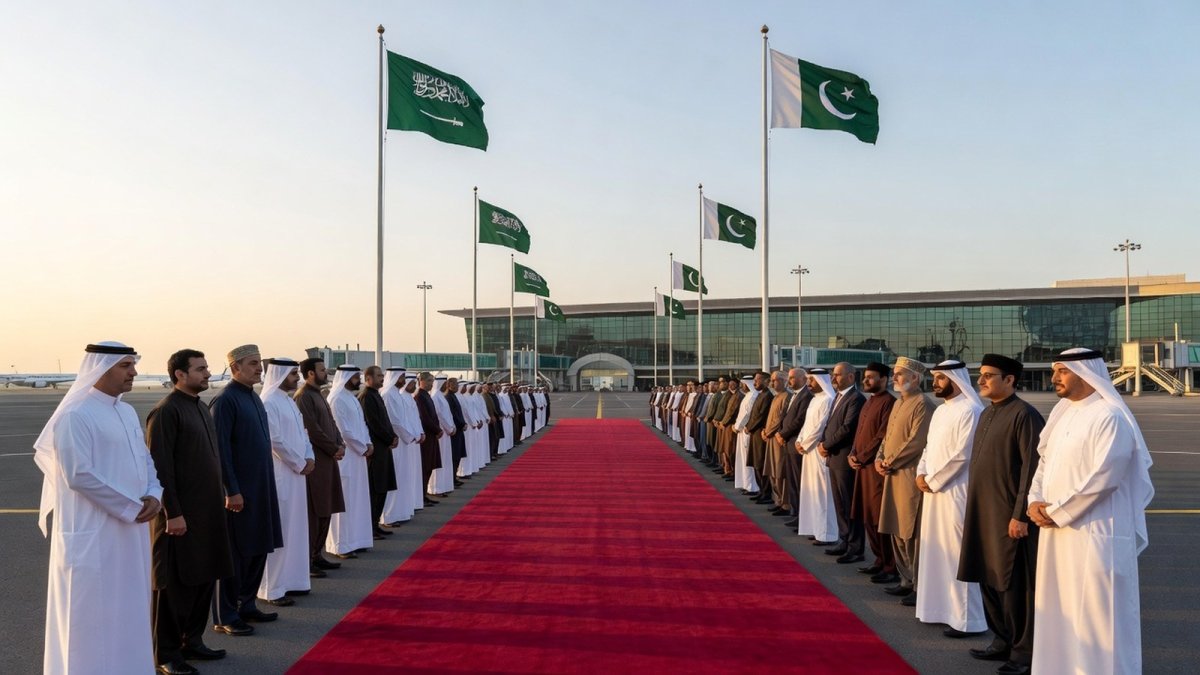
Jeddah, Saudi Arabia – August 6, 2026 — Pakistan Prime Minister Muhammad Shehbaz Sharif arrived at King Abdulaziz International Airport in Jeddah on August 6 for an official visit through August 8 at the invitation of Crown Prince and Prime Minister Mohammed bin Salman. He was received by Deputy Governor of the Makkah Region Prince Saud bin Mishaal bin Abdulaziz, Environment Minister Abdulrahman Alfadley, Saudi Ambassador Nawaf Al-Malki and Pakistan’s Ambassador Ahmad Farooq. The high-level delegation includes Deputy Prime Minister and Foreign Minister Ishaq Dar, Chief of Army Staff Field Marshal Syed Asim Munir, and ministers Khawaja Muhammad Asif and Attaullah Tarar. Sharif will hold extensive talks with MBS on bilateral relations and regional developments while performing Umrah in Madinah.
Geopolitical Context
The visit unfolds against the backdrop of the US-Iran conflict that started February 28, 2026. Pakistan brokered a two-week ceasefire in April and helped secure a June memorandum of understanding that collapsed in July after Iranian strikes on commercial vessels and subsequent US strikes. Washington reimposed a naval blockade on Iran while Oman mediates Strait of Hormuz talks. On July 20 Yemen’s Houthis declared a naval blockade on Saudi Arabia and claimed attacks on Red Sea shipping, pushing oil prices near US$90 per barrel.
The US-Iran conflict, erupting on February 28, 2026, with strikes that eliminated Supreme Leader Ayatollah Ali Khamenei, has forced Pakistan into a delicate position as both a frontline neighbor and a potential bridge. Islamabad’s earlier success in brokering a two-week ceasefire in April and facilitating a June memorandum of understanding demonstrated its unique access to both Washington and Tehran, yet the collapse of that accord in July after Iranian attacks on commercial vessels exposed the limits of such mediation. With Oman now steering Strait of Hormuz talks and the United States enforcing a naval blockade, Pakistan’s 900-kilometre border with Iran becomes both an asset for quiet diplomacy and a vulnerability should tensions spill across the frontier.
Houthi naval actions declared on July 20 have compounded these pressures by targeting Red Sea shipping lanes, driving oil prices close to US$90 per barrel and prompting Saudi Arabia to reroute more than 70 percent of its exports through the East-West pipeline. This shift has allowed Aramco to maintain output while posting a 33 percent profit surge, yet it also underscores how non-state actors can disrupt energy flows that Pakistan itself depends upon for affordable imports. The resulting volatility tests Islamabad’s ability to maintain steady economic lifelines while positioning itself as a neutral actor rather than a partisan in the widening Gulf confrontation.
Defence and Security Ties
Saudi Arabia and Pakistan signed the Strategic Mutual Defence Agreement in September 2025 under which each treats an attack on the other as an attack on itself. Pakistan has already deployed jets to a Saudi airbase under the pact. On July 30 Saudi Arabia announced a multinational maritime defence coalition with Pakistan among 14 founding members; Riyadh will host headquarters covering the Bab el-Mandeb Strait, Red Sea and Gulf of Aden after hosting 43 nations and the EU.
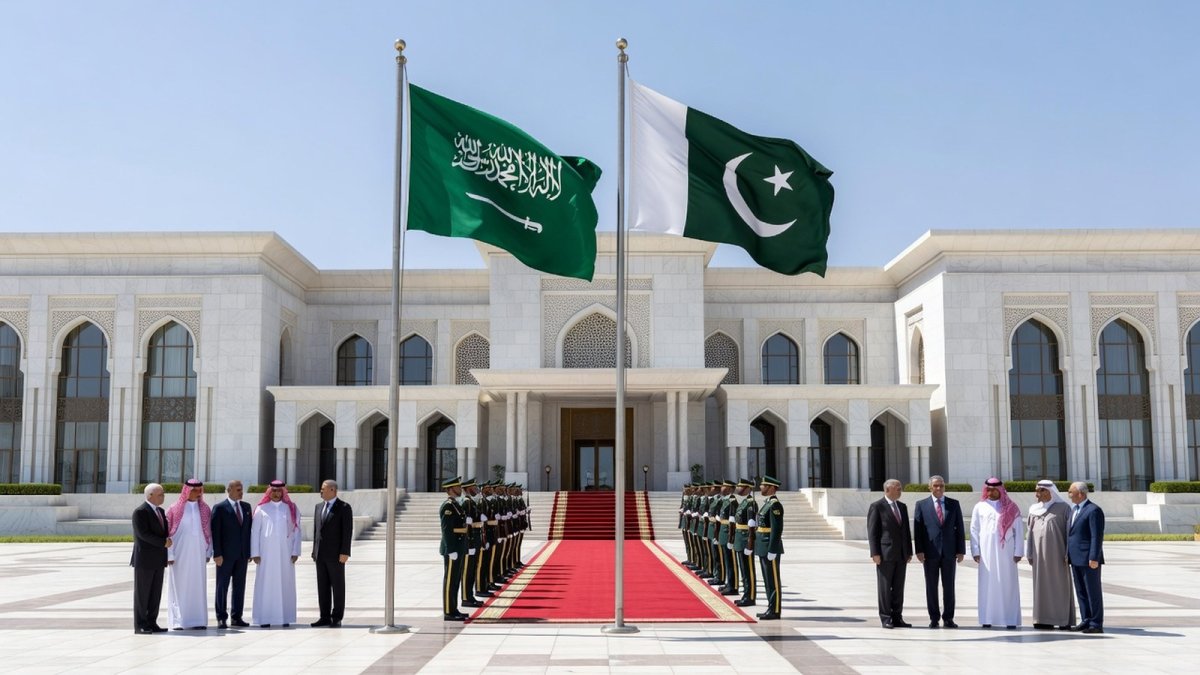
The Strategic Mutual Defence Agreement signed in September 2025 formalised a mutual-defence commitment that treats an attack on either party as an attack on both, moving beyond the informal security understandings that have characterised relations since the 1960s. Pakistan’s subsequent deployment of jets to a Saudi airbase, confirmed in April 2026 during the ceasefire talks, illustrated the pact’s operational dimension without requiring permanent large-scale troop movements. This measured approach allows Riyadh to signal credible deterrence while Islamabad avoids the appearance of direct alignment against Iran.
The multinational maritime coalition announced on July 30, 2026, with Pakistan among its 14 founding members and Riyadh as headquarters, extends this coordination into the Bab el-Mandeb Strait, Red Sea and Gulf of Aden. The planning conference that drew 43 nations plus the European Union reflects Saudi determination to build a regional security architecture at a time when long-term US protection appears less certain. For Pakistan, participation reinforces its value as a trusted partner capable of contributing air and naval assets without overextending its own stretched resources.
Historical Background
Pakistan’s Ministry of Foreign Affairs described the visit as occurring against short-term effects of the regional situation to expand strategic cooperation and coordination on regional affairs. Sharif’s delegation includes Ishaq Dar who joined from Madinah after the Ministerial Meeting on Jerusalem in Jordan. This marks Sharif’s third visit to Saudi Arabia in 2026.
Pakistan-Saudi security cooperation dates to the 1960s, when Pakistani pilots and technicians helped build the kingdom’s early air-defence capabilities. During the 1990-91 Gulf War, Pakistani troops participated in Operation Desert Shield and Storm, cementing a pattern of rapid deployment in moments of Saudi vulnerability. These episodes established Islamabad as a reliable force multiplier, a role further enhanced by Pakistan’s nuclear programme, which Gulf states have long viewed as an implicit strategic backstop against regional adversaries.
Financial support has followed a similar cyclical rhythm. Saudi deposits and deferred oil facilities have repeatedly stabilised Pakistan during balance-of-payments crises, including the acute pressures that followed the 2022 floods and the subsequent IMF standby arrangements. The current request to convert the existing US$5 billion deposit into a ten-year facility and expand the oil arrangement to US$5 billion with a three-year repayment window continues this established pattern of leveraging Riyadh’s liquidity to ease Islamabad’s reserve constraints under its ongoing IMF programme.
Economic Dimensions
Pakistan has requested converting the existing US$5 billion Saudi deposit at the State Bank of Pakistan into a 10-year facility and expanding the deferred oil arrangement from US$1.2 billion to US$5 billion with a three-year repayment period. Workers’ remittances from Saudi Arabia reached US$829.6 million in June 2026 while total FY26 remittances rose 8.6 percent to US$41.6 billion. Saudi Arabia redirected over 70 percent of oil exports through the East-West pipeline to Red Sea ports, enabling Aramco to sustain millions of barrels per day and report a 33 percent profit surge.
Pakistan’s economy remains under significant reserve pressure within its IMF programme, making the requested conversion of the US$5 billion Saudi deposit into a longer-term facility and the expansion of the deferred oil arrangement from US$1.2 billion to US$5 billion with extended repayment terms a critical priority. These measures, first formally sought in March 2026, would provide breathing room for foreign-exchange management while the country contends with elevated global energy prices. The timing of the Jeddah visit therefore carries direct implications for fiscal stability beyond the immediate diplomatic agenda.
Remittances from Saudi Arabia, which reached US$829.6 million in June 2026 alone, continue to form a vital component of Pakistan’s external accounts. With total FY26 remittances climbing 8.6 percent to US$41.6 billion, the kingdom’s role as the largest single source of such inflows underscores the interdependence between labour migration and macroeconomic resilience. Any deepening of defence or energy cooperation is therefore assessed in Islamabad not only through a security lens but also through its capacity to sustain these remittance channels amid regional turbulence.
Regional Dynamics
Pakistan’s longstanding ties with Tehran, maintained alongside its security partnership with Riyadh, allow it to present itself as a credible interlocutor at a moment when direct US-Iran communication remains minimal. This dual positioning has grown more valuable as Saudi Arabia confronts reduced certainty over long-term American protection and seeks alternative partners capable of contributing to Gulf stability. The 900-kilometre border with Iran gives Islamabad both leverage and exposure, enabling discreet messaging while exposing it to potential spillover from any escalation.
The Houthi blockade and the subsequent maritime coalition have further highlighted how non-state threats can reshape state alignments. Pakistan’s inclusion among the coalition’s founding members signals a willingness to address these challenges without abandoning its mediator posture, yet the arrangement also tests the limits of that balancing act. Riyadh values Islamabad’s participation precisely because it brings operational credibility without requiring the kingdom to rely solely on uncertain external guarantees.
Strategic Calculus
Analyst Muhammad Faisal notes the defence pact functions as a mechanism for deterrence and crisis coordination rather than new deployments, enhancing Pakistan’s relevance without a permanent Gulf-centred posture. Umer Karim states the pact remains a mix of signalling and deployments as Islamabad avoids appearing directly aligned against Iran while taking a firmer position against non-state actors such as the Houthis. The biggest risk is that Pakistan’s balancing act as mediator and security provider will come under strain if Iran and its proxies continue attacking Saudi Arabia.
The central tension lies in sustaining the mediator role while fulfilling coalition obligations. Should Iran or its partners escalate against Saudi infrastructure, Pakistan’s dual positioning could face direct strain, forcing trade-offs between financial support from Riyadh and the diplomatic capital accumulated with Tehran. The Jeddah talks will therefore reveal how far the two sides can institutionalise cooperation without compromising Islamabad’s broader regional utility.
Regional Implications
Faisal warns that a sharper Saudi-Iran rivalry would erode Pakistan’s strategic flexibility, forcing difficult trade-offs. The visit is expected to test whether expanded Saudi financing and the maritime coalition can stabilise Pakistan’s economy while preserving its mediation role between Washington and Tehran. If implemented, deeper defence coordination could influence future energy market stability and Arab-Israeli normalisation dynamics across the region.
Deeper Saudi-Pakistani defence coordination could influence energy-market stability by reassuring markets that Red Sea and Gulf of Aden routes enjoy credible protection, potentially moderating price spikes that affect importers worldwide. At the same time, expanded financing arrangements tied to the visit may help anchor Pakistan’s economy during its IMF programme, reducing the likelihood of domestic instability that could itself become a regional concern. These outcomes remain contingent on whether the maritime coalition delivers tangible operational results against Houthi threats.
A sharper Saudi-Iran rivalry would nevertheless erode Pakistan’s room for manoeuvre, compelling difficult choices between economic imperatives and diplomatic neutrality. The visit thus serves as an early test of whether institutionalised defence ties and fresh financial support can coexist with continued mediation efforts between Washington and Tehran, shaping not only bilateral relations but also the broader trajectory of Arab-Israeli normalisation and Gulf security architecture.
By Malik Hassan, Staff Writer
This article was produced with AI-assisted research and editorial support. Reporting is based on sources cited in the article.
What's Your Reaction?
 Like
0
Like
0
 Dislike
0
Dislike
0
 Love
0
Love
0
 Funny
0
Funny
0
 Wow
0
Wow
0
 Sad
0
Sad
0
 Angry
0
Angry
0

Middle East Correspondent at Global1.News. Based in Beirut, covering politics, conflict, energy, and society across the Middle East. Brings context and depth to a region often reduced to headlines.











Comments (0)