
FWD Hong Kong backs HKSAR’s Five-Year Plan, Healthy Greater Bay Area healthcare, and responsible AI in insurance.
FWD Hong Kong has publicly endorsed the Hong Kong Special Administrative Region’s (HKSAR) newly released Five‑Year Plan for Economic and Social Development (2026‑2030) and the accompanying 2026 Policy Address.
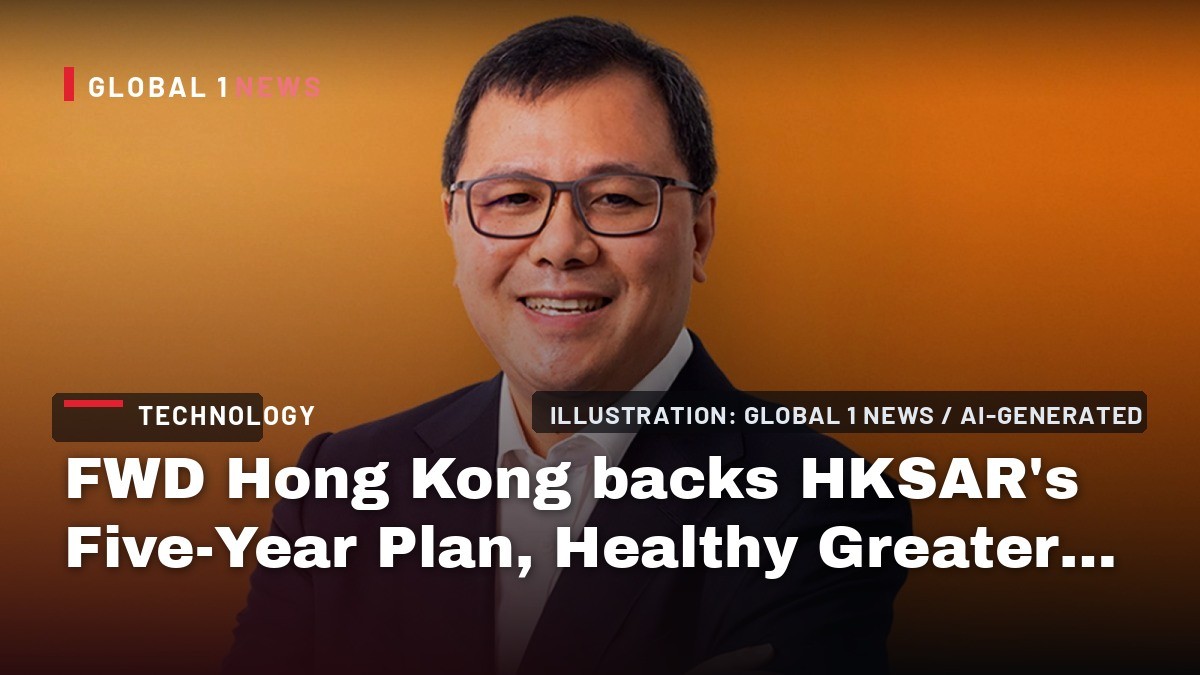
FWD Hong Kong has publicly endorsed the Hong Kong Special Administrative Region’s (HKSAR) newly released Five‑Year Plan for Economic and Social Development (2026‑2030) and the accompanying 2026 Policy Address. The endorsement was delivered by Ken Lau, Managing Director for Greater China and Chief Executive Officer for Hong Kong at FWD, who highlighted the insurer’s alignment with the government’s vision of positioning Hong Kong as a leading risk‑management hub and an international financial centre. Lau’s remarks, issued in a statement produced by an advertising partner, also underscored FWD’s commitment to the “Healthy Greater Bay Area” initiative and to responsible artificial‑intelligence (AI) development within the insurance sector.
Strategic Alignment with the Five‑Year Plan
Ken Lau’s comments make clear that FWD views the Five‑Year Plan not merely as a policy document but as a strategic framework that dovetails with the insurer’s own growth objectives. By positioning Hong Kong as a “leading risk management hub,” the plan directly supports the core business of a pan‑Asian insurer whose operations are headquartered and listed in the city. The language of “financial security” that Lau employed signals an intention to align product development and distribution channels with the government’s broader economic goals, particularly those related to the stability of the real economy.
In practice, this alignment could manifest in several ways. First, FWD may expand its underwriting capacity for sectors identified as priority areas in the Five‑Year Plan, such as technology, green finance, and health services. Second, the insurer is likely to deepen its partnership with local regulators, as evidenced by its participation in the Insurance Authority’s AI Cohort Programme. Such cooperation can facilitate smoother regulatory approval for innovative products, thereby reinforcing Hong Kong’s reputation as a forward‑looking financial hub.
Supporting the “Healthy Greater Bay Area” Vision
The “Healthy Greater Bay Area” model, a key component of the government’s policy agenda, seeks to integrate health resources across the Guangdong‑Hong Kong‑Macau region. Lau’s statement that FWD will provide “cross‑boundary medical solutions and services” indicates that the insurer intends to leverage its regional network to deliver seamless healthcare coverage for customers moving between jurisdictions. This approach aligns with the broader trend of insurers expanding into health‑tech and telemedicine services to meet rising consumer expectations for convenient, high‑quality care.
While the source material does not detail specific product offerings, the emphasis on “quality healthcare support” suggests that FWD may pursue partnerships with hospitals, clinics, and digital health platforms in both Hong Kong and neighboring Guangdong cities. By doing so, the insurer can create a value‑added proposition that differentiates it from competitors, especially in a market where consumers increasingly value integrated health and insurance solutions.
Responsible AI Development in Insurance
FWD’s involvement in the Insurance Authority’s AI Cohort Programme signals a proactive stance toward the ethical deployment of AI technologies. As a “founding participant,” the insurer is positioned to influence the development of industry standards around data usage, algorithmic transparency, and risk assessment. This participation reflects a broader regulatory push in Hong Kong to ensure that AI adoption does not compromise consumer protection or market integrity.
From an analytical perspective, responsible AI can enhance underwriting efficiency, claims processing speed, and fraud detection. However, the insurer’s public commitment to “responsible AI innovation, adoption and competency development” suggests an awareness of the reputational and regulatory risks associated with opaque AI models. By aligning its AI strategy with the authority’s cohort, FWD aims to balance innovation with compliance, thereby reinforcing trust among policyholders and regulators alike.
Implications for Hong Kong’s Financial Centre Aspirations
The endorsement of the Five‑Year Plan by a major insurer like FWD contributes to the narrative that Hong Kong’s financial ecosystem is cohesive and supportive of government policy. When leading market participants publicly align with policy objectives, it signals to international investors that the jurisdiction offers a predictable and collaborative business environment. This perception is crucial for maintaining Hong Kong’s status as an international financial centre, especially amid regional competition from other Asian hubs.
Moreover, FWD’s emphasis on risk management and financial security dovetails with the government’s goal of building a resilient economy. By positioning insurance as a safeguard for the “real economy,” the insurer reinforces the idea that robust risk‑transfer mechanisms are essential for sustainable growth. This framing may encourage other financial institutions to adopt similar language, creating a collective industry narrative that underscores the strategic importance of insurance in economic development.
Cross‑Border Healthcare Integration: Opportunities and Challenges
The “Healthy Greater Bay Area” initiative presents both market opportunities and operational challenges for insurers. On the opportunity side, cross‑border health coverage can attract a mobile customer base that values seamless access to medical services across Hong Kong, Macau, and Guangdong. For FWD, leveraging its pan‑Asian footprint could enable the rollout of standardized health insurance products that simplify enrollment and claims for customers traveling within the region.
Conversely, integrating health services across jurisdictions involves navigating differing regulatory regimes, reimbursement structures, and data‑privacy laws. While the source material does not elaborate on how FWD plans to address these complexities, the insurer’s public commitment to “quality healthcare support” implies that it will need to coordinate closely with local health authorities and possibly adopt interoperable digital platforms to ensure consistent service delivery.
AI Cohort Participation: Shaping Industry Standards
Being a founding participant in the Insurance Authority’s AI Cohort Programme places FWD in a position to influence the trajectory of AI governance in Hong Kong’s insurance sector. The cohort likely serves as a collaborative forum where insurers share best practices, develop common technical standards, and engage with regulators on policy formulation. FWD’s involvement suggests that it will contribute its own expertise in data analytics and digital transformation, while also adopting the cohort’s guidelines to mitigate ethical and compliance risks.
From a strategic viewpoint, early engagement with AI standards can provide a competitive edge. Insurers that master responsible AI deployment can achieve operational efficiencies, improve customer experience, and reduce loss ratios. By aligning its AI roadmap with the cohort’s recommendations, FWD can demonstrate to policyholders that its technological innovations are both cutting‑edge and trustworthy, reinforcing brand credibility in a market that is increasingly sensitive to data security and algorithmic fairness.
Future Outlook: Integrating Policy, Technology, and Service
FWD Hong Kong’s public endorsement of the HKSAR’s Five‑Year Plan, its commitment to the Healthy Greater Bay Area, and its participation in the AI Cohort collectively illustrate a strategic approach that intertwines policy alignment, technological innovation, and customer‑centric service. As the Five‑Year Plan unfolds, the insurer is likely to monitor policy developments closely, adjusting its product portfolio and operational models to stay in step with government priorities.
In the broader context, FWD’s actions reflect a pattern among leading Asian insurers that seek to embed themselves within national development agendas while advancing digital transformation. By doing so, they not only secure regulatory goodwill but also position themselves to capture emerging market opportunities in health, risk management, and AI‑driven services. The coming years will reveal how effectively FWD translates these strategic commitments into tangible offerings that enhance consumer welfare and reinforce Hong Kong’s stature as a resilient, innovation‑friendly financial hub.
This article was produced with AI-assisted research and editorial support. Reporting is based on the source material cited below. Sources: South China Morning Post; scmp.com; Global1.News (18 September 2026).
By Kenji Tanaka, Staff Writer
What's Your Reaction?
 Like
0
Like
0
 Dislike
0
Dislike
0
 Love
0
Love
0
 Funny
0
Funny
0
 Wow
0
Wow
0
 Sad
0
Sad
0
 Angry
0
Angry
0

Japan Correspondent at Global1.News. Tokyo-based voice covering Japanese politics, technology, economy, and culture. Tracks the intersection of tradition and innovation in one of the world's most dynamic societies.













Comments (0)