
Waymo locks in $5B loan from Blackstone, PIMCO to fuel robotaxi expansion
Waymo just closed a $5 billion loan – its first foray into debt – and the move says a lot about where the autonomous‑vehicle game is headed. Rowe Price and Fidelity.
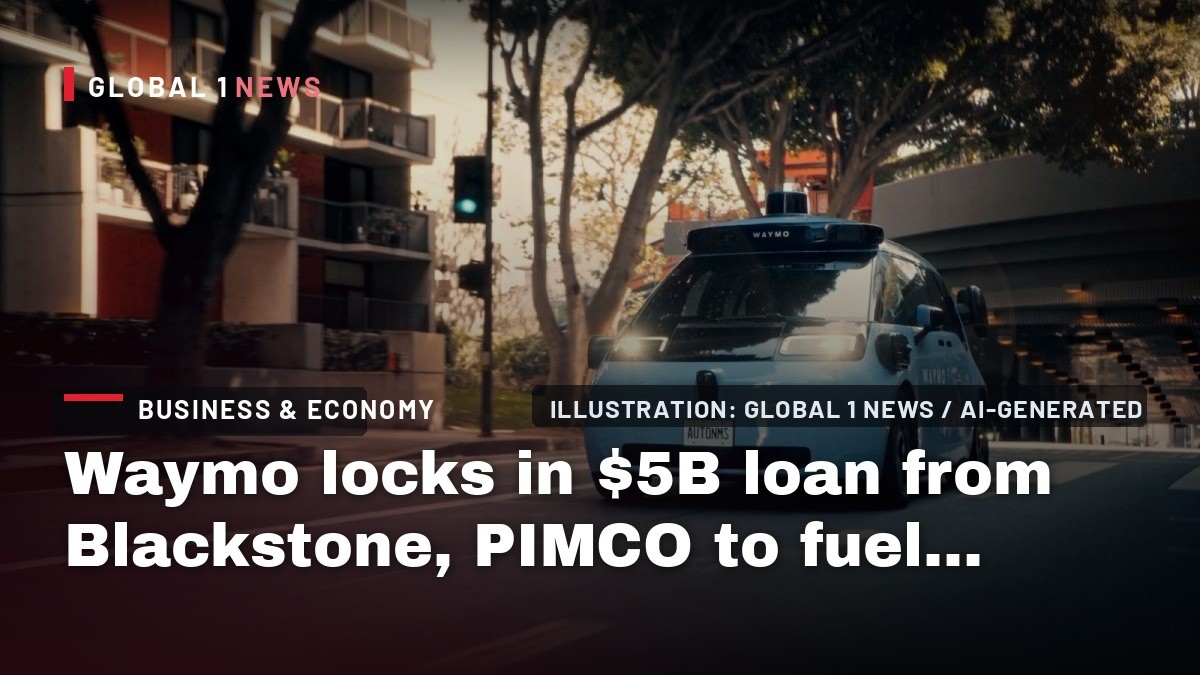
Waymo just closed a $5 billion loan – its first foray into debt – and the move says a lot about where the autonomous‑vehicle game is headed. After years of being propped up by Alphabet’s deep pockets and a string of equity rounds, the robotaxi outfit is now reaching for the kind of financing that traditionally belongs to mature, cash‑flowing businesses. For independent hosting providers and any founder who’s ever been sold a “best practice” that collapses when you hit production, this is a cautionary tale wrapped in a cash‑flow lesson.
Why Waymo needed a loan in the first place
The loan came from a roster of heavyweight lenders – Blackstone, PIMCO, Sixth Street, plus a slew of asset managers like Capital Group, T. Rowe Price and Fidelity. Goldman Sachs acted as the sole lead bookrunner, underscoring the deal’s seriousness. Waymo’s own spokesperson framed the financing as a way to “strengthen its balance sheet” and give the company flexibility to “capitalize on the significant opportunities ahead.” In plain English, the company needs cash to fund a scaling commercial operation that can’t rely on endless equity injections.
From a founder’s perspective, the shift from equity‑only to debt signals a transition from growth‑at‑all‑costs to a focus on profitability and cash‑flow discipline. It’s a reminder that even a $126 billion‑valued venture can’t ignore the fundamentals of paying the bills when you start moving from pilot projects to full‑blown services.
The equity history that got Waymo to this point
Waymo’s capital story reads like a VC‑funded hype train. In February 2026 the company raised $16 billion in equity, pushing its valuation to $126 billion. Earlier rounds included $5.6 billion in 2024, $2.5 billion in 2021 and $3.2 billion in 2020, all led by the likes of Dragoneer, DST Global and Sequoia. Alphabet remains the majority holder, but the sheer volume of cash raised shows how much hype money can flow into a tech that still wrestles with real‑world deployment challenges.
For independent operators, the lesson is clear: equity can fuel rapid expansion, but it also creates a runway that evaporates quickly if the underlying unit economics don’t improve. Waymo’s pivot to debt is a signal that the market is starting to demand a more disciplined capital structure.
The operational stretch: 15 markets and counting
Waymo now runs robotaxi services in 15 markets across the United States, from its early foothold in Phoenix to a spread that includes Los Angeles, San Francisco, San Diego, Austin, Dallas, Houston, Miami, Orlando and Tampa. The company is also testing in London and Tokyo, eyeing a global rollout. Each new market adds layers of regulatory, insurance and infrastructure costs that quickly outpace the cash burn of a pure‑play tech startup.
Running a fleet at scale is a logistical nightmare – think of the data pipelines, the edge compute, and the constant software updates needed to keep cars safe on public roads. Those are the same kinds of operational headaches we see in hosting: you can’t just spin up more servers without a plan for power, cooling and network bandwidth. Waymo’s loan is essentially a bet that the revenue from these 15 markets will be enough to service the debt while they push into new territories.
Regulatory headwinds and safety investigations
The expansion hasn’t been smooth. The National Highway Traffic Safety Administration opened an investigation into Waymo robotaxis illegally passing stopped school buses, and a separate NHTSA probe followed a minor‑injury incident where a robotaxi struck a child near a school. The National Transportation Safety Board also launched its own inquiry after similar bus‑passing behavior was observed in multiple states.
Regulators are tightening the screws, and that adds risk to any financing deal. Debt holders will be watching these investigations closely because any finding of non‑compliance could trigger fines, operational shutdowns, or higher insurance premiums – all of which erode the cash flow needed to service a $5 billion loan. Independent providers should take note: compliance costs can balloon quickly, and they’re rarely accounted for in early‑stage financial models.
What the loan means for Waymo’s competitive posture
By tapping the debt market, Waymo is signaling to rivals – from Cruise to smaller regional players – that it has the financial muscle to sustain a long‑haul rollout. The loan’s syndicate includes firms that typically back mature, cash‑generating businesses, suggesting they see Waymo as moving beyond the “research lab” phase.
However, the reliance on debt also ties Waymo’s hands. Lenders will demand covenants, likely tied to revenue milestones or operational metrics. Miss a target, and you could see tighter credit terms or even a forced restructuring. In the hosting world, that’s akin to a cloud provider being forced to sell capacity at a discount because they missed a growth KPI. It’s a reminder that scaling without a clear path to profitability can quickly turn a growth story into a financial squeeze.
Actionable takeaways for founders and hosting operators
First, diversify your capital sources early. Don’t wait until you need a $5 billion loan to think about debt – start building relationships with banks and asset managers while you’re still in the equity phase. Second, embed regulatory compliance into your product roadmap. Waymo’s investigations show that safety issues can become financial liabilities overnight.
Third, focus on unit economics before you chase market share. Every new city Waymo adds brings a fixed cost load that must be covered by ride revenue. If the per‑ride margin isn’t enough to cover those costs, you’ll end up like a data center that can’t pay its power bill. Finally, keep a tight grip on cash‑flow forecasting. Debt financing is a double‑edged sword – it gives you runway, but it also demands disciplined repayment schedules.
Bottom line: Debt is a reality check for the robotaxi dream
Waymo’s $5 billion loan is a stark reminder that even the most well‑funded tech ventures must eventually answer to the balance sheet. The move from equity‑only to debt financing underscores a maturation that many founders resist, preferring the hype of headline‑grabbing rounds. But when you’re running a fleet of autonomous cars on public streets, the stakes are higher than a cloud‑hosting startup’s monthly burn rate.
For anyone building infrastructure‑heavy businesses – whether you’re deploying servers in a data center or autonomous vehicles on city streets – the lesson is the same: growth must be underpinned by real cash flow, compliance, and a clear path to profitability. Ignore those fundamentals, and you’ll find yourself negotiating with lenders instead of customers. That’s a lesson worth taking to heart before the next round of hype hits.
— Allan Ali, Founder
This article was produced with AI-assisted research and editorial support. Reporting is based on the source material cited below. Sources: TechCrunch; techcrunch.com; Global1.News (08 October 2026).
By Allan Ali, Global1.News
What's Your Reaction?
 Like
0
Like
0
 Dislike
0
Dislike
0
 Love
0
Love
0
 Funny
0
Funny
0
 Wow
0
Wow
0
 Sad
0
Sad
0
 Angry
0
Angry
0

Publisher of Global1.News. Automation architect, systems builder, and the guy making sure the truth gets published.















Comments (0)