
Final opportunity for Blue Economy MSMEs
When the OECS Commission announced the third and final call for the Regional MSME Matching Grants Programme, a ripple of anticipation spread across the smaller islands of the Eastern Caribbean.
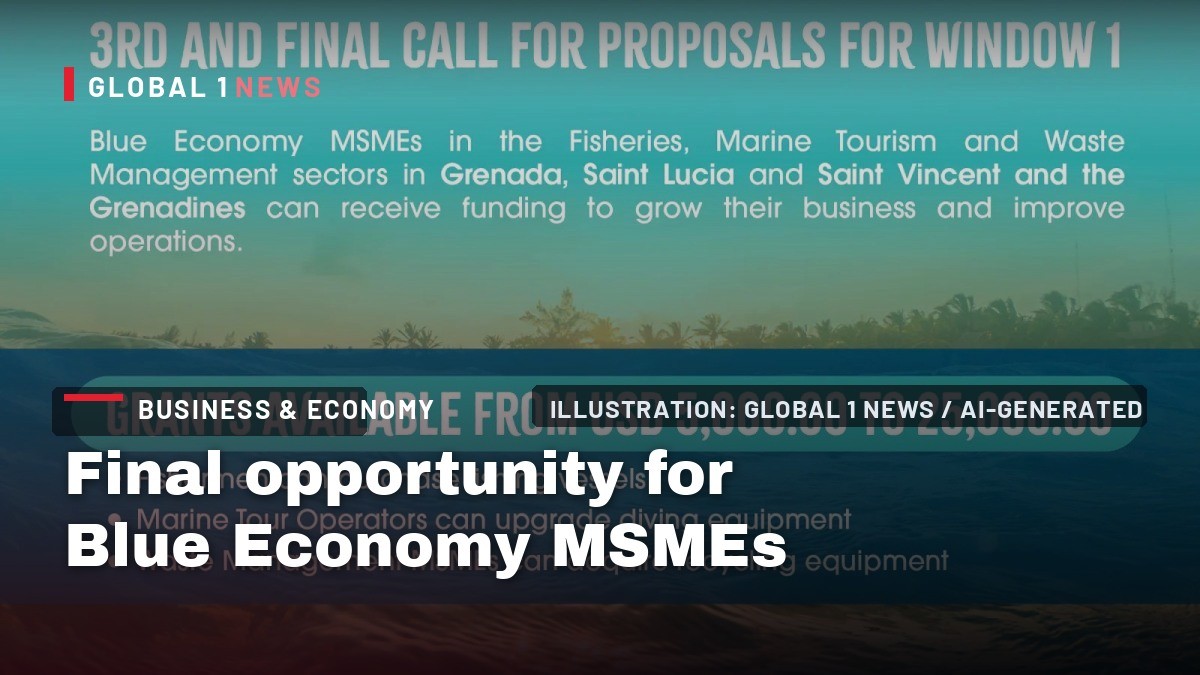
When the OECS Commission announced the third and final call for the Regional MSME Matching Grants Programme, a ripple of anticipation spread across the smaller islands of the Eastern Caribbean. The Unleashing the Blue Economy of the Caribbean (UBEC) Project, funded by the World Bank, has been a lifeline for micro, small and medium‑sized enterprises (MSMEs) operating in the fisheries, marine tourism and waste‑management sectors. Now, with the deadline looming on 30 October 2026, entrepreneurs in Grenada, St Lucia and St Vincent and the Grenadines are being urged to seize what may be their last chance to secure grant financing under Window 1 of the programme.
What the final Window 1 call means for OECS entrepreneurs
The UBEC‑backed Regional MSME Matching Grants Programme was set up to provide both financial and technical assistance to eligible businesses that are vital to the Blue Economy. Under Window 1, grant funding can be used to purchase equipment, improve safety standards, boost operational efficiency and expand capacity. The third call, launched via a virtual webinar on 30 October, is explicitly the last round of this particular funding stream, meaning that any MSME that has not yet applied must act swiftly.
Eligibility remains tied to the three priority sectors – Fisheries, Marine and Coastal Tourism, and Waste Management – and applicants must meet the programme’s stipulated criteria. While the source does not detail every eligibility requirement, it does stress that prospective applicants should attend the launch webinar to learn the full set of conditions, the application process and the complementary business‑development support that accompanies the grant.
Success stories that illustrate the grant’s impact
One of the most vivid examples comes from Grenada, where fisherman Renrich Bethel used his grant to outfit his vessel, the Rachee Bee, with life rafts, marine‑tracking gear, an ice machine and a water maker. These additions have not only heightened safety for his crew but also improved the efficiency of his catch handling, allowing him to preserve fish quality and reduce downtime at sea. Bethel’s gratitude was palpable when he thanked the OECS Commission, UBEC and the grant administrators for the trust placed in him and his wife.
In St Vincent and the Grenadines, dive‑centre owner Cathy Howard‑Sachs secured a larger, more energy‑efficient scuba compressor through the same programme. The new compressor enables Dive Bequia to fill tanks faster, thereby increasing the number of divers that can be taken out each day – a clear boost to revenue and visitor experience. Howard‑Sachs highlighted that without the grant she would have been forced to purchase a smaller, slower unit, which would have constrained her business’s growth.
Turning waste into wealth: the St Lucian example
The grant’s reach extends beyond traditional fishing and tourism activities. In St Lucia, Eugene Gabriel, proprietor of E&E Agrochemical, has transformed fish waste into a valuable agricultural fertiliser. With grant support, Gabriel acquired an industrial immersion blender essential for breaking down fish bones and turning the residual material into a marketable product. This innovation not only creates a new revenue stream but also addresses waste‑management challenges, aligning with UBEC’s broader goal of fostering sustainable, circular‑economy solutions in the Caribbean.
Gabriel’s testimony underscores how targeted financial assistance can catalyse novel business models that marry environmental stewardship with economic opportunity – a narrative that resonates strongly across the region where waste disposal and marine health are pressing concerns.
Why women entrepreneurs are a focal point
The programme places a particular emphasis on encouraging women‑led enterprises to apply. While the source does not provide specific statistics on gender participation, it notes that women own and operate innovative businesses throughout the Blue Economy. By actively promoting women entrepreneurs, the UBEC project seeks to diversify the sector’s leadership, enhance inclusive growth and ensure that the benefits of grant funding reach a broader cross‑section of the community.
This gender‑focused outreach is especially relevant in the OECS context, where women often play pivotal roles in informal fisheries and tourism activities but may lack access to formal financing channels. The final Window 1 call thus represents a strategic moment for women‑run MSMEs to secure the capital needed to scale up operations and cement their place in the regional Blue Economy.
How the grant fits into the wider Blue Economy strategy
UBEC’s overarching mission is to strengthen the enabling environment for sustainable economic activity linked to marine and coastal resources. By providing grant financing alongside business‑development support, the programme tackles both the capital gap and the knowledge gap that many small enterprises face. The focus on Fisheries, Marine and Coastal Tourism, and Waste Management reflects the sectors that generate the most employment and revenue in Grenada, St Lucia and St Vincent.
In the broader Caribbean context, these sectors are also under pressure from climate change, over‑fishing and rising tourism demand. Grants that enable the acquisition of safety equipment, energy‑efficient technology and waste‑processing machinery help businesses become more resilient to these challenges, thereby contributing to the long‑term sustainability of the region’s Blue Economy.
Practical steps for interested MSMEs
Entrepreneurs keen to apply should first register for the virtual launch webinar scheduled for 30 October 2026 at 10 am. The session will outline the third call’s eligibility criteria, the detailed application procedure and the timeline for submission. Following the webinar, applicants are advised to prepare a concise business plan that demonstrates how the grant will improve productivity, resilience and competitiveness.
Contact details for the programme team are provided in the source material (email address redacted for privacy). Prospective applicants are encouraged to reach out early to clarify any questions about documentation, required co‑financing or the technical assistance component that accompanies the grant.
Looking ahead: the legacy of the final Window 1 call
While this marks the last round of Window 1 funding, the UBEC project continues to support Blue Economy initiatives through other interventions and funding windows. The success stories from Grenada, St Vincent and St Lucia illustrate how a modest grant can catalyse safety improvements, operational efficiencies and innovative waste‑to‑value chains. As the Caribbean navigates the twin challenges of climate vulnerability and economic diversification, programmes like UBEC provide a template for how regional cooperation and targeted financing can empower small businesses to thrive.
For the MSMEs that manage to secure this final tranche of support, the grant is more than just a financial injection; it is a vote of confidence in their capacity to drive sustainable growth, create jobs and safeguard the marine resources that underpin the livelihoods of countless islanders. The clock is now ticking, and the call to action is clear: attend the launch, polish your proposal and seize the opportunity to invest in the future of the Caribbean Blue Economy.
This article was produced with AI-assisted research and editorial support. Reporting is based on the source material cited below. Sources: Now Grenada; nowgrenada.com; Global1.News (08 October 2026).
By Sharon Sahatoo, Staff Writer
What's Your Reaction?
 Like
0
Like
0
 Dislike
0
Dislike
0
 Love
0
Love
0
 Funny
0
Funny
0
 Wow
0
Wow
0
 Sad
0
Sad
0
 Angry
0
Angry
0

Caribbean Correspondent at Global1.News. Based in Port of Spain, Trinidad, covering Caribbean politics, economy, energy, climate, and culture. Amplifying the voices and stories of the Caribbean region.















Comments (0)