
A senator tried to ban gambling on prediction markets—now she's a Kalshi lobbyist
In July 2010, Senator Blanche Lincoln of Arkansas warned that the nascent world of prediction markets could become a loophole for gambling if left unchecked.
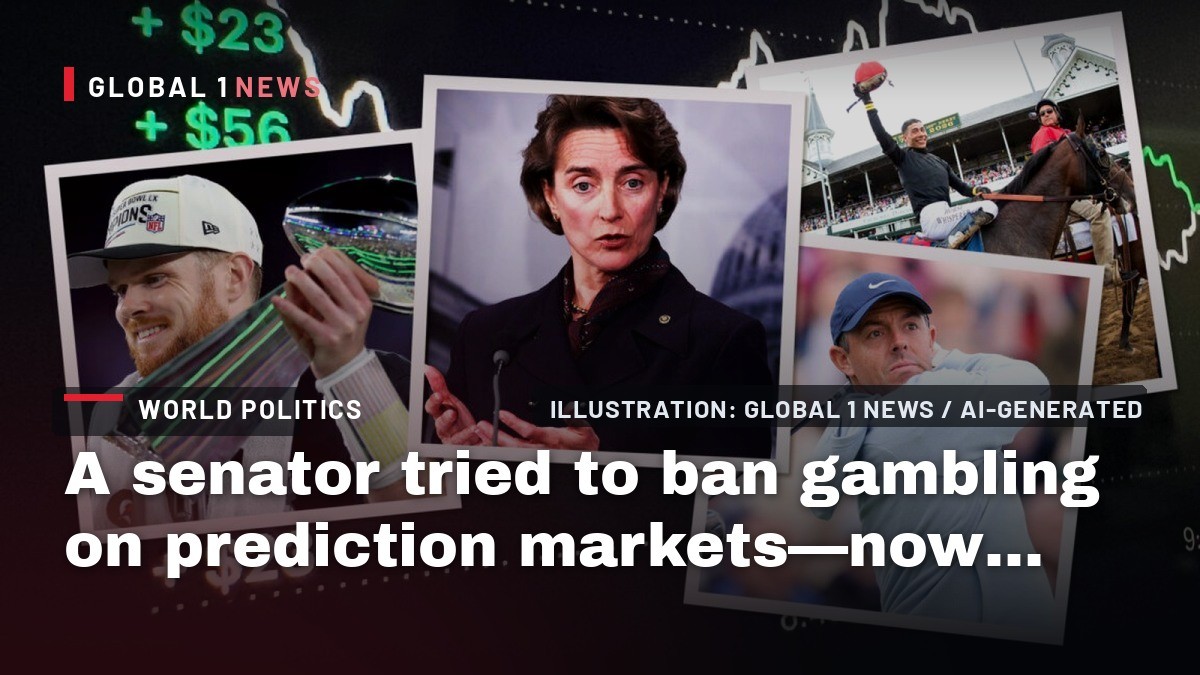
In July 2010, Senator Blanche Lincoln of Arkansas warned that the nascent world of prediction markets could become a loophole for gambling if left unchecked. Speaking on the Senate floor during deliberations on the Dodd‑Frank Wall Street Reform and Consumer Protection Act, she warned that “event contracts” could be fashioned around marquee sports events—the Super Bowl, the Kentucky Derby, the Masters—without serving any genuine commercial purpose, but merely facilitating wagers. Lincoln, then chair of the Senate Agriculture Committee and a primary author of Title VII of Dodd‑Frank, helped embed language that gave the Commodity Futures Trading Commission (CFTC) authority to police such contracts and, implicitly, to ban sports‑related betting on prediction platforms.
From Legislative Architect to Industry Advocate
Fast‑forward sixteen years, and Lincoln has swapped the Senate floor for the lobbying corridors of Kalshi, a prediction‑market exchange that has embraced the very activity she once decried. Since 2024, Kalshi has funneled $480,000 to the firm she founded in exchange for lobbying the CFTC and Congress to loosen restrictions on “event contracts.” The shift is stark: a senator who championed a ban on sports wagering via prediction markets now urges the regulator to permit exactly that, arguing that the markets should be treated like a stock exchange rather than a casino.
Lincoln’s transformation is more than a personal career pivot; it underscores how regulatory capture can evolve when former lawmakers leverage insider knowledge to reshape the rules they once helped craft. Her lobbying efforts have become a focal point in ongoing legal battles over whether the CFTC can preempt state gambling laws, a question that courts in roughly twenty states are currently wrestling with.
The Regulatory Pendulum: Biden to Trump
During the Obama administration, the CFTC interpreted Dodd‑Frank as prohibiting sports‑related event contracts, extending the ban to cover additional wagers such as election outcomes. The Biden‑era CFTC even proposed expanding that prohibition, citing concerns that sports results lack “significant economic consequences” and therefore do not merit the same market‑based treatment as other events. Lincoln’s August 2024 letter to the Biden CFTC echoed this stance, urging the agency to maintain the ban on sports betting while allowing other types of contracts.
That calculus shifted dramatically under the Trump administration. Leveraging the authority granted by Dodd‑Frank, the Trump‑appointed CFTC adopted a permissive view, allowing sports‑event contracts to proliferate nationwide, even in states with strict gambling prohibitions. This regulatory pivot opened the door for Kalshi to launch sports betting on January 23 2025—just three days after President Trump’s second inauguration—signaling a coordinated policy realignment that aligned federal permissiveness with industry ambitions.
State Lawsuits and the Looming Supreme Court Decision
The clash between federal permissiveness and state gambling restrictions has ignited a wave of litigation across the country. Courts in about twenty states are now tasked with interpreting whether Dodd‑Frank’s grant of authority to the CFTC preempts state gambling laws or leaves room for state enforcement. Some state courts have sided with the federal position, allowing Kalshi‑style contracts to operate unhindered; others have upheld state bans, creating a patchwork of outcomes that is likely to compel the Supreme Court to intervene.
Judges have even cited Lincoln’s 2010 Senate remarks as evidence of congressional intent to prohibit sports‑related event contracts. One federal judge explicitly referenced her warning that such contracts would “serve no real commercial purpose,” bolstering arguments that Congress intended a ban. The Supreme Court’s eventual ruling will thus hinge on interpreting the original legislative history—material that Lincoln herself helped shape—making her past statements a pivotal piece of the legal puzzle.
Kalshi’s Defense: Federal Preemption Over State Law
Kalshi’s public messaging frames its operations as a federally regulated marketplace, not a casino. The company asserts that because it “works like the stock market rather than a casino,” it falls under CFTC jurisdiction and is therefore insulated from state gambling statutes. This argument rests on the Trump‑appointed CFTC’s stance that federal law preempts state restrictions on prediction‑market betting, a position Kalshi has repeatedly championed in court filings and public statements.
Kalshi also paints its opponents as part of a “gaming cartel” that spends millions lobbying to protect a monopoly on gambling revenue. By casting state regulators and traditional casino interests as the antagonists, Kalshi seeks to frame the debate as one of innovation versus entrenched interests, a narrative that resonates with a segment of the public eager for new forms of market‑based wagering.
Industry Backing and the Political Economy of Prediction Markets
The political alignment between Kalshi and the Trump administration extends beyond regulatory appointments. Donald Trump Jr. serves as an advisor to both Kalshi and its rival Polymarket, and his venture firm, 1789 Capital, is a major investor in Polymarket. This confluence of political influence and capital underscores how prediction‑market firms have cultivated a network of allies within the current administration to shield their business models from state‑level challenges.
Legal scholar Ilya Beylin of Seton Hall Law School noted that Kalshi’s timing—launching sports betting immediately after Trump’s inauguration—was no coincidence. He explained that the Biden‑era CFTC’s Rule 40.11 barred sports event contracts, and that Kalshi’s legal team anticipated the regulatory shift under Trump. The firm’s strategic patience illustrates how industry players can align product rollouts with favorable political windows, leveraging regulatory change to unlock new revenue streams.
What Lies Ahead for Prediction‑Market Betting
The next chapter in this saga will likely be decided in the Supreme Court. If the high court affirms that the CFTC’s authority preempts state gambling laws, Kalshi and similar platforms could operate a nationwide sports‑betting market with minimal state interference, effectively creating a federal monopoly on prediction‑market wagering. Conversely, a ruling that preserves state authority would fragment the market, forcing platforms to navigate a mosaic of state regulations and potentially curbing the industry’s growth.
Regardless of the outcome, the story of Senator Lincoln—once a staunch opponent of sports betting on prediction markets, now a paid advocate for its expansion—serves as a cautionary tale about the revolving door between Capitol Hill and regulated industries. Her evolution mirrors the broader tension between consumer protection and market innovation, a balance that regulators, lawmakers, and courts will continue to negotiate as prediction markets mature into a new frontier of American wagering.
This article was produced with AI-assisted research and editorial support. Reporting is based on the source material cited below. Sources: Ars Technica; arstechnica.com; Global1.News (08 October 2026).
By Jessica Ali, Staff Writer
What's Your Reaction?
 Like
0
Like
0
 Dislike
0
Dislike
0
 Love
0
Love
0
 Funny
0
Funny
0
 Wow
0
Wow
0
 Sad
0
Sad
0
 Angry
0
Angry
0

Editor-in-Chief at Global1.News. Atlanta-based journalist who cuts through the BS and tells it like it is. Lead anchor, host, and the voice you hear when the spin stops and the truth starts.















Comments (0)