
Jalisco governor announces water-rationing plan for Guadalajara amid contamination crisis
The announcement, echoed by State Chief of Staff Alberto Esquer, signals a new chapter for the Guadalajara Metropolitan Area (ZMG), where more than three hundred neighborhoods already grapple with water that is unsafe to drink.
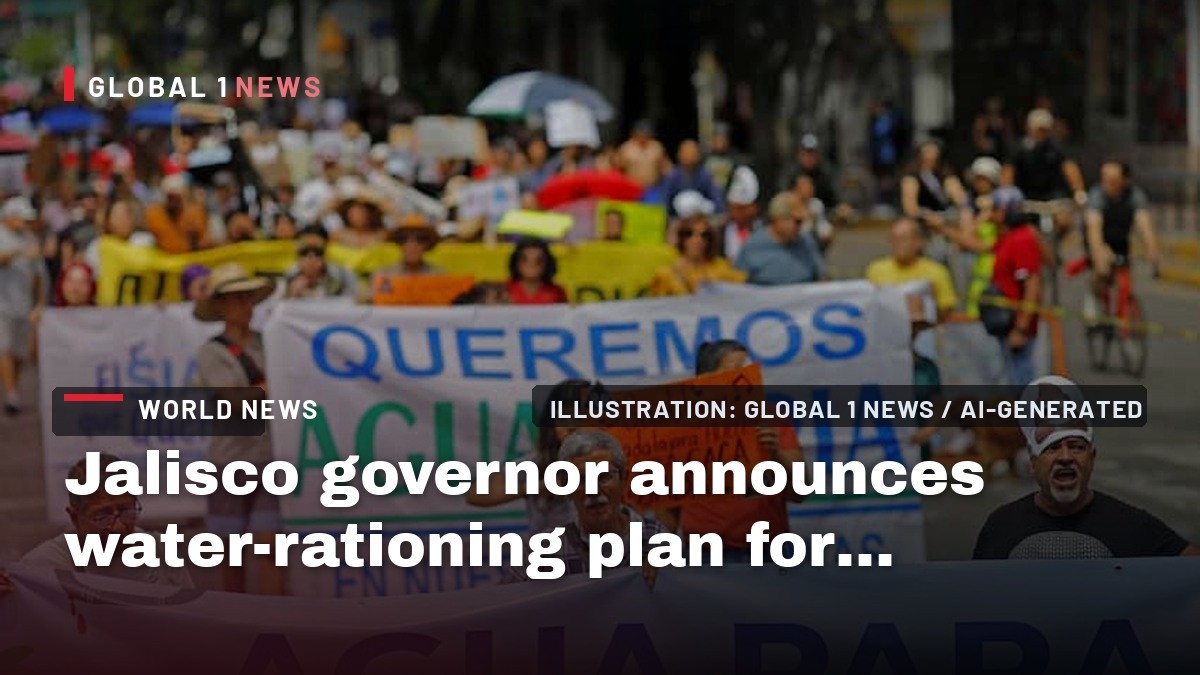
Guadalajara’s water taps are about to feel the pinch of a crisis that Governor Pablo Lemus calls “unprecedented.” In a video posted to his official social media accounts on October 7, the governor announced a six‑month water‑rationing plan aimed at cleaning a supply system that has been tainted by aging infrastructure and illegal discharges. The announcement, echoed by State Chief of Staff Alberto Esquer, signals a new chapter for the Guadalajara Metropolitan Area (ZMG), where more than three hundred neighborhoods already grapple with water that is unsafe to drink.
Why the crisis matters now
The heart of the problem lies in the Chapala‑based water network that has fed the ZMG for decades. Lemur’s video highlighted that the “city is going through an unprecedented drinking water crisis,” a phrase that resonates beyond the municipal borders and into the homes of families who rely on a single tap for cooking, cleaning, and bathing. Poor water quality now affects at least 342 metropolitan neighborhoods, a figure that underscores how deeply the contamination has penetrated the daily lives of ordinary residents.
According to the newspaper La Jornada, the ZMG consumes between 10 and 11.5 cubic meters of water per second. By withdrawing up to 2.5 cubic meters per second from the distribution network—effectively cutting off the Las Pintas dam and the old Chapala system—the governor’s plan will shave roughly a quarter off the total flow. While the reduction may sound dramatic, Lemus stresses that the trade‑off is cleaner water: “the move means less water during the rehabilitation project — hence the rationing — but what flows will be cleaner.”
The mechanics of the rationing plan
The temporary measure, expected to last about six months in its first stage, will not leave households without water for half a year. Instead, the plan will rely on service rotations, low‑pressure episodes, and brief interruptions lasting one or two days in the most affected zones. The Intermunicipal Potable Water and Sewerage System (SIAPA) and the municipalities are slated to reveal the precise operating details on October 12, a timeline that gives residents a narrow window to adjust their daily routines.
Esquer explained to El Informador that authorities are still analyzing how much water can be distributed without drawing from the Las Pintas source. This calculation will shape the rotation schedules and determine which neighborhoods will face the most frequent low‑pressure periods. “We call on residents for patience; we are working on this, and we acknowledge the problem,” he said, underscoring the government’s intent to keep the public informed as the logistics are refined.
Infrastructure fixes in the pipeline
Beyond the short‑term rationing, Lemus outlined a suite of infrastructure projects designed to restore and improve water quality. The first priority is fast‑tracking the La Calera diversion aqueduct, a conduit that will reroute cleaner water into the system while the older Chapala pipeline undergoes repairs. Simultaneously, the first phase of expanding Water Treatment Plant No. 1 in Miravalle will be accelerated, boosting the plant’s capacity to treat the contaminated flow.
These projects are complemented by the creation of a permanent working group that will bring together metropolitan mayors to monitor water supply and quality on an ongoing basis. By institutionalizing this coordination, the state hopes to prevent future lapses and ensure that any emerging contamination can be addressed swiftly, rather than waiting for a crisis of this magnitude to erupt.
Long‑term vision: a new aqueduct
Governor Lemus also presented a longer‑term solution: a replacement Chapala–Guadalajara aqueduct. Estimated to take about two years to complete, the new conduit would bypass the aging sections that have been the source of many leaks and illegal connections. Lemus noted that President Claudia Sheinbaum has pledged federal support for the outstanding works required to bring the El Zapotillo system to full capacity, signaling a collaborative effort between state and federal authorities.
The governor emphasized that none of the announced measures will increase public debt, raise SIAPA rates, or open the water service to privatization. This reassurance aims to allay fears that the rationing plan could become a pretext for cost‑shifting or the introduction of private water operators, a concern that has haunted many Mexican communities where water has been commodified.
Impact on everyday life in the colonia
For families in the ZMG, the rationing plan translates into a reshaping of daily rhythms. Mothers in the tianguis of Zapopan will need to adjust cooking schedules to the hours when water pressure is higher, while workers in the industrial zones of Tlaquepaque may face interruptions that affect sanitation at their sites. The plan’s reliance on service rotations means that some neighborhoods will experience water cuts more often than others, a reality that could strain community solidarity if not managed transparently.
Community leaders have begun organizing water‑conservation workshops, reminding residents of traditional practices such as filling large earthen jars (tinajas) during high‑pressure periods to store water for later use. Such grassroots efforts echo the historic ejido spirit of mutual aid, where collective action has long been a bulwark against scarcity. By tapping into these cultural reservoirs, authorities hope to soften the blow of reduced flows while the infrastructure upgrades take shape.
Environmental and health considerations
The contamination crisis is rooted in illegal discharges into the Las Pintas canal, where water from Chapala mixes with drainage from the city’s southern districts. This mixing not only degrades water quality but also poses health risks, especially for children and the elderly who are most vulnerable to water‑borne diseases. By cutting off the Las Pintas source, the state aims to halt the influx of polluted water, allowing treatment plants to work with a cleaner baseline.
Environmental groups have welcomed the move to stop drawing from the contaminated canal, yet they warn that long‑term vigilance is needed. The illegal discharges that plagued the canal are symptomatic of broader challenges in waste management and urban planning. Without addressing the sources of drainage—such as inadequate sewer connections and industrial runoff—the risk of future contamination remains high, even with a new aqueduct in place.
Looking ahead: hope amid uncertainty
Governor Lemus’s water‑rationing plan is a stark reminder that essential services can falter when infrastructure ages and governance gaps allow illegal practices to flourish. Yet the governor’s pledge to fast‑track critical projects, the collaboration with President Sheinbaum, and the establishment of a permanent monitoring group signal a commitment to turn this crisis into a catalyst for lasting improvement.
As Guadalajara’s families brace for intermittent water service over the coming months, the true test will be whether the promised upgrades materialize on schedule and whether the state can maintain transparency throughout the process. If the government succeeds, the city could emerge with a more resilient water network, one that honors the legacy of communal resource management while meeting the demands of a modern metropolis. Until then, patience and vigilance remain the twin pillars upon which the ZMG’s water future rests.
This article was produced with AI-assisted research and editorial support. Reporting is based on the source material cited below. Sources: Mexico News Daily; mexiconewsdaily.com; Global1.News (08 October 2026).
By Rosa Martinez, Staff Writer
What's Your Reaction?
 Like
0
Like
0
 Dislike
0
Dislike
0
 Love
0
Love
0
 Funny
0
Funny
0
 Wow
0
Wow
0
 Sad
0
Sad
0
 Angry
0
Angry
0

Latin America/Andes Correspondent at Global1.News. Based in Bogota, covering politics, environment, energy, and social movements across the Andean region. Passionate about environmental journalism and communities protecting their land.













Comments (0)