
France Meets Lagos: Sixty Tracks From One Afrobeat Camp
In Lagos, Nigeria's cultural and musical capital, nine French artists recently sat down with some of Afrobeats' brightest talents for a songwriting camp that produced nearly sixty new tracks in less than a week. The encounter, organised between rising French voices and the powerhouse label Mavin Records, turned a simple studio session into a celebration of how deeply Nigerian music now flows through the world's sound.
In Lagos, Nigeria's cultural and musical capital, nine French artists recently sat down with some of Afrobeats' brightest talents for a songwriting camp that produced nearly sixty new tracks in less than a week. The encounter, organised between rising French voices and the powerhouse label Mavin Records, turned a simple studio session into a celebration of how deeply Nigerian music now flows through the world's sound.
France Meets Lagos: Sixty Tracks Born From One Afrobeat Camp
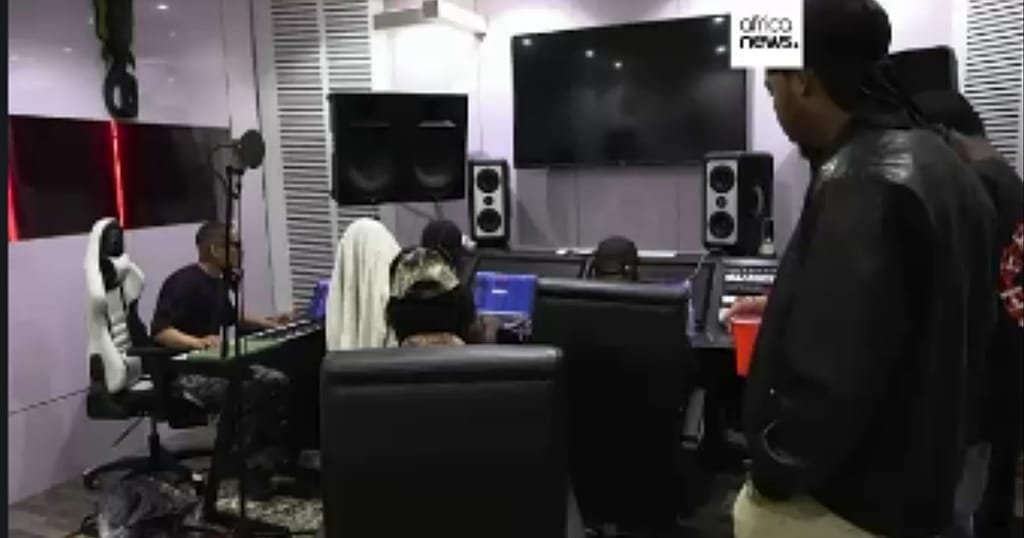
Lagos, Nigeria — The camp brought together nine French artists from rap, pop and urban music with the stars of Mavin Records, the Lagos label that has helped carry Afrobeats around the globe. In under a week, roughly sixty songs emerged, blending French delivery, Nigerian rhythm and international pop instincts into something neither scene could have produced alone.
A Creative Collision in Lagos
The songwriting camp concept is simple on paper but electric in practice: lock a group of artists in a studio, strip away the distance between continents, and let the music do the talking. That is exactly what happened when nine French artists from rap, pop and urban music travelled to Lagos to join talents from Mavin Records, the powerhouse label founded by producer Don Jazzy. The camp lasted nearly a week, and by the end, the walls of the studio had absorbed enough melodies, hooks and rhythms to fill an entire festival season.
Lagos was never a random choice for this exchange. As Nigeria's cultural and musical capital, the city breathes music from every corner — from the street-corner speakers blasting Amapiano and Afrobeats to the packed venues in Lekki and Victoria Island where new sounds are tested on live audiences. For the French artists, many of whom had never set foot in West Africa, the city itself became a co-writer, its energy seeping into every chord and cadence they laid down.
The atmosphere in the studio was one of joyful discovery rather than pressure. Artists traded verses, producers swapped drum patterns, and the language barrier dissolved into a shared vocabulary of rhythm. French pop met Nigerian percussion, and the result was a hybrid sound that felt both fresh and strangely inevitable. The camp was structured around intensive daily sessions, with artists rotating between writing rooms and production booths, each pairing bringing a different alchemy to the table.
For Mavin Records, hosting the French delegation was a statement of intent. The label has long positioned itself as the bridge between Nigerian music and the global mainstream, and this camp was another step in that mission. The nine French artists came from diverse backgrounds — some steeped in the aggressive delivery of French rap, others carrying the melodic sensibilities of contemporary pop — and each found common ground with their Nigerian counterparts.
What the meeting symbolises for Franco-African musical relations cannot be overstated. France has one of the largest African diaspora populations in Europe, and its music scene has been shaped by African rhythms for decades. But this camp inverted the usual dynamic: instead of African artists travelling to Paris to seek validation, French artists came to Lagos to learn from the source. The creative exchange shows Afrobeats attracting new audiences through collaborations between Africa and the rest of the world, and the direction of travel matters.
Sixty Tracks in Six Days
The output from the camp is staggering by any measure. Nearly sixty songs were created in under a week, a pace that speaks to the chemistry between the artists and the efficiency of the production setup. Each track carries a different DNA — some lean heavily into Afrobeats' signature log drum patterns and melodic hooks, while others favour the harder edges of French urban music, with rapid-fire verses and punchy delivery.
The tracks mix French, Nigerian and international influences in ways that defy easy categorisation. A song might open with a French rap verse over a Nigerian percussion bed, then shift into a sung chorus that could sit comfortably on European radio. The pidgin English that flows through so much of Lagos street music appears alongside French lyrics, creating a linguistic tapestry that mirrors the multicultural reality of both cities.
The contrast between French urban styles and Nigerian Afrobeats melodies was the creative engine of the camp. French rap often prioritises lyrical density and rhythmic aggression, while Afrobeats leans into melody, groove and a certain softness in the vocal delivery. When these two approaches collided, the artists found themselves pushing beyond their comfort zones, discovering new textures in their own voices.
The discovery process was mutual. Nigerian artists heard how French artists approached rhythm and phrasing, while the French visitors absorbed the infectious energy of Lagos studio culture, where a simple idea can become a full song in a matter of hours. The producers, too, traded techniques — Nigerian drum programming met French electronic textures, and the results were captured across dozens of session files.
What happens next is where the real magic lies. After the camp, Mavin Records artists will select the strongest tracks to record and offer to the international public. This curation process ensures that the best of the sixty songs will get a proper release, polished and packaged for global consumption. The africanews report, published in January by the Redaction Africanews with AFP, confirmed that the selection process is already underway, with Mavin's A&R team reviewing the material.
Voices From the Studio
The participants themselves offer the clearest window into what made this camp special. Nassim Diane, a French beatmaker known by his alias Voluptyk, spoke with the enthusiasm of someone who had found a new well of inspiration. He said he feels a very strong Nigerian influence in music worldwide in recent years, and that it is interesting for artists to come to Nigeria to draw directly from those inspirations. His words capture the shift in global music's centre of gravity — Lagos is no longer a place to sample from afar but a destination to experience firsthand.
Olubukola Ireti Holo, a Nigerian artist at the camp who goes by the stage name Ohla, described the experience in terms of personal transformation. She said the camp showed her a facet of music she did not know, and that French singer Shannon transmitted it through her music and style. For Ohla, the encounter was not just about writing songs but about seeing her own craft through a different cultural lens, one shaped by the Caribbean and French influences that Shannon brought to the sessions.
Shannon, a French singer originally from Martinique, embodies the transatlantic connections that make this music so rich. She described Afrobeats as very rhythmic but soft in the way of singing, while her shatta style is more aggressive and delivery-focused. She called them opposites that attract and mix wonderfully, and her assessment rings true in the tracks that emerged from the camp. The Martinican influence adds yet another layer, connecting the Caribbean to West Africa through the shared history of the Atlantic.
Kizito Ahams, the licensing and publishing manager at Mavin Records, was present throughout the camp and witnessed the cultural explosion firsthand. He said it was the first time the label had hosted talents directly from France with such a cultural explosion, and he marvelled at the touches of French and Nigerian pidgin coming together. He called it a magnificent connection and noted that many very promising tracks were discovered during the sessions.
These voices, captured in the africanews report from January, paint a picture of genuine artistic exchange rather than a transactional studio exercise. The artists did not just collaborate; they listened, learned and absorbed pieces of each other's musical identities. That is the kind of exchange that leaves a lasting mark on everyone involved.
Mavin Records: The Engine of Afrobeats' Global Rise
To understand the significance of this camp, one must understand the institution that hosted it. Mavin Records was founded in 2012 by producer Don Jazzy, whose real name is Michael Collins Ajereh. In the years since, the label has grown from a Nigerian powerhouse into a global force, home to international stars Rema and Ayra Starr, whose music has defined the sound of Afrobeats for a new generation.
Rema's rise has been nothing short of meteoric. His track Calm Down with Selena Gomez became a global smash, dominating charts across Europe, the Americas and Africa, and introducing millions of listeners to the melodic possibilities of Afrobeats. The song's success proved that Nigerian music could cross over without diluting its essence, and it opened doors that had long been closed to African artists in the mainstream Western market.
Ayra Starr, whose real name is Oyinkansola Sarah Aderibigbe, has followed a parallel trajectory. A Grammy nominee with a distinctive voice and a fearless approach to genre, she has become one of the most recognisable faces of the Afrobeats wave. In July 2025, she signed a management deal with Roc Nation, the label founded by Jay-Z, while keeping her recording contract with Mavin — a structure that allows her to benefit from global expertise while remaining anchored to her Nigerian roots.
Rumours of Ayra Starr's departure from Mavin circulated in recent months, but Don Jazzy himself dismissed them in an X post in early August, putting the speculation to rest. His intervention underscored the importance of the artist-label relationship in an industry where loyalty and trust are often in short supply. For Mavin, keeping Ayra Starr was not just a business decision but a statement about the label's enduring relevance.
The camp with the French artists is part of Mavin's broader strategy of international expansion. By hosting foreign talents and creating music that crosses borders, the label is positioning itself not just as a Nigerian institution but as a global music company with African roots. The licensing and publishing infrastructure that Kizito Ahams oversees is central to this vision, ensuring that the music created in Lagos reaches audiences everywhere.
Afrobeats' Endless Reinvention
Afrobeats, as a genre, has never stood still. Born in the 1970s with Fela Kuti's Afrobeat — a fusion of jazz, funk and traditional Yoruba music — the sound has evolved through countless iterations, absorbing influences from hip-hop, dancehall, house and now French urban music. The camp in Lagos is the latest chapter in this story of endless reinvention, proof that the genre's appetite for new sounds remains undiminished.
The fusion with French urban music and Caribbean influences, exemplified by Shannon's Martinican roots, adds yet another dimension to the Afrobeats palette. The genre has always been porous, welcoming outside elements and making them its own. This openness is why Afrobeats has been able to conquer global charts while remaining unmistakably Nigerian in its core rhythms and sensibilities.
The role of pidgin and French lyrics in the new tracks from the camp is particularly significant. Pidgin English has long been the lingua franca of Nigerian popular music, a language that transcends ethnic divisions and speaks to a pan-African audience. By mixing it with French, the artists are creating music that can travel across the continent and beyond, appealing to listeners in Dakar, Abidjan, Paris and Montreal simultaneously.
Creative exchanges between Africa and the rest of the world have always been the lifeblood of the genre. From Fela's collaborations with American musicians in the 1970s to the contemporary partnerships between Nigerian artists and their European and American counterparts, Afrobeats has thrived on cross-pollination. The Lagos camp continues this tradition, bringing fresh perspectives into the studio and sending new sounds out into the world.
For Senegal, a country with its own rich musical heritage — from the Mbalax of Youssou N'Dour and Baaba Maal to the timeless grooves of Orchestra Baobab — the rise of Afrobeats offers both inspiration and a reminder of the power of cultural export. The same energy that drives Lagos studios pulses through Dakar's music scene, and the success of Nigerian artists on the global stage opens doors for musicians across the continent.
A Bridge Between Continents
The broader significance of the Franco-Nigerian camp extends far beyond the sixty tracks it produced. For African music's global standing, this kind of exchange is a validation of the continent's creative leadership. When French artists travel to Lagos to write songs, they are acknowledging that the future of popular music is being shaped in African studios, not just in London, New York or Paris.
Kizito Ahams captured this sentiment when he described hosting French talents for the first time with such a cultural explosion. The mix of French and Nigerian pidgin, he said, was a magnificent connection, and the many promising tracks discovered during the camp are evidence of what happens when artists from different worlds are given the space to create together. The economic and cultural value of such international co-productions for African labels cannot be overstated — they bring revenue, visibility and credibility.
The parallels with other African music scenes are striking. Senegal's Mbalax, with its intricate percussion and soulful vocals, has long been a source of pride and cultural identity, even if it has not achieved the global reach of Afrobeats. South Africa's Amapiano, with its log drums and jazzy chords, has exploded onto the world stage in recent years, finding audiences in Europe, Asia and the Americas. Each of these genres is finding its own path to global audiences, and collaborations like the Lagos camp accelerate that process.
For African labels, the lesson is clear: international partnerships are not a concession but an opportunity. By hosting foreign artists, African labels can expand their networks, access new markets and create music that resonates across borders. The camp model, which brings artists together in a concentrated burst of creativity, is one that could be replicated across the continent, from Accra to Nairobi to Johannesburg.
The cultural value of these exchanges is equally important. When French and Nigerian artists create together, they are building bridges that transcend music, fostering understanding and friendship between peoples. In a world that often seems divided, the studio becomes a space of unity, where differences are celebrated rather than feared.
What to Watch For
The coming months will reveal the fruits of the Lagos camp. The strongest tracks from the nearly sixty songs created will be selected by Mavin Records artists, recorded properly and released to an international public. The anticipation is palpable, both in Lagos and in Paris, where fans of both scenes are eager to hear what happens when French urban music meets Nigerian Afrobeats in the studio.
Mavin Records shows no signs of slowing its international expansion. Ayra Starr's third album, Starrgirl, was released on 14 August via Mavin Records and Republic Records, a 16-track project featuring Wizkid, Rema, ZAYN, Theodora and Danny Ocean. Described as the most anticipated Afrobeats release of the year, the album is a testament to the label's ability to attract global talent while nurturing homegrown stars.
The growing pipeline of France-Africa music collaborations is another trend to watch. The success of the Lagos camp is likely to inspire similar initiatives, bringing more French artists to African studios and more African artists to French stages. The cultural ties between France and its former colonies in West Africa are complex, but music has a way of transcending history and creating new connections.
For young African artists seeking global careers, the message is clear: the world is listening. The success of Rema, Ayra Starr and their contemporaries has opened doors that were once firmly closed, and the infrastructure of labels like Mavin Records provides a pathway to international recognition. The camp in Lagos is a reminder that African music is not just a regional phenomenon but a global force.
As the tracks from the camp make their way into the world, they will carry with them the energy of Lagos, the ambition of the French artists who travelled there, and the enduring power of Afrobeats to bring people together. The bridge between continents is being built, one song at a time, and the music that crosses it will shape the sound of the years to come.
By Amara Diop, Staff Writer
This article was produced with AI-assisted research and editorial support. Reporting is based on sources cited in the article.
What's Your Reaction?
 Like
0
Like
0
 Dislike
0
Dislike
0
 Love
0
Love
0
 Funny
0
Funny
0
 Wow
0
Wow
0
 Sad
0
Sad
0
 Angry
0
Angry
0

West Africa/Sahel Correspondent at Global1.News. Dakar-based journalist covering politics, security, climate, and development across Francophone and Anglophone West Africa. Tells the stories of a region undergoing profound transformation.












Comments (0)