
Why BioWare's Neverwinter Nights still has thousands of active players
Neverwinter Nights, BioWare’s 2002 tabletop‑style RPG, still pulls a surprisingly active crowd more than two decades after its launch. Each leg was meant to be “equivalently high quality,” appealing to different player groups without sacrificing the others.
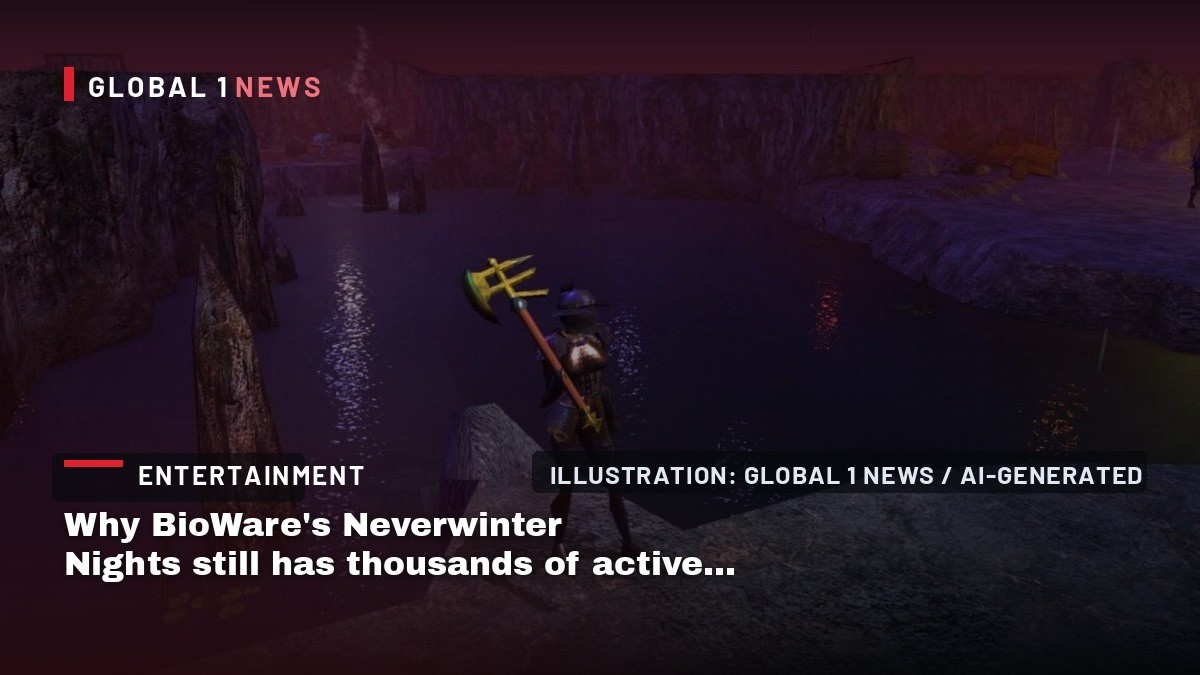
Neverwinter Nights, BioWare’s 2002 tabletop‑style RPG, still pulls a surprisingly active crowd more than two decades after its launch. While its sister titles—Baldur’s Gate, Knights of the Old Republic, Mass Effect and Dragon Age—have become household names in the single‑player narrative space, Neverwinter Nights occupies a niche that no other BioWare classic has matched: a living, player‑driven sandbox built around a robust modding and Dungeon Master (DM) toolkit. The game’s endurance isn’t a fluke; it’s the result of a deliberate design philosophy that treated the title as a four‑legged table, each leg serving a distinct community of gamers.
The Four‑Legged Table: Single‑Player, Multiplayer, DM Tools, and Modding
When BioWare co‑founder Ray Muzyka explained the game’s architecture to IGN, he likened it to a table with four legs: single‑player campaign, multiplayer, DM tools, and the module‑making suite. Each leg was meant to be “equivalently high quality,” appealing to different player groups without sacrificing the others. The single‑player campaign, The Wailing Death, was intended to sit alongside the studio’s flagship narratives, promising a story experience “as good as anything we’ve ever done” in Baldur’s Gate or Mass Effect. Meanwhile, the multiplayer and DM components were designed for small, tightly knit communities to craft and run their own adventures, echoing the social dynamics of a tabletop Dungeons & Dragons session.
The toolset itself was a watershed moment for PC RPGs. It gave players the ability to design modules, script events, and act as virtual dungeon masters on live servers. This emphasis on user‑generated content set Neverwinter Nights apart from BioWare’s other releases, which largely relied on pre‑crafted narratives. The result was a game that could live indefinitely, as long as creators kept feeding it fresh adventures.
A Trial Run for an MMO That Never Materialized
In the early 2000s, the MMO boom loomed large over the industry, and BioWare initially eyed Neverwinter Nights as a testbed for that model. Interviews from the era reveal that the studio saw the title as a “trial run” to explore massive multiplayer possibilities. However, the team quickly recognized the technical and design challenges of building a full‑scale MMO and abandoned that ambition well before the game shipped. The decision left Neverwinter Nights as a hybrid: not a true MMO, but a platform that encouraged small‑scale, community‑driven multiplayer experiences.
This pivot proved pivotal. By focusing on intimate groups rather than a massive, always‑on world, BioWare avoided the pitfalls that later plagued many service‑based titles—ever‑shifting monetization, subscription fatigue, and content droughts. Instead, the game’s longevity now hinges on the creativity of its community, not on corporate roadmaps or microtransaction revenue streams.
The Solo Campaign: Nostalgia Meets Design Compromise
Revisiting The Wailing Death after twenty years, the author of the source article found the solo experience “cozy” but uneven. While the narrative lacked the depth of Baldur’s Gate 2 or Mass Effect, its generic, D&D‑style storytelling still resonated, especially for players who appreciate a blank‑slate hero. The campaign’s design, however, reveals a trade‑off: unlike Baldur’s Gate’s party‑based mechanics, Neverwinter Nights forces players to control a single character, limiting tactical variety.
Choosing a monk class highlighted this limitation. The monk’s kit boiled down to two combat modes—one faster but less accurate, the other more balanced—plus a handful of knockdown and stun abilities that often felt underwhelming. Early acts felt repetitive, with combat dominating over role‑playing opportunities. The author notes that while later levels introduce more options, the early experience can feel “monotonous quickly,” especially for players accustomed to richer class systems.
Community‑Driven Content: The Engine That Keeps It Alive
The most compelling reason for Neverwinter Nights’ enduring player base is its vibrant modding community. Even though the majority of players initially engaged with the solo campaign, a “relatively small portion” delved into the construction kit or DM tools. Those who did, however, built a parallel ecosystem of user‑generated modules that continue to attract new and returning players.
This community‑generated content functions as a self‑sustaining engine. As long as creators publish fresh adventures, servers remain populated, and the game’s core loop—exploring dungeons, battling foes, and improvising with a DM—remains engaging. The source article emphasizes that “the campaign is not the point” for many; instead, the social and creative aspects drive participation. This dynamic mirrors the original tabletop experience, where the story evolves through collaborative storytelling rather than a fixed script.
Design Lessons: What BioWare Got Right and Where It Faltered
Neverwinter Nights illustrates both BioWare’s ambition and its occasional missteps. On the positive side, the studio succeeded in delivering a high‑quality toolset that empowered players to become creators, a rarity among early‑2000s RPGs. The four‑legged design philosophy ensured that even if one pillar—such as the single‑player narrative—proved weaker, the others could sustain the title.
Conversely, the execution of the single‑player leg fell short of the studio’s lofty standards. Muzyka’s claim that each game must be “better than the previous one” set a high bar that the campaign struggled to meet. The limited class depth, the reliance on a single character, and the lack of a compelling personal story left the solo experience feeling “a little wobbly.” Yet, the very imperfections of the solo leg may have nudged players toward the multiplayer and DM aspects, inadvertently reinforcing the community‑driven model that now defines the game’s legacy.
Why Neverwinter Nights Outlasts Its Peers
Other BioWare classics have remained popular, but none have cultivated a continuously active, creator‑centric community the way Neverwinter Nights has. The game’s longevity stems from three interlocking factors: a toolset that remains functional and accessible, a design that encourages small‑scale, player‑run sessions, and a cultural ethos that treats the player as a co‑author rather than a passive consumer.
In an era where many titles chase “games‑as‑a‑service” revenue models, Neverwinter Nights offers a counterpoint: a service sustained by passion, not profit. The absence of modern monetization hooks—cosmetics, battle passes, or subscriptions—means the community’s engagement is driven by genuine enjoyment of creation and collaboration. This authenticity has fostered a “tight‑knit and surprisingly active community” that continues to generate fresh content, keeping the game relevant two decades after its release.
The Future of a Two‑Decade‑Old RPG
Looking ahead, the prospects for Neverwinter Nights hinge on the continued vitality of its creator base. As long as players keep building modules, the game will retain its niche appeal. The source article hints that the community, though small compared to mainstream titles, is “tight‑knit,” suggesting a resilient core that can weather the ebb and flow of online interest.
Should BioWare or a third‑party publisher decide to revitalize the engine—perhaps by updating compatibility with modern operating systems or integrating new scripting capabilities—the existing community could serve as a launchpad for a resurgence. Even without official support, the game’s open architecture ensures that passionate fans can keep the tables set, the dice rolling, and the adventures flowing. In that sense, Neverwinter Nights stands as a testament to the enduring power of player agency in an industry increasingly dominated by top‑down monetization strategies.
This article was produced with AI-assisted research and editorial support. Reporting is based on the source material cited below. Sources: Ars Technica; arstechnica.com; Global1.News (17 October 2026).
By Jessica Ali, Staff Writer
What's Your Reaction?
 Like
0
Like
0
 Dislike
0
Dislike
0
 Love
0
Love
0
 Funny
0
Funny
0
 Wow
0
Wow
0
 Sad
0
Sad
0
 Angry
0
Angry
0

Editor-in-Chief at Global1.News. Atlanta-based journalist who cuts through the BS and tells it like it is. Lead anchor, host, and the voice you hear when the spin stops and the truth starts.















Comments (0)