
Former Russian Official Elected President of South Ossetia
Former Russian official Marat Kambolov has been elected president of South Ossetia, the Moscow‑backed breakaway enclave of Georgia, in an election that Moscow hailed on Saturday as a clear expression of the territory’s desire for tighter integration with the Russian Federation.
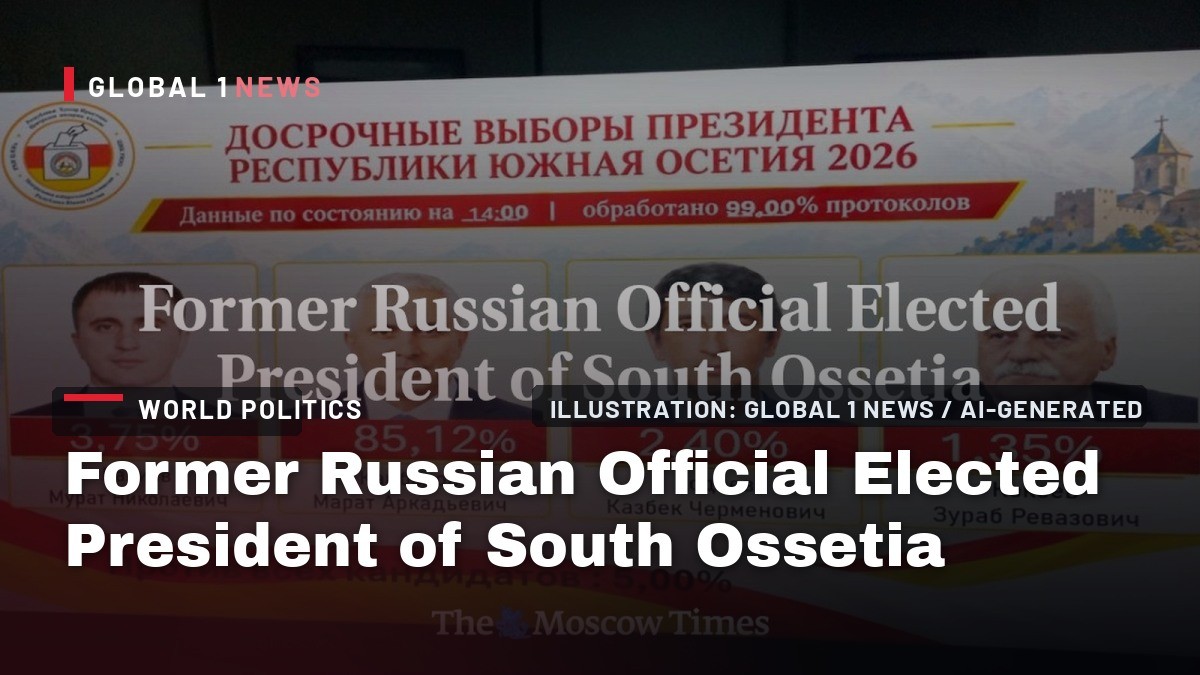
Former Russian official Marat Kambolov has been elected president of South Ossetia, the Moscow‑backed breakaway enclave of Georgia, in an election that Moscow hailed on Saturday as a clear expression of the territory’s desire for tighter integration with the Russian Federation. Kambolov, a 61‑year‑old native of North Ossetia—a Russian republic situated on the opposite side of the Caucasus Mountains—arrived in South Ossetia with no prior personal ties to the region, underscoring the Kremlin’s willingness to install Moscow‑aligned technocrats in strategic peripheral posts.
From North Ossetia to the South Ossetian Presidency
Kambolov’s political résumé is rooted in senior positions within Russia’s federal apparatus, most recently in the Education Ministry. His appointment as South Ossetia’s prime minister in June followed the resignation of President Alan Gagloyev, who stepped down to become an adviser to President Vladimir Putin. The rapid elevation from prime minister to president reflects a pattern of Kremlin‑orchestrated succession in the region, where local leadership is often a conduit for Moscow’s broader strategic objectives.
In a telegram published on the Kremlin’s website, President Putin personally congratulated Kambolov, signalling the importance the Russian leadership attaches to the appointment. The telegram, while brief, placed the new president within the inner circle of officials trusted by the Kremlin, reinforcing the perception that South Ossetia’s political elite are increasingly drawn from the Russian federal bureaucracy rather than from indigenous political currents.
The Election Results and Their Official Interpretation
According to Russian state media, Kambolov secured 85 percent of the vote in the Friday election, with his rivals each receiving only single‑digit percentages. Voter turnout was reported at 73 percent, suggesting a high level of participation in a region where elections are closely monitored by Moscow. The Foreign Ministry described the outcome as evidence of “South Ossetian society’s widespread desire for domestic political stability, progress and the comprehensive development of ties with the Russian Federation.” This official narrative frames the election as a democratic endorsement of deeper integration, while sidestepping any discussion of the fairness of the electoral process.
The Moscow Times, designated an “undesirable” organization by Russia’s Prosecutor General’s Office, reported the same figures, indicating that even critical outlets are compelled to acknowledge the official statistics. The consistency of the numbers across both state and independent sources suggests a coordinated messaging strategy rather than an independent verification of the vote count.
Geopolitical Context: Treaties and Military Presence
South Ossetia’s recent treaty with Russia, signed in May, expanded cooperation on defense, foreign and security policy, and laid out plans to integrate energy grids and transportation networks. The agreement, signed just months before Kambolov’s election, signals a deliberate deepening of the region’s dependence on Moscow. By linking energy and transport infrastructure directly to Russian systems, the treaty reduces South Ossetia’s autonomy and binds its economy more tightly to the Russian market.
In addition to economic integration, Moscow maintains a military base in South Ossetia, a legacy of the 2008 war that expelled Georgian forces from parts of the territory. The presence of Russian troops underscores the strategic value the Kremlin places on the enclave as a foothold on Georgia’s northern frontier, a factor that shapes both the political calculus of local leaders and the broader security dynamics of the South Caucasus.
Georgia’s Reaction and the International Dimension
Georgia condemned the May treaty as an attempt by Russia to cement its “de facto annexation” of South Ossetia and Abkhazia, the other Russian‑backed breakaway region. Tbilisi also criticized Russia’s decision to open polling stations in both territories for the State Duma elections held on 18‑20 September, viewing the move as an encroachment on Georgian sovereignty and an effort to legitimize Russian control through electoral participation.
The Georgian government’s denunciations reflect a broader pattern of diplomatic protest against Moscow’s incremental integration of the breakaway regions. By framing the treaty and the election as steps toward formal annexation, Georgia seeks to rally international support and keep the issue on the agenda of Western policymakers, even as the on‑the‑ground realities in South Ossetia become increasingly intertwined with Russian state structures.
Economic Dependence and Domestic Challenges
South Ossetia’s population, estimated at about 50,000, remains heavily dependent on Russia for essential imports, including food, equipment and energy. The region’s limited industrial base forces it to rely on Moscow for public‑sector wages, pensions and major infrastructure projects. Kambolov’s victory speech in Tskhinvali pledged to improve living standards, acknowledging the “great deal of work ahead” in raising the quality of life for the republic’s residents.
The promise of economic development is tightly linked to the integration plans outlined in the May treaty. By aligning the energy grid and transport links with Russia, the Kremlin aims to create a seamless supply chain that can sustain South Ossetia’s basic needs while simultaneously binding the local economy to Russian markets. This strategy reduces the incentive for the population to seek alternatives, thereby reinforcing Moscow’s political leverage.
Implications for Kremlin Power Structures
Kambolov’s ascent illustrates the Kremlin’s approach to managing peripheral territories: install loyal technocrats from the Russian federal bureaucracy, embed them within local power structures, and use formal treaties to legitimize deeper integration. By positioning a former Education Ministry official at the helm of South Ossetia, the Kremlin ensures that policy implementation aligns with Moscow’s broader objectives, from defense coordination to energy dependency.
This pattern mirrors similar appointments in other Russian‑aligned breakaway regions, where local elites are replaced or supplemented by officials with proven loyalty to the central government. The result is a network of client states whose political and economic systems are increasingly indistinguishable from those of the Russian Federation, a development that complicates any future negotiations over the status of these territories.
Future Outlook: Stability, Integration, and International Tension
With Kambolov now presiding over South Ossetia, the immediate outlook points toward continued stability under Moscow’s patronage. The integration of energy and transport infrastructure, combined with the presence of Russian military forces, suggests that the region will remain a strategic asset for the Kremlin in any future regional calculus, including potential leverage in negotiations with Georgia.
However, the deepening of ties also raises the stakes for international actors. Western governments, which have consistently condemned Russia’s support for breakaway regions, may view the formalization of these relationships as a further erosion of the post‑Soviet order. The Georgian government’s vocal opposition indicates that the dispute will persist in diplomatic forums, while the presence of Russian troops and the integration of critical infrastructure could become flashpoints in any broader confrontation between Moscow and the West.
This article was produced with AI-assisted research and editorial support. Reporting is based on the source material cited below. Sources: The Moscow Times; themoscowtimes.com; Global1.News (20 September 2026).
By Irina Volkov, Staff Writer
What's Your Reaction?
 Like
0
Like
0
 Dislike
0
Dislike
0
 Love
0
Love
0
 Funny
0
Funny
0
 Wow
0
Wow
0
 Sad
0
Sad
0
 Angry
0
Angry
0
Russia/Eastern Europe Correspondent at Global1.News. Covering Russian politics, energy, security, and the shifting dynamics of the post-Soviet space. Provides clear-eyed analysis on one of the world's most opaque regions.










Comments (0)