
Former Cambridge professor Jason Arday found dead after plagiarism row
Former Cambridge professor Jason Arday found dead after plagiarism row London, UK — Former University of Cambridge professor Jason Arday has been found dead at his home in Battersea, south London, prompting an outpouring of grief and anger from politicians, colleagues and friends who say the...
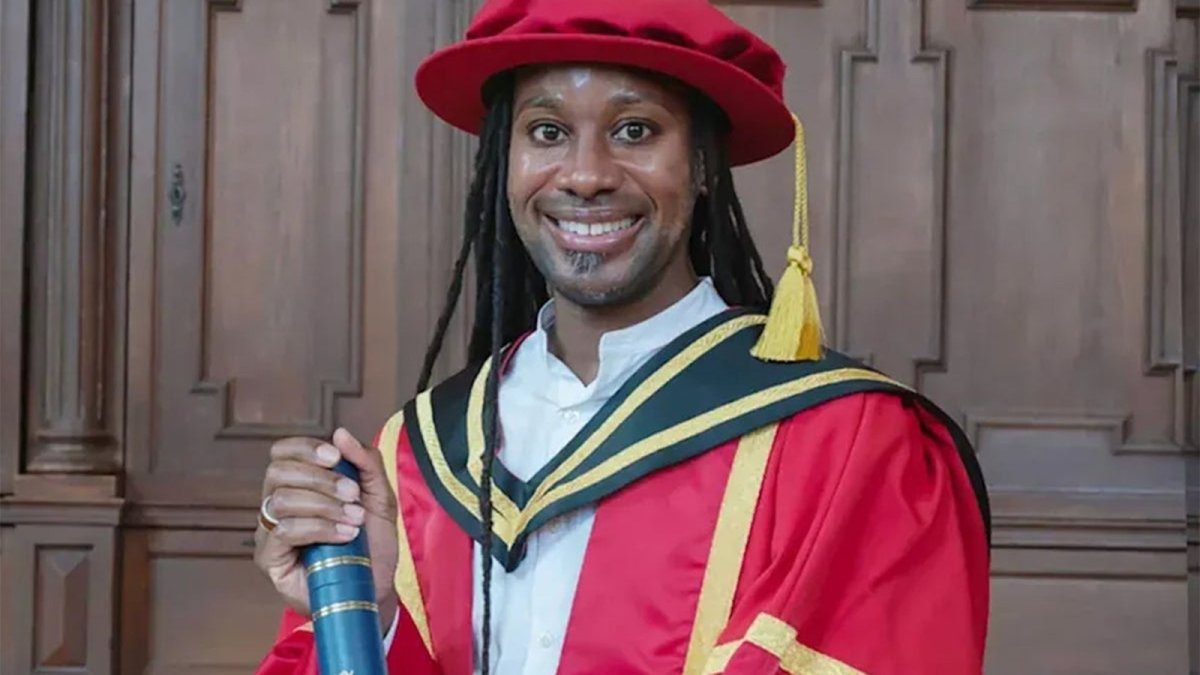
Former Cambridge professor Jason Arday found dead after plagiarism row
London, UK — Former University of Cambridge professor Jason Arday has been found dead at his home in Battersea, south London, prompting an outpouring of grief and anger from politicians, colleagues and friends who say the relentless scrutiny he faced in recent weeks may have contributed to his death.
The 41-year-old sociologist, who became Cambridge's youngest black professor in 2023, was pronounced dead at the scene on Daley Thompson Way, SW8, on Friday afternoon after emergency services were called just after 3pm. The Metropolitan Police said his death is being treated as unexpected but is not believed to be suspicious, and a file will be prepared for the coroner.
His family, in a statement released through police, said they were "in shock to have lost this amazing father, partner, brother, uncle and son". They added: "The campaign of misinformation was too much for Jason, who was a gentle man and who always wanted to see the best in everyone."
Emergency services called to Battersea flat
The London Ambulance Service said it received a call at 3.06pm on Friday to reports of an incident on Daley Thompson Way. A spokesperson said: "We sent a number of resources to the scene, including an ambulance crew, an advanced paramedic in a fast response car and members of our Hazardous Area Response Team. Sadly, a person was pronounced dead at the scene."
The Metropolitan Police confirmed officers were alerted to the death by the ambulance service at 3.12pm. A force spokesman said: "Sadly, a 41-year-old man was pronounced dead at the scene. His next-of-kin have been informed and are being supported by officers. At this time his death is being treated as unexpected, but is not believed to be suspicious. The case is being investigated by officers from the Met's Central South Command Unit."
The address on Daley Thompson Way, named after the Olympic decathlete, is in the SW8 area of south-west London, close to Battersea Power Station.
From PE teacher to Cambridge's youngest black professor
Arday's journey to the upper echelons of British academia was extraordinary by any measure. Born in south London, he was non-verbal until the age of 11 and unable to read or write until he was 18. He initially worked as a PE teacher before completing a PhD at Liverpool John Moores University (LJMU) in 2015, where he later became a lecturer.
His academic career then took him to Durham University as an associate professor, followed by a professorship in sociology of education at the University of Glasgow. In 2023, he was appointed professor of sociology of education at Cambridge, becoming the university's youngest black professor in its 800-year history. The appointment was hailed at the time as a progressive moment for an institution that has long grappled with questions of diversity and representation.
His forthcoming memoir, Great And Unfortunate Things, published by Simon & Schuster, was due to be released in the UK on 27 August. It had already been published in the US earlier this week. The book chronicles his life story, from his childhood struggles with communication and literacy to his improbable rise through the ranks of British higher education. Last weekend, Arday cancelled an event promoting the book.
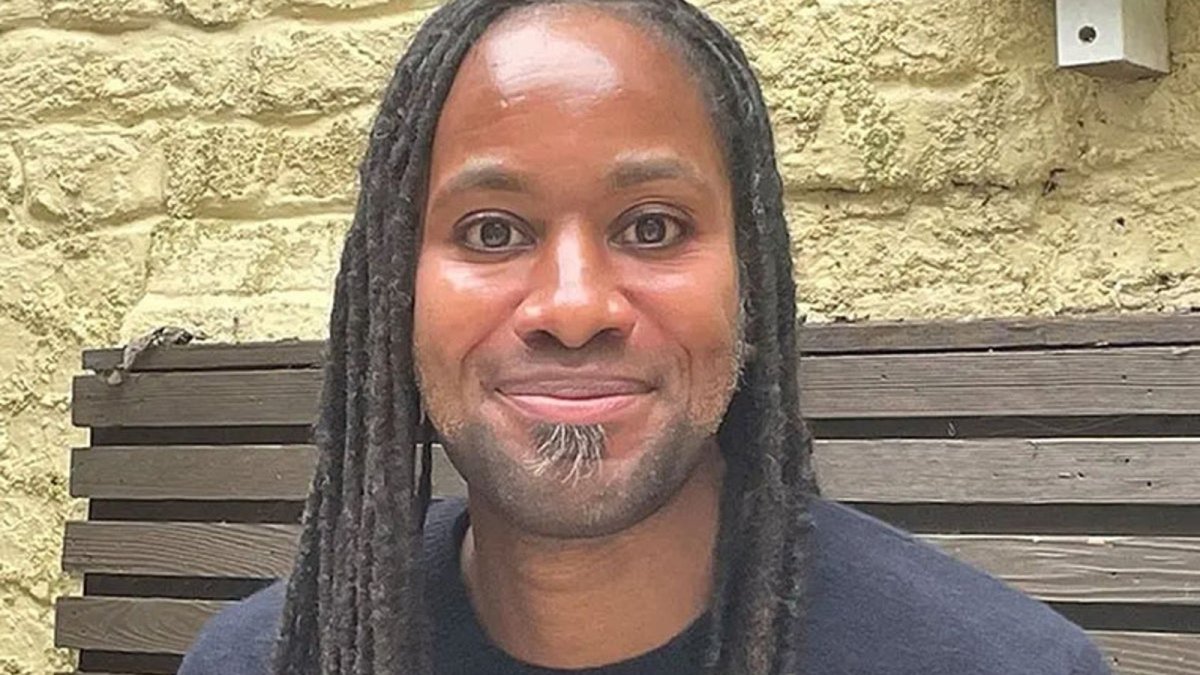
The plagiarism row and resignation
The controversy that engulfed Arday began after Nathan Cofnas, a self-described "race realist" who was sacked from his Cambridge role in 2024, claimed he had found numerous instances of plagiarism in Arday's work. The allegations, which were widely reported in the press, centred on Arday's PhD thesis and several journal publications.
Arday consistently denied the plagiarism claims, though he admitted to errors in his early academic work. He attributed some of these mistakes to his autism, explaining that he had relied on mimicry to make sense of information. "Similar scrutiny would find similar errors in work by other academics," he told The Times earlier this month. "We're talking about academia here. I didn't murder somebody. I think the cruelty that I've experienced and the positioning of me as this kind of liar and fantasist is totally unacceptable."
Questions were also raised in the press about other claims Arday had made, including that he had run 600 miles in six days, completed 30 marathons in 35 days, and raised more than £5 million for charity through his endurance feats. These claims were subjected to intense scrutiny, with some commentators questioning their veracity.
An investigation at Liverpool John Moores University cleared Arday of plagiarism. The university, which awarded him his PhD in 2015, concluded that he had not plagiarised work. However, Durham and Glasgow universities announced reviews into the circumstances surrounding his appointments there, and Cambridge announced an independent investigation into his appointment earlier this week.
Resignation letter: 'The personal cost has become too great'
Arday resigned from Cambridge last week, saying in an open letter that the "only way to bring this chapter to an end is to step away". He wrote: "This decision should not be interpreted as a loss of faith in scholarship or in the values that first brought me to Cambridge. Nor should it be mistaken for an acceptance of the narratives that have surrounded me. It is simply the decision of someone who has reached the limits of what any person should reasonably be expected to endure."
In a separate statement announcing his resignation, he said the "personal cost" of the scrutiny had become "too great". He added: "While criticism is an inevitable part of academic life, what I have experienced has gone far beyond scholarly disagreement. The relentless accusations, speculation and public commentary have taken a profound toll on me and on those I love."
Cambridge's Vice-Chancellor, Professor Deborah Prentice, said she was "desperately saddened" by the news of Arday's death. "Our heartfelt sympathies go to Jason Arday's family and friends at this incredibly difficult time," she said. Earlier this week, in a letter to university staff, she had acknowledged the concerns raised about Arday's appointment, saying: "I fully understand the concerns being raised across the university and well beyond it, regarding Jason Arday's appointment and I share them... That investigation, as you say, should be thorough and transparent, and will be carried out independently by senior academics from within and beyond Cambridge."
Tributes and questions over media scrutiny
The news of Arday's death has prompted a wave of tributes and, in some quarters, anger at the manner in which his case was handled by the media. Labour deputy leader Lucy Powell said she was "deeply shocked and saddened" and urged people to give his family privacy "through this incredibly difficult period & to remember there are real people with loved ones involved".
Kim Johnson, the Labour MP for Liverpool Riverside, said "serious questions need to be answered" over the "relentless media attacks Jason faced". Damian McBride, a former Downing Street adviser now working for Yvette Cooper, drew a direct comparison with the death of television presenter Caroline Flack in 2020, posting: "Everyone said lessons would be learned from Caroline Flack's death. We learn nothing."
Jolyon Maugham KC, founder of the Good Law Project, told Sky News he had spoken to Arday every day or two for the last two weeks. "The police have described his death as unexpected, but cannot say that to me, because he has been telling me for some days he thinks his life is over," he said. "I have been trying to talk to him and tell him things can get better and he has much valuable work to do and contribute to society and at the same time I have been fielding calls from journalists."
A reckoning for British academia and the press
Arday's death raises profound questions about the treatment of public figures in Britain, the intensity of media scrutiny, and the responsibilities of both journalists and academic institutions. The Caroline Flack case, in which the former Love Island presenter took her own life while facing assault charges and intense tabloid coverage, led to widespread calls for reform of press regulation and greater sensitivity in reporting. Many will now ask whether those lessons were truly learned.
There is also a broader debate to be had about the culture of British academia. Arday's rise was celebrated as a breakthrough for diversity, but his case has exposed the sometimes brutal nature of academic disputes, where reputations can be destroyed through public allegations before any formal investigation has concluded. The fact that LJMU cleared him of plagiarism, and that the other investigations were still ongoing at the time of his death, has led some to question whether the presumption of innocence was abandoned in his case.
The University of Glasgow said it was "shocked and saddened" by the death of its former colleague. "Our thoughts and deepest sympathies are with his friends and family at this desperately sad time," a spokesperson said. The university had announced a review into Arday's previous academic work, as had Durham.
For the British public, many of whom followed Arday's story with fascination, his death is a reminder that behind the headlines and the academic controversies are real people with families, friends and lives. His family's statement, describing him as "a gentle man who always wanted to see the best in everyone", paints a picture of someone ill-suited to the ferocity of the public arena he found himself in.
As the coroner prepares to examine the circumstances of his death, and as the universities continue their investigations, the questions will linger. What drove a man who had overcome so much — non-verbal until 11, unable to read or write until 18, yet rising to the pinnacle of British academia — to the point where he felt his life was over? And what responsibility do the media, the academy and the wider public bear for the environment that led him there?
Arday's memoir was due to be published in the UK on 27 August. It is a book that tells the story of "improbable triumphs and heartbreaking setbacks". Tragically, the final setback proved too much to overcome.
If you are experiencing feelings of distress, or are struggling to cope, you can speak to the Samaritans, in confidence, on 116 123 (UK and ROI), email [email protected], or visit the Samaritans website to find details of your nearest branch.
This article was produced with AI-assisted research and editorial support. Sources: The Independent, BBC News.
By Erica Thornton, Staff Writer
What's Your Reaction?
 Like
0
Like
0
 Dislike
0
Dislike
0
 Love
0
Love
0
 Funny
0
Funny
0
 Wow
0
Wow
0
 Sad
0
Sad
0
 Angry
0
Angry
0

US Politics and Policy Correspondent at Global1.News. Based in Washington DC, covering American politics, policy, elections, and the courts. Knows how the system works and tells you what it actually means.













Comments (0)