
Ford's Private Meeting with Loblaw CEO Raises Questions About Grocery Pricing Stance
Ontario Premier Doug Ford held a private, unpublicized meeting with Loblaw CEO Per Bank at his Etobicoke home one day after dismissing opposition calls to ban surveillance pricing, government records reveal. The meeting raises questions about transparency amid the affordability crisis.
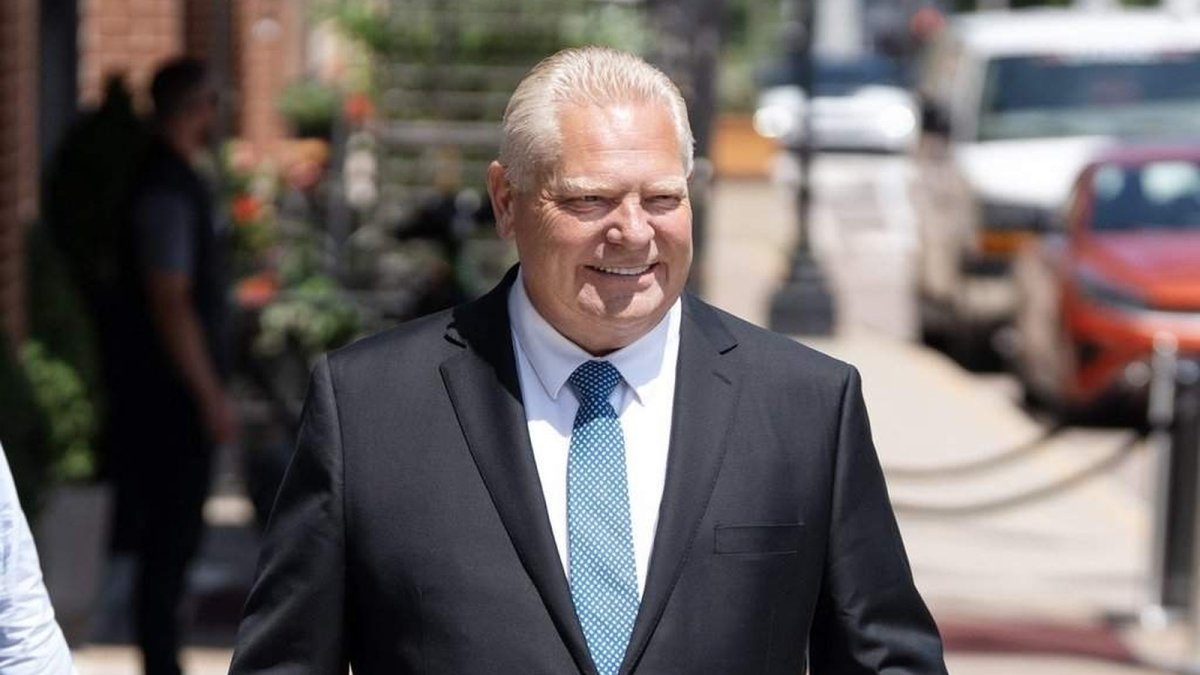
Ontario Premier Doug Ford held a private, unpublicized meeting with the CEO of Loblaw Companies at his Etobicoke home just one day after dismissing opposition calls to ban surveillance pricing in grocery stores, government records obtained through freedom of information laws reveal. The meeting, which took place on Friday, April 17, comes amid a persistent affordability crisis that has seen Ontario families struggle with rising costs for essential food items at the checkout.
Ford’s Private Meeting with Loblaw CEO Raises Questions About Grocery Pricing Stance
Toronto, Ontario — August 18, 2026 — The premier’s calendar, obtained by Global News, shows the one-on-one meeting with Loblaw CEO Per Bank lasted approximately 45 minutes and was attended by a single staffer. The meeting was not publicized by the premier’s office, nor did it appear on Ford’s social media accounts, raising questions about transparency in how the province’s leader engages with one of Canada’s largest private-sector employers.
Opposition Efforts to Curb Surveillance Pricing
The context for the meeting is critical. In mid-April, both the Ontario NDP and the Ontario Liberals tabled legislation and motions at Queen’s Park aimed at restricting companies from using surveillance pricing—a practice where retailers use personal data to target individual customers with personalized prices, potentially inflating costs for essential items. The NDP went further, asking the legislature to “remove existing controls on real property that have the effect of limiting and controlling competition among food retailers.”
Neither bill received support from the Progressive Conservative government. When asked directly on April 16 whether his government would ban surveillance pricing in grocery stores, Ford rejected the proposal outright. “I believe in capitalist society, free market, the market dictates,” Ford said. “If ABC grocery store wants to compete against the other one, that’s what the true driver is. Free and fair competition and let the market dictate on food prices.”
Timing of the Meeting Raises Eyebrows
NDP Leader Marit Stiles said the timing of the meeting—one day after Ford dismissed the idea of legally forbidding surveillance pricing—is not a coincidence. “We’d tabled a motion and asked the government to support the motion to stop predatory surveillance pricing and the Conservative government voted against our motion,” Stiles said. “It is no surprise to me that Doug Ford is listening, as he always does, to the CEOs, to the CEO of Loblaws, because he’s clearly not listening to the people of Ontario. He is making a choice, and this is about choices.”
While the calendar does not reveal the subject of the conversation, Bank registered to lobby the Ford government on a variety of subjects, including “policies and issues related to the retail sector” and “policies related to data and privacy.” The premier’s office did not answer a number of questions about the meeting, including whether surveillance pricing or leasing agreements were discussed and why the lunch hour meeting took place at Ford’s home.
Premier’s Office and Loblaw Respond
“Premier Ford frequently meets with a number of businesses and stakeholders, including one of Canada’s largest employers and retailers,” the premier’s office said in a statement. A statement from Loblaw said the company is “already on the record as not using surveillance pricing” and is pushing the grocery sector “to remove property controls.”
“As Canada’s largest private-sector employer, and a major employer in Ontario, we regularly meet with elected officials at all levels of government and across the political spectrum to discuss issues affecting our colleagues, our customers, our business and the communities we serve,” the company said in its statement.
The Manitoba Precedent
The effort to eliminate the practice of surveillance pricing began in Manitoba, where Premier Wab Kinew’s government tabled legislation to crack down on “the misuse of personal data to inflate prices.” That provincial initiative has been watched closely by consumer advocates and opposition parties across the country, who argue that similar measures are needed in Ontario to protect families already stretched thin by the cost of living.
At the same time as Ford prepared to host the Loblaw CEO at his home, the premier said he was willing to target grocery store chains “if there’s collusion on pricing” but dismissed other interventions. “There’s no better way of letting people get lower costs on no matter if it’s cars or homes or groceries than competition,” Ford said. “That’s a capitalist society. The other one is socialism. Socialism does not work. You go around and dictating and overseeing every single price.”
What This Means for Ontario Families
For Ontario families, the affordability crisis remains a pressing concern. Grocery prices have been a significant driver of inflation, and the cost of essential items continues to strain household budgets. The opposition parties argue that surveillance pricing represents a hidden and unfair practice that disproportionately affects vulnerable consumers who may not be aware that their personal data is being used to set prices.
Stiles said the private meeting is in line with how Ford conducts business. “I think it’s one of the reasons why Doug Ford hides his cellphone records from the people because he doesn’t want people to know who he’s meeting with, who’s giving him the information, who he really serves,” she said.
The meeting between Ford and Bank, coming as it did on the heels of the government’s rejection of surveillance pricing legislation, raises legitimate questions about the influence of large corporate interests on provincial policy decisions. While the premier’s office frames such meetings as routine engagement with major employers, the lack of transparency around the timing and location of this particular meeting does little to reassure Ontarians that their interests are being prioritised over those of powerful retail chains.
As the affordability crisis continues to affect families across the province, the contrast between the government’s stated commitment to free-market principles and the reality of rising grocery costs will remain a central political issue. Whether the Ford government will revisit the question of surveillance pricing or other measures to address food affordability remains to be seen, but the records obtained through freedom of information laws have cast a spotlight on how the premier engages with the very companies whose pricing practices are under scrutiny.
Grocery Competition and Affordability in Canada
The grocery sector in Canada has long been defined by its concentration. A handful of major players—Loblaw, Metro, and Sobeys parent company Empire—control the vast majority of food retail sales across the country, a reality that has drawn increasing scrutiny as food prices climbed sharply in recent years. During the peak of the inflation surge, grocery bills became one of the most visible symbols of the affordability crunch, with shoppers sharing stories of shrinking packages, rising shelf prices, and promotions that seemed to offer little relief. The federal Competition Bureau has examined the sector repeatedly, and its work has highlighted concerns about the market power wielded by the dominant chains, including the barriers that make it difficult for new entrants to challenge the incumbents.
Public distrust of grocery pricing was crystallized by the 2017 bread price-fixing scandal, in which Loblaw admitted to participating in a coordinated scheme to inflate the price of packaged bread over more than a decade. The company co-operated with investigators and offered customers a $25 gift card as compensation, but the episode left a lasting mark on the national conversation about grocery affordability. It also fuelled calls for stronger competition enforcement and greater transparency in how retailers set prices. For many Canadians, the scandal remains a reference point whenever questions arise about whether the industry is operating fairly, and it has made the grocery sector a politically sensitive file for governments at every level.
Federal-Provincial Dimensions
Consumer protection in Canada is a shared responsibility, with provinces overseeing many day-to-day retail practices while the federal government holds authority over competition law and certain national standards. This division of powers has created a patchwork of approaches to grocery pricing issues. Federally, the Competition Bureau has pushed for measures to improve transparency and competition in the sector, including recommendations aimed at making it easier for independent grocers to compete and for consumers to compare prices across retailers. Provinces, meanwhile, have the latitude to introduce their own consumer protection rules, which is why the Manitoba government’s move on surveillance pricing has drawn attention from advocates who would like to see similar action elsewhere.
For Ontario, the political stakes are considerable. The province is home to a large share of the national population, and its grocery market is dominated by the same major chains that operate across the country. Any policy decision made at Queen’s Park on pricing practices could set a precedent for other provinces, while also carrying electoral weight. With the cost of living consistently ranking as a top concern for voters, the Ford government’s approach to grocery affordability is a file that opposition parties are eager to press. The premier’s rejection of surveillance pricing legislation, combined with his willingness to meet privately with a major grocery executive, gives his political opponents a narrative about whose interests are being served—a message that could resonate with families feeling the pinch at the checkout counter.
What Ontarians Should Watch For
The records obtained through freedom of information laws matter because they offer a rare window into how the premier engages with powerful corporate interests. While routine meetings between government leaders and business executives are a normal part of governance, the lack of transparency around this particular encounter—its timing, location, and the absence of any public acknowledgment—invites questions that the premier’s office has so far declined to answer. For Ontarians, the key issue is accountability: when decisions about grocery pricing policy are made, the public deserves to know what input was sought and from whom.
Looking ahead, the question is whether this episode will prompt any changes in how the province handles grocery affordability. Opposition parties have already signalled that they will continue to press the government on surveillance pricing and related issues, and the Manitoba precedent offers a template for legislative action that could be adopted elsewhere. The FOI records have also underscored the importance of transparency mechanisms themselves, and advocates may push for stronger disclosure rules around premier’s meetings with lobbyists and corporate leaders. For now, the meeting between Ford and Bank remains a single data point, but it has added to a growing body of evidence that Ontarians are watching closely as they navigate one of the most difficult affordability periods in recent memory.
By Alex Thompson, Staff Writer
This article was produced with AI-assisted research and editorial support. Sources: Global News.
What's Your Reaction?
 Like
0
Like
0
 Dislike
0
Dislike
0
 Love
0
Love
0
 Funny
0
Funny
0
 Wow
0
Wow
0
 Sad
0
Sad
0
 Angry
0
Angry
0
Canada Correspondent at Global1.News. Based in Toronto, covering Canadian politics, energy, trade, and US-Canada relations. Provides the Canadian perspective on North American and global affairs.













Comments (0)