
Fired Stars and Stripes Journalists Sue Pentagon Over First Amendment Rights
Three fired Stars and Stripes journalists sued the Pentagon and Defense Secretary Pete Hegseth on Aug 27, alleging First Amendment retaliation over a CBS segment and a USS Abraham Lincoln story. The suit seeks a restraining order and to overturn the Pentagon's editorial independence repeal.
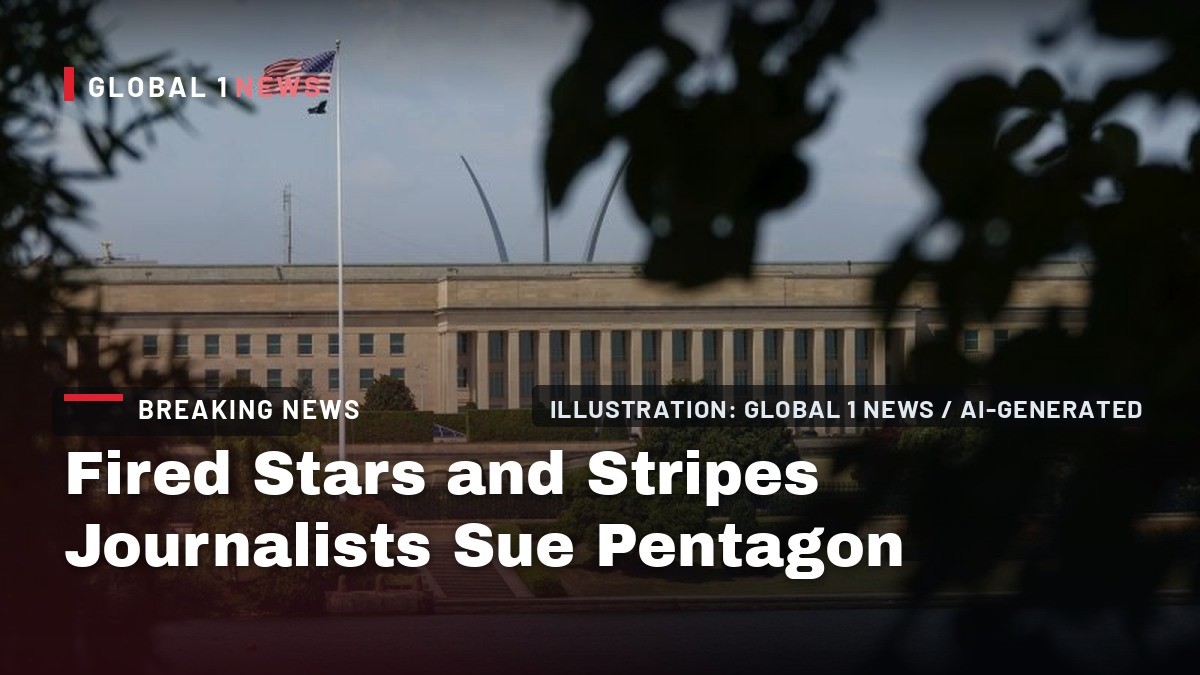
Three journalists fired from Stars and Stripes filed a 45-page federal lawsuit in Washington, D.C., on Thursday, August 27, 2026, accusing the Pentagon and Defense Secretary Pete Hegseth of unconstitutional retaliation. The suit, which names the U.S. Defense Department, Hegseth, chief Pentagon spokesman Sean Parnell, and Principal Deputy Assistant to the Secretary of Defense for Public Affairs Andrew Brey as defendants, alleges the terminations violated the First Amendment rights of the publication's staff and the service members who depend on its independent reporting.
The plaintiffs are Erik Slavin, the paper's editor-in-chief; Max Lederer, its publisher; and Lara Korte, a Middle East reporter. All three were fired last week after receiving separation notices on Friday, August 21, each charged with insubordination. The lawsuit contends those firings were direct retaliation for the journalists' public defense of editorial independence and for publishing a story that exposed deteriorating conditions aboard the USS Abraham Lincoln.
Represented by Democracy Defenders Fund, Lawyers for Good Government, and the Government Accountability Project, the plaintiffs are seeking a temporary restraining order and permanent relief ahead of the termination of their contracts. They are also asking the court to declare unlawful the Pentagon's repeal of regulations that have long protected the publication's editorial independence. The Pentagon did not respond to CNN's request for comment, and Military.com received no response by press time.
A Retaliation Timeline: From CBS to Termination Notices
The lawsuit lays out a precise sequence of events that the plaintiffs argue proves retaliatory intent. The first flashpoint came on July 5, 2026, when Slavin and Korte appeared in an eight-minute segment on "CBS Sunday Morning" in which they publicly supported Stars and Stripes' editorial independence. That interview aired five and a half weeks before the Pentagon's first direct demand for their removal.
The second flashpoint arrived on August 12, 2026 — exactly one day after Stars and Stripes published its investigation into the USS Abraham Lincoln. On that date, the lawsuit alleges, the Pentagon demanded that Lederer fire Slavin and Korte. Lederer refused. Instead, he announced his retirement, effective September 30, writing in a memo that his "philosophy of leadership" and his "understanding of the value and mission of Stars and Stripes" differ "in fundamental ways" from the direction the Defense Department has for the organization.
Three days after that memo, Lederer was pushed out before his retirement date. Slavin and Korte were also fired. The lawsuit states the agency cited "statements to the media as grounds for their termination." The separation notices, dated August 21, charged all three with insubordination.
The USS Abraham Lincoln Story and a 270-Day Deployment
At the center of the retaliation claim is a story Stars and Stripes published on August 11, 2026, detailing deteriorating conditions aboard the USS Abraham Lincoln. The Nimitz-class aircraft carrier had been deployed for 270 days without a port call amid the ongoing war with Iran, which marks the six-month point of the conflict on Friday, August 28.
The investigation described the toll of the extended deployment on the ship's crew, including the strain of continuous operations in a combat zone. The lawsuit argues that the Pentagon's demand for the journalists' firing came within 24 hours of that story's publication, a timing the plaintiffs say is no coincidence.
For the plaintiffs, the Lincoln story is exactly the kind of reporting Stars and Stripes exists to produce. The publication, despite partial funding from the Pentagon through congressional appropriations, operates like a commercial newspaper and has a decades-long record of editorial independence. That independence, the lawsuit argues, is what makes the paper's reporting credible to the troops it serves.
The Pentagon's 'Modernization' Push: A Timeline of Escalation
The firings did not occur in a vacuum. The lawsuit and the plaintiffs' attorneys point to a series of Pentagon actions beginning in January 2026 that systematically dismantled the publication's editorial safeguards. In January 2026, the Pentagon announced it would "modernize" the outlet and "refocus its content away from woke distractions." On the same day, the agency moved to repeal the regulations protecting the publication's editorial independence.
In March 2026, the Pentagon outlined an overhaul that barred the paper from using some newswire services and from running comics and other syndicated features. The new rules also required content consistent with "good order and discipline," a phrase drawn from the Uniform Code of Military Justice. Critics at the time said the language was a cudgel to suppress reporting the Pentagon found inconvenient.
In April 2026, the paper's ombudsman — a role Congress created specifically to protect its editorial independence — was fired. In June 2026, two earlier First Amendment complaints were filed: ombudsman Jacqueline Smith sued the Defense Department after being forced out, and two advisory board members sued the Pentagon over the overhaul. That second case remains pending.
What the Lawsuit Seeks: Restraining Order and Permanent Relief
The legal action filed Thursday is broad in its asks. The plaintiffs are seeking a temporary restraining order to halt the termination of their contracts while the court considers the case. They are also seeking permanent relief, including reinstatement and a declaration that the Pentagon's repeal of the editorial independence regulations was unlawful.
The suit names Hegseth personally, along with Parnell and Brey, in their official capacities. The inclusion of the two public affairs officials is significant, as the lawsuit alleges they were directly involved in the decision to demand the journalists' firing and in the subsequent termination notices.
The plaintiffs' legal team is a coalition of three organizations with deep experience in whistleblower and First Amendment cases. Democracy Defenders Fund, Lawyers for Good Government, and the Government Accountability Project have jointly taken on the case, signaling the importance they place on the outcome for press freedom in the military context.
Plaintiffs' Statement: Protecting Service Members' Right to Independent Press
In a joint statement released alongside the filing, the three journalists framed the lawsuit as a fight for the troops, not just for their own jobs. "Our goal is to protect the rights of service members and their families to a free and independent press," the statement read. "This lawsuit is about safeguarding that mission and ensuring our civilian and military journalists can do their jobs without retaliation."
Taryn Wilgus Null, senior counsel at Democracy Defenders Fund, was more pointed. "The Pentagon is trying to punish journalists for defending the established mission of Stars and Stripes," she said. "We are asking the court to stop these unconstitutional terminations. Service members and their families need reporting that is independent."
Amy Powell, litigation director at Lawyers for Good Government, tied the firings directly to the First Amendment protections at issue. "These retaliatory firings at Stars and Stripes are precisely why these First Amendment protections matter," Powell said. "The government cannot preserve an independent press while punishing the people who insist that its independence is paramount."
The Journalists: Decades of Service, Now in Legal Limbo
The three plaintiffs bring substantial institutional knowledge to their case. Slavin joined Stars and Stripes in 2005 and became its top editor in September 2025. Korte began reporting for the paper in 2024. Lederer spent 30 years with Stars and Stripes, making him one of the longest-serving publishers in the paper's modern history.
Their combined experience spans wars, deployments, and the paper's evolution from a print publication to a digital-first newsroom. The lawsuit argues that their institutional memory and editorial judgment are precisely what the Pentagon is trying to eliminate by replacing independent journalism with content management.
The timing of the firings — with the war with Iran entering its sixth month on August 28 — adds urgency to the case. The plaintiffs argue that service members deployed in combat zones need independent reporting now more than ever, and that the Pentagon's actions have created a chilling effect across the military press corps.
Press Freedom and Military Journalism: What's at Stake
The case raises fundamental questions about the relationship between the military and the press that covers it. Stars and Stripes has operated for decades under a unique model: funded in part by congressional appropriations through the Pentagon, but editorially independent. That model has produced award-winning journalism, including coverage of troop conditions, military leadership failures, and the human cost of war.
The Pentagon's January 2026 announcement that it would "modernize" the outlet and "refocus its content away from woke distractions" signaled a break with that model. The March 2026 overhaul, with its restrictions on newswire services and syndicated features, further tightened control. The April 2026 firing of the ombudsman removed the last institutional check on that control.
Now, with the June 2026 lawsuits and Thursday's filing, the courts are being asked to decide whether the Pentagon can legally dismantle a publication that Congress has long protected. The outcome will have implications not just for Stars and Stripes, but for any government-funded news organization that claims editorial independence.
What Happens Next: Legal Proceedings and the Road Ahead
The immediate next step is a hearing on the temporary restraining order, which the plaintiffs hope will halt the termination of their contracts while the case proceeds. If granted, the order would allow Slavin, Lederer, and Korte to continue their work at Stars and Stripes pending a full hearing on the merits.
The broader case will likely take months to resolve. The plaintiffs are asking the court to declare the Pentagon's repeal of the editorial independence regulations unlawful, which would restore the legal framework that has protected the paper for decades. They are also seeking damages and reinstatement.
For now, the three journalists are in legal limbo, fired from jobs they held for years and fighting to get them back. Their case joins two other pending lawsuits against the Pentagon over the same overhaul, creating a legal front that could ultimately reshape how the military interacts with the press. The Pentagon's silence on the matter, at least for now, leaves the next move to the courts.
This article was produced with AI-assisted research and editorial support. Sources: CNN, Military.com, Stars and Stripes, The Washington Post, The Guardian.
By Jessica Ali, Staff WriterWhat's Your Reaction?
 Like
0
Like
0
 Dislike
0
Dislike
0
 Love
0
Love
0
 Funny
0
Funny
0
 Wow
0
Wow
0
 Sad
0
Sad
0
 Angry
0
Angry
0

Editor-in-Chief at Global1.News. Atlanta-based journalist who cuts through the BS and tells it like it is. Lead anchor, host, and the voice you hear when the spin stops and the truth starts.














Comments (0)