
Finland Completes 200-Kilometer Border Fence With Russia
Finland has completed a 200-kilometer fence along its border with Russia, three years after construction began following Moscow's invasion of Ukraine. Interior Minister Mari Rantanen unveiled the barrier near Nuijamaa, citing hybrid threats and urging EU funding for eastern member states.
Finland Completes 200-Kilometer Barrier on Russian Border, Citing Security Shift
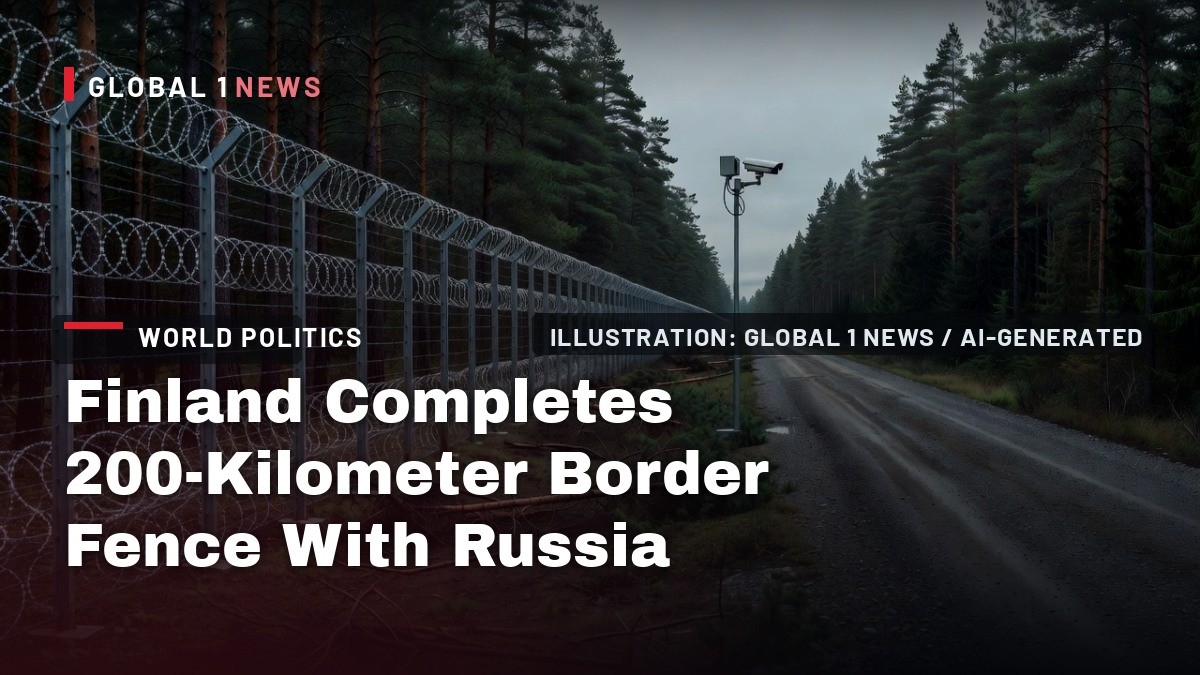
Finland has completed construction of a 200-kilometer fence along its eastern frontier with Russia, a project announced on Monday near the shuttered Nuijamaa crossing point in southeastern Finland. The Finnish Border Guard and Interior Minister Mari Rantanen presented the finished barrier as a central element of national security policy, addressing what Helsinki describes as heightened risks following Russia’s full-scale invasion of Ukraine. The structure, which has been built in dozens of separate sections rather than as a continuous line, covers roughly 15 percent of the 1,340-kilometer border, focusing on areas where Finnish authorities have judged the risk of illegal crossing to be highest.
Barrier Specifications and Cost
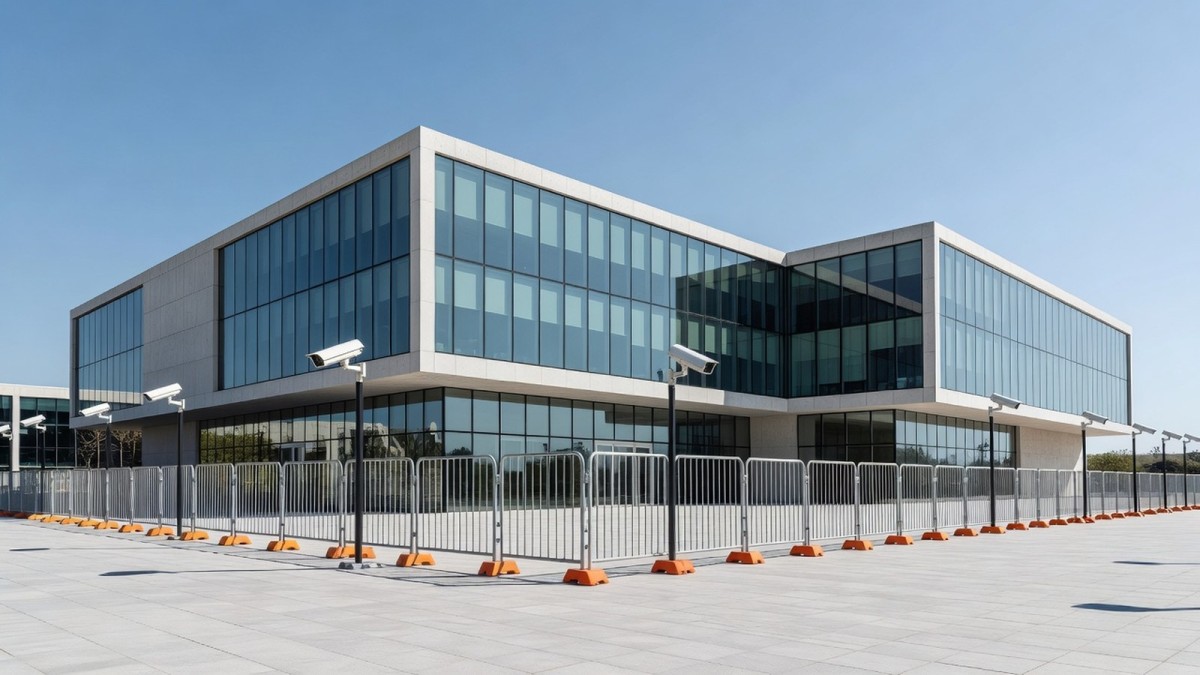
The completed fence cost 356 million euros, approximately $413 million, according to Finnish border authorities, with an estimated annual maintenance expense of between 2 and 3 million euros. The barrier features metal fencing several meters high—reaching about 4.5 meters in places—along with a cleared strip, patrol and service roads, surveillance cameras, night lighting and loudspeakers. The Finnish Border Guard has stated that the fence is designed to slow and channel any attempted crossings toward managed points, rather than to seal the border completely. Construction proceeded under a cross-party agreement reached in 2022 following Russia’s invasion of Ukraine, with pilot sections built at Imatra and Salla in 2023 and large-scale work beginning in August 2024. The project has taken approximately three years in total.
Minister Rantanen on Funding and Security
Interior Minister Mari Rantanen presented the completed fence at the Nuijamaa site on Monday, emphasizing the need for broader European financial support for border infrastructure. “What we particularly need is EU funding for eastern member states so that projects like this can be financed,” Rantanen said. The minister framed the barrier within the state’s core responsibilities, stating, “The state's most important duty is to see to the safety of its nationals.” Rantanen also indicated that the fence could be extended further in the future, depending on security assessments and available resources. The presentation took place near a border crossing that has remained closed since December 2023, a visual reminder of the strained relations between the two neighbors.
Background: The 2023 Border Crisis
The fence project and the continued border closures trace back to a sudden surge of asylum seekers in the autumn of 2023. Between August and December of that year, roughly 1,300 people crossed from Russia into Finland, mostly citizens of Syria, Somalia and Yemen, with smaller numbers from Kenya, Morocco and Pakistan. Approximately 900 of those arrivals occurred in November 2023 alone, a dramatic increase compared with the fewer than one per day previously recorded. Finland responded by closing all eight eastern border crossings in late November and December 2023. Brief reopenings in December were reversed within days as arrivals resumed, and the entire land border was closed on December 15, 2023, for an initial period of one month. Restrictions have since been extended repeatedly and remain in force; in June 2026, the Finnish government decided to maintain the restrictions indefinitely.
Accusations of Hybrid Attack and Kremlin Denial
Helsinki has characterized the 2023 influx as a “hybrid attack,” alleging that Russian authorities were instrumentalizing migration by allowing people to reach the Finnish border without Schengen visas. Finnish border authorities have said that Russian officials appeared “heavily involved” in transport operations bringing asylum seekers to the crossing points. This assessment was echoed by EU officials, including then-home-affairs commissioner Ylva Johansson. Finland’s government has linked the pressure directly to the country’s decision to join NATO in April 2023, after decades of military non-alignment, a move that doubled the alliance’s land border with Russia. Helsinki has stated that the border crisis was retaliation for that decision as well as for deepened defense cooperation with the United States. The Kremlin has consistently rejected these accusations. In December 2023, Russian President Vladimir Putin suggested that the West had “dragged” Finland into NATO and claimed that all disputes between the two countries, including mid-20th-century territorial questions, had long been resolved.
Legal Framework and Concerns Over Asylum Access
The Finnish government last week proposed extending the temporary Border Security Act until December 31, 2028. The law, in force since 2024, allows border guards to turn away asylum seekers at the eastern border under exceptional circumstances. The government has argued that the extension is necessary given what it describes as unprecedented challenges to border security. The proposal has drawn scrutiny from human rights organizations and international bodies. The Council of Europe sent a letter in December 2023 expressing concern about access to asylum during the border closures. Rights groups have continued to raise questions about whether the restrictions comply with Finland’s international obligations, even as the government maintains that the measures are proportionate to the security threat. The Border Security Act is framed as a temporary instrument, but the proposed extension to the end of 2028 suggests that Finnish authorities expect the current situation to persist for years to come.
Regional Context: Baltic States and Border Defense
Finland’s fence is not an isolated project. Estonia, Latvia, Lithuania and Poland have built or are building similar barriers on their borders with Belarus, which has been accused of flying migrants to the region and pushing them toward EU borders in what Brussels has called a hybrid operation. The Baltic states and Finland have coordinated on responses to what they term “hybrid threats,” sharing intelligence and best practices on border management. Finland shares the longest land border of any EU or NATO member with Russia, a geographic reality that gives the fence project particular strategic significance. The barrier is intended to buy time for border guards to respond to any mass arrival attempt, allowing for the channeling of people toward designated crossing points where their claims can be processed under controlled conditions.
Russia Closes Railway Checkpoints
In a separate development over the summer, Russia closed five railway border checkpoints with Finland without disclosing the reasons or indicating when they might reopen. The closures have further reduced the already limited points of contact between the two countries. Passenger rail service between Finland and Russia had already been suspended in previous years, and the latest closures affect remaining freight and operational crossings. Russian authorities have not publicly explained the decision, leaving Finnish officials to speculate about the motives. The closures are consistent with a broader pattern of reduced cross-border interaction since 2022, when Russia’s invasion of Ukraine prompted Finland to reassess its relationship with its eastern neighbor. For ordinary people on both sides of the border, the practical consequences have been significant: family visits, cultural exchanges and local trade have all been disrupted, and the once-busy crossing points now stand empty.
Implications for Russia-Europe Relations
The completion of the fence marks a permanent physical change to the Russia-Finland border, one that is likely to endure for decades. Analysts suggest this could indicate a fundamental shift in how Helsinki views its relationship with Moscow, moving from a posture of pragmatic coexistence to one of defensive preparedness. The fence, combined with Finland’s NATO membership and the continued closure of border crossings, signals that Finland no longer expects a return to the pre-2022 era of open borders and mutual trust. For NATO’s northeastern flank, the barrier adds a layer of territorial defense that complements the alliance’s military posture. For Russia, the fence represents a tangible consequence of its actions in Ukraine and its pressure on Finland in 2023. The Kremlin has denied any role in the migration surge and has portrayed Finland’s policies as hostile, but the physical reality of the fence underscores the depth of the current estrangement.
Looking Ahead: Extension and European Support
With the fence now complete, Finnish authorities are turning their attention to maintenance, surveillance and potential future extensions. Interior Minister Rantanen’s call for EU funding reflects a recognition that border security is a shared European concern, particularly for member states on the alliance’s eastern edge. The proposed extension of the Border Security Act until the end of 2028 suggests that Helsinki anticipates a prolonged period of heightened alert. The Finnish Border Guard has said the fence is one component of a broader border management strategy that includes electronic surveillance, patrols and international cooperation. Whether the barrier will be extended beyond the current 200 kilometers remains an open question, one that will likely depend on security assessments, funding availability and the evolution of Russia’s behavior. For now, the fence stands as a concrete symbol of the new reality on Europe’s northeastern frontier: a line of steel and cameras where open fields once lay.
By Irina Volkov, Staff Writer
This article was produced with AI-assisted research and editorial support. Sources: The Moscow Times, Reuters, Yle, Helsinki Times.
What's Your Reaction?
 Like
0
Like
0
 Dislike
0
Dislike
0
 Love
0
Love
0
 Funny
0
Funny
0
 Wow
0
Wow
0
 Sad
0
Sad
0
 Angry
0
Angry
0
Russia/Eastern Europe Correspondent at Global1.News. Covering Russian politics, energy, security, and the shifting dynamics of the post-Soviet space. Provides clear-eyed analysis on one of the world's most opaque regions.









Comments (0)