
New 9/11 Videos Put Saudi Arabia Back in the Spotlight 25 Years On
In a recent BBC News investigation, reporter Jane McMullen examined new evidence in the long-running legal battle between the families of 9/11 victims and the Kingdom of Saudi Arabia, 25 years after the deadliest terror attack in history.
In a recent BBC News investigation, reporter Jane McMullen examined new evidence in the long-running legal battle between the families of 9/11 victims and the Kingdom of Saudi Arabia, 25 years after the deadliest terror attack in history.
New Videos in 9/11 Lawsuit Reopen Questions About Saudi Role
London - 8 September 2026 — A quarter-century after the attacks that killed nearly 3,000 people, previously unseen videos of Omar al-Bayoumi — the Saudi national accused of aiding two hijackers in California — have been placed on the public docket of a $1 trillion lawsuit brought by 9/11 families against the Kingdom of Saudi Arabia. The footage, obtained by the BBC and aired this week as a Global Story episode, shows Bayoumi alongside Anwar al-Awlaki, the cleric who later became a senior al-Qaeda figure, and raises fresh questions about what US investigators knew and when they knew it. With the 25th anniversary of 11 September 2001 days away, the release intensifies pressure on Washington and Riyadh as the case heads toward a historic appeals hearing.
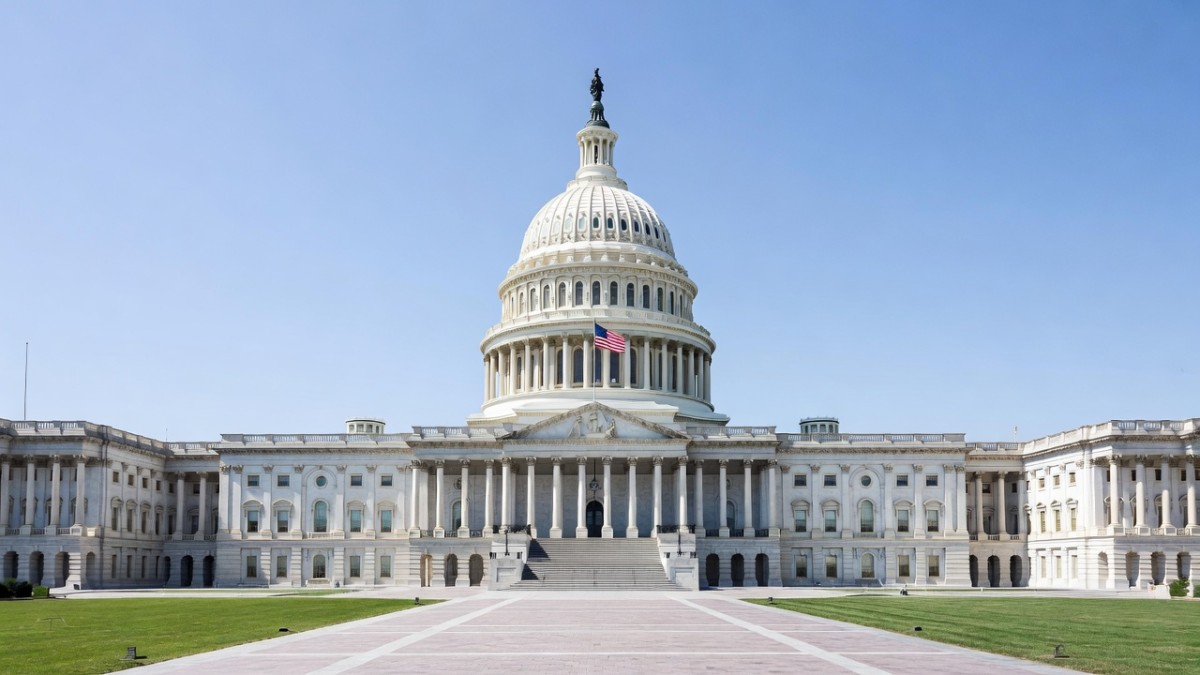
The Man Who Helped Two Hijackers Settle In
Bayoumi's role in the months before 9/11 has been the subject of intense scrutiny for two decades. In early 2000, he helped Nawaf al-Hazmi and Khalid al-Mihdhar — both of whom would later board American Airlines Flight 77 and crash it into the Pentagon — settle in San Diego. According to the 9/11 Commission's 2004 report, Bayoumi found the pair an apartment in his own complex, translated for them, and assisted them in opening a bank account with deposits kept just below federal reporting thresholds.
Now, a new witness has come forward. The woman who ran the rental office at the Parkwood apartment complex in San Diego has spoken to the BBC for the first time, describing how Bayoumi brought the two men in as if he were chaperoning them. Her account, detailed in the investigation, adds a human dimension to the documentary record: a Saudi graduate student, ostensibly studying English, shepherding two future hijackers through the logistics of American life with apparent ease and purpose.
Bayoumi has consistently denied knowing the two men were hijackers, denied being a Saudi spy, and denied any role in the attacks. He is believed to live in Saudi Arabia today. But the new witness's testimony, combined with the videos now public, forms part of a broader evidentiary picture that the families' attorneys argue points to official Saudi support for the hijackers' preparations.
Paintball, al-Awlaki and the Ministry of Islamic Affairs
The videos obtained by the BBC, which the FBI had within days of the attacks and which have never been shown publicly, depict Bayoumi engaged in paintball games for at least three years in the late 1990s and very early 2000s. His companion in the footage is Anwar al-Awlaki, the American-born cleric who became a senior figure in al-Qaeda's Yemeni branch and was killed by a US drone strike in 2011. Another previously unreported clip shows Bayoumi embracing Awlaki in January 1998 — a moment of apparent warmth between two men whose paths would later intersect with the 9/11 plot.
Further footage records Bayoumi meeting officials and preachers from Riyadh's Ministry of Islamic Affairs, including at SeaWorld in San Diego. These meetings, captured on video, suggest a pattern of contact with Saudi government-linked religious figures that Bayoumi has never adequately explained, according to the families' attorneys.
The significance of the videos is amplified by Bayoumi's own testimony. Questioned in the families' lawsuit in 2021, he insisted he had not met Awlaki. The contradicting video was placed on the public court docket on 4 September this year, directly undermining that sworn denial. Saudi Arabia has said any allegation that it or its officials were complicit in 9/11 is "categorically false," and its attorneys have dismissed the footage as innocuous social interaction. But the discrepancy between Bayoumi's testimony and the visual record is now a matter of public record.
What the FBI Knew — and Did Not Pursue
Ten days after the attacks, British police raided Bayoumi's home in Birmingham, UK, seizing evidence that was later handed to the FBI. The haul included a phone book with more than two dozen names of Saudi government officials, flight simulator software, tickets and travel documents, and a yellow notebook page with a sketch of a plane marked "contains handwritten notes mathematical calculations re height of planes." The page was made public in 2022; last year, the federal judge overseeing the families' lawsuit found it, on its face, "connects Bayoumi with knowledge of the 9/11 Attacks."
The BBC investigation reveals that FBI agents in San Diego and Los Angeles repeatedly requested copies of this evidence and were blocked from interviewing Bayoumi's Saudi government contacts. A Department of Justice official told the BBC he was never shown a proposal to prosecute Bayoumi, adding: "We've convicted people for less." The implication is stark: evidence that might have supported charges was available, but no prosecution was ever pursued.
Bayoumi's attorneys have dismissed the notebook sketch as a high school math assignment, and Saudi officials have characterized the materials as unremarkable. But the judge's ruling last year suggests the evidence carries weight in a legal context. The question of why the FBI did not act on what it had — and why agents were blocked from following leads — remains a central grievance for the families and their congressional allies.
The Commission That Never Saw the Evidence
The 9/11 Commission, whose July 2004 report remains the official US government account of the attacks, described Bayoumi as "obliging and gregarious" and cleared him of extremist ties. But the BBC investigation reveals that the Commission never saw the plane diagram, the paintball video, or most of the evidence seized by British police. The report's authors operated with a partial record, and their conclusions reflected that limitation.
BBC reporting indicates that some Commission staff objected to the line that Bayoumi was "an unlikely candidate for clandestine involvement with Islamist extremists." A compromise was reached: the conclusion was attributed to "our investigators who have dealt directly with him," rather than presented as the Commission's independent finding. The distinction matters, the families argue, because it shows the clearance was based on incomplete information and internal disagreement.
The Commission's failure to access the Birmingham evidence — and the FBI's apparent reluctance to share it — has become a recurring theme in the families' litigation. If the Commission had seen the plane diagram or the videos, its conclusions about Bayoumi might have been very different. The new evidence, now public, invites a reassessment of the official record as the 25th anniversary approaches.
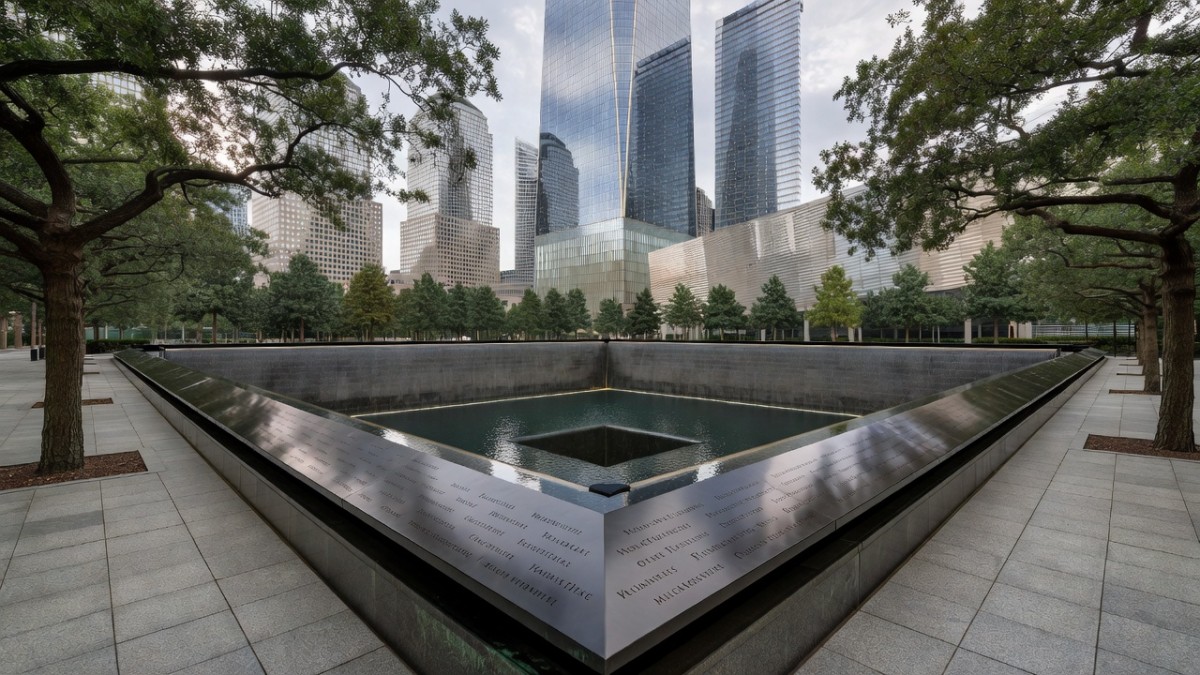
A $1 Trillion Lawsuit and the Road to Trial
The families' lawsuit, brought under the US Justice Against Sponsors of Terrorism Act (JASTA), was allowed to proceed by a federal judge in 2018. Last year, the same judge ruled the evidence compelling enough to go to trial, writing that Saudi exculpatory explanations "are either self-contradictory or not strong enough to overcome the inference that they had employed al-Bayoumi to assist the hijackers." The judge added that while no evidence shows Saudi leaders knew of the plot, "the total evidence creates a high probability as to al-Bayoumi's role in the hijackers' plans."
The stakes are enormous: the families seek damages that could total $1 trillion, a figure that would dwarf any previous judgment against a foreign state. Saudi Arabia has fought the lawsuit at every stage, arguing that it is immune from such claims and that the evidence against Bayoumi is circumstantial. The kingdom's attorneys have called the videos "tourist footage" and dismissed the notebook as irrelevant.
On 7 October, New York federal appeals court judges will hear oral arguments — the first time the appeals court has considered the videos and their link to the Saudi state. The hearing could determine whether the case proceeds to trial, where the families would have the opportunity to present their full evidentiary case before a jury. A ruling against the families would effectively end the litigation; a ruling in their favor would set the stage for a trial that could reshape US-Saudi relations.
Families Push for Declassification
As the 25th anniversary of the attacks approaches, the families are pressing the Trump administration to declassify more records before 11 September. They point to phone records they say tie Bayoumi to the hijackers and to Awlaki — records that remain classified despite years of requests. The families argue that full transparency is essential to understanding what happened and who was responsible.
Their cause has attracted bipartisan support. Rep. Nicole Malliotakis, a New York Republican and Trump ally, joined Democrats Dan Goldman and Jerry Nadler in a bipartisan letter to the Public Interest Declassification Board, urging the release of the remaining records. The letter argues that the public has a right to know the full extent of any Saudi involvement in the attacks.
The White House has signaled openness to the families' request; spokesperson Anna Kelly said President Trump is "leading the most transparent administration in history," and that his team is "working diligently to identify records that are responsive to these families' request." But the declassification process itself remains opaque, and no timeline has been set. For the families, the 25th anniversary is not a moment for closure but for continued pursuit of answers.
Analysis: What the Evidence Does — and Does Not — Prove
The newly public videos and the witness testimony add significant weight to the families' case, but they do not, on their own, prove that the Saudi government orchestrated the 9/11 attacks. What they show is a pattern of association: Bayoumi's contacts with Awlaki, his meetings with Ministry of Islamic Affairs officials, and his assistance to two hijackers in San Diego. Analysts suggest this signals a level of Saudi official involvement that the kingdom has long denied.
Legally, the evidence strengthens the families' argument that Bayoumi acted as an agent of the Saudi state, a key requirement under JASTA. The judge's ruling last year — that the evidence creates a "high probability" of Bayoumi's role — reflects the cumulative weight of the record. But proving agency requires more than association; it requires showing that Bayoumi's actions were directed or funded by Saudi officials. That link remains inferential.
Historically, the evidence complicates the official narrative that Saudi Arabia was uninvolved in the attacks. The 9/11 Commission's clearance of Bayoumi now appears based on incomplete information, and the FBI's failure to pursue the Birmingham evidence raises questions about political interference. As the appeals court prepares to hear arguments, the case stands at a crossroads — one that could redefine the US-Saudi relationship for decades to come.
By Irina Volkov, Staff Writer
This article was produced with AI-assisted research and editorial support. Reporting is based on sources cited in the article.
What's Your Reaction?
 Like
0
Like
0
 Dislike
0
Dislike
0
 Love
0
Love
0
 Funny
0
Funny
0
 Wow
0
Wow
0
 Sad
0
Sad
0
 Angry
0
Angry
0
Russia/Eastern Europe Correspondent at Global1.News. Covering Russian politics, energy, security, and the shifting dynamics of the post-Soviet space. Provides clear-eyed analysis on one of the world's most opaque regions.









Comments (0)