
Filipino Missing in Nepal-Tibet Flash Floods; DFA Verifies
In an ANC 24/7 report, the world learned of a tragedy unfolding thousands of miles from home, yet one that strikes a deeply personal chord for Filipinos: a fellow citizen is among the hundreds missing after catastrophic flash floods and mudslides ravaged the Nepal-Tibet border on Wednesday. As the Department of Foreign Affairs (DFA) works to verify the report, families here in Manila, Cebu, and Davao are holding their breath, reminded that our bayanihan spirit extends...
In an ANC 24/7 report, the world learned of a tragedy unfolding thousands of miles from home, yet one that strikes a deeply personal chord for Filipinos: a fellow citizen is among the hundreds missing after catastrophic flash floods and mudslides ravaged the Nepal-Tibet border on Wednesday. As the Department of Foreign Affairs (DFA) works to verify the report, families here in Manila, Cebu, and Davao are holding their breath, reminded that our bayanihan spirit extends even to the highest peaks of the Himalayas.
Filipino Missing in Nepal Floods; DFA Verifies
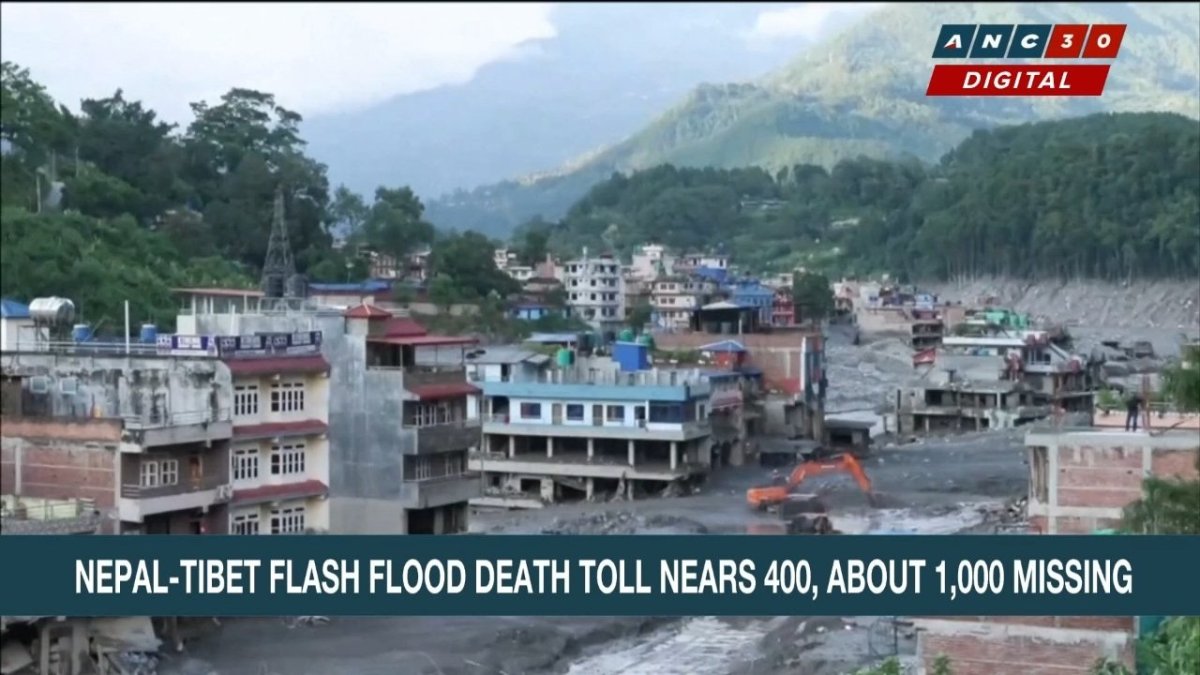
Manila, Philippines – Thursday — The Department of Foreign Affairs confirmed it is coordinating with Nepali authorities following a report from the Nepal Tourism Board that one Filipino is among 644 foreign travelers missing in the wake of Wednesday’s devastating flash floods. The disaster, which struck the mountainous border region between Nepal and Tibet, has claimed more than 360 lives and left nearly 1,500 people unaccounted for, making it one of the deadliest natural calamities to hit the region in recent memory.
A Catastrophe Born of Ice and Rock
The tragedy unfolded at approximately 8:40 a.m. local time (02:55 GMT) on Wednesday, August 26, when a massive section of a glacier collapsed high in the Himalayas at an elevation of about 5,200 meters (17,000 feet). According to geological reports, the lower end of the glacier broke away and plunged roughly 1,200 meters (3,900 feet) to the valley floor, gathering immense amounts of rock and sediment as it fell. The ice-rock avalanche struck the Lhende River in Tibet, about 20 kilometers (12 miles) northeast of the Nepal-China border crossing, temporarily damming the river before the natural barrier gave way, releasing a powerful wall of water downstream.
Officials were caught off guard because it was not raining. The United States Geological Survey (USGS) initially reported a magnitude 4.4 earthquake, but later revised its assessment, determining that the seismic signal was generated by the landslide itself, which registered as a magnitude 5.2 seismic event. The sheer force of the collapsing glacier and the resulting avalanche created a disaster that struck without the usual warning signs of heavy rainfall or rising river levels.
Philippine Government Responds with Urgency
In Manila, the DFA moved quickly to address the situation. The Philippine Embassy in New Delhi and the Philippine Honorary Consulate General in Kathmandu are actively monitoring developments and coordinating with Nepali authorities. In an official statement, the DFA said: "The Embassy and the Consulate General are coordinating with Nepali authorities to determine whether there are affected Philippine nationals and provide emergency rescue or assistance."
When pressed for confirmation on the missing Filipino, the DFA responded: "Our Embassy and the Honorary Consulate General are verifying this information with the Nepali authorities. We'll share updates as soon as they become available." The Philippines is currently monitoring 146 Filipinos registered in Nepal, according to a Daily Tribune report, a figure that underscores the small but present Filipino community in the Himalayan nation.
President Ferdinand Marcos Jr. extended the nation's condolences on X (formerly Twitter), writing: "The Philippines extends its deepest condolences to our friends in Nepal and to all those affected by the deadly flash flood yesterday." The President's message reflects the strong diplomatic ties between the two nations and the shared sense of loss that transcends borders.
Filipinos in Nepal: A Community in Fear
For the Filipino community in Kathmandu, the disaster has brought anxiety and uncertainty. A Filipina in Kathmandu told GMA News that her community keeps in touch amid worries about flooding, a testament to the resilience and close-knit nature of Filipinos abroad. Nepal's Filipino community is small, but it is tightly bonded, with many members working as professionals, aid workers, and entrepreneurs in the tourism and hospitality sectors that serve the thousands of trekkers and pilgrims who traverse the Kathmandu-Lhasa route each year.
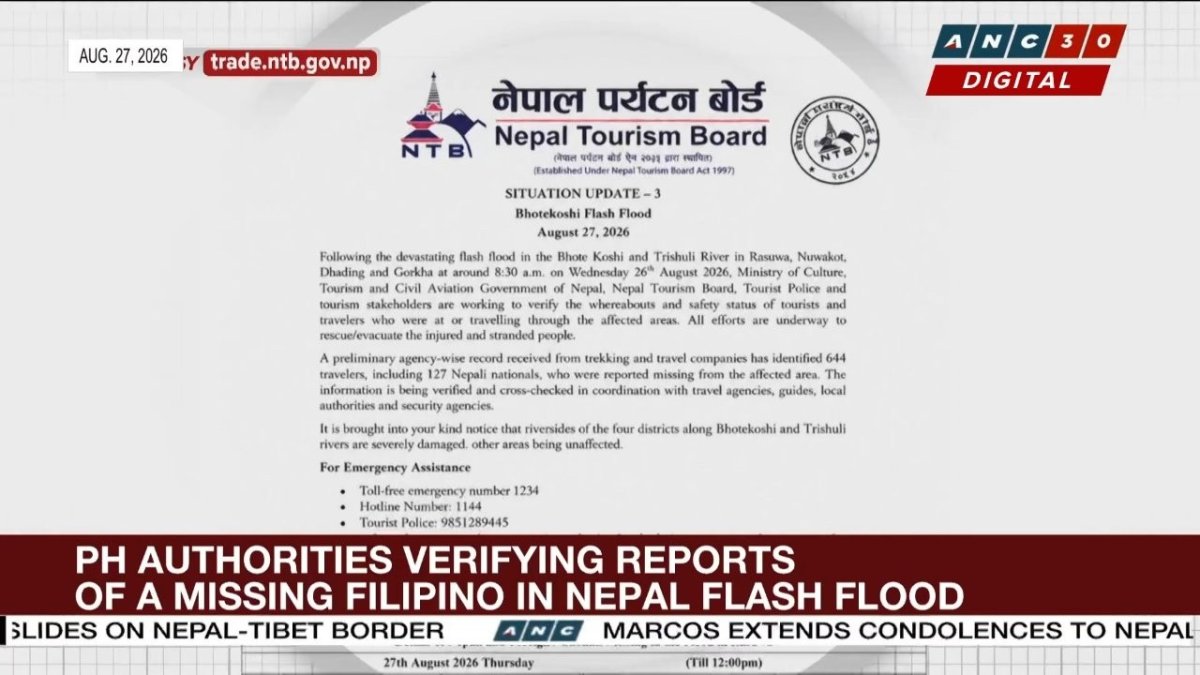
The missing Filipino is believed to have been traveling in the region, possibly as a tourist or pilgrim, though authorities have not released further details. For families back home, the wait for news is agonizing. The DFA has provided contact numbers for those seeking information: the Philippine Embassy in New Delhi can be reached at +91 9220405387 or via email at [email protected], while the Philippine Honorary Consulate General in Kathmandu is available at +977 014008801-805 or [email protected].
Rescue Efforts and Regional Impact
In Nepal, rescue operations are underway with Nepalese soldiers deployed alongside helicopters, drones, and search dogs. However, high river levels, damaged roads, and thick mud have complicated efforts. Authorities have used helicopters to search for survivors and drop emergency supplies to thousands of people cut off by the disaster. The flood swept down the Bhote Koshi gorge and the Trishuli River, with water levels in the Trishuli rising by as much as 9 meters (27 feet) in just 30 minutes — a terrifying surge that caught many off guard.
The worst-hit areas in Nepal include the Rasuwa district, particularly the towns of Timure and Syapru Besi, as well as the Nuwakot and Dhading districts. In Tibet, mud and debris hit Gyirong Port in the Shigatse region, where Chinese state media reported 558 missing, including 260 foreign nationals. At least 19 bridges and about 40 kilometers (25 miles) of roads were washed away, severing vital connections in a region that serves as a key artery for trade and tourism between Nepal and China.
The disaster struck a route thronged by trekkers and pilgrims that links Kathmandu with Lhasa in Tibet. This corridor is not just a tourist attraction; it is a lifeline for local communities, many of whom depend on the steady flow of visitors for their livelihoods. The loss of infrastructure will have long-term economic consequences for the region, affecting everything from small sari-sari store-like shops to larger hospitality businesses.
What to Watch For: Verification, Assistance, and Lessons
In the coming days, the DFA's primary focus will be on verifying the status of the missing Filipino and providing consular assistance to any affected nationals. The Embassy and Honorary Consulate are expected to maintain close contact with Nepali authorities, including the Nepal Tourism Board, which has been issuing situation updates. The Philippine government has a well-established protocol for such emergencies, having dealt with similar situations in the past, from earthquakes in Nepal in 2015 to volcanic eruptions in New Zealand in 2019.
For Filipino travelers, this disaster serves as a stark reminder of the importance of registering with the DFA before traveling abroad. The agency's registration system allows the government to locate and assist Filipinos in times of crisis. It also highlights the need for travel insurance and emergency preparedness, especially when visiting remote or mountainous regions where natural disasters can strike without warning.
The broader regional context is also worth watching. Climate change is increasing the frequency and intensity of glacial lake outburst floods and landslides in the Himalayas. Scientists have long warned that warming temperatures are destabilizing glaciers, making events like Wednesday's collapse more likely. For the Philippines, a country no stranger to typhoons, earthquakes, and volcanic eruptions, this disaster is a sobering reminder of the shared vulnerabilities of nations across the Asia-Pacific region.
As the world watches the rescue efforts unfold, the Filipino community at home and abroad stands in solidarity with the people of Nepal and Tibet. The bayanihan spirit — that innate Filipino trait of communal unity and cooperation — compels us to extend our help and prayers to those in need, even as we anxiously await news of our fellow citizen. The coming days will be critical, not just for the families of the missing, but for the entire region as it grapples with the aftermath of this unprecedented catastrophe.
For now, the DFA urges Filipinos in Nepal to stay in touch with the Embassy and Consulate, and for families in the Philippines to remain calm while verification efforts continue. The road to recovery will be long, but with the resilience of the Nepali people and the support of the international community, including the Philippines, the region will rebuild. And for the Filipino missing in the flood, we hold onto hope, praying for a miracle amid the mud and debris.
By Bella Reyes, Staff Writer
This article was produced with AI-assisted research and editorial support. Reporting is based on sources cited in the article.
What's Your Reaction?
 Like
0
Like
0
 Dislike
0
Dislike
0
 Love
0
Love
0
 Funny
0
Funny
0
 Wow
0
Wow
0
 Sad
0
Sad
0
 Angry
0
Angry
0

Philippines/Southeast Asia Correspondent at Global1.News. Manila-based journalist covering Philippine politics, environment, maritime security, and social issues. Passionate about marine conservation and the communities protecting the Philippines' natural heritage.














Comments (0)