
MTN Reopens Talks to Buy Telkom, This Time With Cash on the Table
MTN has confirmed early-stage talks to buy Telkom outright, with cash leading the consideration and MTN shares as an alternative, reviving a bid for a target now worth about R31.7bn.
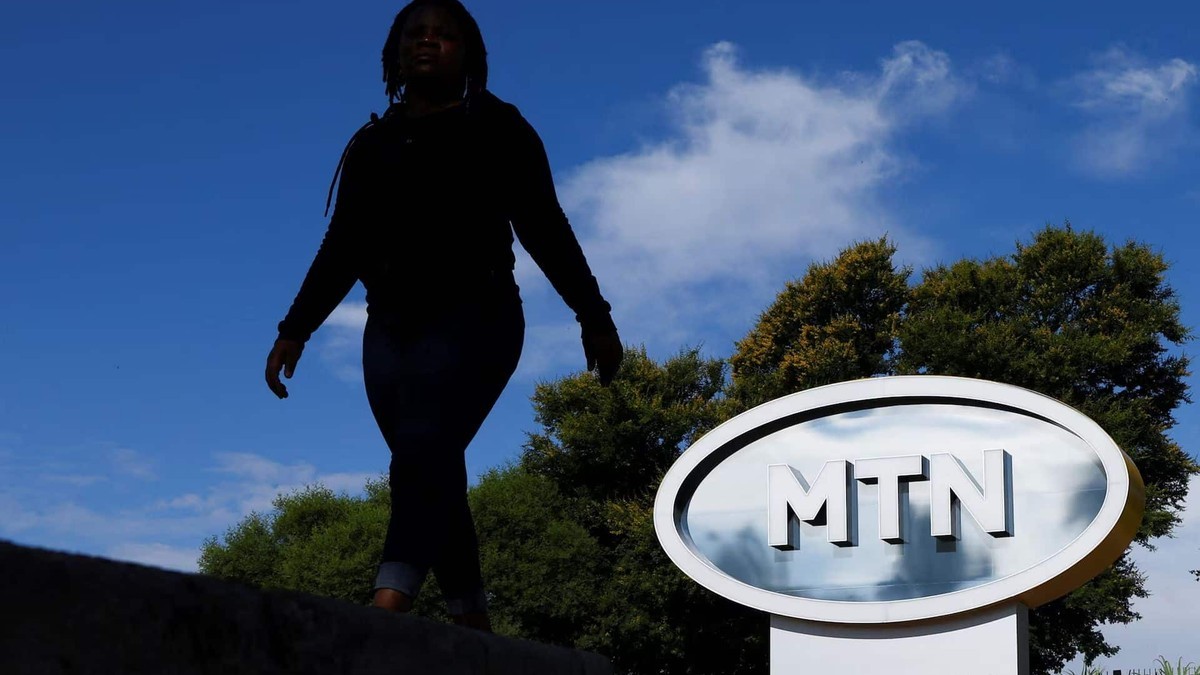
Two of South Africa's biggest telecoms companies confirmed on Monday morning that they are talking about a takeover, and the phrase that matters is not "Telkom" or "MTN" — it is "cash". Africa's largest mobile operator has come back for the fixed-line and fibre group it walked away from four years ago, and this time the payment is pitched to lead with cash.
MTN Reopens Talks to Buy Telkom, This Time With Cash on the Table
Johannesburg, South Africa – November 16, 2026 — MTN Group confirmed in a cautionary announcement to the Johannesburg Stock Exchange that it has entered discussions with Telkom SA SOC Limited which, if successful, will result in MTN making an offer to acquire the entire issued share capital of Telkom. Telkom published its own cautionary notice the same morning, confirming that the talks followed an approach by MTN. Neither company put a value on the transaction. Both said the discussions are at an early stage and that there is no certainty a deal will be concluded.
What the Two Announcements Actually Say
The wording of the two filings is worth reading closely, because it is doing a lot of work. MTN told shareholders the consideration "is currently contemplated that" it will be settled in cash, "with an alternative for Telkom shareholders to receive MTN shares." That is a structure, not an offer. The company went on: "The terms of any transaction, including the form of consideration, remain subject to negotiation." Telkom's notice is the mirror image. It confirms that discussions followed an approach by MTN and states that the transaction, if concluded, "may have a material effect on the price of Telkom's securities." Both boards told their shareholders to exercise caution when trading until a further announcement is made. There is no offer price, no premium, no timetable and no mention of conditions. What exists as of Monday morning is a confirmed conversation between two JSE-listed companies, published because securities law requires it, and nothing more.
A Target That Has Grown 85 Percent Since Last Time
The arithmetic explains why this attempt looks different from the last one. When the two companies confirmed formal discussions in July 2022, Telkom was valued at roughly R17.1 billion. By Friday's close its shares stood at R62.00, giving it a market capitalisation of about R31.7 billion — roughly 85 percent above the 2022 valuation, before anyone has agreed to pay a takeover premium. MTN, for scale, is worth about R427.7 billion on the JSE, more than thirteen times Telkom's value. The 2022 discussions were reported at the time as a deal worth about R24 billion. Any cash offer now starts from a considerably higher base, which is the single most practical difference between the bid MTN abandoned and the one it has just revived. The second difference is the shape of the payment: four years ago the proposal contemplated a mixture of cash and shares. Now cash leads, with MTN stock as the alternative.
Cash, Shares, and a Warning to Traders
A cash-led structure tells you something about intent. Accepting MTN paper would leave Telkom's shareholders — including the state — as owners of MTN, exposed to a group operating across multiple markets, several of them carrying currency risk. Cash ends the relationship cleanly, and it is also the structure most likely to satisfy a government shareholder that has to explain a disposal to the public. It is harder to raise, too. MTN has named Tamela Holdings as transaction and lead sponsor and JP Morgan Equities (SA) as joint sponsor, with Standard Bank of South Africa and Tamela acting as joint financial advisers and Edward Nathan Sonnenbergs as legal adviser. Telkom's independent board issued the caution to shareholders, and MTN's board did the same. The market's verdict was immediate and split: an RTTNews note on Monday had Telkom about 13 percent higher at 7,020 cents, or R70.20 a share — against Friday's R62.00 close — while MTN fell more than 1 percent to 23,174 cents, or R231.74. The language on both sides — trade carefully, a further announcement will follow — is standard cautionary wording, and it also means the market is now trading on rumour until the next filing lands.
The Fibre Prize Behind the Phone Business
The obvious reading of this deal is subscriber numbers: MTN combining with Telkom would bring together South Africa's second- and third-largest mobile operators and, on Reuters' assessment, overtake Vodacom in customer totals. But the asset that makes the bid worth running is buried in a subsidiary. Openserve, Telkom's wholesale fibre business, is the country's second-largest home fibre provider after Vumatel, and it recorded its first full-year revenue growth in nine financial years in the year to March 2026. MTN does not have a home fibre business of comparable scale in South Africa. That gap matters more every quarter, as operators try to move revenue away from voice and mobile data toward fixed connectivity, enterprise networks and digital infrastructure. The competitive contest in South African telecoms is no longer only about who sells the most SIM cards. It is about who owns the pipes that carry the country's data, and that is where Telkom's balance sheet is strongest.
The 51.6 Percent Question
No commercial logic gets past the share register. The South African government holds 40.5 percent of Telkom through the Department of Communications and Digital Technologies, currently led by Solly Malatsi, and the Government Employees Pension Fund, managed by the Public Investment Corporation, holds another 11.1 percent. Together that is 51.6 percent — control, in ordinary language. The Citizen's breakdown of the register puts the department at 40.51 percent, the PIC at 10.25 percent and Treasury at a further 5.5 percent — a reading that separates a Treasury holding BusinessDay's figures do not. The two tallies do not reconcile line for line. Both, however, describe a clear state-linked majority. Both sides of that majority matter, and neither can deliver control on its own. The pension fund has a fiduciary duty to beneficiaries that is not the same thing as a government policy position. Transfers of a former state monopoly into private hands have a long, loud history in South Africa, and this one will be argued about in public.
Two Regulators, Two Different Tests
Approval would run through more than one door. The Competition Commission would assess the effect on market concentration, consumer welfare, employment and public-interest considerations including the participation of historically disadvantaged businesses. It is the same body that stood in the way of an earlier, smaller transaction between the same two companies. The Independent Communications Authority of South Africa would separately have to weigh spectrum ownership, network competition and wholesale access, because a combined MTN-Telkom would control a substantial portfolio of mobile spectrum. The competition question is not only about price today. Telkom has been an aggressive price competitor in prepaid data, and removing it as an independent operator removes a source of pressure on the two largest players. The question regulators would put is not a simple yes or no, but which commitments — on wholesale access, on pricing, on network investment — could be made binding.
The 2015 Ruling Nobody Has Forgotten
The precedent is a decade old and still decides how this conversation is read. In 2014 MTN intended to take over only Telkom's radio access network, with each party roaming on the other's mobile network — an arrangement not unlike the "virtual radio access network" Cell C now runs with MTN. The Competition Commission recommended against it in 2015, finding that the transaction would affect the structure of the mobile market and would "prevent or lessen" competition in mobile services. Telkom's chief executive at the time, Sipho Maseko, said the company decided not to proceed rather than face protracted Competition Tribunal hearings. That history is not a prediction. A full acquisition is a different transaction from a network-sharing deal, and eleven years of market change have altered the counterfactual. But it is the reason nobody in South African telecoms treats a friendly announcement as a completed deal.
What Killed the 2022 Deal
The nearer failure was about exclusivity, not price. The two companies first disclosed formal buyout discussions on 15 July 2022. MTN terminated them in October 2022 after Telkom declined to provide assurances around exclusivity, with a competing proposal on the table from the data-only network Rain, which argued that buying Rain in exchange for Telkom shares would create a viable third operator and a 5G challenger. Rain was later reprimanded by the Takeover Regulation Panel and forced to retract its announcement, but the damage was done. There was a further false start. Bloomberg reported in September 2025 that MTN was examining a revival and that Telkom had begun consulting advisers; MTN chief executive Ralph Mupita denied talks were active at the time, while declining to rule out a deal later. Monday's filings close that loop.

A Turnaround Under New Management
Telkom is a different company from the one MTN courted in 2022, and the difference is the reason the price has moved. Its last full-year results, for the year to 31 March 2026, showed revenue up 1.4 percent to R44.5 billion, EBITDA up 5.8 percent to R12.5 billion, headline earnings per share up 21.5 percent and net debt down 14.7 percent to R6.37 billion. That came after a brutal restructuring: in January 2020 Telkom announced plans to shed 3,000 jobs as fixed-line voice revenue fell and debt rose, and by the financial year to March 2024 its permanent workforce had shrunk by 15 percent while the programme delivered roughly R1 billion in fixed-cost savings. Group chief executive Serame Taukobong now runs a leaner business with a fibre unit that is finally growing. MTN's chief, Ralph Mupita, has argued repeatedly that South Africa cannot sustain four large operators on the available profit pool, and that consolidation is inevitable. This is that argument, in a filing.
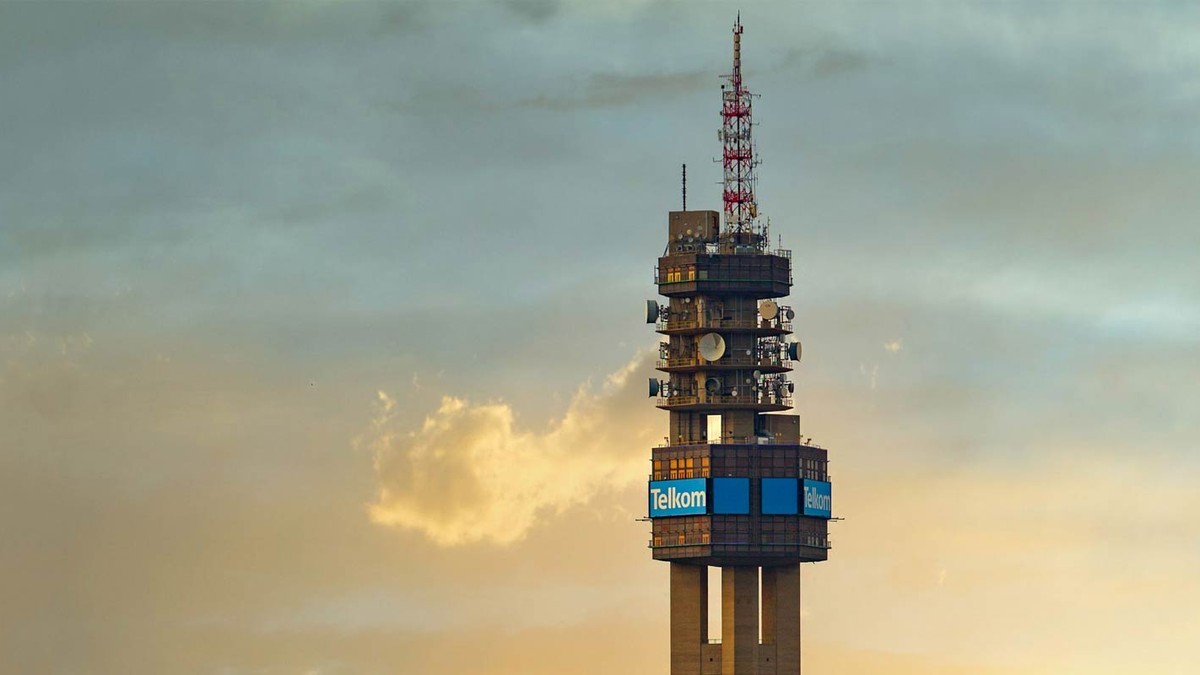
The Next Test Is Telkom's Own Results
The next hard number arrives on Tuesday morning, a day after the announcement. Telkom presents interim results for the six months ended 30 September 2026 at the JSE in Sandton, with a webcast and a broadcast on BDTV. That presentation will show whether the turnaround visible in the full-year numbers is holding, and it will be the first public appearance by Telkom's leadership since the approach became public. Watch three things. First, whether management is asked about the talks and answers with anything beyond the cautionary wording. Second, whether the government shareholder says anything at all — the department and the pension fund were silent in Monday's filings. Third, whether a firm offer or a formal withdrawal follows, because the history of this pair is that talks begin loudly and end quietly. Folks, an approach is not a deal, and a cautionary announcement is not a bid. But the cash structure, the advisers already appointed and a target that has nearly doubled in value say MTN came back to finish what it started.
By Jessica Ali, Staff Writer
This article was produced with AI-assisted research and editorial support. Sources: MTN Group and Telkom SA SOC Limited cautionary announcements via the JSE Stock Exchange News Service (Moneyweb, ProfileData); Reuters via CNBC Africa; BusinessDay; BusinessDay Nigeria; Moneyweb; IOL; The Citizen; ITWeb Africa; MyBroadband; Daily Investor; RTTNews; Telkom Group investor relations. Photographs: Reuters/Siphiwe Sibeko via CNBC Africa (lead image); TechCentral; ITWeb. Social cover card: Global 1 News editorial image.
What's Your Reaction?
 Like
0
 Dislike
0
 Love
0
 Funny
0
 Wow
0
 Sad
0
 Angry
0

Editor-in-Chief at Global1.News. Atlanta-based journalist who cuts through the BS and tells it like it is. Lead anchor, host, and the voice you hear when the spin stops and the truth starts.














Comments (0)