
Ein al-Auja: The Slow Erasure of a Palestinian Bedouin Community Under Settler Violence and Water Theft
In a recent Middle East Eye report, the story of Ein al-Auja unfolds as a quiet catastrophe: a natural spring and waterfall north of Jericho, once the lifeblood of a Bedouin community of more than 100 families, has run dry as residents fled under the weight of settler violence, r
In a recent Middle East Eye report, the story of Ein al-Auja unfolds as a quiet catastrophe: a natural spring and waterfall north of Jericho, once the lifeblood of a Bedouin community of more than 100 families, has run dry as residents fled under the weight of settler violence, resource theft, and military restrictions. The video, produced as part of the 2026 Middle East Eye Fellowship and published on 13 August, documents how Haitham Rashaidh was among the last to leave, packing his family's tents and belongings onto a tractor for a two-hour journey across difficult terrain to al-Balqa, a sparsely populated area of the Jordan Valley. What emerges is not a single dramatic expulsion, but a slow, methodical erasure—one that has unfolded over years, accelerated since early 2024, and now threatens to erase the last remaining Palestinian presence in this strategic corridor.
Ein al-Auja: The Slow Erasure of a Palestinian Bedouin Community Under Settler Violence and Water Theft
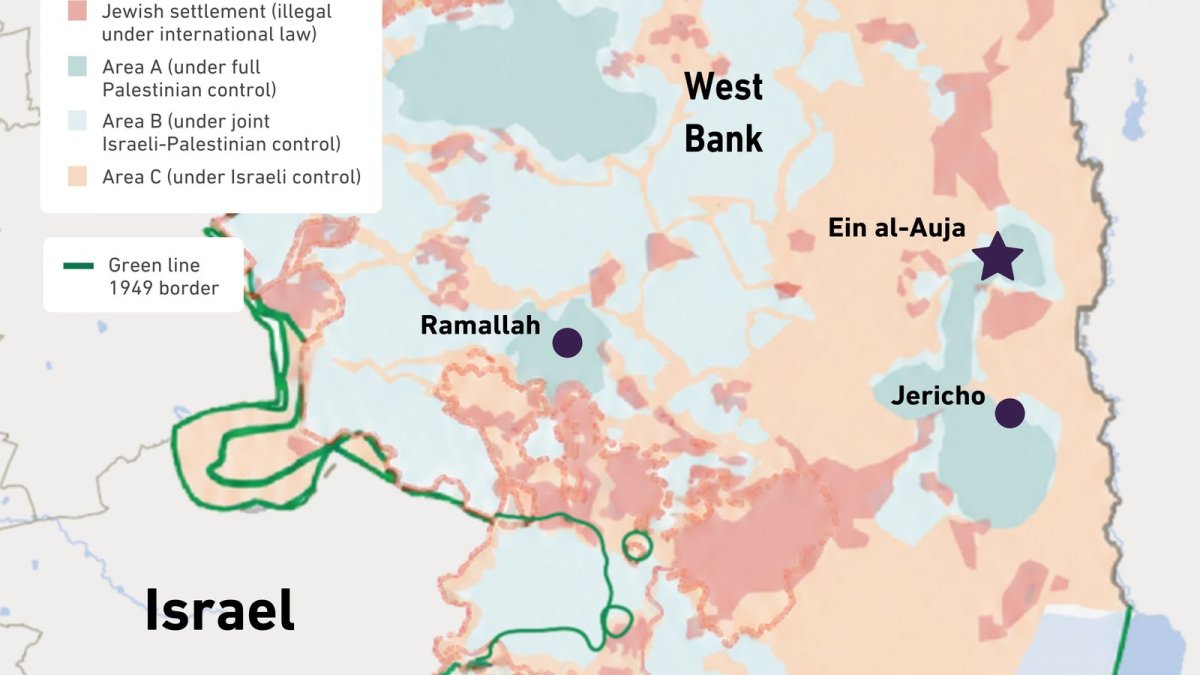
Ramallah, Occupied West Bank – 14 August 2026 — The displacement of the Ein al-Auja community is not a story of a single day, but of a thousand small cuts: water pipes severed, roads blocked, livestock stolen, and families worn down until staying became impossible. As the international community focuses on Gaza, the Jordan Valley—home to some of the most fertile land in the occupied West Bank—is being quietly emptied of its Palestinian inhabitants, replaced by illegal settlement outposts and the deep wells that serve them.
‘We Defended Our Land Alone, and We Lost It’
Haitham Rashaidh now lives in al-Balqa, a tiny Bedouin encampment with no public services, more than two hours from the nearest city centre. His children no longer attend school; the journey is too long and too dangerous. Speaking to Middle East Eye from his new camp, he described the cumulative pressure that finally broke his family's resolve in January 2026.
“We did not leave the first time they tried to push us out. We came back, rebuilt what we could, and tried to continue our lives. But it didn't stop. Every time we returned, the pressure came back stronger: more restrictions, more attacks, less access to water,” Rashaidh said. “In the end, it wasn't one incident that forced us out, but the repetition of everything, over and over again—until staying became impossible.”
His words echo a sentiment heard across the Jordan Valley, where Bedouin communities have historically weathered displacement attempts with resilience. But the scale and coordination of the recent campaign, documented by Israeli human rights group B'Tselem and the UN Office for the Coordination of Humanitarian Affairs (OCHA), has proven different. “No one leaves their land willingly, and that is one of the hardest things in life. But to stand alone is not enough. We defended our land alone, and we lost our land, our livestock and our water. If we do not stand together, we will all lose,” Rashaidh added.

Rashaidh now works as a labourer on a date palm farm near al-Balqa, a job he described as “highly risky” and without permits. “Many of us are injured or arrested while going to or returning from work,” he said, referring to the dangerous checkpoints and constant surveillance that shape the commute. His story is not unique; many displaced Bedouins have been left with no choice but to seek seasonal, low-paid work within the Israeli economy, with no job protections or employment rights.
The Spring That Ran Dry: Water Diversion and Deep Wells
The decline of Ein al-Auja's spring is not a natural phenomenon, but a man-made one. Ayman Abu Zaher, an environmental researcher who monitors the local water system, explained that the spring's flow was historically estimated at more than 1,000 cubic metres per hour, potentially doubling in rainy seasons. In recent years, that flow has dropped by 50 to 70 percent, and at times the spring runs entirely dry.
The cause lies deep underground. The region's hydrogeology consists of a shallow aquifer, accessed by wells 70 to 100 metres deep, and a much deeper aquifer that feeds the Ein al-Auja spring. Historically, three state-managed wells in the area extended 500 to 600 metres underground. Over the past three decades, Israeli authorities have deepened them to nearly 1,000 metres and added a fourth well. Collectively, these wells extract an estimated four to six million cubic metres of water annually from the deep aquifer—water that is diverted to Israeli settlements rather than supplying nearby Palestinian communities.
“The water they produce is not enough for agriculture and is increasingly unsuitable for irrigation, which pushes the area towards a trajectory of desertification,” Abu Zaher said. The impact is visible on the ground: irrigated orchards and cultivated fields that once covered more than 30,000 dunums (3,000 hectares) in the Ein al-Auja area have shrunk to only around 3,000 dunums today. About a dozen Palestinian wells remain, but they are “shallow and insufficient,” according to Abu Zaher.
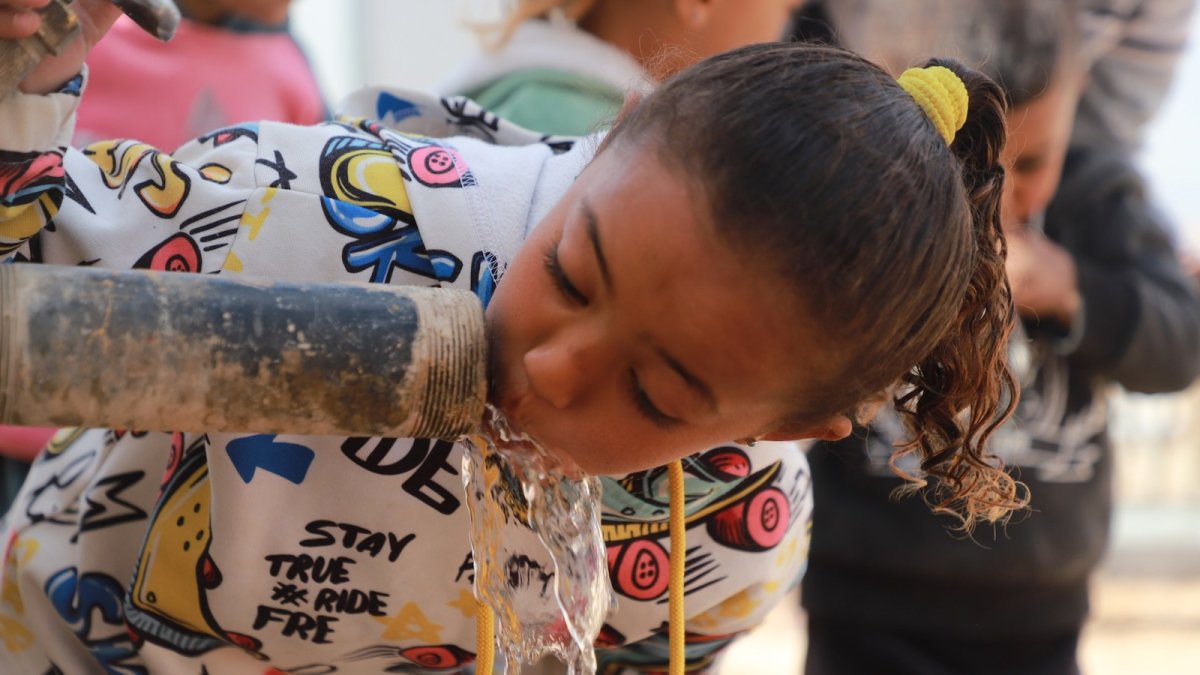
Naifa Zaied, displaced to al-Balqa in early 2026, described the daily struggle for water. “We were forced to buy large quantities of water due to the shortage in the spring. But in the last year, the army even prevented us from buying it. Water tankers were barred from reaching us,” she said. “We used to have water close to us. Today, every litre has become a struggle.”
Escalation Since 2024: From Two Attacks to 38 Documented Cases
Before the Gaza war, forced displacement from the Ein al-Auja area had been minimal. OCHA recorded only two settler attacks resulting in casualties or property damage between 2017 and 2023. That changed dramatically in early 2024, when several new illegal Israeli settlement outposts were established in the area. Attacks ramped up, with at least 38 documented cases in 2025 alone.
OCHA's January report detailed the tactics: settlers believed to be from the outposts repeatedly cut or damaged water pipes connected to the Ein al-Auja spring, blocked access roads used for water collection and delivery, emptied households' water tanks, and intimidated or assaulted residents and herders attempting to collect water. In one documented case earlier in 2026, 26 families comprising 124 people—including 59 minors, per B'Tselem—were forcibly displaced amid ongoing violence by armed settlers and Israeli troops. B'Tselem documents the forcible transfer from Ras 'Ein al-'Auja on 8 January 2026.
The violence has been brutal and unrelenting. In early 2025, settlers stole around 1,500 sheep and goats during a raid on the community; the following day, dozens of animal carcasses were found in the area. The theft was not just an economic blow but a deliberate act of destruction, targeting the Bedouin community's primary livelihood and asset base.
The escalation has also affected international visitors. In January 2023, a group of American, Italian, and French hikers was confronted by armed settlers, attacked with clubs and pepper spray. Two women—one Italian and one Palestinian—were injured, and it took hours for Israeli forces to arrive. Tourism across the occupied West Bank has taken a significant hit since the Gaza war, with millions of dollars in lost revenue. Muhammad Taha, a vendor from Jericho, told Middle East Eye: “We used to wait for buses coming from the northern and southern West Bank every weekend, but now traffic has become almost nonexistent.”
Life in al-Balqa: Displacement, Rationing, and Lost Childhoods
Al-Balqa, where Rashaidh and Zaied now live, is a tiny encampment with no public services. It is more than two hours from the nearest city centre, and the journey is fraught with checkpoints and surveillance. For children, the cost of displacement is particularly acute. One displaced parent described the daily ordeal: “My children used to walk to school easily. Now they wake up very early, and still sometimes cannot arrive, because the road is long and unsafe. Some days, they simply stay home.”
The community is cut off from the places it once depended on. “Everything has become far. Even reaching basic services takes hours now,” said one anonymised resident. Water rationing is a constant feature of life; women carry heavy containers from distant sources, and the threat of settler violence looms over every trip. The loss of livestock—the 1,500 sheep and goats stolen in early 2025—has devastated families who relied on them for milk, meat, and income.
Hassan Mleihat, general supervisor of al-Baidar, an organisation advocating for Bedouin rights, described the situation as a coordinated effort to erase communities. “We called for judicial intervention to stop the effective disappearance of our communities under settler violence and the expansion of surrounding pastoral outposts,” he said. The outposts, established since early 2024, have effectively encircled the remaining Palestinian population, cutting off access to land, water, and movement.
The Court Battle: A Last-Ditch Attempt
Residents last year petitioned Israel's High Court, calling for the dismantling of illegal outposts and facilitation of their return home. The state denied the existence of formal evacuation orders and argued that no government policy prevented residents from returning. In February 2026, the court ordered Israeli authorities to help families return to their homes around Ein al-Auja spring, with a report due within 60 days.
By April, the deadline had passed unmet. Petitioners asked the high court to compel the state, but the state contests the request, arguing there is no basis to station a permanent security force in the area. Mleihat was blunt about the limits of legal recourse: “Resorting to the courts was not a strategic choice, but rather a last-ditch attempt to assert the rights of Palestinians... the place had already been emptied.”
The 972 Magazine reported on 16 January 2026 that settlers had set up an outpost in the centre of Ras Ein Al-Auja at the end of December 2025, plowing private land, destroying a main road, and cutting electricity cables. On the morning of 8 January, the village was filled with scenes of displacement. The Guardian reported on 14 January that Ras 'Ein al 'Auja was a community of about 135 families—the only one remaining in that part of the Jordan Valley. Al Jazeera's headline on 22 January captured the grim reality: “If you sleep, settlers will burn your house”: the Palestinian village of Ras Ein al-Auja held out against violent Israeli settlers—until now.
Analysis: The Jordan Valley and the Logic of Erasure
The displacement of Ras Ein al-Auja marks one of a series of forcible transfer campaigns in the occupied West Bank since October 2023. The Jordan Valley, which constitutes over 30 percent of the West Bank, is of strategic importance to Israel, and its gradual emptying of Palestinian residents has long been a goal of settlement expansion. The use of water as a weapon—diverting the deep aquifer to settlements while cutting off Palestinian access—is a particularly insidious form of slow violence.
Under international law, the forcible transfer of protected persons in occupied territory is a grave breach of the Fourth Geneva Convention. The establishment of settlements and outposts is illegal under international law, and the systematic denial of water access violates the right to an adequate standard of living. Yet, as the court battle shows, legal remedies within Israel's system have proven ineffective.
The implications extend beyond Ein al-Auja. If the pattern continues, the Jordan Valley could see the complete erasure of its Palestinian Bedouin population, transforming the region into a settlement-dominated landscape. The loss of agricultural land, water resources, and traditional livelihoods would not only devastate the displaced families but also undermine the viability of a future Palestinian state.
For Rashaidh, the future is uncertain. He looks back at Ein al-Auja with a mixture of grief and resolve, describing the slow accumulation of pressure that finally broke his family's will to stay. His family's story is a microcosm of a larger tragedy unfolding across the West Bank—one that the international community has yet to fully confront.
As the summer of 2026 draws to a close, the spring at Ein al-Auja remains dry, and the tents of al-Balqa stand as a testament to what was lost. The question now is whether the world will act before more communities are erased.
By Fatima Al-Rashid, Staff Writer
This article was produced with AI-assisted research and editorial support. Reporting is based on sources cited in the article.
What's Your Reaction?
 Like
0
Like
0
 Dislike
0
Dislike
0
 Love
0
Love
0
 Funny
0
Funny
0
 Wow
0
Wow
0
 Sad
0
Sad
0
 Angry
0
Angry
0

Gulf/MENA Correspondent at Global1.News. Based in Doha, covering Gulf politics, energy markets, diplomacy, and development across the Middle East and North Africa. Tracks the economic transformation of the Gulf states.












Comments (0)