
Palestinian Christian-Majority Taybeh in Occupied West Bank Caught Between Israeli Army Restrictions, Occupier Attacks
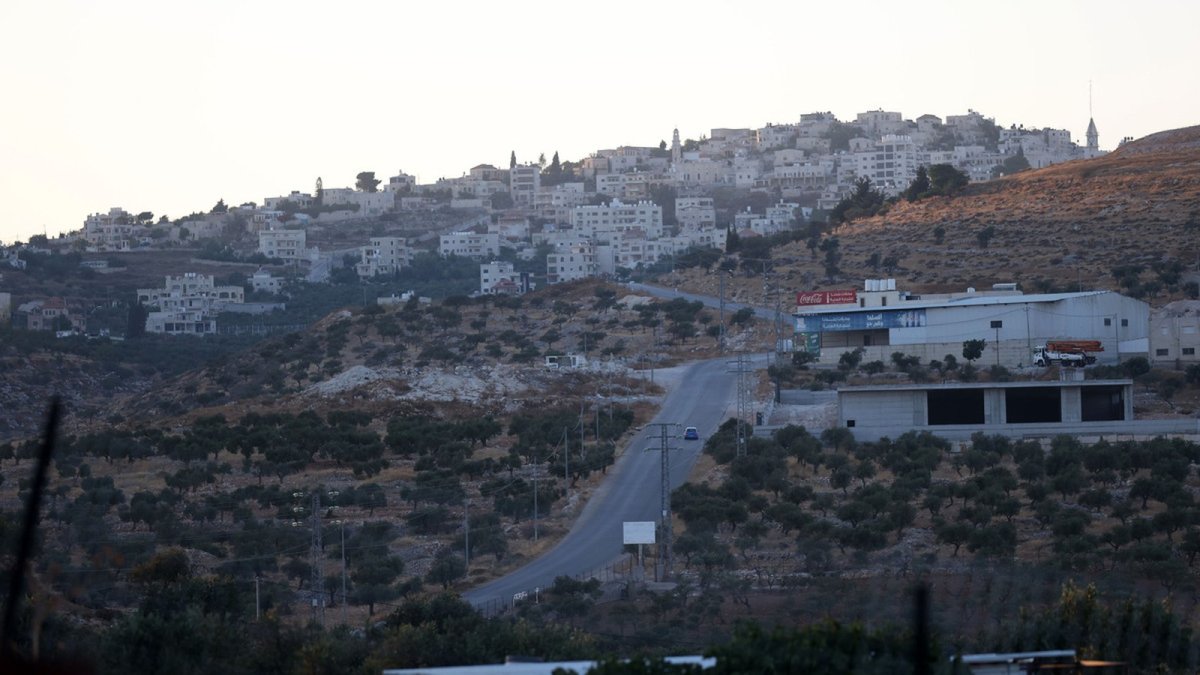
Closed Military Zone: Taybeh's Christians Face a New Layer of Siege TAYBEH, occupied West Bank — For the Palestinian Christian families of Taybeh, the stone houses and ancient olive terraces that have defined this hilltop town for centuries are more than scenery. They are the physical proof of a continuous presence that predates the modern conflict. But that presence is now under a new and potentially devastating threat.
Closed Military Zone: Taybeh's Christians Face a New Layer of Siege
TAYBEH, occupied West Bank — For the Palestinian Christian families of Taybeh, the stone houses and ancient olive terraces that have defined this hilltop town for centuries are more than scenery. They are the physical proof of a continuous presence that predates the modern conflict. But that presence is now under a new and potentially devastating threat. On August 9, 2026, the Israeli army declared Taybeh a "closed military zone" for Israelis who do not reside there, a sweeping administrative order that residents fear will sever them from the solidarity activists, tourists, and religious pilgrims who sustain their economy and their morale.
The order, which is scheduled to remain in effect until July 2027, comes after months of what residents describe as increasingly aggressive attacks by Israeli occupiers on their land, homes, and livelihoods. While the military has not yet clarified how the closure will be implemented, the ambiguity itself is a source of deep anxiety in a town that has already watched its young people leave in search of safety and opportunity.
Taybeh, located in the central occupied West Bank, is one of the last remaining Christian-majority towns in the region. Known for its churches, archaeological sites, and a celebrated annual beer festival, it has long been a symbol of Palestinian Christian resilience. Agriculture and tourism are the twin pillars of its local economy. The new military order threatens both, potentially cutting off the flow of international visitors and peace activists who have historically provided both economic support and a protective international presence.
Father Fawadleh: A Campaign of Attrition
Father Bashar Fawadleh, the parish priest of the Latin church in Taybeh, has watched the situation deteriorate with growing alarm. In an interview conducted this week, he described a coordinated campaign of pressure that has been building for months. "The attacks included the destruction of farmland and the expansion of occupier presence in areas east, west and south of the town," he said, detailing a pattern of encroachment that is slowly strangling the community.
The impact, Father Fawadleh explained, is not abstract. "The restrictions have affected the income of some residents, especially those working in agriculture, and pushed families and young people to emigrate." He cited a stark figure: more than 15 families have left Taybeh over the past three years, and dozens of young people have also departed. For a community of roughly 1,500 people, that exodus represents a demographic wound that may be difficult to heal.
"Continued emigration is one of the main challenges facing the Palestinian Christian presence in the West Bank, Jerusalem and Gaza Strip," Father Fawadleh said. His words carry the weight of a broader historical tragedy. The Palestinian Christian population, once a significant minority across the Holy Land, has dwindled dramatically over the past seven decades. From an estimated 15% of the population in the late 1940s, Christians now make up less than 2% of the Palestinian population in the occupied territories. Each family that leaves Taybeh is not just a personal loss; it is a further erosion of a living heritage that includes some of the oldest Christian communities in the world.
Despite the pressure, Father Fawadleh was emphatic about the community's resolve. Residents, he said, remain determined to stay on their land. That determination, however, is being tested daily by a combination of military restrictions, settler violence, and economic strangulation.
Bedouin Neighbors Under the Same Shadow
The closure order also threatens communities beyond Taybeh's municipal boundaries. Naif Kaabneh, a Palestinian from a Bedouin community adjacent to the town, described a pattern of attacks that has intensified in recent weeks. "The attacks included raiding agricultural land and damaging crops, harvests and residents' property," he said. Kaabneh's own land has been damaged, including his grape crops, which represent a significant source of income for his family.
Kaabneh framed the violence in terms that go beyond isolated incidents of vandalism. "What is happening goes beyond isolated attacks and amounts to attempts to expand settler presence," he said. His assessment aligns with the broader data collected by Palestinian monitoring bodies. According to the Palestinian Colonization and Wall Resistance Commission (CWRC), occupiers carried out 3,488 attacks against Palestinians and their property during the first half of 2026 alone. These attacks include assaults, damage to homes and vehicles, uprooting trees, razing agricultural land, preventing farmers from reaching their land, establishing settlement outposts, and seizing land.
The Bedouin communities of the central West Bank are particularly vulnerable. They live in makeshift structures and rely on open land for grazing and seasonal agriculture. When that land is seized or declared off-limits, their entire way of life is threatened. The new closure order, which could also affect the area between the towns of Rammun and Deir Jarir, east of Ramallah, threatens to sever the connective tissue between these communities and the agricultural land they depend on.
Umm Adi: Living Under the Shadow of Fear
For Umm Adi, a Palestinian resident of the area, the crisis has a personal and painful timeline. Her life changed dramatically in 2023, when an Israeli occupier began grazing livestock on land near her home. What began as a single intrusion has since expanded into a permanent settler presence, transforming the landscape of her daily life.
"Repeated attacks have made life tense and frightening," she said. The psychological toll is compounded by a sense of legal vulnerability. Family members have been arrested following complaints filed by occupiers, a common pattern in the West Bank where Israeli military law applies to Palestinians while settlers are subject to Israeli civilian law. This dual legal system means that Palestinians who defend their land often face arrest, detention, and military prosecution, while settlers who attack Palestinians are rarely held accountable.
Despite the fear, Umm Adi's resolve is unbroken. "We have no other place. We will stay on our land despite the fear, the pressure and the attacks by Israeli occupiers," she said. Her words echo the sentiment expressed by Father Fawadleh and countless other Palestinians across the West Bank who face similar pressures. It is a refrain of steadfastness, or sumud, that has defined Palestinian resistance for generations.
The Closing of Solidarity: Activists Blocked
The new military closure order has also had a chilling effect on the international solidarity movement that has long been a feature of life in the central West Bank. Peace activists from Europe, North America, and elsewhere have historically visited areas like Taybeh to provide a protective presence, document abuses, and offer practical support to Palestinian farmers.
Moishila Alfonso, a foreign activist who came to Taybeh for two weeks to support Palestinians, said he has witnessed firsthand the attempts to obstruct assistance to residents. The closure order makes it significantly more difficult for activists to reach the town, and the threat of military enforcement creates a climate of intimidation that deters many from coming at all.
The loss of this international presence is significant. Activists have often served as witnesses to settler violence, their presence sometimes deterring attacks that might otherwise occur in the absence of accountability. They have also helped with olive harvests, provided medical assistance, and documented conditions for human rights reports. Their reduced access leaves Palestinian communities more isolated and more vulnerable.
Settlements and International Law: The Broader Context
The situation in Taybeh cannot be understood in isolation. It is part of a broader pattern of settlement expansion and land seizure that has been accelerating across the occupied West Bank for decades. According to the CWRC, approximately 750,000 settlers now live in 194 settlements and 400 settlement outposts across the West Bank, including occupied East Jerusalem.
Under international law, these settlements are illegal. The Fourth Geneva Convention, to which Israel is a signatory, explicitly prohibits an occupying power from transferring parts of its own civilian population into the territory it occupies. The International Court of Justice, in its 2004 advisory opinion on the separation wall, reaffirmed that the settlements are illegal and that Israel's occupation itself violates international law. More recently, in July 2024, the ICJ issued an expanded advisory opinion declaring Israel's presence in the occupied Palestinian territories unlawful and calling for an end to the occupation.
Despite this clear legal framework, settlement expansion has continued unabated. The establishment of outposts, the seizure of land for military purposes, and the declaration of closed military zones are all tools that have been used to facilitate this expansion. The order affecting Taybeh fits squarely within this pattern, using the language of military security to achieve what residents and human rights organizations describe as a demographic and territorial objective.
A Community's Determination
As the sun sets over the hills of Taybeh, the town's churches cast long shadows across the valley. The wine presses and olive groves that have sustained this community for centuries remain, but the future is uncertain. The closure order, if fully implemented, could accelerate the emigration that Father Fawadleh identifies as the greatest threat to the Palestinian Christian presence.
Yet there is also a quiet defiance in the town. The residents who remain are not passive victims. They are organizing, documenting, and speaking out. They are maintaining their farms, their churches, and their schools. They are insisting, in the face of overwhelming pressure, that this land is theirs and that they will not be moved.
The coming months will be critical. The implementation of the closure order, the response of the international community, and the continued determination of Taybeh's residents will all shape the town's future. For now, the people of Taybeh are doing what they have always done: staying put, tending their land, and praying for a justice that has been slow to arrive.
By Fatima Al-Rashid, Staff Writer
This article was produced with AI-assisted research and editorial support. Sources: Middle East Monitor, Anadolu Agency.
What's Your Reaction?
 Like
0
Like
0
 Dislike
0
Dislike
0
 Love
0
Love
0
 Funny
0
Funny
0
 Wow
0
Wow
0
 Sad
0
Sad
0
 Angry
0
Angry
0

Gulf/MENA Correspondent at Global1.News. Based in Doha, covering Gulf politics, energy markets, diplomacy, and development across the Middle East and North Africa. Tracks the economic transformation of the Gulf states.













Comments (0)