
Dozens dead after boat capsizes in north-western Nigeria
SOKOTO, Nigeria — At least 46 people, many of them children, have died after a wooden boat capsized in a remote part of north-western Nigeria's Sokoto state, according to police officials, as rescue teams continue to search for survivors in a tragedy that has once again exposed the deadly risks of r
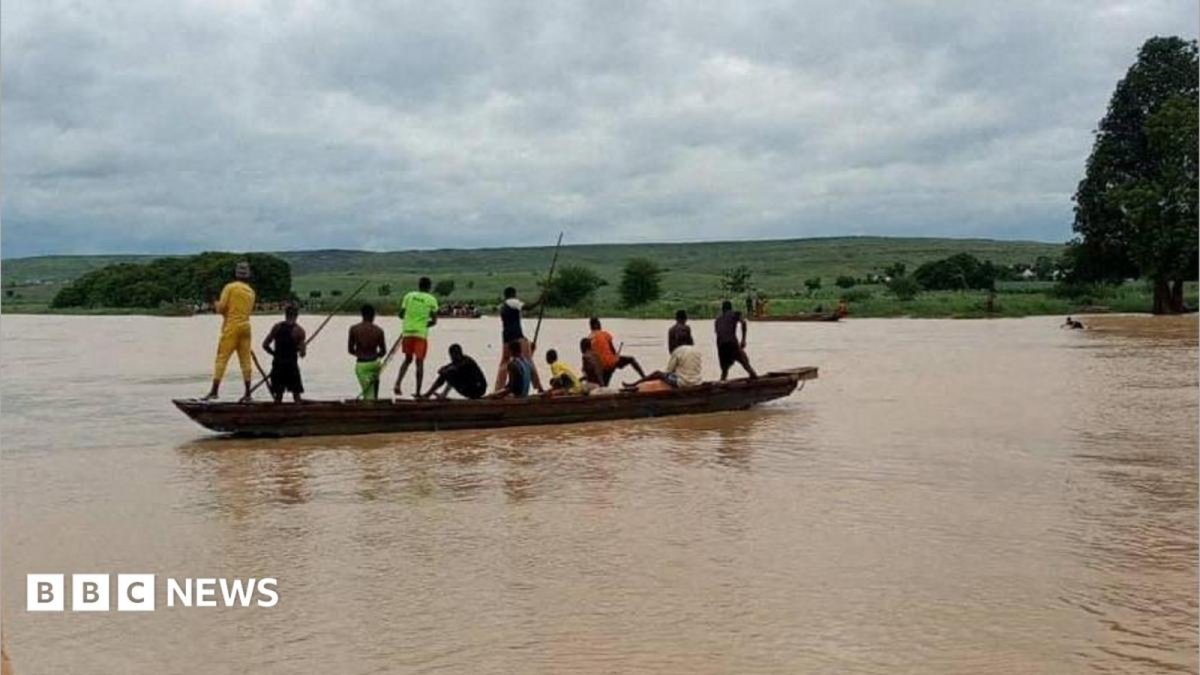
SOKOTO, Nigeria — At least 46 people, many of them children, have died after a wooden boat capsized in a remote part of north-western Nigeria's Sokoto state, according to police officials, as rescue teams continue to search for survivors in a tragedy that has once again exposed the deadly risks of river travel in West Africa.
The vessel was believed to be carrying more than 70 passengers when it went down near the community of Gorau in the Goronyo area on Thursday. Police spokesperson Ahmad Rufai told the BBC that 46 bodies had been recovered so far, with 16 people rescued alive and 15 still unaccounted for. The search operation is ongoing, but officials warn that the difficult terrain is hampering efforts.
A community in mourning
The scale of the loss is only beginning to sink in for residents of Gorau, a settlement so isolated that Nigeria's emergency management agency described it as "very remote." One witness told the Reuters news agency that he believed the children on board were travelling alongside farm owners and labourers heading to work on a rice harvest — a common pattern in this agricultural region where families often move together during the farming season.
The same witness said he saw 50 bodies, many wrapped in mats and traditional cloths, laid out in front of a community mosque ahead of their burial. The image is a stark reminder that in rural Nigeria, death and faith are never far apart. Mosques and churches often serve as gathering points in times of crisis, and here, they became the final resting place for the young before their families could say goodbye.
Ezekiel Manzo, spokesperson for Nigeria's National Emergency Management Agency (Nema), confirmed to the BBC that a team had been dispatched to the location. "Gorau is a very remote place," he said, adding that security agencies and emergency services were making their way to the site. The logistical challenge is immense: poor roads, limited communication networks, and the sheer distance from state capital Sokoto city mean that help arrives slowly, if at all.
A recurring tragedy on Nigeria's waterways
This is not an isolated incident. Boat accidents are a grimly familiar occurrence across Nigeria, where overcrowding, poorly maintained vessels, and weak enforcement of safety regulations combine to create a deadly formula. The numbers tell a sobering story.
Just last month, at least five people drowned when a boat overturned in neighbouring Jigawa state. In January, 26 people lost their lives when a boat carrying farmers and fishermen from Jigawa to Yobe state capsized. And in December 2024, 54 bodies were recovered from the River Niger after a boat that may have been carrying more than 200 passengers went down. Each incident follows a similar pattern: too many people, too few life jackets, and a vessel not built to withstand the conditions.
Authorities have long recommended a suite of measures to address the crisis — providing safer boats and life jackets, dredging waterways, deploying water guards at jetties and terminals, and ensuring boat operators are properly trained and licensed. But these recommendations have largely remained on paper. Implementation has been patchy at best, and enforcement is almost non-existent in the rural areas where most of these tragedies occur.
The river as lifeline and graveyard
For millions of Nigerians, particularly those in rural communities, rivers are not a recreational amenity — they are a lifeline. Many villages are situated near waterways, and with poor roads and a scarcity of bridges, travel by land is often impractical or impossible. Wooden boats, known locally by various names depending on the region, are the primary means of transporting people, goods, and produce to markets and neighbouring communities.
In Sokoto state, the rivers that flow through the region are central to both the economy and daily life. The rice harvest, which draws labourers from surrounding areas, depends on these waterways to move workers and equipment. Children often accompany their parents or guardians on these journeys, either to help with the work or because there is no one to leave them with at home. It is a reality born of necessity, not choice.
This is a pattern familiar across West Africa, from the Niger Delta to the Sahel. Rivers like the Niger and the Benue have sustained communities for centuries, but they have also claimed countless lives. The difference today is that the risks are well-documented, and the solutions are known. What is missing is the political will and the resources to implement them.
Grief and questions in Gorau
As the search continues, the community of Gorau is left to grapple with an unimaginable loss. The sight of dozens of bodies, many of them children, laid out in front of the mosque is a scene that will haunt this village for years. The burials, conducted according to Islamic tradition, are a final act of dignity for the victims, but they also mark the beginning of a long and painful reckoning.
Questions are already being asked. Who owned the boat? Was it overloaded? Were life jackets available? Why were so many children on board? These are the same questions that have been asked after every major boat disaster in Nigeria, and the answers are often the same: the boat was old, the operator was unlicensed, the passengers had no choice but to board.
For the families who lost loved ones, these answers offer little comfort. They are left with the stark reality that their children, parents, and neighbours set out on a routine journey and never returned. The rice harvest, which was supposed to bring income and sustenance, has instead brought grief.
A call for action that must not be ignored
The tragedy in Sokoto is a reminder that safety regulations are not bureaucratic formalities — they are matters of life and death. When a boat capsizes in a remote river, the consequences are felt not just by the immediate families but by the entire community. The loss of so many children, in particular, is a blow to the future of the village.
There are practical steps that can be taken. Community leaders and local authorities could work together to ensure that boats are inspected before departure. Life jackets, which are often available but unused, could be made mandatory. Boat operators could be trained and licensed, with penalties for those who flout the rules. And in the longer term, investment in roads and bridges would reduce the reliance on waterways altogether.
But these measures require a level of commitment that has so far been lacking. The recommendations have been made time and again, by officials, by experts, and by grieving communities. The question is whether this latest tragedy will finally prompt action, or whether it will be forgotten until the next boat capsizes.
For now, the people of Gorau are left to mourn. The search for the missing continues, but hope is fading. In a community where the river is both a source of life and, too often, a source of death, the waters that once carried them to work and market have now carried away their children.
The world may not hear much about Gorau in the coming weeks, but for the families who lost loved ones, this is a wound that will not heal quickly. They will bury their dead, they will pray, and they will ask why this had to happen. The answer, as always, lies in the gap between what is known and what is done.
This article was produced with AI-assisted research and editorial support. Sources: BBC News.
By Amara Diop, Staff WriterWhat's Your Reaction?
 Like
0
Like
0
 Dislike
0
Dislike
0
 Love
0
Love
0
 Funny
0
Funny
0
 Wow
0
Wow
0
 Sad
0
Sad
0
 Angry
0
Angry
0

West Africa/Sahel Correspondent at Global1.News. Dakar-based journalist covering politics, security, climate, and development across Francophone and Anglophone West Africa. Tells the stories of a region undergoing profound transformation.












Comments (0)