
Deadly Sonora heat wave expected to intensify over next 3 days
Deadly Sonora Heat Wave Shows No Mercy: 22 Lives Lost, 350 Sickened as Temperatures Climb Toward 47°C. There is no gentle way to say this, mis amigos: the sun over Sonora has become an adversary.
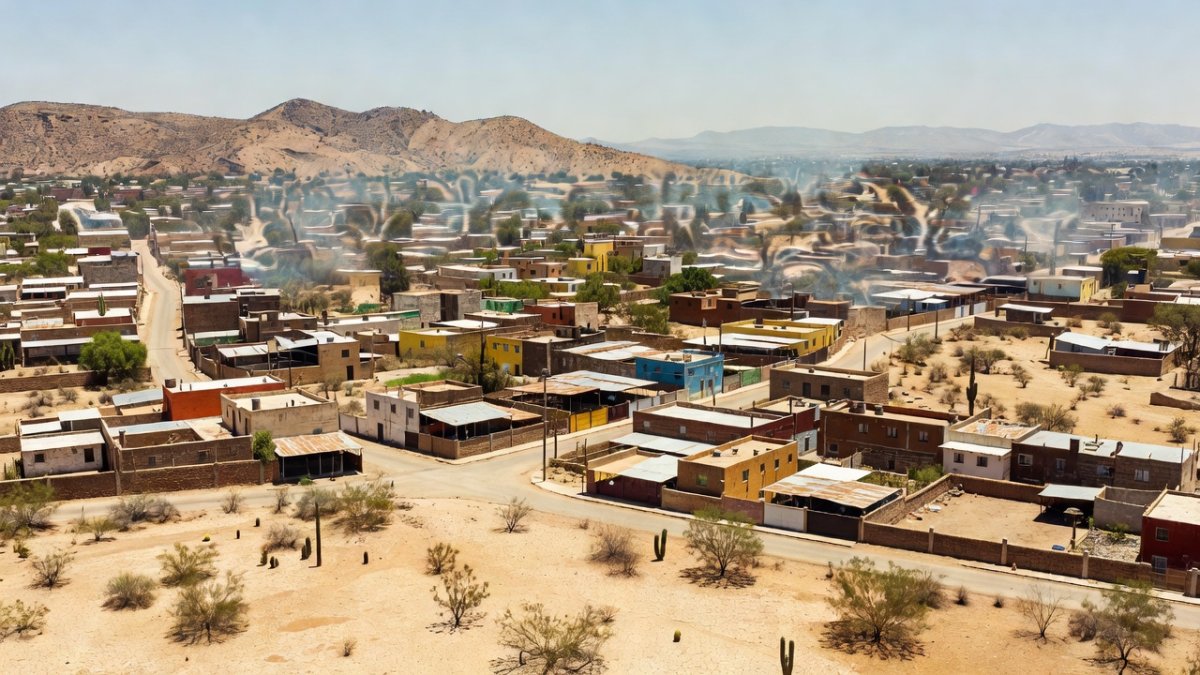
Deadly Sonora Heat Wave Shows No Mercy: 22 Lives Lost, 350 Sickened as Temperatures Climb Toward 47°C
There is no gentle way to say this, mis amigos: the sun over Sonora has become an adversary. For more than six weeks, the northwestern border state has been locked in an unrelenting embrace of heat, and the worst is not yet over. According to Mexico's National Meteorological Service (SMN), temperatures are expected to exceed 40 degrees Celsius (104 degrees Fahrenheit) for the next three days, with highs reaching a staggering 47 degrees Celsius in municipalities across the northwest and central regions. As of Tuesday morning, the Sonora State Health Ministry reported 22 deaths and 350 people sickened by heat-related illnesses.
This is not just a weather report; it is a public health emergency unfolding in real time. The cities of San Luis Río Colorado, Caborca, and the state capital Hermosillo are bracing for highs between 43 and 47 degrees Celsius. In Hermosillo, the relative humidity hovers around 45 percent, turning the air into a thick, wet blanket that makes every breath feel like a labor. The ultraviolet radiation index has reached the "extreme" category, ranging from 8 to 11—levels that can cause skin damage in minutes and are particularly dangerous for outdoor workers, children, and the elderly.
For families in the colonias of Hermosillo, for the campesinos working the fields outside Caborca, for the construction workers raising walls under a merciless sky, this heat is not an inconvenience. It is a matter of life and death. The numbers from the Health Ministry are not abstract statistics; each one represents a father, a mother, a grandfather, a neighbor. And with the SMN predicting that the heat will intensify over the next 72 hours, the question on everyone's mind is simple: how many more before the rain brings relief?
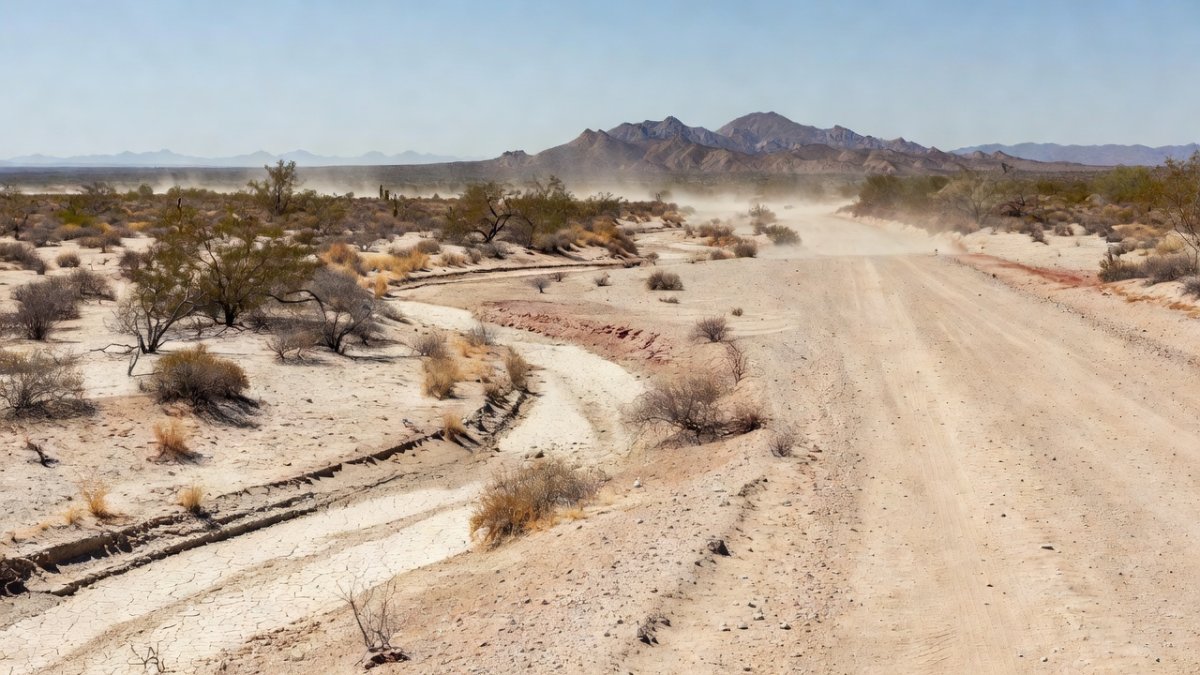
The Monsoon Paradox: Rain Without Relief in Sonora's Mountain Regions
There is a cruel irony in the weather patterns currently affecting Sonora. The SMN is monitoring summer monsoon conditions, with isolated storms reported in the mountainous regions of central and southern Sonora. The State Civil Protection Coordination announced that monsoons will continue to bring rainfall across much of Sonora on Tuesday—but here is the catch: the rain will not cause temperatures to drop. Residents can expect moderate to heavy rain, lightning, and gusty winds, yet the mercury will remain stubbornly high.
This is the monsoon paradox that meteorologists have been trying to explain to a weary public. The storms are a product of the same atmospheric instability that is trapping heat at the surface. When the rain falls on scorched earth, it often evaporates before it can cool the ground, creating a sauna-like effect that is both physically and psychologically draining. For communities in the Sierra Madre Occidental foothills, this means dealing with mudslides and flooded arroyos while simultaneously battling heat exhaustion—a double threat that tests the resilience of even the most seasoned Sonorenses.
The State Civil Protection Coordination has urged residents in monsoon-affected areas to stay alert for flash flooding, especially in low-lying communities and near dry riverbeds that can fill with terrifying speed. But the message is clear: the rain is a temporary visitor, while the heat is a squatter that refuses to leave. For the ejidos and indigenous communities that depend on these rains for their crops, there is a bitter taste to this gift from the sky—it waters the fields but does nothing to cool the bodies of those who tend them.
Workers on the Frontline: Construction and Agriculture Face the Brunt of the Heat
When we talk about the heat wave in Sonora, we must talk about who is most exposed. The answer, as always in Mexico, is the working class. Construction and agricultural workers have been explicitly warned to take precautions, and employers are being urged to schedule breaks during the workday to allow workers to hydrate and reduce their exposure during peak sun hours. But in the informal economy that characterizes much of Sonora's labor market, these recommendations are easier said than enforced.
Consider the jornaleros—the day laborers who rise before dawn to work in the fields of export-oriented agriculture, picking tomatoes, peppers, and melons that will end up on tables in the United States and beyond. For them, stopping work when the sun reaches its zenith is not always an option. Their wages are tied to their output, and every hour lost to shade is an hour of income lost. The state government can issue recommendations, but it cannot replace the income of a family that depends on a full day's work to put food on the table.
Similarly, construction workers in Hermosillo and San Luis Río Colorado are facing a brutal choice: work through the heat and risk their health, or stop and risk their jobs. Health authorities have warned that those who labor outdoors are among the most exposed, and the 22 deaths reported as of Tuesday morning are tied to the heat that has gripped the state for more than six weeks. Labor unions and worker advocacy groups are calling for mandatory rest periods and access to cool drinking water on all job sites, but enforcement remains spotty, particularly on smaller, informal projects.
For the families of those who have died, the grief is compounded by the knowledge that these deaths were preventable. The call for employers to "schedule breaks" is a step in the right direction, but it must be accompanied by real oversight. The Secretaría del Trabajo y Previsión Social (STPS) has the authority to inspect workplaces and levy fines for non-compliance, but inspections are rare in the best of times. In the middle of a heat emergency, they are almost nonexistent.
Golpe de Calor: Recognizing the Silent Killer Before It's Too Late
In every taquería, every tortillería, every tianguis across Sonora, the conversation eventually turns to the heat. Abuelas warn their grandchildren to stay indoors, mothers check on their elderly parents, and neighbors share tips on how to stay cool without air conditioning—a luxury that many families in working-class colonias simply cannot afford. But despite this communal awareness, heatstroke continues to claim lives because its symptoms are often mistaken for something less serious.
The main signs associated with golpe de calor include severe headache, dizziness, confusion, nausea, very hot skin, and loss of consciousness. Health authorities have advised the public to seek immediate medical attention by calling 911 if these severe symptoms occur. The key word here is "immediate." Heatstroke is a medical emergency that can cause permanent organ damage or death within minutes if not treated promptly. The difference between a bad headache and a fatal heatstroke can be a matter of a few hours.
Health authorities are encouraging the public to stay hydrated, wear light-colored, lightweight clothing with long sleeves, and use a hat or umbrella to protect themselves from the sun. People should avoid being outdoors during the hottest hours of the day—typically between 11 a.m. and 4 p.m.—with older adults and children at greatest risk. But these recommendations, while sound, assume a level of flexibility that many workers simply do not have. A mother walking to the mercado to buy tortillas for her family cannot wait until the sun goes down. A child waiting for the school bus cannot choose a cooler hour.
Across Sonora, hospitals and health clinics are bracing for more heat-related emergencies over the next three days as the mercury climbs. Doctors are urging families to check on elderly relatives twice a day, to ensure that homes are ventilated, and to never leave children or pets in parked vehicles—even for a few minutes. The interior of a car can reach lethal temperatures in less than 15 minutes, and the tragedy of a child forgotten in a backseat is one that no community should have to endure.
What to Watch For: The Days Ahead in Sonora
Over the next 72 hours, the SMN expects maximum temperatures to remain above 40 degrees Celsius across much of Sonora, with the most intense readings in San Luis Río Colorado, Caborca and Hermosillo. The ultraviolet index is forecast to stay in the extreme range, and health authorities have said the coming days will be critical for the most vulnerable—older adults, small children and people with chronic conditions.
The monsoon pattern adds another layer of uncertainty. While storms may bring some relief to the sierra, the State Civil Protection Coordination has warned that rainfall will not lower daytime highs and could create flash-flood risks in low-lying areas. Families are being urged to monitor both heat and flood alerts, especially in communities near arroyos and dry riverbeds that can fill quickly.
In the longer term, the crisis is intensifying the debate over how Sonora and Mexico prepare for hotter summers. Climate projections for the region point to more frequent and longer heat waves, pushing state and federal authorities to expand cooling centers, improve early-warning systems and rethink protections for outdoor workers. For now, though, the immediate task is simpler and more urgent: getting through the next three days safely, one family, one neighborhood, one community at a time.
Community Resilience: How Sonorenses Are Coping with the Crisis
In the face of this crisis, the spirit of comunidad is shining through. In Hermosillo, some colonias have organized "cooling centers" in community halls and churches, where residents can escape the heat for a few hours. In San Luis Río Colorado, volunteers are distributing bottled water to homeless individuals and migrant workers who have no shelter from the sun. In Caborca, the municipal government has extended hours at public swimming pools and opened air-conditioned spaces in public libraries.
These grassroots efforts are a testament to the resilience of the Mexican people, but they also highlight the gaps in institutional response. The federal government, through the Secretaría de Salud and the SMN, has issued warnings and recommendations centered on prevention and personal responsibility. But critics argue that more structural measures are needed—such as subsidies for electricity to help families run fans and air conditioners, or the installation of public water fountains in high-traffic areas.
The comparison to the AMLO era is inevitable. During the previous administration, the mañanera press conferences often featured updates on natural disasters and government response. Today, the tone is more subdued, with the focus on individual precautions rather than collective action. But for the families who have lost loved ones, the distinction between personal responsibility and systemic failure is academic. They are burying their dead, and they want to know what will be done to prevent the next tragedy.
As the SMN predicts that the heat will intensify over the next three days, the people of Sonora are doing what they have always done: they are adapting, supporting each other, and praying for rain that will actually cool the earth. The monsoon storms may bring lightning and thunder, but true relief will only come when the high-pressure system that is trapping the heat finally breaks. Until then, the advice from health authorities remains the same—stay hydrated, stay indoors during peak hours, and look out for your neighbors. In a state that knows how to endure, this is both a warning and a way of life.
Tags: Sonora heat wave, golpe de calor, Hermosillo temperatures, SMN warning, Sonora health ministry, heatstroke symptoms, monsoon Sonora, San Luis Río Colorado, Caborca heat, Mexico climate emergency, extreme heat Mexico, public health Mexico
By Rosa Martinez, Staff Writer
This article was produced with AI-assisted research and editorial support. Reporting is based on sources cited in the article.
What's Your Reaction?
 Like
0
Like
0
 Dislike
0
Dislike
0
 Love
0
Love
0
 Funny
0
Funny
0
 Wow
0
Wow
0
 Sad
0
Sad
0
 Angry
0
Angry
0

Latin America/Andes Correspondent at Global1.News. Based in Bogota, covering politics, environment, energy, and social movements across the Andean region. Passionate about environmental journalism and communities protecting their land.









Comments (0)