
Israeli Demolitions in South Lebanon Test the Ceasefire
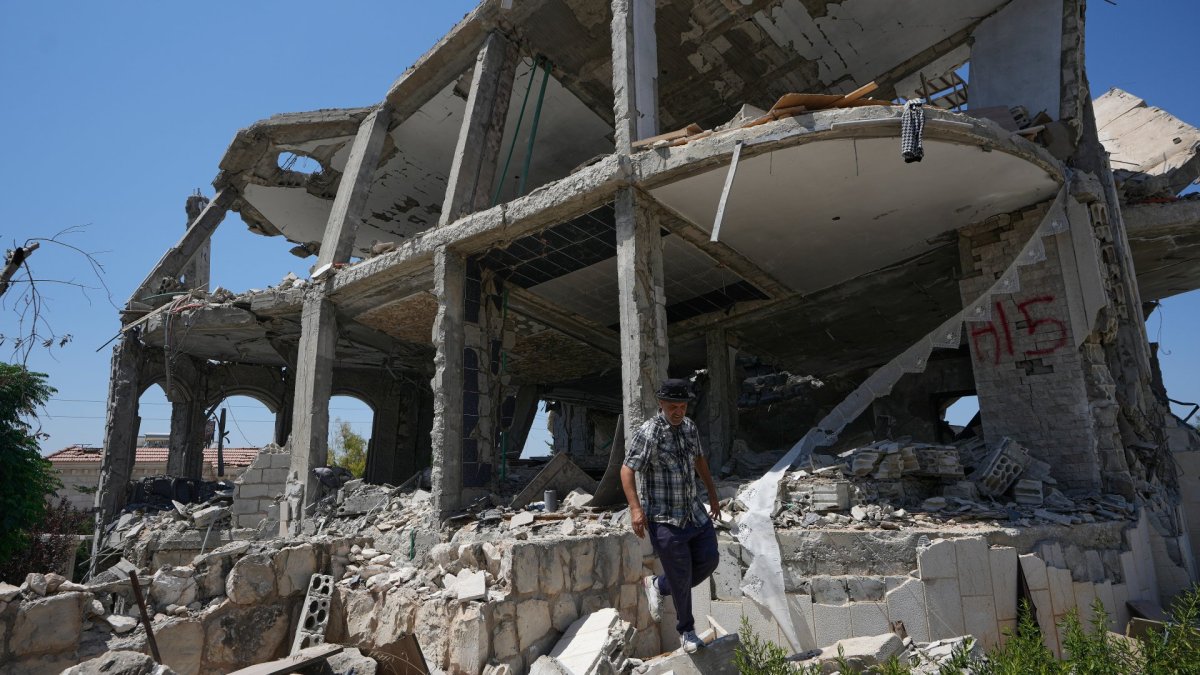
Israel's demolition of homes in the southern Lebanese village of Zawtar al-Sharkiyeh, filmed this week from the neighboring town of Zawtar al-Gharbiya, has laid bare the fragility of the US-brokered framework meant to end the conflict along the Blue Line. The images, distributed by Al Arabiya English, show Israeli excavators tearing through structures in a village that was supposed to be ceded to the Lebanese army under a phased withdrawal.
Israel's demolition of homes in the southern Lebanese village of Zawtar al-Sharkiyeh, filmed this week from the neighboring town of Zawtar al-Gharbiya, has laid bare the fragility of the US-brokered framework meant to end the conflict along the Blue Line. The images, distributed by Al Arabiya English, show Israeli excavators tearing through structures in a village that was supposed to be ceded to the Lebanese army under a phased withdrawal. For a region watching the June 26 framework agreement unravel in slow motion, the bulldozers are a stark symbol of how far the two sides remain from the peace both governments claim to want.
Israeli Demolitions in South Lebanon Test the Ceasefire
Beirut, Lebanon – August 9, 2026 — Israeli troops were seen operating excavators to demolish homes in Zawtar al-Sharkiyeh, a village in the eastern sector of southern Lebanon, according to footage published by Al Arabiya English. The video was shot from Zawtar al-Gharbiya, the adjacent town where the Lebanese army was expected to assume control under the US-sponsored framework agreement signed in Washington on June 26. The demolition work comes as negotiators from Beirut and Tel Aviv prepare to resume indirect talks in September, and as the Lebanese army accuses Israel of violating the very accord it is meant to implement.
The Demolitions at the Front Line
Zawtar al-Sharkiyeh, known in English as Eastern Zawtar, sits in the Nabatieh governorate, close to the Litani River axis that has become the informal dividing line of the current conflict. Footage verified by regional broadcasters shows Israeli engineering equipment working through residential structures while residents across the wadi in Zawtar al-Gharbiya watch from a distance. The Lebanese state-run National News Agency (NNA) has reported repeated Israeli bulldozing operations in the area, including work extending from occupied Zawtar al-Sharkiyeh toward the Ali al-Taher neighborhood of Nabatieh al-Fawqa.
The demolition campaign is not confined to Zawtar. Al Jazeera's correspondent in Tyre, Ihab al-Aqadi, reported this week that Israeli bulldozing, artillery fire and ground incursions have spread across the frontier zone: drone strikes on open ground in Mayfadoun, continued incursions in Kfar Shouba in the Hasbaya district and in Haddatha in the Bint Jbeil district, and shelling that has left the towns of Mansouri and Nabatieh al-Fawqa effectively uninhabitable. On Wednesday, the Israeli military ordered residents of Mansouri to evacuate, the first such warning since June. "For your safety, you must evacuate your homes immediately and move north," the military's Arabic-language spokeswoman, Ella Waweya, posted on X.
The Framework Under Strain
Under the Trilateral Framework signed on June 26 by the United States, Israel and Lebanon, the Israeli military was to "progressively redeploy" out of southern Lebanon while the Lebanese Armed Forces (LAF) restored "effective sovereign authority over all Lebanese territory, pending the verified disarmament of non-state armed groups" — a clear reference to Hezbollah. The deal sketched a "sequenced process" beginning with pilot zones: on July 20, the US State Department announced that operations would launch in the southern villages of Froun, Srifa and Zawtar al-Gharbiya, the first areas selected for implementation.
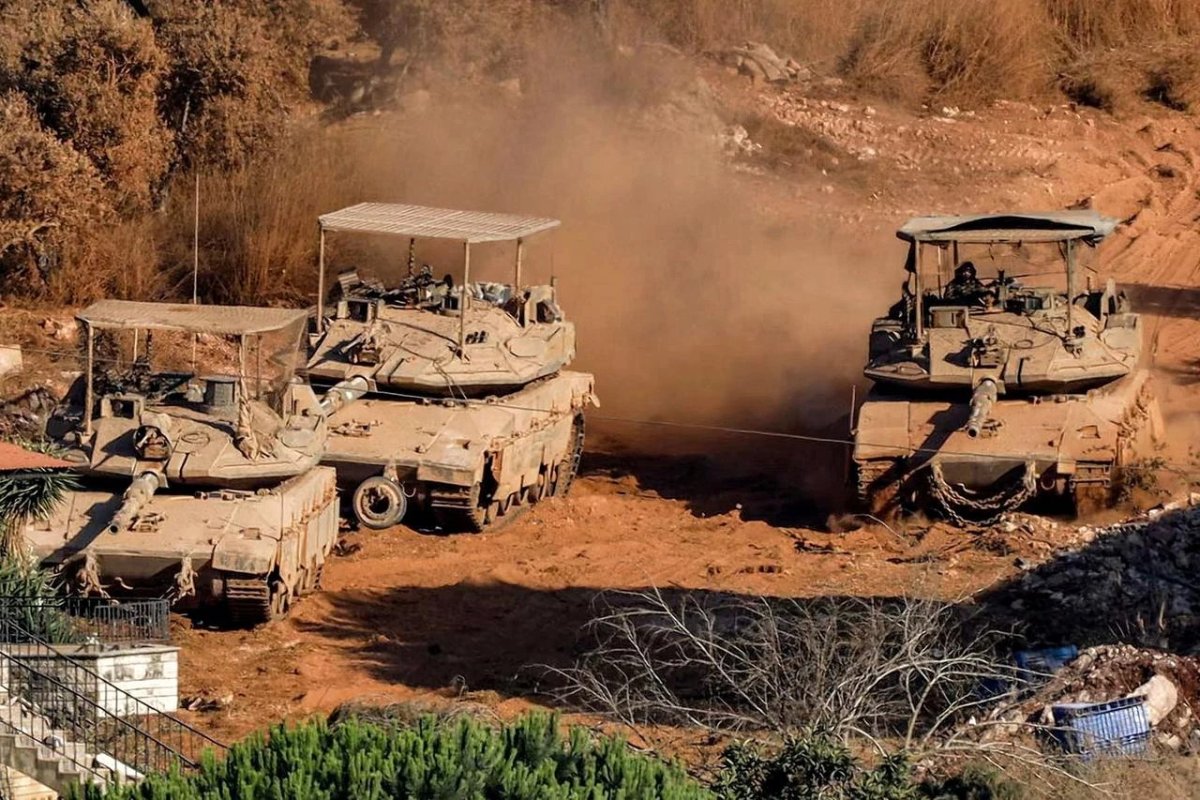
The Lebanese army deployed to Zawtar al-Gharbiyah on July 21, and around 50 families have since returned to the village, according to Mayor Abed Ezzeddine. But the reality on the ground has fallen short of the accord's ambitions. On Saturday, three Lebanese soldiers were wounded while defusing unexploded ordnance in the village, hours after Israeli troops entered overnight and built an earthen barrier about 100 meters from the village square. A Lebanese military source called the move a violation of the framework accord; the Israeli military told AFP it was "not aware of such an event in this area."
Historical Background: From 1701 to the June Framework
The current crisis has deep roots in the unresolved security architecture of the Israel-Lebanon frontier. UN Security Council Resolution 1701, which ended the 2006 war, called for the disarmament of Hezbollah and the deployment of the Lebanese army to the south — provisions that were never fully implemented. A November 2024 ceasefire ended an earlier round of fighting linked to the Gaza war, but Israeli forces carried out near-daily operations, citing Hezbollah violations, and maintained an occupation in breach of that deal.
The present war began on March 2, when Hezbollah fired rockets into northern Israel in what it described as retaliation for US-Israeli strikes on Iran on February 28. Since then, Israel has occupied roughly one-fifth of Lebanese territory and, according to figures cited by regional media, more than 4,000 people have been killed and more than one million displaced. Israel continues to hold what it calls a buffer zone, or the "Yellow Line," about 10 kilometers inside Lebanon. Prime Minister Benjamin Netanyahu said after the June framework was signed: "We will maintain [the buffer zone] until Hezbollah disarms and as long as there is a threat to the State of Israel."
The Rome Talks: Negotiating Under Fire
The seventh round of US-mediated talks concluded in Rome on Thursday, with President Joseph Aoun saying Beirut had made "positive progress" on border and prisoner issues. The Lebanese delegation included former ambassador to Washington Simon Karam, incumbent ambassador Nada Mouawad, military negotiators led by Brigadier-General George Rizkallah, legal adviser Antoine Sfeir and land-surveying expert Najib Massihi. Prime Minister Nawaf Salam said before the talks that Lebanon's focus was a phased Israeli withdrawal and an end to what Beirut views as obstruction of the pilot-zone program.
The atmosphere was tense. Israel asked Wednesday's session to end three hours early, with an unnamed source telling AFP that the head of the Israeli delegation, US Ambassador Yechiel Leiter, blamed "misleading leaks" by the Lebanese side. A US State Department official said the round would focus on "expanding the pilot zone process, resolving all outstanding border issues, and working on a comprehensive peace and security agreement." Hezbollah, for its part, has denounced the negotiations as "humiliating" and called on the Lebanese government to convene an emergency session, warning of the risks of continued concessions.
Regional Dynamics: Hezbollah, Iran and the Gulf
The Zawtar demolitions sit at the intersection of several regional currents. Hezbollah remains the most heavily armed non-state actor in the Middle East, and its fate is inseparable from Iran's position: Italian Foreign Minister Antonio Tajani spoke with his Iranian counterpart as the delegations met in Rome, calling on Tehran to halt Hezbollah's operations. The framework's central bargain — Israeli withdrawal in exchange for Hezbollah's disarmament — mirrors the logic of past Arab-Israeli normalization efforts, in which security guarantees precede political breakthroughs, but it places an extraordinary burden on the Lebanese state, whose institutions are too weak to compel a militia that has outlasted every previous attempt at disarmament.
For Gulf capitals, Lebanon's stabilization matters less as a security priority than as a barometer of Iranian influence along the Mediterranean. Saudi Arabia and the United Arab Emirates, which have watched Hezbollah's arsenal grow since 2006, are wary of any framework that legitimizes the group's political position even as it strips its military capability. The United States, under the Trump administration, has positioned itself as the indispensable mediator, mirroring its role in the Abraham Accords — but the Lebanese file carries far greater risk, because failure does not simply mean no deal; it means renewed war on Israel's northern border.
Strategic Calculus: What Each Side Wants
Israel's objectives are clear: a verified, irreversible disarmament of Hezbollah north of the Litani, security guarantees for its northern communities, and no withdrawal that leaves a vacuum for the militia to refill. Its demolition operations serve a dual purpose — degrading Hezbollah's infrastructure near the border while signaling to Beirut that the pilot-zone process will not shield villages from Israeli military action. The deaths of two reserve soldiers, Maj. Harel Birenstock and Sgt. Maj. Tamir Vaknin, in an explosion at a structure in Majdal Zoun on Wednesday — the first combat deaths since June 28 — have hardened the military's posture.
Lebanon's calculus is more constrained. The government of President Aoun and Prime Minister Salam has staked its credibility on the framework, and the army's deployment to Zawtar al-Gharbiyah is its first tangible success in reasserting sovereignty. But every Israeli incursion into a pilot zone undermines that narrative, empowering Hezbollah's argument that negotiations are a cover for Israeli occupation. For Washington, the framework is a test of whether the Trump administration can deliver a Middle East peace breakthrough beyond normalization — a high-stakes bet that requires Israel to show restraint and Lebanon to show capacity.
Regional Implications
The coming weeks will determine whether the framework survives its pilot phase. Beirut is preparing for a new round of talks in September, and the expansion of pilot zones — with Bint Jbeil or Khiam named as possible candidates for the second phase — is the most concrete benchmark of progress. If Israel continues demolitions inside and around pilot villages, the Lebanese army's position becomes untenable, and the political space for further negotiations collapses. If the pilot zones hold, however, the framework could become the foundation of a broader arrangement, potentially including border demarcation and a permanent cessation of hostilities.
For the wider region, the stakes extend beyond Lebanon's borders. A durable Israel-Lebanon arrangement would deprive Iran of its most formidable front against Israel and reshape the balance of the broader confrontation that began with the February strikes on Iran. It would also reassure Gulf investors and international donors that Lebanon's reconstruction is a sound bet. But the alternative — a collapse of the framework and a return to full-scale war — would draw in Hezbollah's rocket arsenal, threaten energy infrastructure across the eastern Mediterranean, and displace hundreds of thousands once more. The excavators at Zawtar al-Sharkiyeh are a warning that the window for peace is narrower than the negotiators in Rome would like to admit.
By Malik Hassan, Staff Writer
This article was produced with AI-assisted research and editorial support. Reporting is based on sources cited in the article.
What's Your Reaction?
 Like
0
Like
0
 Dislike
0
Dislike
0
 Love
0
Love
0
 Funny
0
Funny
0
 Wow
0
Wow
0
 Sad
0
Sad
0
 Angry
0
Angry
0

Middle East Correspondent at Global1.News. Based in Beirut, covering politics, conflict, energy, and society across the Middle East. Brings context and depth to a region often reduced to headlines.












Comments (0)