
David Rigert Set 60-Plus World Records and Won Montreal. Munich Never Left Him.
David Rigert, the 1976 Olympic weightlifting champion who set more than 60 world records and won six world titles, has died at 79 after a prolonged illness, the Russian Weightlifting Federation said. He twice failed at the Olympics.
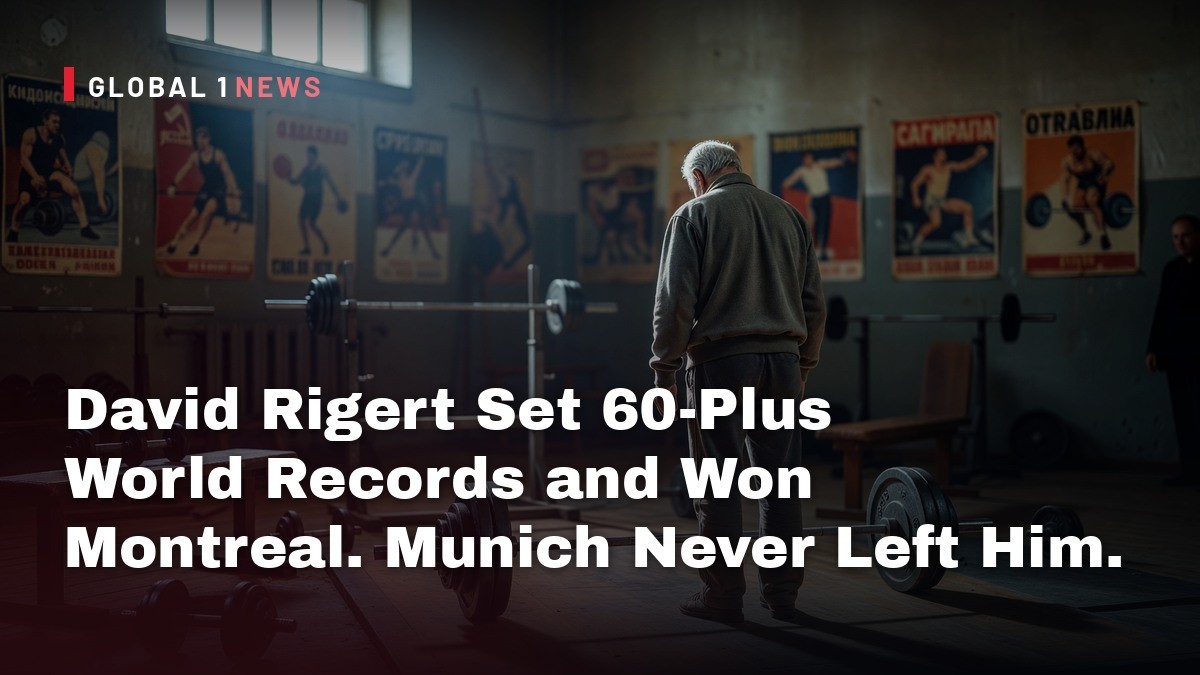
The Russian Weightlifting Federation announced on Monday evening that David Rigert, the 1976 Olympic champion and one of the most dominant lifters the sport has ever produced, had died at 79 after a prolonged illness. In the same breath, the federation's own message conceded what no record book can settle: that the exact scale of what he did on the platform has never been agreed.
He was born in a Kazakh village to a deported German family, learned the sport from a manual, worked a coal seam in the town where he trained, and spent the rest of his life being asked about two afternoons he lost. Four years after his greatest triumph he walked onto a platform in Moscow, could not complete a single snatch, and was gone from the competition before the medals were decided.
David Rigert Set 60-Plus World Records and Won Montreal. Munich Never Left Him.
Taganrog, Russia — The federation's Telegram statement, carried by Izvestia and RBC, confirmed the death on the evening of 26 October and described a legacy that went past the podium: "His legacy is not only records and awards, but also his students, a coaching school, an example of endurance and devotion to his work."
An earlier line from the same federation press service told a different and thinner story. Hours before, its statement to TASS said Rigert had died "a few hours ago today" and that "the cause of death is still unknown." The formal notice that followed said a prolonged illness. Both are on the record, from the same body, on the same day, and neither is elaborated on.
A German Family's Child in a Kazakh Village
David Adamovich Rigert was born on 12 March 1947 in Nagornoye, in the Kokchetav region of the Kazakh Soviet Socialist Republic, into a Russian-German family whose war had scattered it. His father, Adam Adamowitsch Rigert, was taken to the Ural Mountains as a forced labourer alongside other Soviet citizens of German ancestry, while his mother, Jelisaweta Rudolfowna Horn, and the children were moved to northern Kazakhstan.
He and eight siblings grew up in the Kuban region near the Caucasus. His first sport was boxing. What turned him to the bar was Yury Vlasov's gold medal at the 1960 Rome Olympics, four years before Rigert lifted his first competitive weight. He began teaching himself the lifts in 1966, working from the training methods of the former Soviet champion Arkady Vorobyov, with no coach and no platform of his own.
Shakhty, a Coal Seam, and Plyukfelder
Two years later, serving in the Soviet Army, he earned the title Master of Sport of the USSR. After demobilisation he settled in Armavir and kept training. The turn came in 1969, when he met Rudolf Plyukfelder, a Soviet Olympic and world champion of German origin who had built a school in the coal town of Shakhty, in Russia's Rostov region.
Plyukfelder invited him to train there. Rigert moved, joined the Trud sports society, and worked as a coal miner. Olympedia records that within eleven months he was on the Soviet national team. In 1970, at his first international championship, in Columbus, Ohio, he took bronze in the 82.5-kilogram class. That November, at the RSFSR championships in Volgograd, he set his first world record. It was the beginning of a run that would only be matched by one man of his era.
The Records, and Why the Numbers Do Not Agree
Here is where the sources part company, and it is worth stating plainly rather than picking the tidiest figure. Izvestia, citing the federation, reports 63 world records and 64 Soviet records. The International Weightlifting Federation's own retrospective on the 1976 season credits him with 65. Olympedia, and a separate IWF profile published in 2017, both count 68. RBC settles for "more than 60."
The IWF's breakdown of the 65 figure is the most granular available: one world record in the press, 21 in the snatch, 21 in the clean and jerk, 14 in the two-lift total and eight in the three-lift total. His best competitive lifts were a 185-kilogram snatch in 1981 and a 230-kilogram clean and jerk in 1980, and his three-lift total reached 562.5 kilograms in 1972.
The Other Man From Shakhty
The only lifter of the era whose record run outdid Rigert's was Vasily Alekseyev, the super-heavyweight who came out of the same coaching school in the same town. Izvestia's obituary of Plyukfelder this year records that the school produced six Olympic champions, naming Rigert and Alekseyev among them, and seven world champions in total. In a 2007 interview with the IWF's magazine, Rigert described the two of them as men who lived in the same town and occasionally went fishing and hunting together, and he said plainly that they got along well without being best friends.
That is the shape of Soviet weightlifting in the 1970s: two men out of one coal town, coached by the same German-born teacher, sitting at the top of the same sport. Rigert's own record of his career is the one that carries the two blank Olympic lines.
Munich: 187.5 Kilograms, Then Nothing
At the 1972 Munich Olympics he arrived as probably the heaviest favourite in the entire weightlifting competition, in the 90-kilogram class, at 25 years old. He opened with a press of 187.5 kilograms and led the field. Then he missed all three of his snatch attempts at 160 kilograms and was eliminated with no total.
He wanted the record as well as the medal, and the pursuit of it cost him both. "In snatch I missed all three attempts on 160 kg," he recalled in an interview with the IWF's own magazine. He ran to his head coach and asked to take the weight once more; the answer was no, and the coach told him it was over. Soviet team officials allowed him to stay on rather than send him home, and he later described that as a gesture he did not forget. He also said he wanted only to go home.
Five Years With Nothing Left to Prove
What followed was one of the great runs in the sport. He won the world middle-heavyweight title in 1971, then every year from 1973 to 1976, adding a sixth world title in the 100-kilogram class at Gettysburg, Pennsylvania, in 1978. He won nine European championships, seven of them consecutively between 1971 and 1978 in the middle-heavyweight class plus two more at sub-heavyweight in 1979 and 1980, and five Soviet titles. In 1973, by his own accounting, he won every competition he entered and set eight world records.
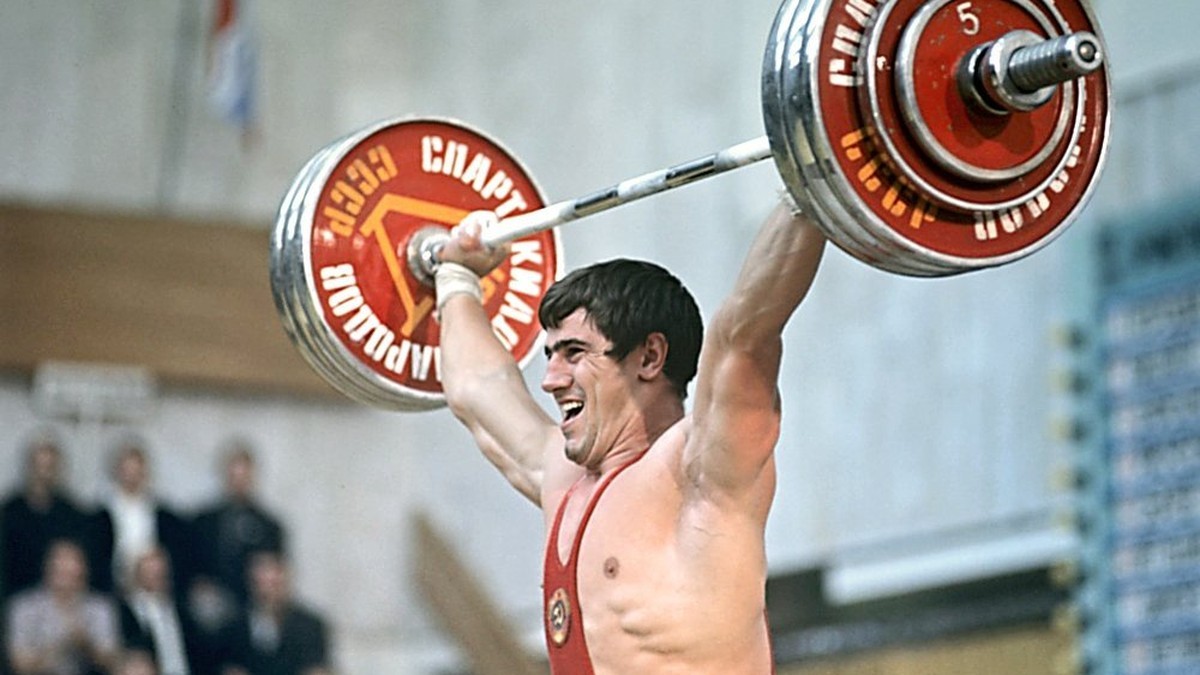
Montreal in 1976 was the vindication. He took the Olympic gold in the 90-kilogram class with lifts of 170, 212.5 and 282.5 kilograms, four years after the collapse in Munich and at the second of his three Games. The Order of the Red Banner of Labour followed that year. He was 29.
Moscow 1980 and a Torn Leg Muscle
His final Games are the ones that still sting. For Moscow in 1980 he dropped from the under-100-kilogram class to the under-90-kilogram class, and the weight cut was too fast. He tore a leg muscle in the process. He then failed all three of his snatch attempts for the second time in an Olympic competition and did not finish, on home soil, in front of the country that had watched him for a decade.
The distance between those two failures and the rest of his record is the thing that makes him hard to summarise. Olympedia's own biography puts it without decoration: he was one of the greatest weightlifters ever, and at the Olympic Games he "suffered abject failure twice," in 1972 and again in 1980. Between those two afternoons he did not lose a world or European title.
The Coach, and the Hall of Fame
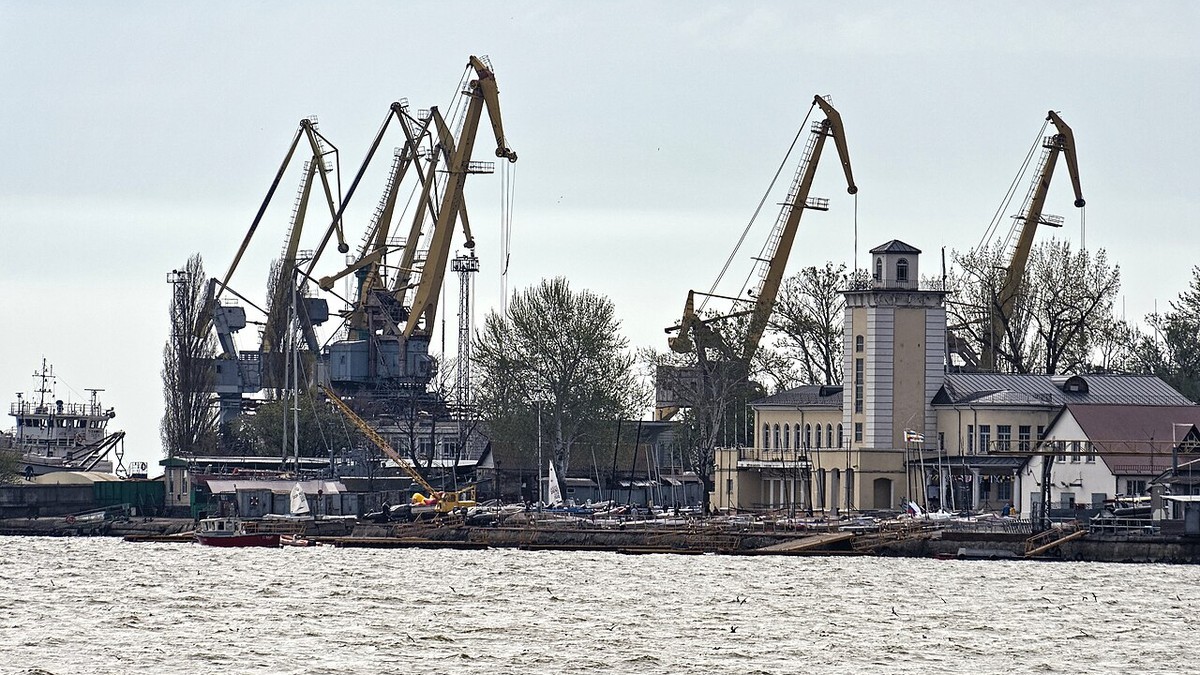
Rigert retired from competition in 1981 and moved into coaching, first in Rostov and then in Taganrog, on the Sea of Azov. He studied at the Moscow Institute of Physical Culture, and from 1985 to 1987 he was head coach of the Soviet national weightlifting team. In 1999 the International Weightlifting Federation inducted him into its Hall of Fame.
He returned to the national setup in 2002, this time as head coach of the Russian team, and led it at the Athens Olympics in 2004. Alongside coaching he designed and manufactured competition weights, and he is credited with building around a hundred sports facilities in Taganrog and founding a weightlifting centre there.
Taganrog, the Council Seat, and a School in Hungary
In 2004 he entered local politics and was elected to the Taganrog city council, and in March 2009 he was re-elected as a deputy of the Taganrog Duma for the United Russia party. He was made an honorary citizen of Taganrog, of Grozny and of Chornomorsk. His reach was not confined to Russia: in Iregszemcse, in Hungary's Tolna county, the weightlifting academy and sports school founded in 2013 carries his name, and he visited the country several times.
His wife, Nadezhda, was a competitive javelin thrower, and three sons, Viktor, Vladislav and Denis, all became competitive weightlifters. Beyond that the family has said nothing publicly, and the federation's statement named no funeral arrangements and gave no further medical detail.
Six Months After His Teacher
The timing is the part that lands hardest. On 28 April this year, Rigert telephoned TASS to report that Plyukfelder, the coach who had pulled him out of a coal town and made him a world champion, had died in Germany on 24 April at the age of 97. "Today I learned that Rudolf Vladimirovich Plyukfelder passed away in Germany on April 24," he told the agency.
Plyukfelder had been the oldest Olympic weightlifting champion in history when he won in Tokyo in 1964 at 36, and the school he founded in Shakhty produced six Olympic champions, Rigert and Alekseyev among them, and seven world champions in all. Rigert outlived his teacher by six months and two days. Whatever else is disputed about the record books, that line is not.
By Jessica Ali, Staff Writer
This article was produced with AI-assisted research and editorial support. Sources: Russian Weightlifting Federation statement via Izvestia and RBC; TASS; Rossiyskaya Gazeta; Olympedia; Olympics.com; International Weightlifting Federation; 24.hu. Photographs: cover, Press Office of the Governor of Rostov Oblast, CC BY 4.0, via Wikimedia Commons; weightlifting archive frame, Rossiyskaya Gazeta; Taganrog waterfront, Alexxx1979, CC BY-SA 4.0, via Wikimedia Commons.
What's Your Reaction?
 Like
0
 Dislike
0
 Love
0
 Funny
0
 Wow
0
 Sad
0
 Angry
0

Editor-in-Chief at Global1.News. Atlanta-based journalist who cuts through the BS and tells it like it is. Lead anchor, host, and the voice you hear when the spin stops and the truth starts.















Comments (0)