
Zelensky Says the US Raised Trading the Donbas for NATO. He Would Ask the Country.
Zelensky says US negotiators asked for the first time whether Ukraine would withdraw from the Donbas in exchange for NATO membership. He says Kyiv will not recognize occupied land as Russian, and that he would put any real security package to a national referendum. Washington has not confirmed his account.
President Volodymyr Zelensky says the Americans raised a question Kyiv had never heard before: whether Ukraine would withdraw from the Donbas in exchange for NATO membership. He says he would not answer it alone, and Washington has not confirmed that any such offer was made.
Zelensky Says the US Raised Trading the Donbas for NATO. He Would Ask the Country.
Kyiv, Ukraine — On his account, the question was put to him after two days of US-mediated talks in Abu Dhabi and a meeting in Moscow. His answer was that Ukrainians, not he, would decide.
The Question That Had Never Been Asked
Zelensky told reporters on Friday 13 November, after visits to Denmark and Ireland, that the idea came directly from the American side. "The Americans raised a question: 'What if Ukraine joins NATO? Would Ukraine withdraw from Donbas?' This was the first time this had been raised," he said.
His office released the remarks on Saturday 14 November, having held them under embargo. Zelensky added: "That is why I believe NATO is back on the agenda. But you have also heard Putin's signals, and this is an extremely difficult conversation."
Read that carefully. This is Zelensky's account of a question, not a confirmed American proposal. The distinction matters, because the rest of the diplomatic week was built around leverage, secrecy and denial. What he described was a probe, and he said it was the first of its kind. That is the claim at the center of the week.
What Zelensky Actually Put on the Table
Zelensky did not say yes. He said any deal would need four things: security guarantees from NATO and the EU; a strong Ukrainian army with no constraints on its size or weapons; money to rebuild; and no recognition of occupied territory as Russian.
"I have said repeatedly: Ukraine is not retreating and is not giving up its land to terrorists," he said. He added that any settlement would be "without any recognition of the occupied territories as Russian."
The decision, he said, would not be his alone. "I have no right to make that decision on my own," Zelensky said. Ask the public, he argued, and only once the guarantees are real. "But we need specifics, and we don't have them yet," he said. "All of this is still under discussion."
That is the shape of it: not a surrender, not a withdrawal, but a package he says he would take to the public. The conditions are the point. Without them there is nothing to ask.
Washington Has Not Confirmed a Word of It
Washington has not confirmed Zelensky's account. A US official told the BBC: "many ideas continue to be discussed but any final deal will have to be agreed to by both parties."
US officials had previously said that Ukrainian NATO membership was off the table. The White House and the State Department did not immediately respond to a request for comment, according to Politico.
Politico also reported that giving up Donbas has long been part of proposals put forward by the Trump administration, including the 28-part plan for a peace agreement proposed by the White House in 2025.
So the public record is narrow: Zelensky's account, a US official's hedge, and a history of proposals Kyiv has treated with suspicion. That gap is not a detail. It is the difference between a trial balloon and a policy. NATO has not commented.
Kushner's Post Read Like a Rebuke
Jared Kushner is Trump's son-in-law and a US special envoy, alongside Steve Witkoff. Hours after Zelensky's remarks, Kushner posted on X on Saturday at 8:15 PM.
"Several new ideas emerged from these discussions and are now being explored," he wrote. "The press has reported some of the maximalist positions proposed by both sides, along with strong political rhetoric. In our private discussions, both sides understand that practical compromises will be necessary to end this war."
He added that the US was "determined to continue the hard work, maintain the confidentiality necessary for sensitive negotiations, and find a pathway to end this horrible war." He said NATO "will remain a critical pillar of European security."
The BBC read the post as a reproach to Kyiv. The emphasis on confidentiality, and on "maximalist positions" being aired in public, landed as a warning against the disclosure. Kushner did not confirm Zelensky's account. He shifted the frame to process, secrecy and the next round. That is not a denial. It is a leash.
Russia's Answer Was a 1997 Map
The New York Times reported that Russian officials circulated a paper at the Abu Dhabi talks dated 10 November. The paper had no letterhead and no signature. It demanded that NATO return its forces to the positions they held in 1997, rule out any further expansion, and bar military activity in Ukraine and elsewhere in Eastern Europe, the South Caucasus and Central Asia.
The full text has not been published. The Times' account rests on anonymous sources, so treat the document as reported, not confirmed.
Separately, Kremlin aide Yuri Ushakov confirmed on the record that Russia is demanding a halt to further NATO expansion, restrictions on weapons systems near Russian borders, and a return of the alliance's military posture to 1997. He referred to the draft agreements Russia presented in December 2021.
The Washington Post framed the demand as an attempt to rewrite Europe's security architecture. Lithuania's president said it cannot be met; Bulgaria's Rumen Radev called it unthinkable. That is not a negotiating chip. It is a redrawing of the map by other means.
The Only Deal in Abu Dhabi Was a Prisoner Swap
The talks ran for two days, 10 and 11 November — the first trilateral round between Ukraine, Russia and the United States since February this year. They ended without a ceasefire agreement and without a major breakthrough.
The only publicly announced agreement was the "largest prisoner exchange of the war." More than 1,000 people were involved, according to Zelensky, but the final numbers were still under discussion. Russia said a large-scale exchange could take place within two to three weeks. The exchange had not happened.
Ukrainian delegation head Davyd Arakhamia said the Russians came with "extremely strict instructions." Iuliia Osmolovska of GLOBSEC's Kyiv office warned against reading too much into the positive assessments. She pointed to a joint assessment by 71 Ukrainian security and defense experts putting the chances of a peace agreement or ceasefire this year or next at just 19%.
"What we are seeing now is more of a farce," she said, "an attempt by all sides to put a brave face on things."
Kostiantynivka, and the Towns Behind It
At the Moscow meeting on 12 November, Putin proposed a joint humanitarian operation in Kostiantynivka. Zelensky rejected the framing outright.
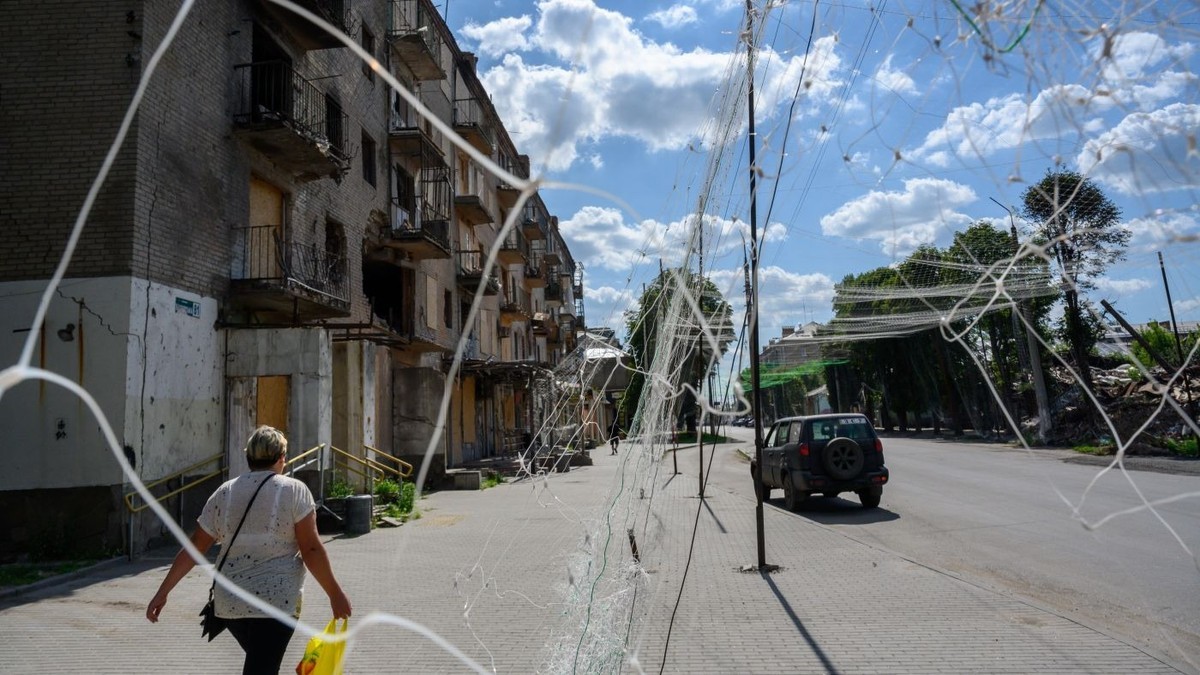
"Putin simply wants us to leave Kostiantynivka so that they can move in and occupy the entire city that way," he said. He argued that the proposal reflected Moscow's inability to take the city by force, and that civilians there had already had the chance to evacuate.
Russia said this year that it had seized Kostiantynivka. Ukraine says fighting is ongoing. Zelensky said Ukraine had given a list of seven or eight other frontline settlements where civilians, including children, are trapped for a potential humanitarian truce. He said Russia prefers to use them as military targets. Moscow denies deliberately targeting civilians.
"Their next steps will be our other cities in Donbas," Zelensky said. The pattern he described is simple: a humanitarian label, a demand to pull back, then a claim of capture. That is why he treated Kostiantynivka as a test of intent, not a gesture of mercy.
Europe Finally Gets a Chair
Europe was not at the table in Abu Dhabi. It was on the sidelines, even though its officials were in the city: Rustem Umerov, head of the Ukrainian delegation, said representatives of the UK, France, Germany, Italy, NATO and the European Commission held separate coordination meetings with Kyiv.
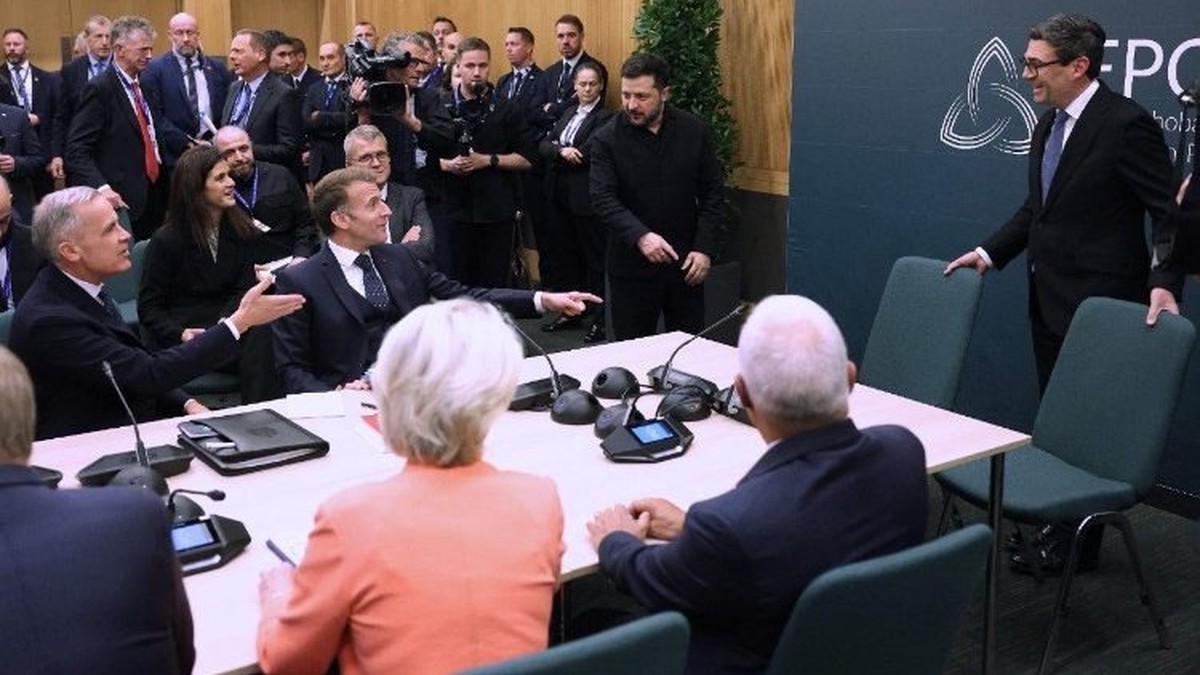
At the summit in Ireland, EU leaders agreed that Europe's team for future talks would comprise five major military powers: non-EU member Britain plus France, Germany, Italy and Poland, as well as EU officials. Witkoff said Putin had agreed to let European representatives join the next round.
Moscow was less enthusiastic. Russia's Foreign Ministry cautioned that, as far as it knew, European participation had not come up at the Moscow meeting. Kremlin spokesman Dmitry Peskov said: "It would be better for us to talk to the Europeans and understand to what extent their position could potentially contribute to the peace process."
Ushakov said European countries need to decide whether they want war or peace. Kushner was blunter: "We cannot reach this agreement without Europeans at the negotiating table."
This War Must Be Ended First
Zelensky's sequencing is clearest here. "We cannot turn everything upside down and start by talking about changing the security framework in the world or across the continent overall, and only then talk about ending this war," he said. "This war must be ended first."
He rejected the idea Europe can build a new architecture around Moscow's demands. "Real security in Europe means the EU and NATO. That's it. There is no other security in Europe," he said. He called the alternative "dangerous because, in my view, it is precisely things like this that lead to wars or escalations."
He pushed back on the notion that Ukraine is a problem to be managed. "Ukraine already is a defending line of Europe. We are part of Europe, and we are part of the security architecture already," he said. "Everybody's very happy if we will be in NATO."
Putin has demanded that NATO pull back its troops from the Russian border. EU leaders have strongly criticized that demand. The order matters: end the war, then talk about the wider map.
What the Winter Decides
The battlefield does not wait for communiques. Interfax carried the Defense Ministry's claim that its forces had captured Tersianka in the southeastern Zaporizhzhia region. The ministry said Russian forces struck Ukrainian energy and transport infrastructure used by the military, along with ammunition depots and drone production and storage sites.
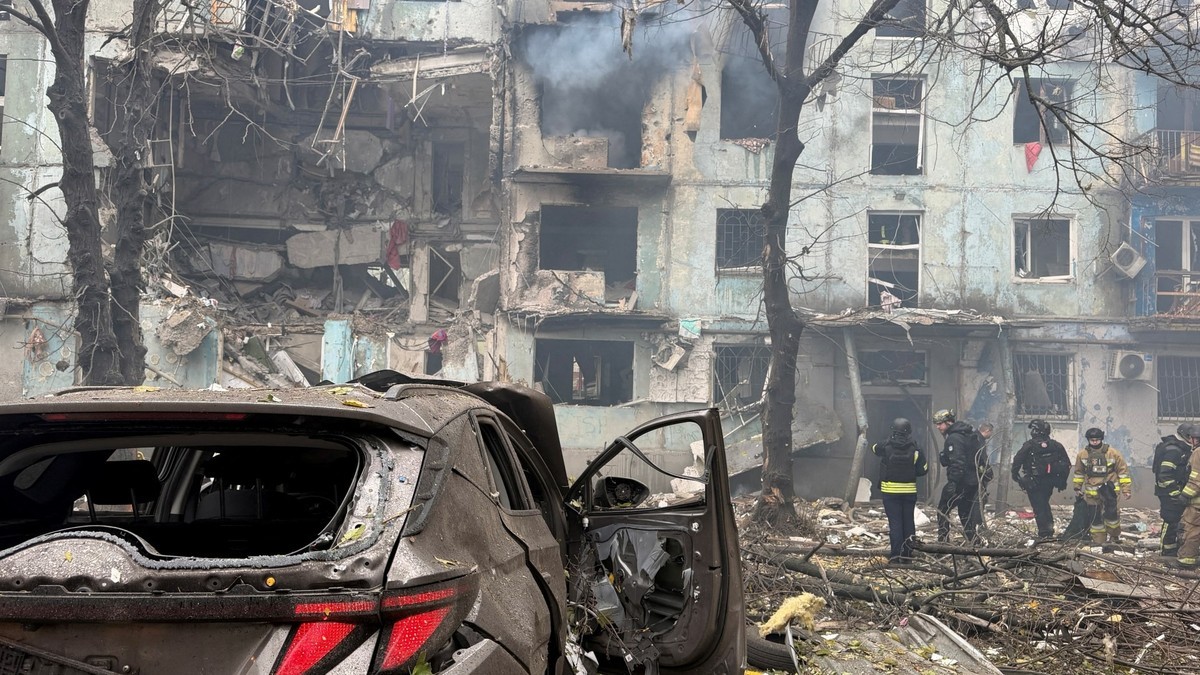
Russia has targeted power stations across Ukraine in waves of ballistic and cruise missile attacks, cutting power and heating to millions of people as temperatures plunge. Russian bombardment continued on Saturday, with deadly strikes in Pavlohrad and in a village near Zaporizhzhia.
Zelensky said Putin was "betting everything" on this winter's campaign. Russia occupies roughly a fifth of Ukrainian territory, including most of the Donetsk and Luhansk regions that compose the Donbas. On the BBC's reading, the land Ukraine still holds there would be a small concession in practical terms, and a symbolically enormous one, because it would accept the Donbas as Russian.
That is the trap: small on a map, enormous in law. And the missiles are still falling.
By Jessica Ali, Staff Writer
This article was produced with AI-assisted research and editorial support. Sources: BBC News, Agence France-Presse, Reuters, Politico Europe, Deutsche Welle, NBC News, The Washington Post, The New York Times, RIA Novosti, Vatican News, Meduza, The New Voice of Ukraine, Prothom Alo. Photographs: AFP via Al Jazeera; AFP via Vatican News; Getty Images via CNN. Cover: Global 1 News editorial image.
What's Your Reaction?
 Like
0
 Dislike
0
 Love
0
 Funny
0
 Wow
0
 Sad
0
 Angry
0

Editor-in-Chief at Global1.News. Atlanta-based journalist who cuts through the BS and tells it like it is. Lead anchor, host, and the voice you hear when the spin stops and the truth starts.









Comments (0)