
Cyclospora Outbreak from Guanajuato Lettuce Claims Two Lives, Spreads Across 47 States
In a recent DW News report titled "Cyclospora outbreak spreads to 47 US States," a microscopic parasite has claimed two lives in the US with more than 10,000 cases reported across 47 states. The outbreak, traced to iceberg lettuce grown in central Mexico, directly affects Mexican families in the Bajío region whose livelihoods depend on export contracts with companies like Taylor Farms de Mexico.
In a recent DW News report titled "Cyclospora outbreak spreads to 47 US States," a microscopic parasite has claimed two lives in the US with more than 10,000 cases reported across 47 states. The outbreak, traced to iceberg lettuce grown in central Mexico, directly affects Mexican families in the Bajío region whose livelihoods depend on export contracts with companies like Taylor Farms de Mexico. Ordinary households in Guanajuato now face job losses and market uncertainty as the recall expands.
Cyclospora Outbreak from Guanajuato Lettuce Claims Two Lives, Spreads Across 47 States
Guanajuato, Guanajuato – Mexico, August 6, 2026 — The Secretaría de Agricultura y Desarrollo Rural and COFEPRIS are monitoring the largest cyclospora outbreak in US history, with Taylor Farms de Mexico voluntarily removing all iceberg lettuce sourced from central Mexico from the US market indefinitely after federal authorities linked the produce to illnesses in 47 states. The FDA identified shredded iceberg lettuce from a single independent farm in central Mexico, which supplies less than 1% of US iceberg, as the source in one cluster. This development threatens the reputation of Mexican produce exports under the T-MEC agreement and places immediate pressure on growers in the Bajío agricultural belt.

The Story Unfolds
The CDC reported 6,707 laboratory-confirmed cases plus approximately 11,500 suspected cases as of July 28, with national totals exceeding 25,000 according to AP reporting on August 6. Michigan alone recorded 11,234 outbreak-linked cases, up sharply from 461 the previous Friday, along with 193 hospitalizations and two confirmed deaths announced Monday, August 3, 2026, by the Michigan Department of Health and Human Services. These represent the first fatal cyclosporiasis cases ever recorded in the United States; both victims had significant underlying health conditions and died from intestinal illness and dehydration. The CDC expanded the multistate investigation from nine to 15 states on August 4, adding Arkansas, Iowa, Missouri, Nebraska, New Hampshire, and North Carolina to the prior list of Illinois, Indiana, Kansas, Kentucky, Michigan, Ohio, Oklahoma, Pennsylvania, and West Virginia. Most suspected cases remain concentrated in Michigan and Ohio. Investigators also connected one cluster to lettuce served at Taco Bell locations in five states. The FDA is currently tracking five separate ongoing cyclospora outbreaks nationwide.
The outbreak began quietly in late June when Michigan health officials first noted a spike in cyclosporiasis cases among residents who had eaten fresh salads. By early July the numbers climbed steadily as more people sought care for prolonged stomach troubles, prompting the CDC to open a formal investigation. What started as a handful of reports in one state quickly grew into a national concern, with laboratory confirmations rising each week until the total crossed into the thousands by the end of July.
As the CDC widened its investigation, the picture became clearer that the problem reached far beyond the Midwest, with newly added states showing how widely the contaminated lettuce had traveled through distribution networks. One cluster traced directly to Taco Bell restaurants across five states highlighted how even popular fast-food chains could become unexpected points of exposure, leaving families wondering which everyday meals might carry hidden risks.
Hospitalizations reached 193 in Michigan alone, with two deaths marking a somber first for the United States. These losses hit hardest in households already managing chronic illness, reminding communities that behind every statistic stands a family adjusting to sudden grief. The 2026 totals now dwarf every previous year on record, underscoring how quickly a single supply chain can affect thousands across state lines.
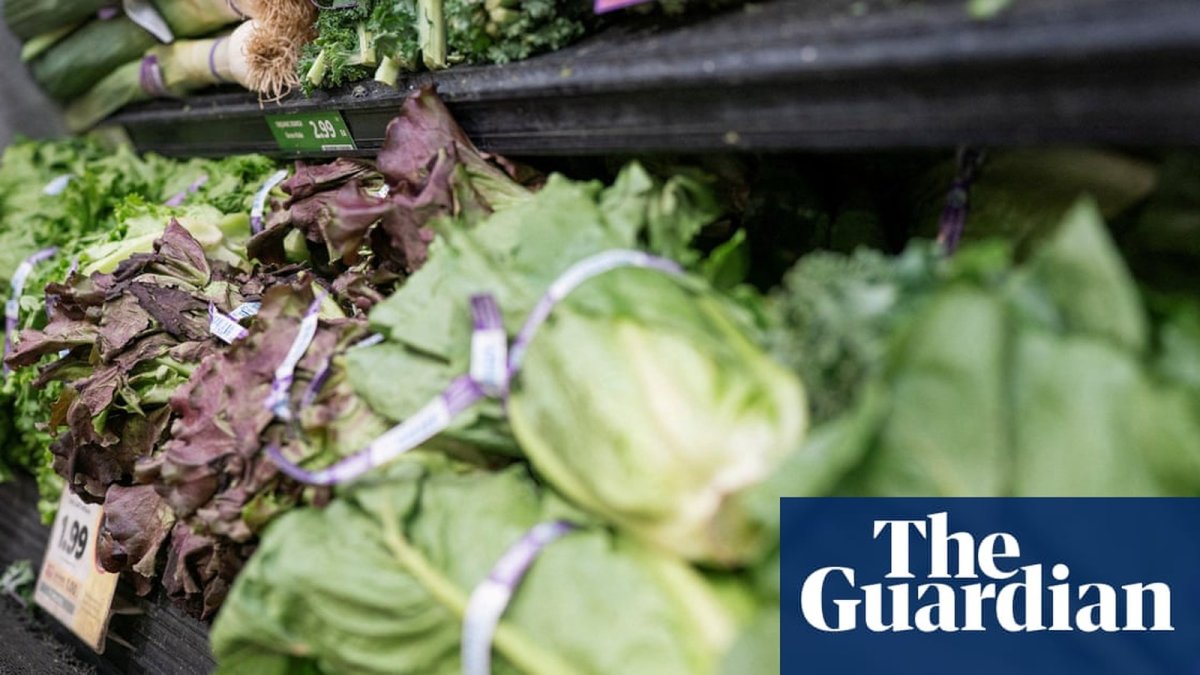
Mexican Context
Guanajuato stands as one of Mexico's leading agricultural export states within the central produce belt, shipping large volumes of lettuce and vegetables to the United States under the T-MEC framework. SADER, COFEPRIS, and SENASICA oversee food safety protocols for these shipments, yet the current recall marks Taylor Farms de Mexico's fourth outbreak link since 2013. The July 17, 2026, recall covered all retail and food-service iceberg lettuce products sourced from central Mexico. Sysco, the nation's largest food distributor, announced it will no longer purchase iceberg lettuce from Taylor Farms or from Mexico. Mexican officials note that the single implicated farm accounts for a tiny fraction of total US supply, yet the broader impact on the 2026 fall and winter export season could reshape trade patterns for the entire Bajío region.
Guanajuato and the wider Bajío region form the backbone of Mexico's fresh-produce exports, sending crisp lettuce and other vegetables northward during the cooler months when U.S. fields rest. The United States remains the primary buyer, turning seasonal harvests into steady income for thousands of families who depend on these cross-border sales. Under the T-MEC agreement this trade represents a multi-million-dollar seasonal business that supports entire rural economies from planting through packing.
SADER, COFEPRIS, and SENASICA work together to check safety standards before produce leaves Mexican soil, yet the current situation reveals how even careful oversight can face unexpected challenges. The FDA's initial positive test on Taylor Farms de Mexico lettuce later prompted an apology for a false positive caused by the parasite's tricky detection limits, yet the recall stayed in place. This episode shows how scientific tools, while powerful, still leave room for uncertainty that ripples through both countries' regulatory systems.
Sysco's decision to stop buying Mexican iceberg lettuce adds immediate pressure on growers who had counted on reliable contracts. While the single implicated farm supplies only a tiny share of U.S. needs, the broader signal affects planning for the entire export season. Mexican officials continue tracing steps with their U.S. counterparts, hoping clearer protocols will protect both public health and the long-standing trust that keeps produce moving across the border.
Impact on Mexican Communities
Farmworkers and small growers in Guanajuato colonias now confront reduced hours and contract cancellations as export demand drops. Campesinos who rely on steady maquiladora-style agricultural jobs face income losses that ripple through local tortillerías and tianguis markets. Families in rural communities dependent on USMCA produce trade worry about long-term price instability and employment cuts heading into the winter season. Indigenous and migrant workers from surrounding areas who staff the fields stand to lose the most if additional states expand import restrictions. The outbreak has already surpassed the previous record of roughly 4,700 illnesses set in 2019, amplifying economic pressure on households across central Mexico.
In the colonias and rural ejidos around Guanajuato, farmworker families watch their weekly hours shrink as packing houses adjust to canceled orders. Campesinos who once planned steady seasonal work now weigh whether to stay local or seek opportunities farther north, knowing migration decisions often hinge on just a few weeks of reliable pay. Small growers and independent packing operations feel the pinch first, since they lack the reserves larger exporters maintain during slow periods.
These income drops travel quickly through local tianguis and tortillerías, where vendors notice fewer customers buying staples. Remittances that once supported extended households may dip if workers cannot find replacement shifts, tightening already modest budgets heading into the fall. The fear that buyers might begin avoiding all Mexican lettuce, rather than isolating the single farm, adds another layer of worry for communities that have built their livelihoods around these exports.
Past scares involving cilantro and raspberries taught similar lessons, yet recovery took time and coordinated effort from both sides of the border. Families remember how strengthened traceability eventually reopened markets, but they also recall the months of uncertainty that strained neighborhood networks. Today the same resilience appears in community conversations about protecting the Bajío's reputation while ensuring every harvest meets the highest safety expectations.
Reactions and Responses
Wade Syers, food safety specialist at Michigan State University Extension, stated that the development highlights the importance of identifying the source and preventing additional illnesses. Dr. Juan Luis Marquez, medical director of Washtenaw County and Livingston County health departments, noted the weeks-long gap between exposure and symptoms, laboratory analysis difficulties, and staffing cuts at federal, state, and local public health levels that reduce investigative capacity. Mexican authorities through SADER and SENASICA continue source tracing while consumer advocates on both sides of the border call for stronger traceability requirements. The FDA issued an initial positive test result on Taylor Farms de Mexico lettuce during targeted import surveillance, later apologized for a false positive due to detection complexity, yet maintained the recall.

The Science of a Stubborn Parasite
Cyclospora cayetanensis is a heat-loving microscopic parasite that causes watery diarrhea with frequent and sometimes explosive bowel movements. The oocysts lie dormant on crop surfaces, virtually invisible, requiring roughly one hundred linked end to end to span the head of a pin, according to University of Michigan professor Vernon Carruthers. Once ingested, body temperature, bile, and digestive enzymes trigger the release of parasites that burrow into the small intestine lining and replicate from a few organisms to millions inside intestinal cells. The parasite depends exclusively on human digestive tracts to complete its life cycle and spreads through feces. Outbreaks peak in late spring and summer, and infections can persist for weeks or months even though fatalities remain rare. USDA records show prior links to raspberries, basil, salad mixes, cilantro, berry mixes, lettuce, and snap peas.
What to Watch For
Investigators continue tracing the remaining four cyclospora clusters while monitoring whether additional states report cases beyond the current 47. Mexican exporters await decisions from SADER and COFEPRIS on enhanced inspection protocols that could affect the upcoming winter harvest. If implemented, stricter traceability rules may raise costs for small growers in Guanajuato but could protect the long-term reputation of Mexican produce in US markets. Families in the Bajío region watch for signs that Sysco's decision and the expanded recall will stabilize or further depress local employment. The outbreak's scale already exceeds all previous years, signaling that source identification and prevention measures will shape US-Mexico agricultural relations for seasons to come.
Attention now turns to whether investigators can pinpoint the remaining four cyclospora clusters and whether those sources also trace back to central Mexico. Clear answers would help separate the single-farm issue from any wider pattern, giving Mexican exporters better footing as they prepare shipments. At the same time, U.S. officials may consider heightened border inspections or temporary import adjustments under T-MEC rules, steps that could slow produce movement even if they aim to reassure consumers.
In Mexico, SADER and COFEPRIS may introduce expanded SENASICA testing and updated guidance for packing facilities before the winter harvest begins. November through February marks the peak season for Mexican lettuce exports, when cooler weather in the Bajío allows steady supply to U.S. markets. Any new requirements could raise costs for smaller operations, yet many growers see stronger protocols as necessary to safeguard long-term access to American tables.
Both countries face questions about how staffing reductions at public-health agencies affect outbreak response speed. Families in Guanajuato and Michigan alike hope coordinated improvements will prevent future disruptions, keeping fresh produce affordable while protecting the rural communities that grow it. The coming months will show whether these steps restore confidence or create new hurdles for the cross-border supply chains that connect daily meals on both sides.
The human cost in both countries underscores the need for coordinated action between US and Mexican agencies to safeguard public health while supporting the rural communities that feed cross-border supply chains.
By Rosa Martinez, Staff Writer
This article was produced with AI-assisted research and editorial support. Reporting is based on sources cited in the article.
What's Your Reaction?
 Like
0
Like
0
 Dislike
0
Dislike
0
 Love
0
Love
0
 Funny
0
Funny
0
 Wow
0
Wow
0
 Sad
0
Sad
0
 Angry
0
Angry
0

Latin America/Andes Correspondent at Global1.News. Based in Bogota, covering politics, environment, energy, and social movements across the Andean region. Passionate about environmental journalism and communities protecting their land.















Comments (0)