
350,000 Haitians Lose TPS as Federal Judge Clears Path for Deportations
A federal judge cleared the way for the Trump administration to end Temporary Protected Status for up to 350,000 Haitians, lifting her stay after the Supreme Court's 6-3 Mullin v. Doe ruling. Communities in Florida, New York and Maryland face deportations, labor shortages and up to 4 billion doll...
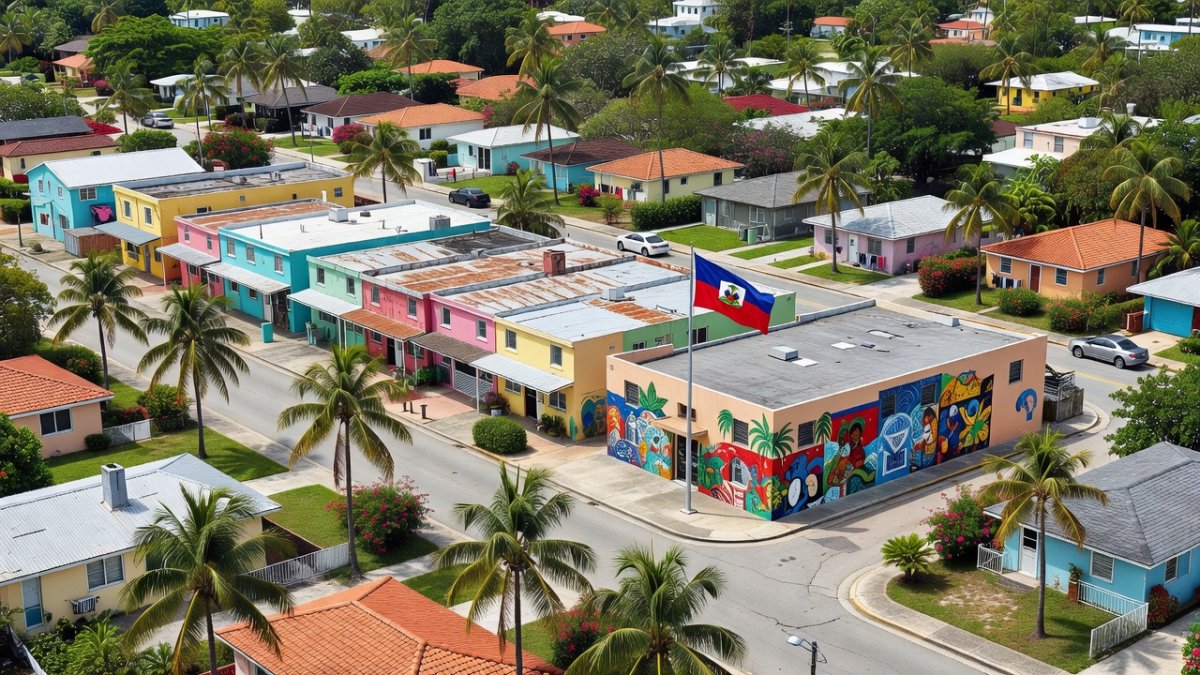
Folks, the hammer just dropped. A federal judge cleared the runway for the Trump administration to strip legal protections from up to 350,000 Haitians, and deportations are now on the table. This is not abstract policy—this is families, workers, and entire communities staring down the barrel of forced removal.
Judge Lifts Stay, 350K Haitians Face Deportation
Washington, D.C. — U.S. District Judge Ana Reyes lifted her stay on Wednesday, August 5, 2026, removing the final legal barrier that had blocked the end of Temporary Protected Status for Haitians. The move follows the Supreme Court's 6-3 ruling in Mullin v. Doe on June 25, 2026, which held that courts cannot review most TPS termination decisions. That decision also opens the door for similar action against roughly 6,000 Syrians.
What Is TPS and Why Does It Matter?
Temporary Protected Status was created by Congress decades ago as a humanitarian tool to shield nationals from countries hit by sudden disasters or ongoing conflict. Haiti earned its designation right after the 2010 earthquake that killed hundreds of thousands and shattered the nation's infrastructure. That single event triggered the initial grant, and repeated extensions kept the program alive for sixteen years as political instability and natural disasters continued to batter the island.
The program works by pausing deportations and granting work permits to eligible individuals already in the United States when conditions in their home country make safe return impossible. It is not a path to citizenship, yet it has allowed holders to build careers, pay taxes, and raise American-born children. Across seventeen countries, roughly 1.3 million people currently rely on TPS protections, making any termination decision a nationwide event rather than an isolated case.
Readers need to understand that TPS functions as a temporary shield, not a permanent fix. When the shield drops, the ripple effects hit every sector that depends on these workers. The Haiti termination serves as the first major test after the Supreme Court narrowed judicial review, setting expectations for how quickly other designations could fall.
The Ruling That Changed Everything
Judge Reyes wrote that her earlier order staying the Department of Homeland Security's termination of Haiti's TPS designation "is no longer in effect" after the Supreme Court decision and the D.C. Circuit's mandate. The ruling slams the door on further judicial challenges for now. Folks, this is the legal green light the administration needed.
The Supreme Court decision in Mullin v. Doe reshaped the landscape overnight. Lower courts lost their ability to second-guess these terminations in most cases. What looked like a temporary reprieve for Haitian TPS holders evaporated in a single stroke.
That shift carries immediate weight for communities that had counted on continued court intervention. Families who spent years navigating paperwork and renewals now face an abrupt end to legal status. The decision also signals that future TPS terminations will move faster, leaving less room for organized resistance at the judicial level.
A Timeline of the Legal Fight
The story stretches back to the 2010 earthquake that prompted the original TPS designation for Haiti. Successive administrations extended the protection through periods of political turmoil and additional disasters, keeping the program intact for sixteen years. The Trump administration then moved to end the designation, triggering lawsuits that slowed the process for years.
In February 2026 a federal judge blocked the termination, prompting a vigil at the Little Haiti Cultural Complex where families gathered to mark what felt like a temporary victory. That relief proved short-lived. On June 25, 2026, the Supreme Court issued its 6-3 decision in Mullin v. Doe, stripping most judicial oversight from TPS terminations and clearing the path for enforcement.
The D.C. Circuit issued its mandate shortly afterward, and on August 5, 2026, Judge Reyes lifted the stay. Each step tightened the timeline, moving the issue from courtroom debate to operational reality for hundreds of thousands of people. The sequence shows how quickly legal protections can vanish once higher courts limit lower-court review.
What TPS Meant for Haiti
Haiti first received TPS designation in 2010 after a catastrophic earthquake leveled parts of the country. The protection lasted 16 years through repeated extensions, giving hundreds of thousands a legal foothold while conditions back home remained unstable. That chapter closes now.
The designation was never meant to be permanent, yet it became a lifeline for communities that rebuilt lives here. Ending it after more than a decade and a half sends a clear signal about how long temporary really means under this administration.
Many holders arrived as young adults and now have U.S.-born children in school and mortgages on modest homes. The sudden cutoff forces a reckoning with the gap between the program's stated purpose and the reality of long-term settlement. Communities that filled labor shortages for years must now absorb the shock of losing that stability all at once.
'You Can Wait for DHS to Deport You or Leave Now'
The Department of Homeland Security delivered a blunt message to affected holders: "Your Temporary Protected Status protections have expired... Enforcement will be carried out. You can wait for DHS to deport you or you leave now." No sugarcoating, no extended grace periods. The choice is stark and immediate.
Advocates warn that pushing people without work authorization into the shadows will hurt American businesses, elder care, and construction sectors that rely on these workers. DHS has floated voluntary departure as an option, but the practical reality for many is far more complicated.
Employers now face decisions about whether to retain staff whose papers have expired or risk penalties. Workers must weigh the cost of leaving against the danger of staying without legal status. The message from DHS removes any illusion of a soft landing, pushing families to act before enforcement teams arrive.
Florida's Economy Takes the Hit
In Miami, home to one of the largest Haitian communities in the U.S., the end of TPS is already squeezing workers, businesses, and soon consumers, according to NPR reporting on August 5. Studies estimate Haitians account for roughly 120,000 of Florida's TPS holders, with the loss to the state's labor force estimated at up to $4 billion in GDP.
Congresswoman Lois Frankel (D-Fla.) warned that ending Haitian TPS would cripple Florida's economy, calling the coming loss "a gaping hole." South Florida's Haitian community reacted with grief and defiance at a Miami protest after the June 25 Supreme Court ruling, as covered by Local 10. The numbers do not lie—removing this workforce creates real economic pain.
Local businesses that hired TPS holders for construction and service roles now scramble to fill gaps. The economic hit spreads beyond the workers themselves to landlords, schools, and suppliers who depend on steady household spending. Florida's experience offers a preview of what other states will confront as enforcement scales up.
Empty Pews on the Eastern Shore
Associated Press coverage from August 5 describes empty church pews and rising fear of ICE on Maryland's Eastern Shore after TPS ended for Haitians. Many work in poultry plants and now face an agonizing choice: try to stay and find underground work while constantly fearing ICE agents, or leave the only home their children know.
That fear is not theoretical. Families who have paid taxes, raised kids, and filled essential jobs are suddenly weighing whether to disappear into the informal economy or uproot everything. The human cost lands heaviest on those who built quiet, steady lives over 16 years.
Churches that once served as community anchors now see fewer faces on Sundays as people weigh the risks of public gatherings. The Eastern Shore's poultry industry, already short on labor, will feel the absence in production lines and local spending. These shifts turn abstract policy into daily disruptions for towns that had grown used to the presence of Haitian workers.
The Caregivers America Can't Afford to Lose
The Times Union reported that an estimated 25,000 Haitian TPS workers in New York lost work authorization, including 5,000 caregivers and 2,000 nursing assistants. Home care agencies are already losing workers they cannot easily replace. These are the people who show up for elderly patients and hospital shifts when no one else will.
Losing this slice of the workforce does not just affect the workers—it ripples straight into American families who depend on reliable care. The numbers from New York make clear that TPS holders are not abstract statistics; they are the backbone of critical services.
Agencies report longer wait times for home visits and increased strain on remaining staff. Patients who relied on consistent caregivers now face turnover that disrupts routines and medical outcomes. The loss extends beyond payrolls to the quiet daily support that keeps vulnerable Americans in their homes rather than institutions.
What Happens Next for 350,000 People
Broader stakes are even larger. A Fwd.us analysis shows 1.3 million TPS holders across 17 countries could be affected by the administration's termination push. The Haiti decision is the first major test case after the Supreme Court ruling, and the template is now set.
Communities from Miami to Maryland to New York are already feeling the ground shift. Without work authorization, people who have contributed for years are forced into impossible decisions that no family should face after building lives here for over a decade and a half.
Work permits expire immediately, leaving employers to decide whether to terminate staff or risk penalties for continuing to employ unauthorized workers. Voluntary departure offers a narrow window to leave without a formal deportation order, yet many fear that accepting it still severs years of roots. ICE enforcement looms as the alternative, pushing families to weigh underground employment against the safety of their U.S.-born children. Advocates urge lawmakers to create legislative fixes, while affected workers weigh the cost of staying hidden versus starting over abroad.
The Bottom Line
This is not the end of the story, but it is a brutal new chapter. The administration has the legal runway it wanted, and enforcement is coming. Folks, the only way to push back is to stay loud, stay organized, and make your representatives feel the heat on this issue.
Contact your members of Congress today and demand they address the broader TPS system. Support legal aid groups on the ground that are already helping families navigate their options. Stay informed through sources like the Miami Herald, NPR, and the Associated Press rather than spin. Knowledge and action are still the best tools we have left.
By Jessica Ali, Staff Writer
This article was produced with AI-assisted research and editorial support. Reporting is based on sources cited in the article.
What's Your Reaction?
 Like
0
Like
0
 Dislike
0
Dislike
0
 Love
0
Love
0
 Funny
0
Funny
0
 Wow
0
Wow
0
 Sad
0
Sad
0
 Angry
0
Angry
0

Editor-in-Chief at Global1.News. Atlanta-based journalist who cuts through the BS and tells it like it is. Lead anchor, host, and the voice you hear when the spin stops and the truth starts.














Comments (0)