
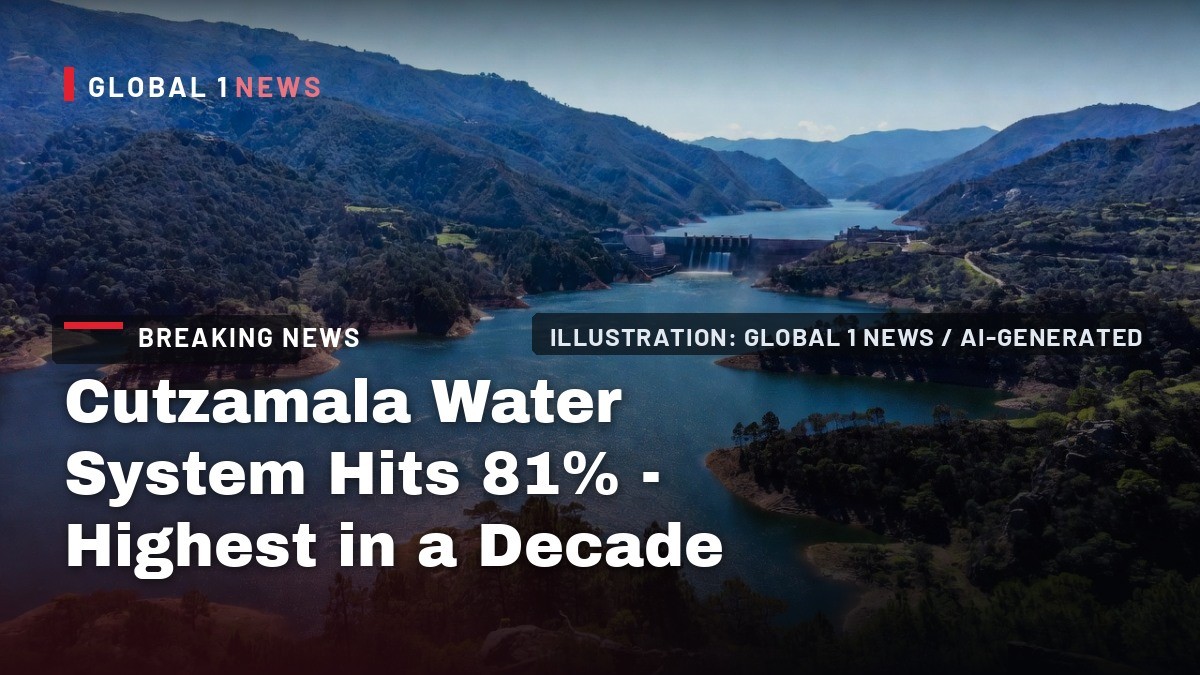
Cutzamala Water System Hits 81% - Highest in a Decade
A Decade of Thirst Begins to Quench: Cutzamala at 81 Percent There is a particular sound that brings relief to the colonias of Mexico City — the gurgle of water rushing through pipes that have been silent for days. For millions of families in the Valley of Mexico, that sound has become more frequent in recent months.
A Decade of Thirst Begins to Quench: Cutzamala at 81 Percent
There is a particular sound that brings relief to the colonias of Mexico City — the gurgle of water rushing through pipes that have been silent for days. For millions of families in the Valley of Mexico, that sound has become more frequent in recent months. The numbers behind this relief are finally matching what many have felt and seen in their tinacos: the Cutzamala water supply system, the region's most vital hydraulic artery, closed August 2026 at 81.05 percent of its capacity.
This figure, reported by the Organismo de Cuenca Aguas del Valle de México (OCAVM) of the Comisión Nacional del Agua (Conagua), represents the highest storage level the system has seen in a decade. The three dams that compose the system now hold a combined 634.252 million cubic meters of water. For context, this is a dramatic reversal from the dark days of 2023 and 2024, when the system became a national symbol of climate anxiety and the dreaded "Day Zero" seemed like a looming possibility rather than a distant fear.
The recovery is not an accident of a single storm, but the result of 13 consecutive weeks of consistent recovery driven by rains and runoff — what hydrologists call escurrimientos — since June 4, 2026. The rains have filled the arteries that feed Valle de Bravo, Villa Victoria, and El Bosque, the three dams that supply roughly 5 million residents of the Mexico City metropolitan area and the Estado de México. This water represents about 18 percent of the region's total consumption, around 422 million liters per day.
Across the city, the shift is palpable. The pipas — those heavy water trucks that became a permanent fixture of the urban landscape during the crisis — are still present, but less frantic, less desperate. The conversation in the mercado has changed from "when will the water come?" to "how long will this last?" It is a subtle but profound shift in the collective psyche of a city that learned to live with scarcity.
The Numbers Behind the Recovery: A Tale of Three Dams
To understand the significance of this recovery, one must look at the individual stories of the three dams that form the Cutzamala system. Each sits in the upper Balsas River basin, collecting the rains that fall on the mountains of the Estado de México and Michoacán. As of the close of August 2026, Valle de Bravo, the largest of the three, stood at 86.58 percent of capacity, holding 341.473 million cubic meters. This dam, whose waters are a playground for weekenders from the capital, has transformed from a symbol of receding shorelines to a testament of nature's resilience.
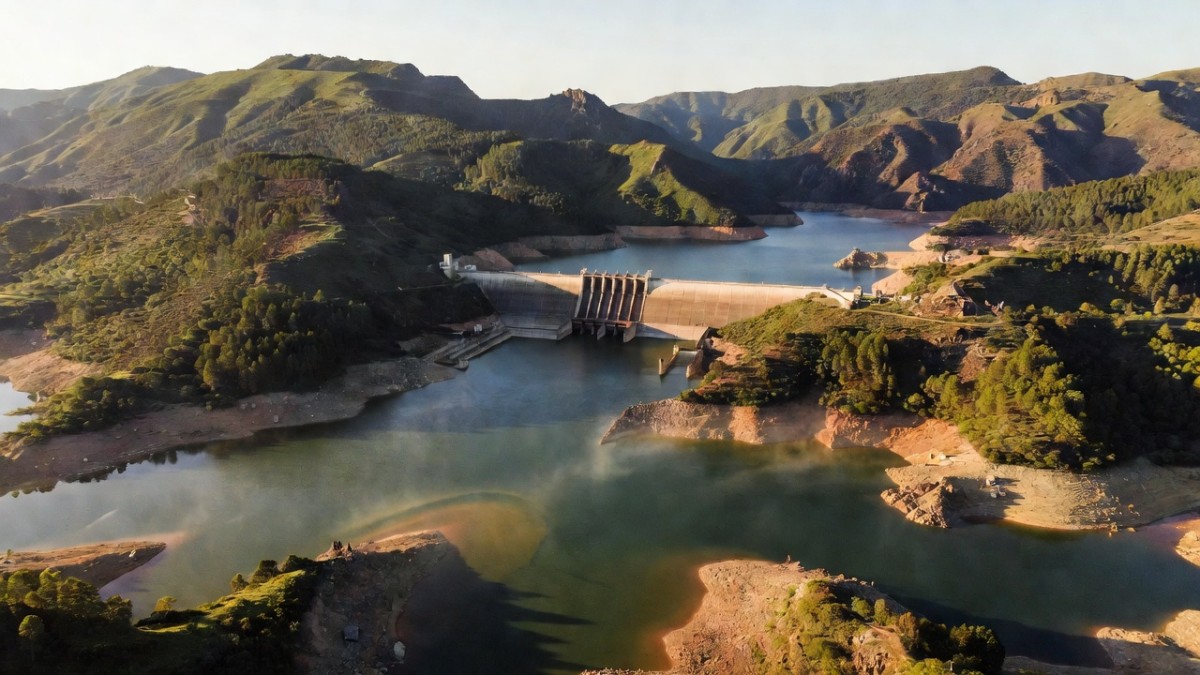
Villa Victoria, located in the Estado de México, reached 78.10 percent, storing 145.065 million cubic meters. El Bosque, in Zitácuaro, Michoacán, recorded 72.98 percent, with 147.714 million cubic meters. The variation between the dams reflects their different microclimates and catchment areas, but the overall trend is uniformly positive. The OCAVM, under the direction of Citlalli Peraza, has been careful to present these figures with both optimism and caution, noting that the system is designed to operate within a range that prioritizes safety.
The year-by-year trajectory, as reported by Mexico City's environment secretariat (Sedema), tells a story of gradual but steady recovery. In 2023, the system stood at a precarious 36.71 percent, a figure that sparked international headlines and domestic alarm. The following year, 2024, saw a modest improvement to 42 percent, still dangerously low. The turning point came with the 2025 rainy season, which pushed levels to 69.79 percent by the end of that year. Now, August 2026's 81.05 percent represents a gain of roughly 7.6 percentage points over the same month in 2025, when the system stood at 73.44 percent.
These numbers are not abstract statistics for the families who lived through the crisis. They represent the difference between bathing children every day versus every other day. They mean the difference between washing clothes at home versus hauling them to a relative's house in a better-served neighborhood. For the women of the city, who disproportionately bear the burden of water management in the household, these percentages translate directly into hours of labor saved and dignity restored.
From Day Zero Fears to a Decade High
It is difficult to overstate the psychological impact of the 2023-2024 drought on the collective consciousness of Mexico City. At its worst point in mid-2024, the combined storage of the Cutzamala system fell to roughly one-quarter to 28 percent of capacity. The phrase "Day Zero" — the hypothetical date when taps would run completely dry — entered the everyday vocabulary of chilangos. International media descended on the capital, publishing stories of a megacity of over 20 million people on the brink of hydrological collapse.
The crisis was compounded by severe heat and drought conditions that persisted through early 2024. The city experienced record temperatures, and the combination of heat and water scarcity pushed the emergency well beyond inconvenience, straining families who had to ration water for drinking, cooking, and bathing. The government of then-President Andrés Manuel López Obrador, and now the administration of President Claudia Sheinbaum, faced intense pressure to address what many called the city's most pressing infrastructure challenge.
The recovery that began in 2025 was initially met with skepticism. When the system reached 96.8 to 97.4 percent in October 2025 — its highest level in seven years at that point — many residents wondered if it was a temporary reprieve or a genuine turning point. The subsequent decline through the 2025-2026 dry season, as the system supplied cities, farms, and industry, was expected. But the 2026 rainy season has proven more generous and more consistent than many forecasters predicted.
For the communities downstream of the dams, the recovery brings a different kind of relief. During the crisis years, there was constant tension between the need to store water for the capital and the imperative to release water to protect downstream communities from flooding. Striking that balance requires ongoing coordination among federal authorities, state governments, and the communities that live beside the reservoirs. The current higher levels, while welcome, require continued vigilance to ensure that the system does not swing from scarcity to excess.
September Rains and the Road to October
As September 2026 unfolds, the Servicio Meteorológico Nacional (SMN) is forecasting strong to very strong rains across much of Mexico, including the catchment zones of the Cutzamala system. This forecast has led Mexican media to project that the system could approach approximately 98 percent of capacity by October 31, when precipitation typically ends in the system's zone. Such a figure would mirror the 97.4 percent peak achieved in October 2025, confirming a pattern of robust recovery.
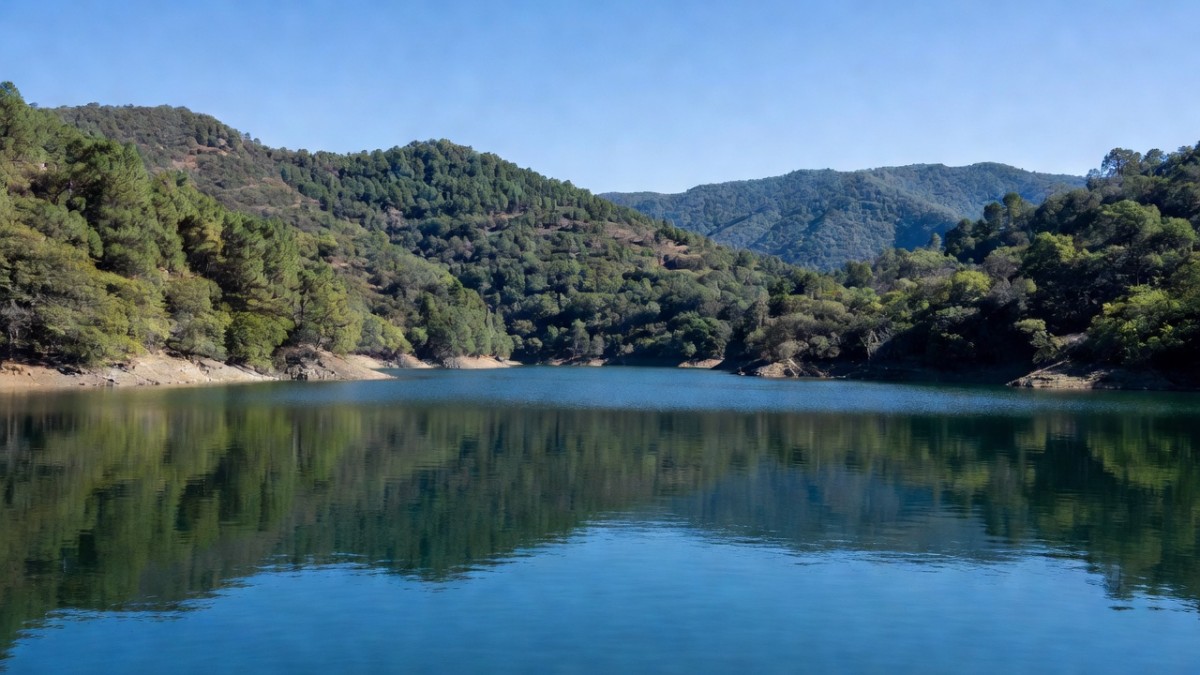
However, authorities have been careful to manage expectations. The dams are deliberately kept from filling to 100 percent of capacity. Water releases are regulated to avoid overflow risks to communities downstream, a lesson learned from past experiences when rapid filling created dangerous conditions. The OCAVM's director general, Citlalli Peraza, has emphasized that the goal is not maximum storage but optimal management that balances supply security with public safety.
The seasonal rhythm of Mexico's water systems is well understood by those who manage them. The rainy season, which typically runs from June through October, is the window during which the dams must capture enough water to sustain the region through the dry months of November through May. The 13 consecutive weeks of recovery since June 4, 2026, suggest that this year's capture has been efficient, but the true test will come in the dry season, when consumption continues unabated while inflows dwindle to near zero.
For residents, the September rains are a familiar companion. The afternoon thunderstorms that roll across the Valley of Mexico, darkening the sky over the volcanoes and sending children running for cover, are now viewed with a different appreciation. Each drop that falls on the mountains of Michoacán and the Estado de México is a contribution to the collective water security of the capital. The lluvias, once merely a seasonal inconvenience, have become a source of hope.
Ongoing Challenges: Leaks, Sinking Ground, and Aging Pipes
Despite the encouraging headlines, officials are quick to caution that even at 81 percent capacity, the picture is not a permanent fix. The region remains below long-term historical averages for this time of year in some measures, and rainfall patterns can shift dramatically from year to year. Climate change introduces an element of unpredictability that makes long-term planning exceptionally difficult. The recovery of the Cutzamala system is a reprieve, not a solution.
The most persistent challenge remains the inefficiency of the distribution network. Mexico City's water utility, the Sistema de Aguas de la Ciudad de México (SACMEX), has long estimated that roughly 40 percent of treated water is lost to leaks in aging pipes before it ever reaches household taps. This means that even when the dams are full, a significant portion of that precious resource is literally disappearing into the ground. The problem is exacerbated by the city's uneven sinking, a geological phenomenon that stresses pipes and causes them to crack and separate.
The issue is not unique to the capital. In the Estado de México, municipalities like Ecatepec have struggled with aging infrastructure and inadequate investment for decades. Recent reporting has highlighted rehabilitation projects for pipelines in these areas, but the scale of the need far exceeds the available resources. Every liter lost to a leak is a liter that must be replaced by drawing down the dams or pumping from overexploited aquifers.
Conservation habits, leak repair, rainwater harvesting, and maintenance of the network remain part of the city's water strategy. The tinaco on the rooftop, that ubiquitous plastic tank that defines the skyline of Mexican neighborhoods, remains an essential component of household water security. Families have learned to monitor their consumption, to fix dripping faucets promptly, and to capture rainwater when possible. These individual actions, multiplied across millions of households, create a meaningful collective impact.
A Community's Resilience and the Road Ahead
The story of the Cutzamala system's recovery is ultimately a story about people. It is about the families in the colonias of Iztapalapa who organized during the worst of the crisis. It is about the women of Ecatepec who managed their households through the daily struggle for water. It is about the engineers at CONAGUA and OCAVM who worked through the night to manage the delicate balance of the dams.
The recovery also speaks to the relationship between the city and its hinterland. The water that fills the Cutzamala dams falls on land that is not part of Mexico City proper. It comes from the forests and mountains of the Estado de México and Michoacán, from communities that have their own water needs and their own claims to this shared resource. The interdependence of the region is a constant reminder that water management cannot be siloed by political boundaries.
Looking ahead, the administration of President Claudia Sheinbaum has signaled that water infrastructure will remain a priority. The lessons of the 2023-2024 crisis have not been forgotten, and there is a recognition that the current recovery, while welcome, must be used as a window to address the systemic issues that made the crisis so severe. Investment in leak detection and repair, expansion of rainwater harvesting programs, and continued public education about conservation are all part of the strategy.
As the 2026 rainy season draws to a close in October, the region will watch the levels of Valle de Bravo, Villa Victoria, and El Bosque with a mixture of hope and vigilance. If the projections hold and the system approaches 98 percent, it will mark two consecutive years of strong recovery. But the people of the Valley of Mexico know better than to take water for granted. The memory of Day Zero fears is still fresh, and the tinacos on their rooftops remain full, a daily insurance policy against an uncertain future.
The water that flows through the Cutzamala system is more than a utility. It is the lifeblood of a megacity, the medium through which daily life is made possible. Its recovery is a collective achievement, a testament to the resilience of a community that refused to accept scarcity as its fate. As the city looks toward the dry season ahead, there is a cautious optimism in the air — a sense that perhaps, this time, the rains have come to stay.
This article was produced with AI-assisted research and editorial support. Sources: Mexico News Daily, La Jornada, adn40, CONAGUA reports.
By Rosa Martinez, Staff Writer
What's Your Reaction?
 Like
0
Like
0
 Dislike
0
Dislike
0
 Love
0
Love
0
 Funny
0
Funny
0
 Wow
0
Wow
0
 Sad
0
Sad
0
 Angry
0
Angry
0

Latin America/Andes Correspondent at Global1.News. Based in Bogota, covering politics, environment, energy, and social movements across the Andean region. Passionate about environmental journalism and communities protecting their land.













Comments (0)