
Cuba's Food Crisis: Ration System Collapses as Hunger Spreads
In Cuba, a six-decade-old promise is quietly running out of food. The island nation that once guaranteed every household a monthly basket of staples through its state ration system is now watching that system collapse under the weight of the United States fuel blockade, a shattered electrical grid, and the worst economic crisis in decades.
In Cuba, a six-decade-old promise is quietly running out of food. The island nation that once guaranteed every household a monthly basket of staples through its state ration system is now watching that system collapse under the weight of the United States fuel blockade, a shattered electrical grid, and the worst economic crisis in decades. With nearly every Cuban family feeling the squeeze, the question is no longer what the ration book can provide, but whether there will be anything left to buy at all.
Cuba's Food Crisis: Ration System Collapses as Hunger Spreads
Havana, Cuba – August 30, 2026 — Cuba imports up to 80 percent of its food, the average monthly salary stands between $12 and $16, and a tray of 30 eggs costs $6. Al Jazeera’s Dalya Al Masri reported from Havana in May as the state ration system that has fed the island since 1962 began to buckle — and three months later, with the national grid collapsing in a fourth summer blackout, the crisis has only deepened. Here is the state of hunger in Cuba.

A Nation Running on Grams — Cuba's Ration System Under Siege
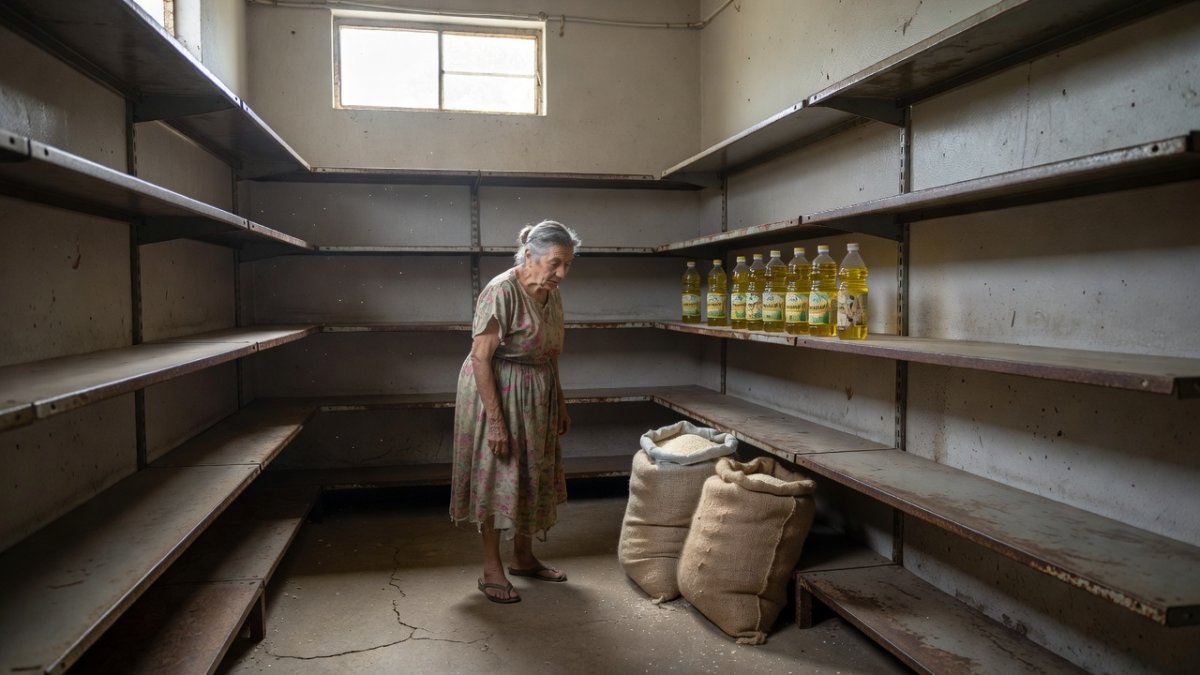
In Havana, survival is measured in grams. The daily ration—a small allocation of rice, beans, and perhaps a few eggs—is all that remains of a six-decade-old social contract that once guaranteed every Cuban a basic basket of food. The libreta, the state-issued ration booklet established in 1962 under Fidel Castro, was designed to ensure that no citizen went hungry, subsidizing essentials from milk to meat. Today, that system is under severe strain, and for millions of Cubans, the promise of a guaranteed meal has become a distant memory.
Walking through the crumbling streets of Centro Habana, the evidence of this collapse is visceral. Bodegas, the neighborhood grocery stores that distribute rationed goods, stand with empty shelves. The lines that once formed early in the morning now stretch for hours, only to end in disappointment. One resident, a woman in her sixties who has lived through the Special Period of the 1990s, told Al Jazeera's Dalya Al Masri: "All products are scarce. From toiletries to food, everything is scarce here." Her words echo a sentiment that has become universal across the island.
The psychological toll is equally devastating. Another Havana resident described the shift in daily life with heartbreaking clarity: "In my house we used to have breakfast, lunch and dinner and sometimes there were snacks between meals. But now we can only have one meal a day." This is not a story of occasional hardship; it is a structural transformation of daily existence. The ration book, once a symbol of revolutionary equality, now distributes only a fraction of what a family needs to survive. As Al Masri reported, "No Cuban can live on the subsidized products from the ration books anymore." The system that held the nation together for generations is now a symbol of its fragility.
The Numbers Behind the Hunger
The statistics paint a stark picture of a nation in nutritional freefall. Cuba imports up to 80% of its food, a dependency that has become a critical vulnerability as the government struggles to sustain the cost of feeding its population. The average monthly salary in Cuba is between $12 and $16—a figure that becomes almost absurd when compared to the price of a tray of 30 eggs, which costs $6. A family would need to spend nearly half of a month's salary on a single tray of eggs, leaving little for rice, beans, or any other staple.
The consequences of this economic mismatch are measurable and severe. The Food Monitor Program's 2026 assessment found that a staggering 96.91% of Cuba's population lacks adequate food access. This is not a marginal issue affecting a small segment of society; it is a near-universal crisis. A 2025 survey found that one in four Cubans goes to bed without dinner, a statistic that speaks to the daily reality of millions of households. The situation is so dire that Cuban officials admitted in June 2026 to a collapse in the supply of basic food items, a rare acknowledgment from a government that has historically been reluctant to publicize internal failures.
These numbers represent more than just data points; they represent the erosion of human dignity and the physical toll of chronic hunger. When a family must choose between buying a tray of eggs or paying for electricity, the calculus of survival becomes brutally simple. The ration system, which was once a safety net, now provides only a fraction of the calories needed for a healthy life. For the average Cuban worker earning $12 to $16 a month, the market economy is out of reach, and the state system is failing. The result is a population that is increasingly malnourished, exhausted, and desperate for solutions.
Blackouts and Broken Supply Chains
The food crisis cannot be separated from the energy crisis that has gripped Cuba since the beginning of 2026. The US fuel blockade, which began in January 2026, was preceded by a dramatic escalation in December 2025 when US authorities seized tankers carrying Venezuelan oil bound for Cuba and declared a formal blockade. This was followed by a geopolitical earthquake: the capture of Venezuela's President Nicolás Maduro on January 3, 2026, which led to the immediate halt of subsidized crude shipments of about 26,000 barrels per day to Cuba. Mexico, under US pressure, ceased its deliveries approximately nine days later.
The loss of these oil supplies has had a catastrophic effect on Cuba's electrical grid. Power cuts across the island have lasted up to 20-22 hours a day in some areas, with the electricity generation deficit exceeding 2,400 MW in August 2026. The situation reached a breaking point on August 3, 2026, when Cuba's national grid collapsed completely—the fourth nationwide blackout of the summer, following three in July. The entire island lost power, a scenario that Reuters reported as unprecedented in its severity. Just a day earlier, on August 2, simultaneous outages on the Matanzas-Cienfuegos and Matanzas-Santa Clara high-voltage lines had split the National Electric System, leaving five western provinces without power for nearly seven hours.
These blackouts are not merely an inconvenience; they are a direct assault on the food supply chain. Refrigerators cannot keep food cold, so perishables spoil within hours. Bakeries cannot operate their ovens. Water pumps fail, cutting off access to clean drinking water. The cold chain for imported food and medicine is broken, meaning that even when supplies do arrive, they often cannot be stored properly. The National Electric System, once a point of pride for the revolution, has become a source of daily suffering. For millions of Cubans, the question is no longer what they can buy, but whether there will be anything left to buy—and whether they will have the electricity to cook it.
The Fuel Blockade's Human Toll
The human cost of the fuel blockade extends far beyond the inconvenience of darkened streets. UN independent human rights experts have condemned the measures, describing the situation as a "full blown crisis." On July 23, 2026, the US imposed new sanctions targeting energy companies, further choking fuel imports even for humanitarian purposes. This is not just an economic policy; it is a public health emergency. Hospitals, already struggling with shortages of medicine and equipment, now face the additional challenge of operating without reliable power. Surgical procedures are postponed, vaccines cannot be kept at the required temperatures, and patients on life-support systems are at constant risk.
The health implications of the blackouts are profound. In a tropical climate where temperatures regularly exceed 30 degrees Celsius, the absence of electricity means no fans, no air conditioning, and no relief from the heat. For the elderly, infants, and those with chronic conditions, this heat is not just uncomfortable—it is life-threatening. The lack of refrigeration has led to a spike in foodborne illnesses, as families are forced to consume spoiled food or go without. The cold chain for insulin, a critical medication for Cuba's diabetic population, is frequently broken, leading to dangerous fluctuations in blood sugar levels for those who depend on it.
The blockade has also disrupted the supply of medicines themselves. Many pharmaceuticals require temperature-controlled transport, which is impossible when fuel is scarce and electricity is unreliable. Chronic disease care, including treatment for hypertension, asthma, and renal failure, has been severely compromised. The UN experts' characterization of a "full blown crisis" is not hyperbole; it is an accurate description of a healthcare system under siege. The fuel blockade is not a surgical instrument aimed at the government; it is a blunt weapon that devastates the most vulnerable members of society, turning treatable conditions into fatal ones and turning a food crisis into a humanitarian catastrophe.
Children Pay the Highest Price
In any food crisis, children are the first to suffer and the last to recover. The data from Cuba is alarming. UNICEF reports that one in ten Cuban children suffers from severe food poverty, defined as consuming only two of the eight essential food groups a day. This is not a matter of picky eating; it is a matter of survival. These children are missing out on the proteins, vitamins, and minerals necessary for physical and cognitive development. The long-term consequences of this malnutrition are devastating: stunted growth, weakened immune systems, and impaired brain development that will affect these children for the rest of their lives.
The World Food Programme (WFP) has been operating in Cuba, but its resources are stretched thin. The WFP's 2026-2030 country strategic plan focuses on food system resilience, local agricultural value chains, linking producers to social protection, and malnutrition prevention. However, these long-term goals are difficult to achieve when the immediate crisis is so acute. Health workers in Havana and other cities describe the heartbreaking task of trying to feed babies when formula is unavailable and mothers are too malnourished to breastfeed adequately. The ration system, which was supposed to prioritize children and pregnant women, is no longer able to fulfill this basic function.
The psychological impact on children is also profound. Hunger affects concentration, mood, and behavior. Schools, which once provided a guaranteed meal for many children, are struggling to maintain their feeding programs due to food shortages. The WFP's efforts to link local producers to social protection programs are a step in the right direction, but they cannot replace the immediate need for calories. The one-in-ten statistic from UNICEF is not just a number; it represents a generation of Cuban children who are growing up hungry, and whose futures are being compromised by a crisis they did not create. The international community must recognize that this is not just a political issue; it is a child rights emergency.
Remittances, Inequality and the New Dividing Line
In the absence of a functioning state system, remittances from relatives abroad have become a critical lifeline for many Cuban families. The resident who told Al Jazeera, "Thanks to my wife's situation, we can eat every day because she has the possibility of receiving money from abroad. If not, we would have hanged ourselves," speaks to a grim reality. This dependence on foreign currency has created a new dividing line in Cuban society—a chasm between those who have access to dollars or euros and those who do not. El País has reported on this deepening inequality, noting that residents in some areas go full 24 hours without electricity in August 2026, while those with resources can afford generators, solar panels, and imported food.
This inequality is not just economic; it is a source of social tension and resentment. The protests that have erupted in cities including Santiago de Cuba in March 2026 and Cienfuegos in August 2026 are fueled not only by hunger and blackouts but also by a sense of injustice. The private sector, which has grown in recent years, is now being described as the "year of resistance," as small business owners struggle to survive without reliable electricity or supplies. The state's inability to provide basic services has eroded its legitimacy, and the gap between the haves and have-nots is becoming a political fault line.
The remittance economy, while a lifeline, is also a source of distortion. It drives up prices in local markets, making food even more unaffordable for those without foreign currency. It creates a two-tiered society where access to basic necessities is determined not by need but by family connections abroad. The Cuban government, which has historically prided itself on equality, is now presiding over a society where inequality is stark and growing. The protests in Santiago and Cienfuegos are a warning sign that this situation is unsustainable. The social fabric that held Cuba together for decades is fraying, and the new dividing line is not political ideology but the simple, brutal question of whether you have a relative in Miami who can send you money.
The Bottom Line — What Comes Next
The future of Cuba's food security looks bleak without significant intervention. Agricultural production is at record lows due to shortages of fertilizer, fuel, machinery parts, and transport. Domestic food output has fallen, deepening the island's dependence on imports that it can no longer afford. US agricultural exports to Cuba plunged more than 20% in 2026, cutting off another potential source of supply. The US-Venezuela oil deal announced on August 29-30, 2026, described as the "biggest oil deal in world history," shifts Venezuelan oil toward the United States, ensuring that Cuba's access to subsidized oil remains cut off. The geopolitical winds are blowing against Cuba, and the Cuban people are bearing the cost.
The WFP's resilience programs offer a glimmer of hope. By focusing on local agricultural value chains and linking producers to social protection, there is potential to rebuild some degree of food sovereignty. However, these programs require fuel, fertilizer, and a stable energy grid to succeed—all of which are currently unavailable. Solidarity networks within Cuba and from abroad are also emerging, with community kitchens and mutual aid groups trying to fill the gaps left by the state. But these efforts, while noble, are insufficient to feed a nation of 11 million people.
The regional stakes are high. Guatemala's announcement that it would phase out its Cuban medical cooperation program involving 333 Cuban doctors under US pressure is a blow to Cuba's medical diplomacy and a sign of the broader regional pressure. For the Caribbean and Latin America, Cuba's crisis is a warning. The blockade, the fuel shortages, and the resulting hunger are not isolated events; they are the product of a geopolitical struggle that has profound humanitarian consequences. As Al Masri closed her report, "For millions of Cubans, the question is no longer what they can buy, but whether there will be anything left to buy." The answer to that question will determine not only the future of Cuba but also the stability of the entire region.
By Elena Vasquez, Staff Writer
This article was produced with AI-assisted research and editorial support. Reporting is based on sources cited in the article.
What's Your Reaction?
 Like
0
Like
0
 Dislike
0
Dislike
0
 Love
0
Love
0
 Funny
0
Funny
0
 Wow
0
Wow
0
 Sad
0
Sad
0
 Angry
0
Angry
0

Latin America Correspondent at Global1.News. Based in Mexico City, covering politics, economics, energy, and culture across the region. Brings an on-the-ground perspective to stories spanning from the Rio Grande to Patagonia.















Comments (0)