
Court Halts Trump's $400m Ballroom: A Landmark Check on Presidential Power
A US federal appeals court ordered the Trump administration to halt construction of the $400m White House ballroom, ruling 2-1 that Congress must authorize the project. The decision upholds a National Trust injunction and sets up a Supreme Court showdown over presidential power.
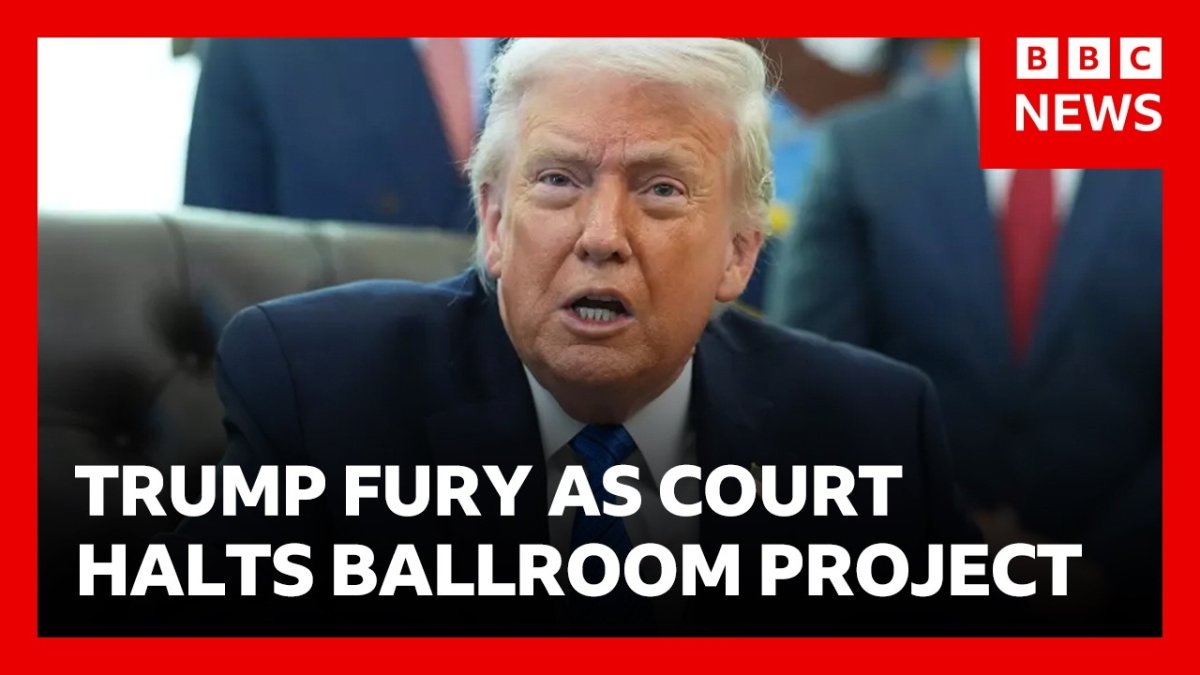
In a recent BBC News report, the scale of the legal confrontation between President Donald Trump and the federal judiciary over his $400m White House ballroom project came into sharp focus — a clash that has quickly become a defining test of presidential power in Washington.
Court Halts Trump's $400m Ballroom: A Landmark Check on Presidential Power
Washington DC – 9 August 2026 — A federal appeals court has ordered the Trump administration to stop construction on the $400m ballroom at the White House, ruling in a 2-1 decision that the project cannot proceed without congressional authorization. The ruling, handed down on Friday, upholds a preliminary injunction won by the National Trust for Historic Preservation and sets the stage for a Supreme Court showdown over the limits of executive authority.
The Ruling: Congress, Not the President, Owns the People's House
The three-judge panel of the US Court of Appeals for the DC Circuit was unambiguous. "Whether or not a massive ballroom should be constructed is for Congress to decide and is not a matter for Executive self-help," the majority wrote, in language that reached far beyond the construction site itself. The court emphasized that Congress has not ceded unfettered authority to the Executive Branch to dramatically redesign, reshape, and reconstruct the White House — the People's House — to fit a particular President's desires. Each President is a temporary tenant, not the owner, of the White House and its Executive Residence, the panel stated. The President has no — and claims no — constitutionally assigned authority over that property.
This framing placed the dispute squarely within the Appropriations Clause and the separation of powers. The panel made clear that the ruling has nothing at all to do with whether the proposed ballroom is desirable. Its focus remained on process and constitutional authority alone. The decision upheld the preliminary injunction obtained by the National Trust for Historic Preservation after the administration demolished the East Wing without congressional approval. By halting work, the court reinforced that major alterations to federal property require legislative consent during active litigation. The 2-1 majority rejected arguments that executive discretion could override these limits, underscoring that self-help by the administration was impermissible.
The opinion drew a sharp line between policy preferences and legal authority. Even if the ballroom offered practical benefits for state events, the judges held that such judgments belong to Congress. This approach avoided any aesthetic evaluation and concentrated instead on the structural boundaries of executive action. The ruling therefore stands as a direct assertion that the White House remains subject to congressional oversight rather than unilateral presidential redesign.
A Two-Decade Ambition and a Tear-Down
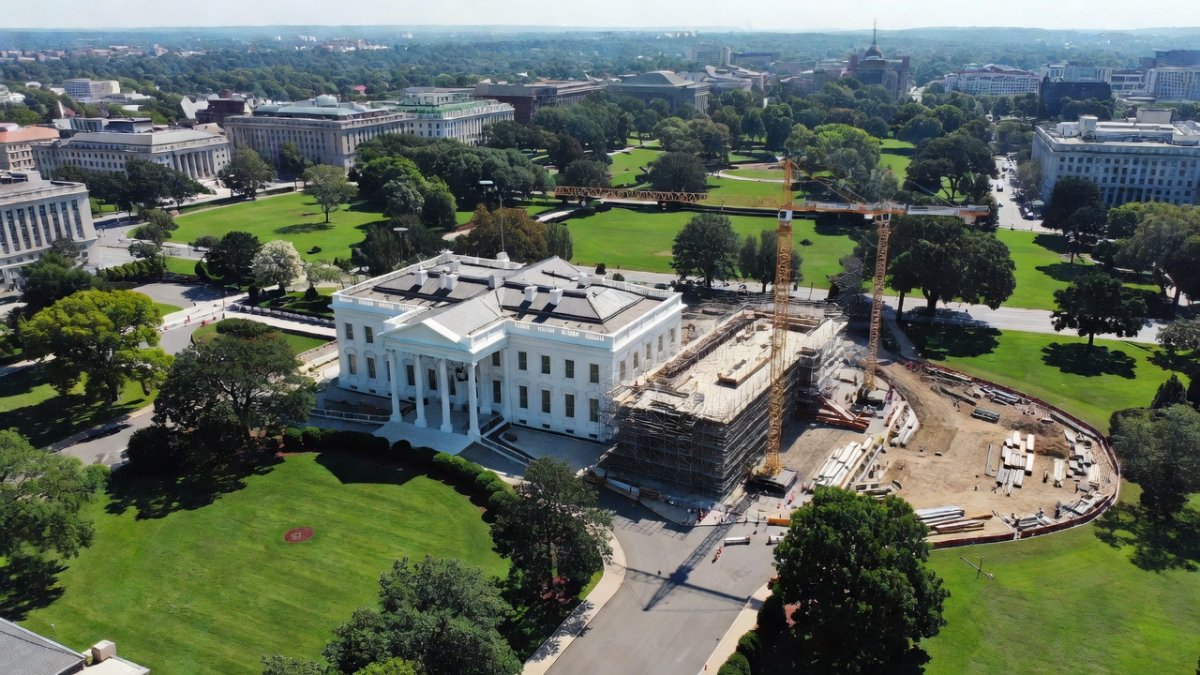
President Donald Trump first offered $100m for a White House ballroom in 2016 during the Obama administration. Then-Press Secretary Josh Earnest stated at the time that the proposal was not something that was at all seriously considered. The idea resurfaced in July 2025 when the administration unveiled plans for a roughly 90,000 square foot structure with seating capacity of about 650. The existing East Room accommodates roughly 200 people, which had previously required large tents for major state dinners. The project represented the most substantial structural change to the presidential residence in more than 70 years.
In October 2025 the administration demolished the East Wing, built in 1902. President Trump had initially described the ballroom as being constructed near the East Wing rather than requiring its removal. The cost reached $400m, funded entirely by private donors and presented as a gift to the American people. The administration maintained that the work proceeded ahead of schedule and under budget. These developments occurred without prior congressional authorization, prompting the National Trust for Historic Preservation to file suit and secure the preliminary injunction now upheld by the appeals court.
The sequence illustrates a long-standing personal priority for President Trump that evolved from an informal offer into active demolition and construction. The shift from proximity to full demolition of the historic wing marked a significant escalation. Throughout, the administration framed the effort as a private initiative that would enhance the White House's capacity for official functions without taxpayer expense.
The National Security Argument
Government lawyers argued that the project incorporates a below-ground security complex needed to protect against drones, ballistic missiles, and biohazards. President Trump stated that the facilities would include bomb shelters, hospital and medical capabilities, and top-secret military installations. The administration doubled down on the project following an assassination attempt at the White House Correspondents' Association dinner in April. President Trump asserted that the military and Secret Service viewed the appeals court ruling as a national security threat and called for the Supreme Court to overturn the decision in its entirety.
The National Trust countered that no demonstrated emergency justified disturbing the White House structure and that a ballroom itself does not constitute a national security imperative. Republicans had separately sought to allocate a portion of $1bn in taxpayer funds for Secret Service security upgrades, a plan set aside by a budget watchdog in May. The administration maintained that the integrated security elements within the ballroom project addressed vulnerabilities more effectively than standalone measures.
These arguments positioned the dispute as one involving both historic preservation and operational security needs. The court, however, confined its analysis to the requirement of congressional authorization rather than evaluating the merits of the security claims during the litigation phase.
The Battle for a Global Landmark
The National Trust for Historic Preservation, led by President and CEO Brent Leggs, framed the White House as a global landmark that symbolizes American identity and the ideals of democracy and belongs to the American people. The organization celebrated the appeals court ruling, noting that no above-ground construction can proceed unless and until Congress acts. The panel's decision halted work on the most substantial structural change to the presidential residence in more than 70 years.
The demolition of the 1902 East Wing carried particular symbolic weight. Earlier warnings from Leslie Greene Bowman of the Committee for the Preservation of the White House had highlighted the need to protect walls that have witnessed so much history. The National Trust's successful litigation underscored that alterations of this scale require legislative approval rather than executive initiative alone.
Brent Leggs emphasized that the White House remains public property whose stewardship extends beyond any single administration. The ruling affirmed this view by requiring congressional involvement before further work can resume. Preservation advocates argued that the project's scope demanded broader democratic consent rather than private funding and unilateral action.
The Supreme Court Showdown Ahead
The US Court of Appeals for the DC Circuit delayed implementation of its ruling for 14 days to permit the administration to seek review by the Supreme Court. President Trump described the decision on social media as horrendous and politically motivated, citing the dissenting judge's characterization of it as a blatant abuse of discretion. He stated that this unjust decision must be overturned by the Supreme Court in its entirety.
A Supreme Court appeal would place the high court in the position of final arbiter over executive authority regarding federal property. The case joins a broader pattern of Trump administration legal disputes reaching the justices. The 14-day window provides limited time for the administration to prepare its petition while construction remains paused.
Observers note that the Supreme Court's eventual ruling could clarify the boundaries of presidential power over historic federal buildings. The appeals court decision has already established that Congress retains primary authority during ongoing litigation, setting the terms for any further review.
Global Implications: Executive Power Under Scrutiny
The clash is being watched closely in Moscow, Beijing, and other capitals where the limits of executive power remain a live question. The ruling signals that American courts can constrain presidential initiatives even on projects framed as national security enhancements. Analysts suggest this case has become a proxy for broader debates about presidential authority, the power of the purse, and whether courts can constrain a president determined to act unilaterally.
In Russia and similar systems, the outcome offers a concrete example of institutional checks operating against executive self-help. The decision reinforces that the White House, as federal property, is not subject to redesign by temporary occupants without legislative consent. This message resonates in democracies monitoring how a superpower disciplines its own executive branch through judicial processes.
The international dimension highlights the durability of separation-of-powers principles. Foreign governments observe whether the appeals court ruling will hold or whether the Supreme Court will expand executive latitude. The case therefore carries implications beyond domestic construction, illustrating how American institutions address unilateral action on symbolic national assets.
Analysis — What Comes Next
Construction now stands halted, leaving workers idle while the project's future depends on either congressional authorization or a favorable Supreme Court ruling. Even some Republicans have expressed unease about unilateral spending and the demolition of a historic landmark without legislative input. This could indicate a judiciary increasingly willing to police the boundaries of executive action on federal property.
Analysts suggest the outcome will shape how future presidents approach major changes to national symbols and federal assets. The decision lands at a moment when the balance of American power is itself on trial. Resolution of the ballroom dispute will be felt far beyond the White House gates, influencing both domestic governance norms and international perceptions of institutional strength. The appeals court has already affirmed that Congress holds the decisive role in authorizing such projects, a principle that will guide subsequent legal and political developments.
By Irina Volkov, Staff Writer
This article was produced with AI-assisted research and editorial support. Reporting is based on sources cited in the article.
What's Your Reaction?
 Like
0
Like
0
 Dislike
0
Dislike
0
 Love
0
Love
0
 Funny
0
Funny
0
 Wow
0
Wow
0
 Sad
0
Sad
0
 Angry
0
Angry
0

Russia/Eastern Europe Correspondent at Global1.News. Covering Russian politics, energy, security, and the shifting dynamics of the post-Soviet space. Provides clear-eyed analysis on one of the world's most opaque regions.














Comments (0)