
Gaza's Rooftop Beekeepers Nurture Hope Amid War's Destruction
The survival of Gaza's beekeeping sector offers a narrow window into the territory's post-conflict trajectory, where small-scale agricultural revival intersects with the US-led Board of Peace's 15-point roadmap announced July 30-31, 2026, and the ongoing fragility of the October 2025 ceasefire.
The survival of Gaza's beekeeping sector offers a narrow window into the territory's post-conflict trajectory, where small-scale agricultural revival intersects with the US-led Board of Peace's 15-point roadmap announced July 30-31, 2026, and the ongoing fragility of the October 2025 ceasefire. As Ibrahim al-Dabba relocates hives to rooftops in Tel al-Hawa, the story underscores how import controls and land access restrictions continue to shape economic prospects even as Hamas accepts the disarmament plan in principle and Israel maintains control over more than 60 percent of the strip.
Gaza's Rooftop Beekeepers Nurture Hope Amid War's Destruction
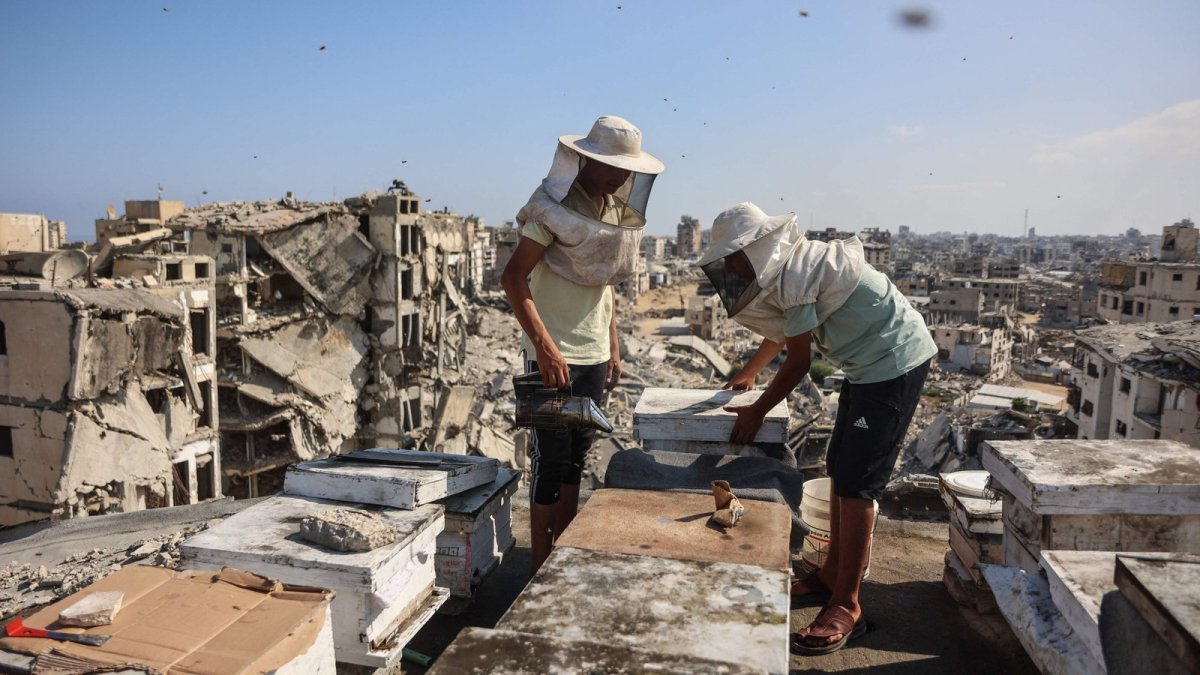
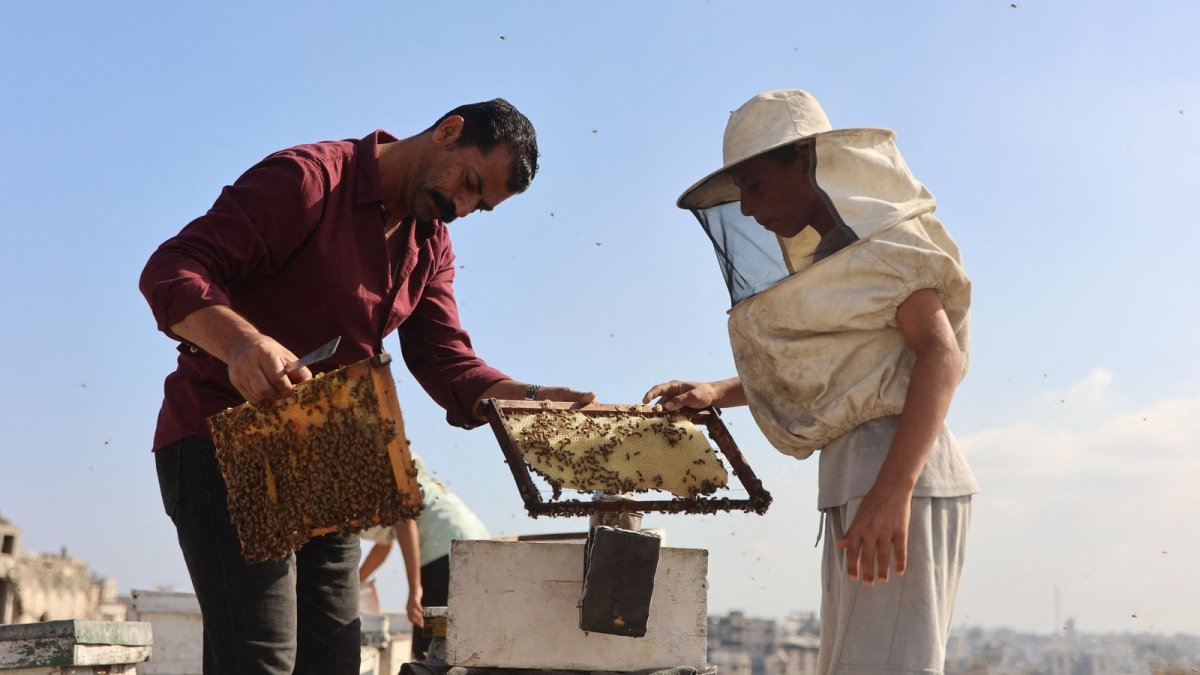
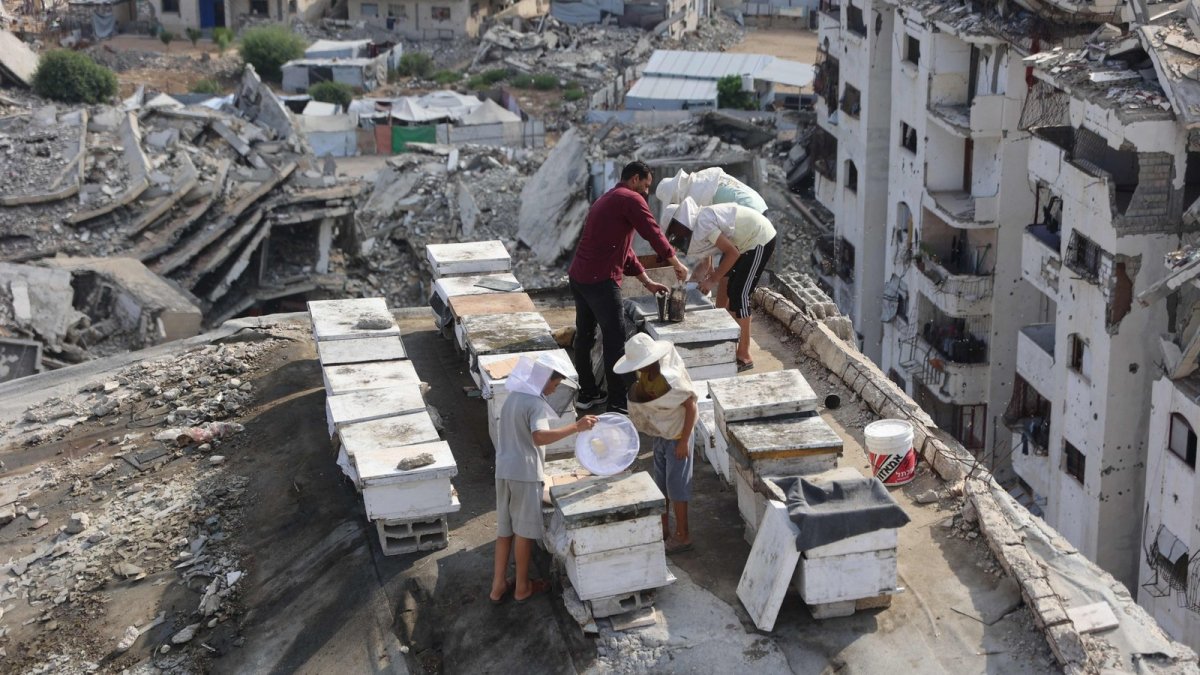
Gaza City, Gaza – August 9, 2026 — High above the shattered streets of Tel al-Hawa, Ibrahim al-Dabba, head of the Beekeepers Cooperative in the Gaza Strip, inspects frames of honeycomb with his sons. Their protective nets and metal smokers stand out against the backdrop of destroyed buildings, where the family has taken refuge after losing agricultural land east of the city. This rooftop apiary now sustains more than 35 hives, a fraction of the 400 al-Dabba once maintained before the war that began in October 2023.
The Pre-War Foundation of Gaza Beekeeping
Before October 2023, Gaza's beekeeping industry supported roughly 10,000 livelihoods through the work of about 1,000 beekeepers, half operating at large scale and half at small scale. The sector drew on Gaza's longstanding agricultural tradition, producing significant quantities of honey that contributed to local food security and modest export potential. Al-Dabba's cooperative coordinated efforts across more than 40,000 hives tended by over 450 beekeepers, creating stable income in a territory already constrained by the post-2007 blockade.
Gaza's beekeeping tradition formed part of a broader agricultural heritage that emphasized self-reliance in a densely populated coastal enclave. Families maintained hives alongside citrus groves and olive orchards, producing honey that supplemented diets and served medicinal purposes in local communities long before modern commercial operations emerged.
After the 2007 blockade tightened following Hamas's takeover, restrictions on imported agricultural inputs forced many producers to adapt with limited equipment and local materials. This environment elevated beekeeping as a low-input activity that sustained household incomes when larger export sectors contracted under movement controls.
The cooperative model helped distribute knowledge and modest surpluses, reinforcing food security in a territory where land and water constraints already limited conventional farming. Such networks later proved critical for coordinating recovery amid ongoing dual-use barriers.
Devastation from the 2023-2025 Conflict
The war triggered by Hamas's October 7, 2023 incursion, which killed 1,221 people in Israel, led to an Israeli campaign that killed more than 73,300 people in Gaza according to the territory's Health Ministry, whose figures the United Nations considers reliable. Beekeeping suffered losses exceeding 95 percent because most operations sat near border areas now under Israeli military control. Al-Dabba personally lost nearly all his hives when his eastern agricultural land became inaccessible, forcing a shift to urban rooftops that offer neither optimal forage nor security from theft.
The war's focus on border zones eliminated not only hives but also irrigation systems, greenhouses, and access roads essential to Gaza's wider farming base. This pattern of destruction extended beyond beekeeping to undermine vegetable production and livestock operations that had previously supported local markets.
With Israeli forces retaining control over vast tracts of the territory, displaced farmers like those in Tel al-Hawa lost seasonal planting cycles and grazing areas, amplifying dependence on external aid. The scale of civilian losses further eroded the labor pool needed for any agricultural rebound.
These geographic and human costs illustrate how conflict-induced isolation compounds reconstruction challenges, particularly when farmland remains inaccessible and basic mobility stays curtailed even after the ceasefire took hold.
Relocation Challenges on Urban Rooftops
Al-Dabba restarted with just three hives after the ceasefire took hold in October 2025 and has since expanded to more than 35 through cooperative recovery efforts. The number of active hives across Gaza has risen from below 500 to around 3,000, with more than 100 beekeepers returning to production. Yet wooden hives placed in open areas remain vulnerable, and wood itself has grown scarce due to fuel and construction material restrictions. "Just as we are displaced in the streets, the bees are also displaced on the rooftops," al-Dabba told AFP.
Import Restrictions Blocking Essential Supplies
Israel's tight control over goods entering Gaza prevents the import of critical beekeeping equipment, including frames, wax foundation sheets, medicines, treatment supplies, and wooden hives. Al-Dabba has sought assistance from organizations and ministries in Gaza and the occupied West Bank, but supplies remain critically short. These dual-use restrictions, long applied to agricultural inputs, now directly limit the sector's ability to scale recovery even ten months into the ceasefire.
Dual-use classifications have long treated beekeeping essentials such as wax foundations and veterinary treatments as potential security risks, mirroring controls applied to cement, steel, and fuel across Gaza's economy. This approach creates persistent bottlenecks that prevent scaling even small recovery initiatives ten months into the truce.
Similar restrictions in construction and energy sectors have repeatedly delayed rebuilding, suggesting that eased access would require coordinated verification mechanisms under the Board of Peace framework. Without such adjustments, agricultural inputs remain subject to the same scrutiny that has historically slowed broader stabilization efforts.
Egypt and Qatar's mediation role could prove pivotal in negotiating predictable import corridors, linking equipment flows to verifiable disarmament milestones and thereby reducing the risk of renewed economic friction.
Signs of Adaptation and Limited Recovery
Despite the constraints, al-Dabba reports that the bees have adapted to their new urban environment, providing a measure of psychological resilience. The cooperative's recovery plan has enabled modest hive increases, and the sight of active colonies has reinforced community determination. "When we saw the bees clinging to life here, it gave us hope too," he told Anadolu. This adaptation occurs against the backdrop of hundreds of thousands of Gazans still living in tents.
Strategic Implications for the Board of Peace Roadmap
The US-led Board of Peace roadmap, mediated by Egypt and Qatar, envisions Hamas disarmament, transfer of administration to the National Committee for the Administration of Gaza, and phased Israeli withdrawal. Netanyahu has stated Israel never agreed to the plan and will not withdraw until full disarmament occurs. Beekeeping recovery illustrates the economic stakes of these negotiations: without eased import rules and secure land access, agricultural sectors cannot contribute meaningfully to reconstruction funding debates among Gulf states or broader Palestinian economic linkages with the West Bank.
Egypt and Qatar's involvement in the July 2026 roadmap underscores their interest in preventing spillover instability, yet Gulf funding debates hinge on credible steps toward NCAG administration and phased withdrawals. Beekeeping's slow revival signals to donors whether import easing can accompany disarmament without compromising security.
Netanyahu's insistence on full disarmament before any pullback creates a sequencing dilemma that directly affects agricultural viability. Gulf states weighing reconstruction pledges will likely condition support on measurable progress in land access and dual-use approvals, testing the roadmap's implementation credibility.
Successful small-scale adaptations in sectors like beekeeping could bolster regional stability arguments by demonstrating that economic linkages with the West Bank remain feasible once administration transfers occur, though persistent strikes against Hamas figures continue to complicate donor confidence.
Prospects for Sustained Economic Revival
The rooftop hives signal both resilience and the limits of Gaza's current trajectory. While the ceasefire has held for roughly ten months, continued Israeli strikes against individuals identified as Hamas members and Israeli control of over 60 percent of the territory constrain movement and investment. Full revival of the beekeeping sector, and by extension wider agriculture, hinges on concrete steps toward the roadmap's implementation, including predictable access to dual-use goods and restoration of border-zone lands. Without these, the hope al-Dabba draws from his bees remains fragile and localized rather than a foundation for territory-wide economic stabilization.
By Malik Hassan, Staff Writer
This article was produced with AI-assisted research and editorial support. Sources: AFP, Anadolu, Middle East Monitor, TRT World.
What's Your Reaction?
 Like
0
Like
0
 Dislike
0
Dislike
0
 Love
0
Love
0
 Funny
0
Funny
0
 Wow
0
Wow
0
 Sad
0
Sad
0
 Angry
0
Angry
0

Middle East Correspondent at Global1.News. Based in Beirut, covering politics, conflict, energy, and society across the Middle East. Brings context and depth to a region often reduced to headlines.














Comments (0)