
Colombia Bans FGM in Landmark Latin America First
Colombia has taken a decisive step against a hidden form of violence that has long affected girls in its Indigenous communities. Last week the country's Congress passed legislation making female genital mutilation illegal, marking the first such national ban anywhere in Latin America.
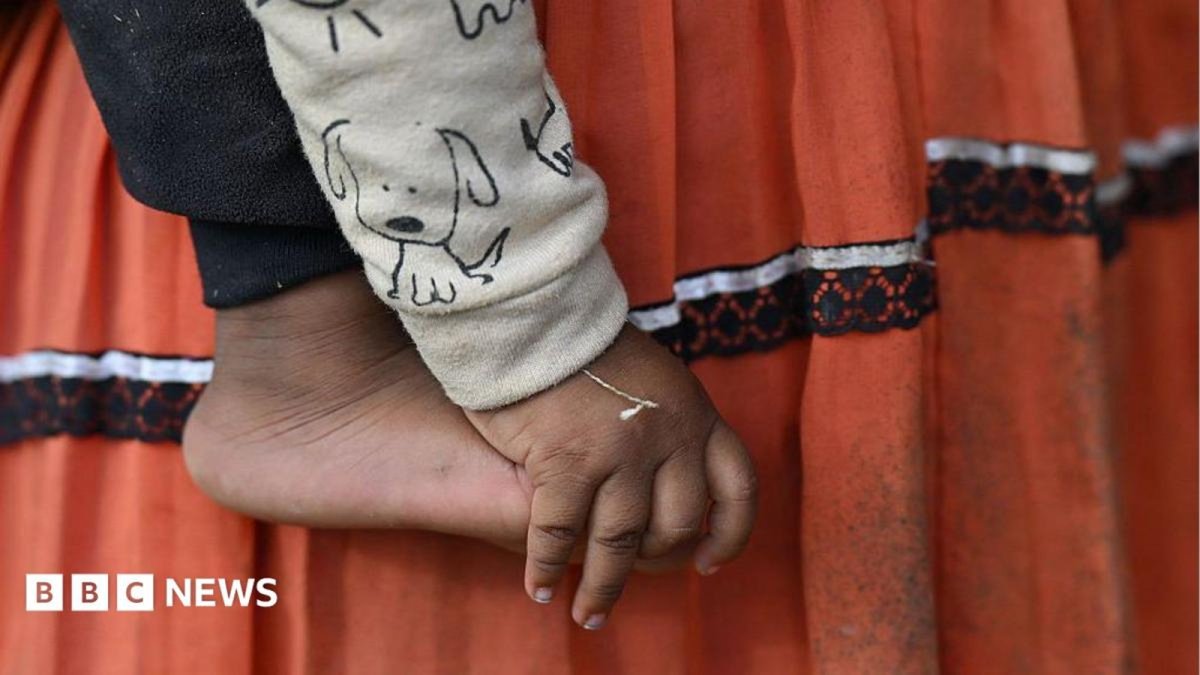
Colombia has taken a decisive step against a hidden form of violence that has long affected girls in its Indigenous communities. Last week the country's Congress passed legislation making female genital mutilation illegal, marking the first such national ban anywhere in Latin America. Activists who spent years pushing for the measure say the unanimous vote represents both a legal victory and an opening to confront practices that have caused deaths and lifelong harm. The law arrives amid ongoing struggles over Indigenous rights and access to health care for women in rural regions.
Colombia Bans FGM in Landmark Latin America First
Bogota, Colombia - Lawmakers approved the prohibition without dissent, ending a practice documented mainly among members of the Emberá Indigenous people. Between 2020 and June 2026, Colombian authorities recorded 240 cases, nearly all involving girls younger than six. The World Health Organization estimates more than 230 million girls and women worldwide have undergone the procedure, most in African countries, yet the Colombian cases show the harm reaches Latin America as well. Supporters now want the statute turned into funded programs that reach remote Emberá settlements in Risaralda, Chocó and Valle del Cauca departments.
Legislative Breakthrough After Years of Advocacy
Juliana Domico, legal representative of the National Confederation of the Peoples of the Great Emberá Nation, helped steer the bill through Congress. She stressed that the measure must become public policy backed by concrete resources rather than remain a paper declaration. The Great Emberá Nation counts roughly 300,000 members across Colombia, with additional populations in Ecuador and Panama. Domico rejected any defense of the cutting as tradition, stating that genuine culture includes clothing, crafts, dances and language, not actions that kill.
Activists note the unanimous passage reflects growing recognition that gender-based violence crosses ethnic lines. The law sets Colombia apart from other Latin American nations where similar practices have received less official attention. Implementation will require coordination between the national government and Indigenous authorities who govern local affairs.
The unanimous congressional approval signals a rare moment of cross-party consensus in Colombia that could pressure neighboring states to examine similar hidden practices. Because the Emberá population spans Ecuador and Panama, the statute creates a precedent for regional coordination on cross-border Indigenous health standards rather than isolated national responses. Lawmakers' willingness to follow Indigenous leaders' guidance during drafting shows how advocacy networks translated community testimony into legislative language without diluting the prohibition.
Juliana Domico's insistence that the text must translate into budgeted programs highlights the persistent gap between statutes and rural service delivery. Without dedicated funding for Risaralda, Chocó and Valle del Cauca, the measure risks remaining symbolic in settlements where health posts already operate sporadically. This challenge mirrors broader Latin American patterns where progressive laws on gender violence fail to reach Indigenous territories lacking infrastructure and bilingual personnel.
Peru and Ecuador now face comparable questions about Emberá communities living near their borders. The Colombian model demonstrates that sustained engagement with traditional authorities can produce enforceable rules, yet it also warns that enforcement without culturally adapted education may simply shift the practice underground rather than eliminate it.
One Family's Encounter With Secret Cutting
Carla Quiñonez, a 30-year-old Emberá activist, learned the consequences firsthand when her six-month-old daughter was cut by the baby's great-grandmother. The infant returned with fever, swelling and bleeding, and cried without relief. Quiñonez confronted the older woman, who replied that men ridicule women who retain a clitoris. Quiñonez's mother, a midwife, treated the baby with medicinal plants because the nearest health center lay hours away.
Quiñonez later connected the incident to earlier deaths she had witnessed. She recalled asking why more girls than boys died shortly after birth and learned of a healthy cousin who died three days after delivery. The family attributed the death to "jai," described as an ancestral illness. Quiñonez now believes many such cases resulted from complications after cutting rather than any traditional sickness.
Carla Quiñonez's account reveals how secrecy around the procedure allowed families to attribute infant deaths to ancestral causes rather than medical complications. When her healthy cousin died three days after birth, relatives invoked "jai" illness, shielding the cutting from external scrutiny and preserving the ritual's legitimacy across generations. This reinterpretation of preventable mortality as spiritual misfortune insulated the practice from community debate until younger women began connecting timelines and symptoms.
The role of women elders emerges as both protective and harmful. Quiñonez's great-grandmother performed the cutting while her midwife mother later provided plant-based treatment, illustrating how female knowledge systems simultaneously transmit the tradition and manage its immediate physical consequences. Such dual responsibility creates intense internal pressure that discourages open questioning within households.
Younger Emberá activists are now reframing these deaths as evidence of harm rather than fate. By sharing personal stories, they challenge the narrative that elders acted solely out of care, opening space for conversations that question whether tradition can justify lifelong injury and early mortality among girls.
Health Workers Confront Underreported Harm
Pediatrician Diana Ramos Mosquera at San Jorge University Hospital in Pereira has examined girls who arrived for unrelated conditions yet showed clear signs of prior cutting. She describes recorded cases as only the tip of the iceberg and recalls one patient whose vaginal opening had been sealed, requiring reconstructive surgery to allow menstruation and future sexual function. Ramos Mosquera views the procedure as sexual and gender-based violence with lifelong effects but insists education must accompany any legal response.
She notes that some community members genuinely believe the cutting prevents future problems and causes no harm. Health staff in urban centers sometimes respond with judgment rather than care, further isolating families. Quiñonez herself faced a nurse who called her a savage and threatened to remove her daughter from her custody after a urinary tract infection linked to the earlier cutting.
The phrase "tip of the iceberg" at San Jorge University Hospital in Pereira underscores how Colombia's health system captures only cases that reach urban facilities, leaving rural Emberá girls invisible. Many families live hours from the nearest clinic and speak only their Indigenous language, so complications such as hemorrhage or infection often resolve untreated or result in death before records are created. This undercounting distorts national prevalence data and delays targeted interventions.
Judgmental responses from medical staff compound the problem. After a nurse threatened to remove her daughter following a urinary tract infection, Quiñonez shifted to home treatment with plants, illustrating how hostile encounters drive families away from formal care. Such interactions reinforce distrust and allow scarring, sealed vaginal openings, and future sexual or obstetric complications to remain unaddressed.
Reconstructive surgery cases at Pereira reveal the long-term physical burden. Girls who arrive with sealed anatomy require operations simply to menstruate, demonstrating that the procedure produces chronic medical needs rather than the protection some community members anticipate. Education campaigns must therefore address both providers and families to close these systemic gaps.
Origins, Myths and Internal Community Shifts
Researchers trace the practice among Emberá groups to possible arrival with enslaved Africans centuries ago, which may explain its concentration in departments bordering large Afro-Colombian populations. Other explanations include fear that an uncut clitoris could grow into a penis, a belief linked to a long-ago intersex birth, or patriarchal concerns that women with intact organs would become promiscuous. Domico and other leaders reject these justifications outright.
Quiñonez reports that women inside the community have begun discussing the issue among themselves. One grandmother admitted she had acted without malice, hoping only to spare her granddaughters from male criticism. Quiñonez acknowledges the difficulty of imagining a different body for women raised without a clitoris, yet she insists the conversation must continue so every girl can understand her own body without shame.
The three origin theories—arrival with enslaved Africans, fear stemming from an ancient intersex birth, and patriarchal concerns over promiscuity—intersect with Colombia's demographic map. Departments with higher Afro-Colombian populations show concentrated cases, suggesting the practice traveled along historical routes of forced migration and later merged with local Emberá beliefs about female anatomy. These layered explanations make the ritual resilient because each theory reinforces the others across generations.
Myths persist because they offer simple causal stories that justify intervention. The notion that an uncut clitoris could grow or invite ridicule provides elders with a rationale that feels protective, even when evidence shows harm. The grandmother's admission that she acted without malice yet still caused injury exposes the emotional complexity of change: women must confront their own past actions while reimagining what safety means for granddaughters.
Internal discussions among Emberá women indicate gradual cultural recalibration. By insisting that genuine tradition encompasses language, crafts and dances rather than procedures causing death, leaders separate identity from injury. This reframing allows communities to retain cohesion while rejecting practices that conflict with contemporary understandings of bodily autonomy and health.
Obstacles to Care and Regional Lessons
Many Emberá women speak only their Indigenous language and lack Spanish, limiting their ability to seek medical help or navigate government services. Quiñonez has received threats, particularly from men who traditionally remain outside the ritual yet still influence decisions. After her hospital experience she now treats her daughter with plants and medication at home rather than risk further hostility.
The Colombian ban offers a model for other Latin American countries facing similar hidden practices. Indigenous women across the region continue to encounter barriers to reproductive health care and protection from gender violence. Sustained funding, language-accessible services and cooperation with community leaders will determine whether the new statute reduces harm or simply drives the practice further underground.
By Elena Vasquez, Staff Writer
This article was produced with AI-assisted research and editorial support. Reporting is based on sources cited in the article.
What's Your Reaction?
 Like
0
Like
0
 Dislike
0
Dislike
0
 Love
0
Love
0
 Funny
0
Funny
0
 Wow
0
Wow
0
 Sad
0
Sad
0
 Angry
0
Angry
0

Latin America Correspondent at Global1.News. Based in Mexico City, covering politics, economics, energy, and culture across the region. Brings an on-the-ground perspective to stories spanning from the Rio Grande to Patagonia.










Comments (0)