
Maharashtra Bans Analogue Paneer: FDA Order, Rs 1 Lakh Fine
Maharashtra has become the second Indian state after Chhattisgarh to impose a complete ban on analogue paneer, with the order issued on July 30, 2026, by Food Safety Commissioner Tukaram Mundhe of the Maharashtra Food and Drug Administration. The prohibition covers every stage from manufacture to retail sale and carries penalties of up to six months imprisonment and Rs 1 lakh fine under the Food Safety and Standards Act, 2006.
Maharashtra has become the second Indian state after Chhattisgarh to impose a complete ban on analogue paneer, with the order issued on July 30, 2026, by Food Safety Commissioner Tukaram Mundhe of the Maharashtra Food and Drug Administration. The prohibition covers every stage from manufacture to retail sale and carries penalties of up to six months imprisonment and Rs 1 lakh fine under the Food Safety and Standards Act, 2006. This move follows a statewide enforcement drive that began in May 2026 and includes a major seizure of 1,400 kg of fake paneer in Pune.
Maharashtra FDA Bans Analogue Paneer Statewide: Penalties and Enforcement Drive Intensify
Mumbai, Maharashtra – August 5, 2026 — Food Safety Commissioner Tukaram Mundhe of the Maharashtra Food and Drug Administration issued a formal order on July 30, 2026, prohibiting the manufacture, processing, packing, storage, transportation, wholesale, retail sale, distribution and offering for sale of analogue paneer across the entire state.
The Scope of the Ban and Legal Framework
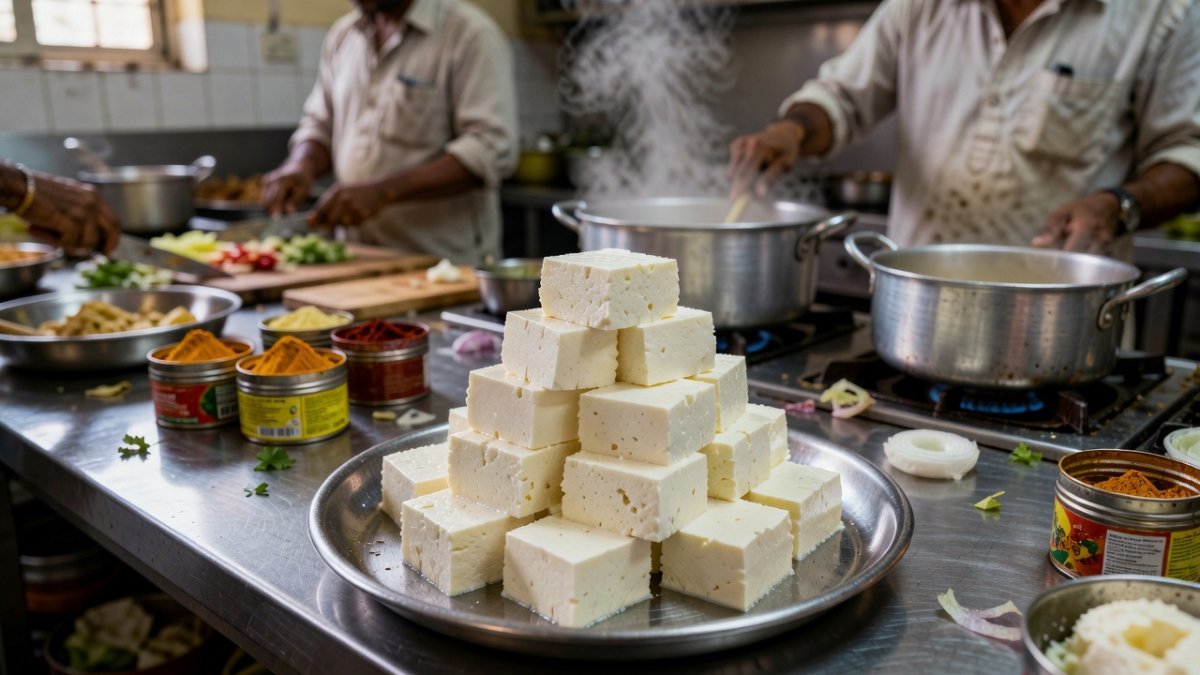
The order applies uniformly to all analogue products made with vegetable fats such as palm oil, starches and emulsifiers instead of milk fat. Violations attract imprisonment of up to six months and a fine of up to Rs 1 lakh under the Food Safety and Standards Act, 2006. If consumption of unsafe food results in death, the law provides for life imprisonment along with a minimum fine. The Maharashtra FDA has stated that selling analogue paneer as genuine dairy paneer constitutes misleading consumers and an unfair trade practice. The issue had reached the Maharashtra Assembly last year, with legislators demanding a complete ban.
Under the Food Safety and Standards Act 2006, penalties for misbranding and adulteration carry structured fines and imprisonment terms that exceed those in the earlier Prevention of Food Adulteration Act, which often limited maximum jail time to three years for repeat offences and imposed lower monetary sanctions scaled to smaller business turnovers. The current framework allows compounding of offences in minor cases while reserving stringent provisions for deliberate substitution that affects public health, creating a clearer deterrent for large-scale manufacturers who previously operated in regulatory grey zones.
The FDA warning on misleading consumers frames analogue paneer sales as an unfair trade practice under consumer protection statutes, enabling civil remedies alongside criminal prosecution and shifting the burden onto sellers to prove accurate disclosure. This legal stance interacts with FSSAI's national stance by overriding the central allowance for labelled analogues, as states retain authority to impose stricter local standards when evidence of widespread mislabelling emerges from enforcement data.
Maharashtra Assembly debates last year highlighted concerns over enforcement gaps in urban supply chains, prompting legislators to push for an outright prohibition rather than relying solely on labelling rules. This state-level escalation reflects differing risk assessments between the Centre and states with high dairy consumption, where local administrations cite repeated violations as justification for going beyond FSSAI's baseline framework.
What This Means for India
The ban directly affects consumers, restaurant operators and dairy farmers in Maharashtra’s major urban centres including Mumbai and Pune. Under FSSAI regulations, genuine paneer must be made from milk with no added starch, non-dairy fats or synthetic elements. FSSAI permits analogue paneer nationally only when strictly disclosed and correctly labelled. The Maharashtra order removes any possibility of mislabelling within state borders and aligns with the ongoing crackdown on synthetic milk and paneer units that began in May 2026.
India's paneer market centres on a staple protein source that supports both household diets and the food-service sector, where cost differentials between genuine milk-based production and vegetable-fat substitutes influence pricing strategies across restaurants and hotels. Dairy cooperatives such as Amul and Nandini face margin pressure when cheaper analogues displace authentic products, affecting procurement volumes from smallholder farmers who supply the organised sector.
Protein inflation concerns intensify when consumers unknowingly purchase lower-nutrient substitutes, eroding trust in dairy supply chains and prompting shifts toward verified local sources. Restaurant operators in major cities must now recalibrate menus and sourcing contracts, while households encounter clearer distinctions at retail points that could gradually reshape purchasing patterns toward certified dairy items.
Consumer awareness remains uneven across income groups, with urban buyers increasingly scrutinising labels yet rural markets lagging due to limited access to testing information. This dynamic underscores the need for sustained public education alongside regulatory action to prevent substitution from re-emerging through informal channels.
Scientific Distinctions and Detection Methods
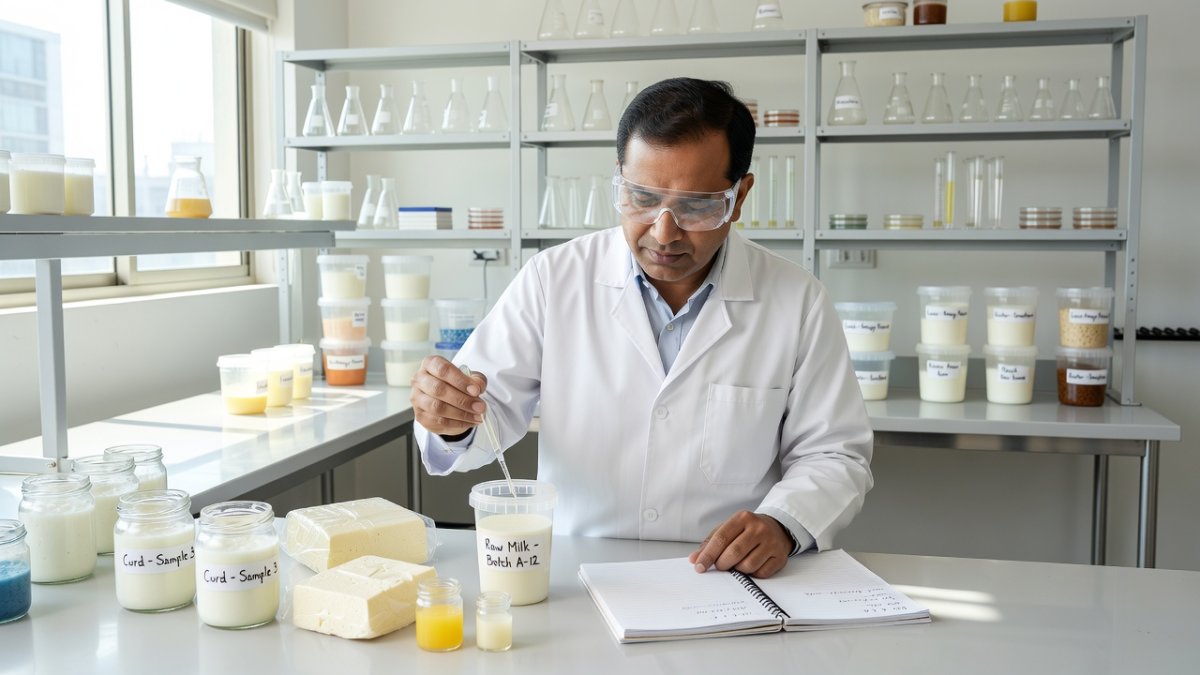
Real paneer forms when milk casein bundles, normally repelling each other, are destabilised by heat and acid such as lemon juice, creating a mesh that traps fat and water. Analogue paneer replaces milk fat with cheaper vegetable oil and thins or substitutes milk protein with starch, producing a formulated product rather than a curd. Laboratories detect the substitute through the presence of beta-sitosterol, a plant compound absent in milk fat, using gas chromatography. Real paneer browns and retains shape when fried, while the imitation often slumps and releases oil.
FSSAI surveillance data consistently identifies milk and paneer as high-risk categories for adulteration, with vegetable oils, starches and synthetic emulsifiers appearing among the most frequent non-permitted additives in processed dairy samples. State food laboratories employ chromatographic methods alongside simpler titration tests to quantify fat profiles and detect foreign sterols, enabling rapid screening during routine inspections.
Kitchen-level checks allow consumers to observe melting behaviour and texture changes under heat, though these remain supplementary to laboratory confirmation. The trans-fat content in many palm-oil-based analogues introduces an additional nutritional consideration, as plant-derived fats do not automatically confer health advantages when used to replace milk fat in high volumes.
Broader adulteration trends show that synthetic milk production often scales with seasonal price spikes in raw milk, creating recurring enforcement challenges for laboratories operating with limited throughput capacity. Improved detection protocols therefore serve both immediate seizure actions and longer-term deterrence by raising the technical barrier for fraudulent operators.
Enforcement Actions Across Maharashtra
The July 30 order follows intensified raids that began in May 2026. In one operation at a godown in Pune’s Manjari Khurd, authorities seized 1,400 kg of fake paneer, 1,800 kg of skimmed milk powder, 400 kg of glycerol monostearate powder and 718 litres of palm oil. The drive has also led to closures and licence cancellations of unhygienic restaurants and hotels in Mumbai and other districts.
The May 2026 statewide drive targeted synthetic milk and paneer units through coordinated inspections that extended beyond manufacturing sites to include cold-storage facilities and distribution networks. Seizure quantities from the Pune Manjari Khurd operation illustrate the economics of scaled production, where bulk inputs of skimmed milk powder and emulsifiers enable low-cost output that undercuts genuine dairy pricing.
Restaurant and hotel inspections in Mumbai revealed ongoing substitution practices in prepared dishes, leading to licence suspensions that disrupt supply to the hospitality sector. These actions signal a shift toward sustained monitoring rather than one-time raids, with authorities preparing follow-up verification visits to ensure compliance after initial closures.
Court cases arising from the drive will test the evidentiary standards required under the 2006 Act, particularly when operators claim products were intended for labelled analogue channels. The volume of seized materials suggests manufacturing units had operated for extended periods before detection, highlighting the resource demands on enforcement teams.
National Context: A Widening Crackdown on Food Fraud
Recent seizures of adulterated turmeric and spices in Kanpur and Hyderabad reflect a parallel enforcement pattern where state food safety commissioners have intensified sampling and rapid-response actions against substitution across multiple commodity categories. FSSAI coordinates these efforts through centralised guidelines while allowing states operational flexibility to address local supply-chain vulnerabilities.
Consumer rights under the Consumer Protection Act complement food-safety prosecutions by enabling class-action claims for economic losses from mislabelled products, broadening accountability beyond criminal penalties. This integrated approach encourages other states to examine their own dairy and spice sectors for similar substitution risks.
The trend indicates a gradual tightening of oversight that could standardise testing protocols nationwide, reducing opportunities for operators to relocate production across state borders. Sustained inter-state coordination will determine whether these isolated crackdowns evolve into a durable national framework against food fraud.
The Bottom Line
Maharashtra’s complete prohibition on analogue paneer, enforced by the Maharashtra FDA under Tukaram Mundhe from July 30, 2026, sets a clear regulatory boundary that prioritises accurate labelling and protects the integrity of dairy products for consumers across the state. The action builds on the earlier Chhattisgarh precedent and the May 2026 enforcement drive, including the Pune seizure of 1,400 kg of fake paneer, signalling stricter oversight of food safety standards nationwide.
— By Dr. Raj Patel, Staff Writer
This article was produced with AI-assisted research and editorial support. Reporting is based on sources cited in the article.
What's Your Reaction?
 Like
0
Like
0
 Dislike
0
Dislike
0
 Love
0
Love
0
 Funny
0
Funny
0
 Wow
0
Wow
0
 Sad
0
Sad
0
 Angry
0
Angry
0

India/South Asia Correspondent at Global1.News. Analytical voice with a background in science and health journalism. Based in New Delhi, covering Indian politics, education, healthcare, technology, and policy. Breaks down complex data into clear, actionable reporting.














Comments (0)