
Iran-Pakistan Axis Redraws 2026 War Map as Tehran Deepens Islamabad Ties
The thin blue line of the Strait of Hormuz has become the defining fault line of the 2026 Middle East war, and this week, Tehran is signaling that its most critical land bridge to the outside world runs not through the Gulf, but through the mountain passes of Balochistan.
The thin blue line of the Strait of Hormuz has become the defining fault line of the 2026 Middle East war, and this week, Tehran is signaling that its most critical land bridge to the outside world runs not through the Gulf, but through the mountain passes of Balochistan. As the United States maintains a formidable naval blockade that has strangled Iranian oil exports and reduced traffic through the world's most vital energy chokepoint to a trickle, the Islamic Republic is deepening its strategic pivot toward Pakistan. This is not merely a diplomatic courtesy; it is a survival mechanism, reshaping the geopolitical map of South Asia and the Gulf in real time.
Tehran's Lifeline: How the Iran-Pakistan Axis Is Redrawing the Map of the 2026 War
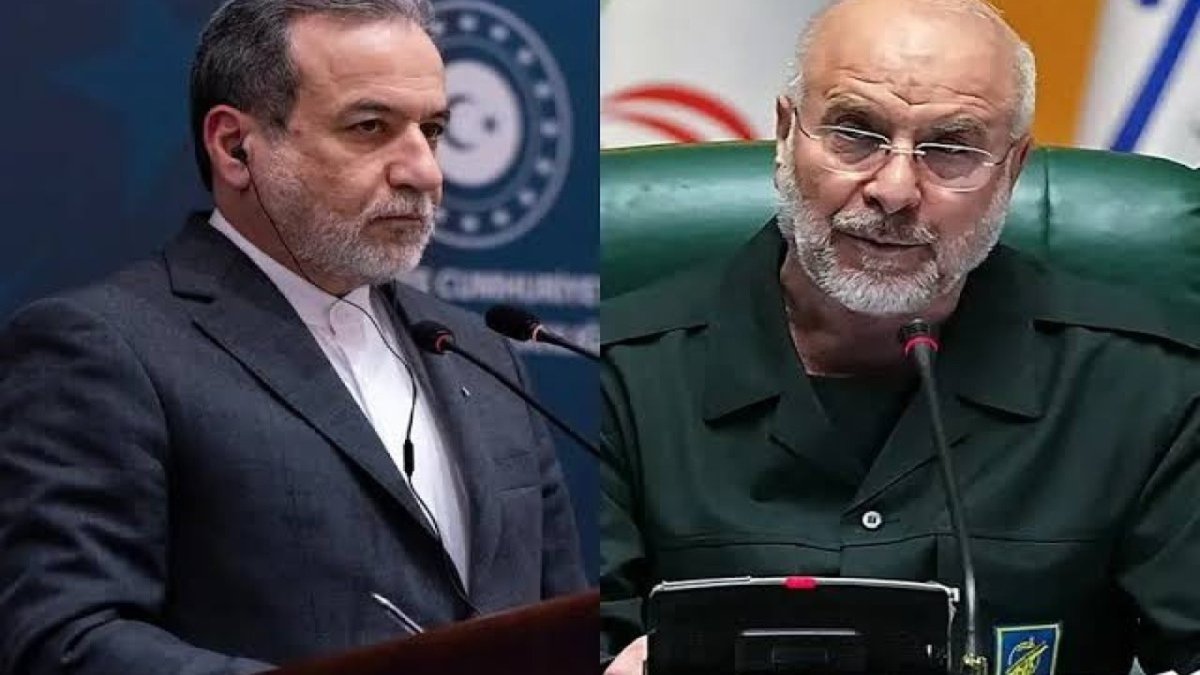
Beirut, Lebanon – August 10, 2026 — Iranian Foreign Ministry spokesperson Esmaeil Baghaei told reporters at the weekly Tehran briefing on Monday that Iran and Pakistan "continue the comprehensive development of bilateral relations," a carefully calibrated phrase that belies the high-stakes maneuvering occurring beneath the surface. Baghaei confirmed that Pakistan has extended formal invitations for Foreign Minister Abbas Araghchi and Parliament Speaker Mohammad Bagher Ghalibaf to visit Islamabad, stating that the visits "will take place at an appropriate time." The remarks, carried by Iran's state-run Press TV and reported by Anadolu, CGTN, and CNBC-TV18, come at a moment when the strategic calculus of the entire region has been upended by the ongoing conflict.
The Islamabad Talks: A Diplomatic Earthquake
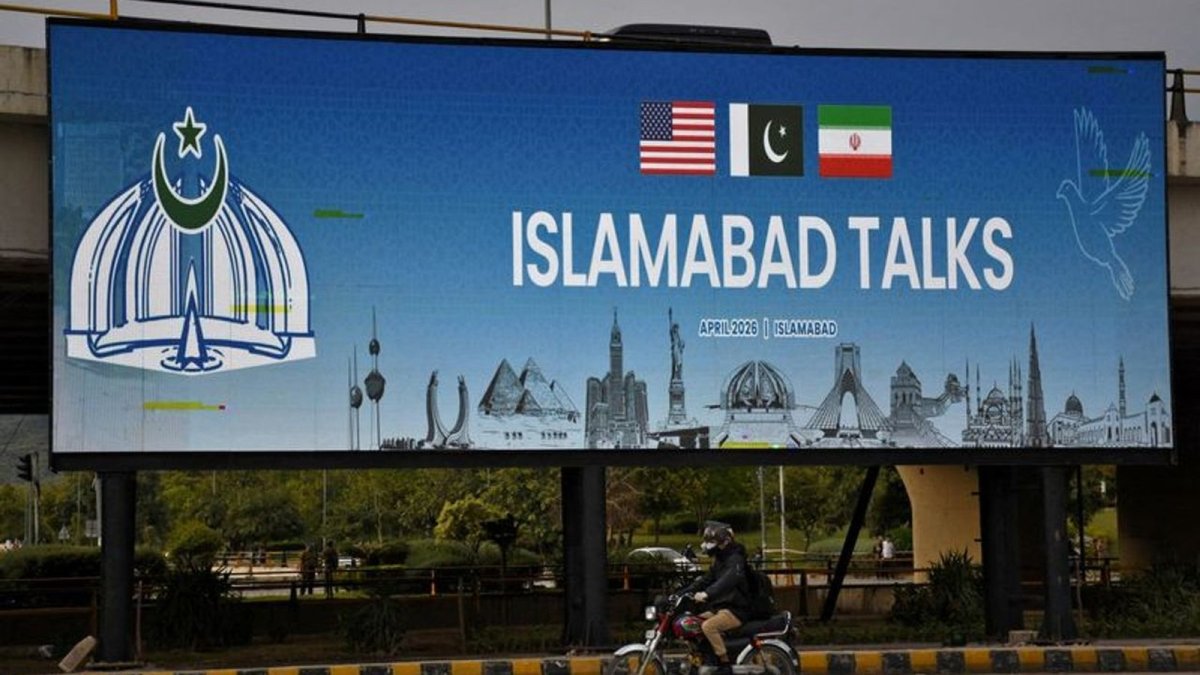
The context for this renewed diplomatic flurry is the extraordinary series of events that unfolded in April 2026. Iran's delegation to the Islamabad Talks was not a routine diplomatic mission; it was a war cabinet on the move. Led by Parliament Speaker Mohammad Bagher Ghalibaf, the delegation comprised Foreign Minister Abbas Araghchi, the Defence Council Secretary, the Governor of Iran's Central Bank, and senior lawmakers. They were received not by mid-level bureaucrats, but by Pakistan's Deputy Prime Minister and Foreign Minister Ishaq Dar and Chief of Defence Forces Field Marshal Asim Munir—a reception that signaled Islamabad's willingness to act as a mediator of last resort.
The presence of the US delegation, led by Vice President JD Vance and joined by special envoy Steve Witkoff and Jared Kushner, marked the most senior American engagement with Iran since John Kerry negotiated the 2015 nuclear deal (JCPOA). Pakistan's Prime Minister Shehbaz Sharif, displaying the weariness of a man holding a live grenade, called the phase "make or break" and warned that making progress would be "hard work." The talks covered the two issues that could plunge the world into a deeper catastrophe: Iran's nuclear enrichment program and the free flow of trade through the Strait of Hormuz.
The Hit List Reprieve: Israel's Concession
Perhaps the most telling indicator of Pakistan's newfound leverage is the quiet, almost surreal, development reported by Business Today in March 2026. At Pakistan's request, Israel removed Foreign Minister Araghchi and Parliament Speaker Ghalibaf from its hit list—a list that has been the subject of intense speculation and fear in Tehran since the conflict began. Islamabad's intervention gave the Iranian officials a temporary reprieve, effectively placing them under Pakistani diplomatic protection.
This is a stunning reversal of the traditional regional hierarchy. For decades, Pakistan was seen as a junior partner in the Gulf's security architecture, a supplier of manpower and nuclear deterrence but rarely a political arbiter. Now, Islamabad is leveraging its unique position as the only country with credible diplomatic channels to both Washington and Tehran, and with enough military heft to make Israel think twice. The removal of Araghchi and Ghalibaf from the Israeli target list is not an act of charity; it is a recognition that killing these two men would collapse the only negotiation track that might prevent a wider war.
The Peace Pipeline: A $2 Billion Gamble Frozen in Time
Beneath the diplomatic theater lies the hard infrastructure of the new axis. The IP gas pipeline, known as the "Peace Pipeline," is a 2,775-kilometre conduit designed to deliver natural gas from Iran's South Pars field to energy-starved Pakistan. Construction began in 2011, and Pakistan formally approved work in 2024, but the project remains a monument to geopolitical frustration. Iran has invested about US$2 billion in its section of the pipeline, a sunk cost that Tehran can ill afford to write off. Pakistan, citing international sanctions and the threat of US secondary penalties, has not begun construction on its side.
In January 2026, Pakistan proposed an out-of-court settlement to shelve the IP pipeline while keeping the option to revive it—a classic diplomatic dodge that allows Islamabad to avoid a multi-billion-dollar penalty clause while preserving the strategic option for a post-war world. But the calculus has shifted. With the Strait of Hormuz effectively closed to Iranian shipping, the pipeline is no longer just an energy project; it is a potential strategic asset that could bypass the US Navy entirely. If the pipeline were ever completed, it would represent the single most important piece of infrastructure in the Iran-Pakistan relationship, a land-based alternative to the maritime chokepoint that the US currently controls.
Ports of Refuge: Iran's Maritime Bypass
In the interim, Iran has turned to Pakistani ports to bypass the US naval blockade. This is a development of immense strategic significance. The US blockade, designed to strangle Iran's economy and force concessions on its nuclear program, has a critical vulnerability: it is a maritime operation. It cannot stop overland trade, and it cannot stop the movement of goods through Pakistani territorial waters if Islamabad chooses to look the other way.
Iranian cargo is now flowing through Gwadar and Karachi, ports that are themselves part of China's Belt and Road Initiative and the China-Pakistan Economic Corridor (CPEC). This creates a fascinating triangular dynamic: Chinese investment in Pakistani infrastructure is inadvertently providing Iran with a lifeline, while the US blockade is pushing Tehran closer to Beijing's orbit. The Strait of Hormuz, which in peacetime carries about a fifth of the world's oil plus vast quantities of natural gas and fertilizer, has seen only a small number of vessels cross since the truce. The global energy market is holding its breath, with oil prices elevated and supply chains stretched to the breaking point.
The Mecca Joint Defense Agreement: A New Trilateral Axis
Baghaei's remarks on Monday also addressed a development that has sent shockwaves through the region's security architecture: the Mecca Joint Defense Agreement, signed in early August 2026 by Saudi Arabia, Turkey, and Pakistan. This new trilateral defense axis represents a fundamental realignment of Gulf security, one that excludes both the United States and Iran. Baghaei stated that Iran sees no reason for concern over the agreement, a diplomatic dismissal that analysts in Beirut view with skepticism.
The strategic calculus behind the Mecca Agreement is complex. Saudi Arabia, historically reliant on the US security umbrella, is diversifying its defense partnerships in response to Washington's unpredictable behavior during the 2026 conflict. Turkey, under President Recep Tayyip Erdogan, is expanding its military footprint across the Middle East and North Africa, seeking to position itself as an indispensable power broker. Pakistan brings nuclear capability, a large standing army, and a unique relationship with the Gulf monarchies built on decades of labor migration and military cooperation.
For Iran, the agreement is a double-edged sword. On one hand, it creates a potential military bloc on its western and eastern flanks that could constrain its freedom of action. On the other hand, the inclusion of Pakistan—Tehran's new lifeline—suggests that Islamabad is not aligning against Iran but rather positioning itself as the indispensable mediator between all parties. The Mecca Agreement may be less about containing Iran and more about creating a Sunni-majority security framework that can negotiate with Tehran from a position of collective strength.
The Nuclear Dimension and the Hormuz Calculus
The core issue that brought Vice President Vance to Islamabad remains unresolved: Iran's nuclear enrichment program. The 2015 JCPOA is a distant memory, and Iran's nuclear advances since the US withdrawal in 2018 have brought it to the threshold of weapons capability. The April talks reportedly discussed a framework that would freeze enrichment at current levels in exchange for sanctions relief and the lifting of the naval blockade—but no final agreement was reached.
Baghaei's statement on Monday that the opening of the Strait of Hormuz depends on the lifting of the US naval blockade is a clear articulation of Iran's negotiating position. Tehran is using the strait as leverage, threatening to keep it closed—or at least heavily restricted—until the blockade is lifted. This is a high-stakes game of chicken. The global economy cannot sustain a prolonged closure of the strait, but Iran's economy cannot sustain a prolonged blockade. The question is which side will blink first, and Pakistan has positioned itself as the venue where that decision will be made.
Regional Repercussions: The Sunni-Shia Dimension and Great Power Competition
The Iran-Pakistan rapprochement cuts across the traditional Sunni-Shia divide. Pakistan is a Sunni-majority nation with a significant Shia minority, and its relationship with Iran has historically been complicated by sectarian tensions and by Islamabad's close ties to Saudi Arabia. The current alignment is driven not by theology but by pragmatism. Pakistan needs energy and a counterweight to Indian influence; Iran needs a land corridor and a diplomatic lifeline.
The great power dimension cannot be ignored. The United States, having committed significant naval assets to the blockade, is now dependent on Pakistan to facilitate negotiations—a dependence that gives Islamabad enormous leverage over Washington. China watches with keen interest, as its investments in Pakistani infrastructure become strategically vital to Iran's survival. Russia, distracted by its own conflicts, maintains a watching brief. The 2026 conflict has killed thousands and plunged global energy markets into turmoil, and the resolution—or escalation—will be determined in the conference rooms of Islamabad as much as on the decks of warships in the Gulf.
For now, the invitations extended to Araghchi and Ghalibaf remain open, and the "appropriate time" for their visits has not yet been announced. But the trajectory is clear: Pakistan has become the fulcrum on which the fate of the Middle East's most dangerous crisis now rests. The war may have started with missiles and naval blockades, but it will end—if it ends at all—with the patient, grinding work of diplomacy in the capital of a country that has suddenly found itself indispensable to all sides.
By Malik Hassan, Staff Writer
This article was produced with AI-assisted research and editorial support. Reporting is based on sources cited in the article.
What's Your Reaction?
 Like
0
Like
0
 Dislike
0
Dislike
0
 Love
0
Love
0
 Funny
0
Funny
0
 Wow
0
Wow
0
 Sad
0
Sad
0
 Angry
0
Angry
0
Middle East Correspondent at Global1.News. Based in Beirut, covering politics, conflict, energy, and society across the Middle East. Brings context and depth to a region often reduced to headlines.











Comments (0)